
Andro Linklater (1944–2013)
Author of Measuring America: How an Untamed Wilderness Shaped the United States and Fulfilled the Promise of Democracy
About the Author
Andro Linklate was born in Edinburgh, Scotland on December 10, 1944. He was the youngest child of the novelist Eric Linklater. He attended Belhaven Hill school in Dunbar, East Lothian, and then Winchester College, before studying modern history at New College, Oxford. He taught at a London show more comprehensive school until he was asked to complete the history of the Black Watch regiment that his father had been writing at the time of his death in 1974. It was published three years later and was well received. His other works include Amazing Maisie and the Cold Porridge Brigade, Wild People, The Code of Love, Measuring America, The Fabric of America, An Artist in Treason, Why Spencer Perceval Had to Die, and Owning the Earth. He died from a heart attack on November 3, 2013 at the age of 68. (Bowker Author Biography) show less
Works by Andro Linklater
Measuring America: How an Untamed Wilderness Shaped the United States and Fulfilled the Promise of Democracy (2003) 711 copies, 14 reviews
An Artist in Treason: The Extraordinary Double Life of General James Wilkinson (2009) 214 copies, 29 reviews
The Fabric of America: How Our Borders and Boundaries Shaped the Country and Forged Our National Identity (2007) 187 copies, 5 reviews
Why Spencer Perceval Had to Die: The Assassination of a British Prime Minister (2012) 51 copies, 1 review
Tagged
Common Knowledge
- Canonical name
- Linklater, Andro
- Legal name
- Linklater, Andro Ian Robert
- Birthdate
- 1944-12-10
- Date of death
- 2013-11-03
- Gender
- male
- Education
- New College, Oxford University (BA)
- Occupations
- journalist
historian
novelist - Relationships
- Linklater, Eric (father)
Linklater, Magnus (brother)
Linklater, Kristin (sister)
Avery, Marie-Louise (wife)
MacINtyre, Marjorie (mother) - Cause of death
- heart attack
- Nationality
- UK
- Birthplace
- Edinburgh, Scotland, UK
- Places of residence
- Isle Martin, Scotland, UK
Markbeech, Kent, England, UK - Place of death
- Edinburgh, Scotland, UK
- Associated Place (for map)
- Scotland, UK
Members
Reviews
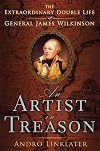
The name of one of the greatest traitors in American history is probably unknown to most people. His story is told in Andro Linklater's An Artist in Treason: The Extraordinary Double Life of General James Wilkinson (Walker, 2009). The most famous conspiracy with which Wilkinson was involved may be vaguely familiar to students of American history (this is the semi-nebulous plot spearheaded by Aaron Burr to invade Mexico and detach the western territories from the United States). As show more Linklater's book makes clear, though, this was just one episode among many in the fascinating, complicated and shocking career of James Wilkinson.
From his earliest days in the army during the Revolutionary War, Wilkinson used his position as an aide to generals (Gates, Greene, Arnold) to curry favor, but made a habit of turning on his patrons as soon as it suited him. After getting caught out in this during the Conway Cabal fiasco Wilkinson found his future prospects for command and advancement in the Continental Army looking bleak, so he slunk away. A sly political operator, though, Wilkinson worked his contacts and got himself appointed clothier general, a position at which he proved uninterested and ineffective. This led George Washington to repeatedly call for his ouster, which was finally accomplished in 1781 (when Congress voted to cut his salary in half, prompting Wilkinson to resign).
Decamping to the Kentucky frontier, Wilkinson became involved in an effort first to create an independent Kentucky government, and then with attempts to open the Mississippi River to trade by negotiating with the Spanish in New Orleans. Courting the Spanish imperial authorities with promises, Wilkinson in effect pledged to bring Kentucky into the orbit of Spain in exchange for trading rights, and arranged to receive payments from the Spanish in return for information and efforts on Spain's behalf in Kentucky (this became known as the Spanish Conspiracy). By December 1792, Linklater writes, Wilkinson was undoubtedly committing treason (he was drawing payments from Spain and providing them with vital information, while at the same time commanding an American army regiment).
Linklater carefully documents the ways in which Wilkinson managed to undercut his personal, political and military foes, while flattering and courting those who could advance his career (most notably a whole string of secretaries of war and presidents from Washington to Jefferson). Notwithstanding a body of evidence and rumors regarding Wilkinson's treason (it was remarkably well known), those in power continued to reward him with duties, positions, and responsibilities. Jefferson in particular was surprisingly indulgent of Wilkinson, particularly after Wilkinson opted to betray Burr's plans to Jefferson even though he had been deeply involved in the plot from the very start.
The number of times Wilkinson was almost brought down, and managed to right his ship by ruining the credibility of his accusers and telling well-crafted, outright lies about the nature of his relationship with the Spanish authorities, is astounding. That he was finally brought down at all ends up being something of a surprise: even after a disastrous loss of troops to illness during the early days of War of 1812 Wilkinson was granted command of the operations to take Canada; when this effort failed spectacularly he survived yet another court-martial (Linklater writes that contemporary jibes had it that Wilkinson "never won a battle, but never lost an inquiry") and was only cashiered during the wholesale downsizing of the military at the end of the war. Even this embittered Wilkinson, who fired off angry letters in every direction and published a three-volume memoir in defense of himself. He ended his days in semi-exile in Mexico, dying there in 1825.
Some of the most breathtaking elements of Wilkinson's treason include his simultaneous memoranda to Jefferson and to his Spanish handlers instructing them (in practically opposite terms) how to deal with the American takeover of the Louisiana Purchase territory. Knowing of the Lewis and Clark expedition, for example, Wilkinson suggested to the Spanish that they might want to intercept the explorers (an attempt was made, but the effort failed). And Wilkinson's careful (and occasionally hysterical) efforts to protect his treason were of great interest: his payments were sent upriver hidden in barrels of foodstuffs, and he and his handlers used ciphers and codes to communicate with each other (an appendix documents some of the codes).
Linklater's book contains a few more than usual errors of the typographic variety, and he missteps (p. 188) in calling Burr the Federalist candidate for president in 1800 (John Adams was running for reelection, of course; Burr was ostensibly the Republican candidate for vice-president, but ended up being Jefferson's strongest competitor when the electoral college vote resulted in a tie and threw the election to the House). These aside, this is a good survey of Wilkinson's life and treasons. Vile he may have been (this is by no means a hagiography), Wilkinson's abilities to dissimulate and keep himself in the good graces of those who mattered were prodigious.
http://philobiblos.blogspot.com/2009/11/book-review-artist-in-treason.html show less
From his earliest days in the army during the Revolutionary War, Wilkinson used his position as an aide to generals (Gates, Greene, Arnold) to curry favor, but made a habit of turning on his patrons as soon as it suited him. After getting caught out in this during the Conway Cabal fiasco Wilkinson found his future prospects for command and advancement in the Continental Army looking bleak, so he slunk away. A sly political operator, though, Wilkinson worked his contacts and got himself appointed clothier general, a position at which he proved uninterested and ineffective. This led George Washington to repeatedly call for his ouster, which was finally accomplished in 1781 (when Congress voted to cut his salary in half, prompting Wilkinson to resign).
Decamping to the Kentucky frontier, Wilkinson became involved in an effort first to create an independent Kentucky government, and then with attempts to open the Mississippi River to trade by negotiating with the Spanish in New Orleans. Courting the Spanish imperial authorities with promises, Wilkinson in effect pledged to bring Kentucky into the orbit of Spain in exchange for trading rights, and arranged to receive payments from the Spanish in return for information and efforts on Spain's behalf in Kentucky (this became known as the Spanish Conspiracy). By December 1792, Linklater writes, Wilkinson was undoubtedly committing treason (he was drawing payments from Spain and providing them with vital information, while at the same time commanding an American army regiment).
Linklater carefully documents the ways in which Wilkinson managed to undercut his personal, political and military foes, while flattering and courting those who could advance his career (most notably a whole string of secretaries of war and presidents from Washington to Jefferson). Notwithstanding a body of evidence and rumors regarding Wilkinson's treason (it was remarkably well known), those in power continued to reward him with duties, positions, and responsibilities. Jefferson in particular was surprisingly indulgent of Wilkinson, particularly after Wilkinson opted to betray Burr's plans to Jefferson even though he had been deeply involved in the plot from the very start.
The number of times Wilkinson was almost brought down, and managed to right his ship by ruining the credibility of his accusers and telling well-crafted, outright lies about the nature of his relationship with the Spanish authorities, is astounding. That he was finally brought down at all ends up being something of a surprise: even after a disastrous loss of troops to illness during the early days of War of 1812 Wilkinson was granted command of the operations to take Canada; when this effort failed spectacularly he survived yet another court-martial (Linklater writes that contemporary jibes had it that Wilkinson "never won a battle, but never lost an inquiry") and was only cashiered during the wholesale downsizing of the military at the end of the war. Even this embittered Wilkinson, who fired off angry letters in every direction and published a three-volume memoir in defense of himself. He ended his days in semi-exile in Mexico, dying there in 1825.
Some of the most breathtaking elements of Wilkinson's treason include his simultaneous memoranda to Jefferson and to his Spanish handlers instructing them (in practically opposite terms) how to deal with the American takeover of the Louisiana Purchase territory. Knowing of the Lewis and Clark expedition, for example, Wilkinson suggested to the Spanish that they might want to intercept the explorers (an attempt was made, but the effort failed). And Wilkinson's careful (and occasionally hysterical) efforts to protect his treason were of great interest: his payments were sent upriver hidden in barrels of foodstuffs, and he and his handlers used ciphers and codes to communicate with each other (an appendix documents some of the codes).
Linklater's book contains a few more than usual errors of the typographic variety, and he missteps (p. 188) in calling Burr the Federalist candidate for president in 1800 (John Adams was running for reelection, of course; Burr was ostensibly the Republican candidate for vice-president, but ended up being Jefferson's strongest competitor when the electoral college vote resulted in a tie and threw the election to the House). These aside, this is a good survey of Wilkinson's life and treasons. Vile he may have been (this is by no means a hagiography), Wilkinson's abilities to dissimulate and keep himself in the good graces of those who mattered were prodigious.
http://philobiblos.blogspot.com/2009/11/book-review-artist-in-treason.html show less
 This review was written for LibraryThing Early Reviewers.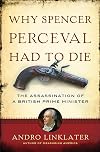
As you might expect from the title, this book takes as its subject the assassination of Spencer Perceval, the prime minister of Britain at what turns out to have been a crucial period in history: a time when the slave trade was beginning to be abolished, the former American colonies were chafing under onerous trade restrictions, and Napoleon was wreaking havoc on the Continent. When Perceval was assassinated on May 11, 1812, his killer was known and made no attempt to deny what he’d done. show more The assassin, John Bellingham, argued, however, that the killing was a political necessity and was therefore not wrong (or done with malice aforethought). Bellingham maintained that he acted alone, but certain facts about his circumstances leading up to the assassination suggest a conspiracy might have been at work.
This is certainly an interesting premise, although at times I felt unconvinced. It’s hard to prove definitively who might have moulded Bellingham into a political assassin, and the use of the conditional left me doubtful. I found it especially vexing to read in this grammatical tense with regard to John Vickery, one of the Bow Street Runners and an early investigating officer. References to Vickery includes statements such as “Vickery must have noticed such and such” or “A man like Vickery would likely have noted this inconsistency”. Mm, I’m going to need more than that to fully buy this premise. Linklater does endnote his work, and I suppose that if you were interested in pursuing this thread yourself, you could with the sources he provides.
Mainly, I found this interesting background reading to the Poldark novels — book 9, The Miller’s Dance, takes place beginning in 1812 and will likely cover some of the fallout of this assassination. show less
This is certainly an interesting premise, although at times I felt unconvinced. It’s hard to prove definitively who might have moulded Bellingham into a political assassin, and the use of the conditional left me doubtful. I found it especially vexing to read in this grammatical tense with regard to John Vickery, one of the Bow Street Runners and an early investigating officer. References to Vickery includes statements such as “Vickery must have noticed such and such” or “A man like Vickery would likely have noted this inconsistency”. Mm, I’m going to need more than that to fully buy this premise. Linklater does endnote his work, and I suppose that if you were interested in pursuing this thread yourself, you could with the sources he provides.
Mainly, I found this interesting background reading to the Poldark novels — book 9, The Miller’s Dance, takes place beginning in 1812 and will likely cover some of the fallout of this assassination. show less
Measuring America: How an Untamed Wilderness Shaped the United States and Fulfilled the Promise of Democracy by Andro Linklater
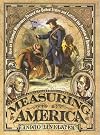
A tremendously interesting book about the history of measurement standards and surveying, most particularly in the young United States but also in France and Britain. Well documented (though the notes are not indicated in the text) and a very lively read. If you've ever wondered where the heck some of our odd units of measure came from, or why the United States doesn't use the metric system, this one is recommended.
“His actions were the most treasonous and dangerous of any in American history”
If, like 99.9% of your contemporaries, you assume that the above quote refers to Revolutionary War traitor Benedict Arnold, you would be incorrect. The subject of the above reference is General James Wilkinson, Revolutionary War soldier and subsequent Commanding General of the United States Army under the first four Presidents of the Republic.
I have read dozens of histories from the founding of our country and show more the early years of the Republic, but can not recall every seeing his name in print. That he has become such an obscure figure, in light of his position and actions is something of a surprise. As a mere 17 year old volunteer, Wilkinson advanced quickly in the Colonial Army, attaching himself to the staffs of such rising stars as Nathanial Greene, Benedict Arnold and Horatio Gates. He was present at the Battle of Trenton, where he caught the attention of George Washington.
Despite rising rapidly in the ranks, Wilkinson was always on the lookout for opportunities in which to enrich himself, and retired from the Army at age 20. Through marriage, he inherited an estate in Maryland which he was subsequently unable to support. He moved to the frontier and became something of a success in Kentucky, speculating in land and goods while becoming politically active.
At the time, Kentucky was isolated, not only by virtue of its location west of the Appalachians, but also by the fact that the Mississippi River was completely controlled by Spain, which disallowed all commercial traffic. Through a combination of bravado, flattery and access to credit, Wilkinson was able to break this embargo and make key contacts with Spanish administrators in St. Louis, Natchez and New Orleans.
Kentucky’s status at the time was up for grabs. Deemed a part of Virginia, settlers were split as to whether to pursue statehood, independence or even annexation to Spanish America (the borders of the various territories were somewhat liquid). Wilkinson sold himself to his Spanish handlers as someone who could bring the territory of Kentucky under their control. That he was able to parley this virtual monopoly in Mississippi commercial traffic and political connection to near bankruptcy speaks volumes to his poor business skills.
Finally, Wilkinson returned to service in the United States Army, quickly becoming commanding General of a largely scaled down domestic force. Wilkinson’s connections among the Spanish were not terminated however. For the next 20 years, Wilkinson continued to feed information and intelligence to his Spanish contacts in a stunning display of treachery (actually exposing the Lewis and Clark expedition to extermination). Most surprisingly, Wilkinson’s actions were largely known to his superiors, who nevertheless continued to entrust him with command of the military, despite rapidly rising tensions along the U.S.-Mexican border.
Finally, Wilkinson faced the ultimate choice. In the face of Aaron Burr’s plan to carve an independent nation from Mexican holdings in the area of what is now Texas, Wilkinson had the means (command of American forces in the region) to bring Burr’s plans to fruition. Instead, Wilkinson mobilized his forces in defense of New Orleans and, according to many historians, saved the Republic. His nefarious activities and close relations with Burr resulted in a swirl of controversies and recriminations which consumed the balance of his life.
While this is undoubtedly a tale worth telling, not the least reason of which is its surprising originality, the story drags at times and falls just short of what could have been an outstanding history. show less
If, like 99.9% of your contemporaries, you assume that the above quote refers to Revolutionary War traitor Benedict Arnold, you would be incorrect. The subject of the above reference is General James Wilkinson, Revolutionary War soldier and subsequent Commanding General of the United States Army under the first four Presidents of the Republic.
I have read dozens of histories from the founding of our country and show more the early years of the Republic, but can not recall every seeing his name in print. That he has become such an obscure figure, in light of his position and actions is something of a surprise. As a mere 17 year old volunteer, Wilkinson advanced quickly in the Colonial Army, attaching himself to the staffs of such rising stars as Nathanial Greene, Benedict Arnold and Horatio Gates. He was present at the Battle of Trenton, where he caught the attention of George Washington.
Despite rising rapidly in the ranks, Wilkinson was always on the lookout for opportunities in which to enrich himself, and retired from the Army at age 20. Through marriage, he inherited an estate in Maryland which he was subsequently unable to support. He moved to the frontier and became something of a success in Kentucky, speculating in land and goods while becoming politically active.
At the time, Kentucky was isolated, not only by virtue of its location west of the Appalachians, but also by the fact that the Mississippi River was completely controlled by Spain, which disallowed all commercial traffic. Through a combination of bravado, flattery and access to credit, Wilkinson was able to break this embargo and make key contacts with Spanish administrators in St. Louis, Natchez and New Orleans.
Kentucky’s status at the time was up for grabs. Deemed a part of Virginia, settlers were split as to whether to pursue statehood, independence or even annexation to Spanish America (the borders of the various territories were somewhat liquid). Wilkinson sold himself to his Spanish handlers as someone who could bring the territory of Kentucky under their control. That he was able to parley this virtual monopoly in Mississippi commercial traffic and political connection to near bankruptcy speaks volumes to his poor business skills.
Finally, Wilkinson returned to service in the United States Army, quickly becoming commanding General of a largely scaled down domestic force. Wilkinson’s connections among the Spanish were not terminated however. For the next 20 years, Wilkinson continued to feed information and intelligence to his Spanish contacts in a stunning display of treachery (actually exposing the Lewis and Clark expedition to extermination). Most surprisingly, Wilkinson’s actions were largely known to his superiors, who nevertheless continued to entrust him with command of the military, despite rapidly rising tensions along the U.S.-Mexican border.
Finally, Wilkinson faced the ultimate choice. In the face of Aaron Burr’s plan to carve an independent nation from Mexican holdings in the area of what is now Texas, Wilkinson had the means (command of American forces in the region) to bring Burr’s plans to fruition. Instead, Wilkinson mobilized his forces in defense of New Orleans and, according to many historians, saved the Republic. His nefarious activities and close relations with Burr resulted in a swirl of controversies and recriminations which consumed the balance of his life.
While this is undoubtedly a tale worth telling, not the least reason of which is its surprising originality, the story drags at times and falls just short of what could have been an outstanding history. show less
This review was written for LibraryThing Early Reviewers.Lists
Awards


You May Also Like


Statistics
- Works
- 13
- Members
- 1,417
- Popularity
- #18,146
- Rating
- 3.8
- Reviews
- 52
- ISBNs
- 60
- Languages
- 3
