
George Belden
Author of The Boy in His Winter
About the Author
Disambiguation Notice:
Do not combine this page with that of Norman Lock, as there is more than one author by that name. Thank you.
Works by George Belden
Associated Works
Tagged
Common Knowledge
- Canonical name
- Belden, George
- Legal name
- Lock, Norman
- Birthdate
- 1950
- Gender
- male
- Occupations
- author
- Awards and honors
- Aga Khan Prize for Fiction (1979)
- Nationality
- USA
- Disambiguation notice
- Do not combine this page with that of Norman Lock, as there is more than one author by that name. Thank you.
- Associated Place (for map)
- USA
Members
Reviews

The Boy in His Winter is yet another novel that has grown in my estimation after I finished reading it. It is a river voyage through time and memory but not eternity. For many of us, Huckleberry Finn has been alive and on his raft with Jim since Mark Twain put him there in 1835. In a discursive first person narrative, Huck tells his timeless story until he is thrown back into time in 2005 with Hurricane Katrina. He continues his story, having taken the name Albert Barthelemy, until he is an show more old man in 2077, remembering it all and dictating to an unnamed, unseen amanuensis, to borrow his word.
The writing is gorgeous. Every page has beautiful turns of phrase: to pick one at random, "Like gray worms, the ash at the ends of our cigars grew, unmolested by a feeble breeze that had lain down in the dust, in laziness or exhaustion." The reader revels in this lushness somewhat impatiently waiting for something to happen. Huck/Albert is not Mark Twain (in fact, he hates him for having usurped his life), and a reader hoping for action and satire is going to be disappointed.
There is not no action. For example, the first word signalling Jim's death gave me a real frisson. At the second word, I gasped aloud, "Run, Jim!" but of course, he didn't. Instead, we get this: "Sometimes, one must tell an outlandish story because the truth is too fantastic to be believed. What I believe is this: To read a book is not to experience life, but words - only them. But to say "only" is to underestimate them....I mean that all these many words I've bundled into the world are a logical result of consciousness and an autocratic will. I insist on caprice as a necessary countermeasure to slavery. Otherwise, my own dictatorial mind must take - unknown to me - its instructions from a mastermind. And I insist, as well, that this story tells a truth." Huck was always a liar. Is he lying about this? The Boy in His Winter is not a book for lazy minds! show less
The writing is gorgeous. Every page has beautiful turns of phrase: to pick one at random, "Like gray worms, the ash at the ends of our cigars grew, unmolested by a feeble breeze that had lain down in the dust, in laziness or exhaustion." The reader revels in this lushness somewhat impatiently waiting for something to happen. Huck/Albert is not Mark Twain (in fact, he hates him for having usurped his life), and a reader hoping for action and satire is going to be disappointed.
There is not no action. For example, the first word signalling Jim's death gave me a real frisson. At the second word, I gasped aloud, "Run, Jim!" but of course, he didn't. Instead, we get this: "Sometimes, one must tell an outlandish story because the truth is too fantastic to be believed. What I believe is this: To read a book is not to experience life, but words - only them. But to say "only" is to underestimate them....I mean that all these many words I've bundled into the world are a logical result of consciousness and an autocratic will. I insist on caprice as a necessary countermeasure to slavery. Otherwise, my own dictatorial mind must take - unknown to me - its instructions from a mastermind. And I insist, as well, that this story tells a truth." Huck was always a liar. Is he lying about this? The Boy in His Winter is not a book for lazy minds! show less
 This review was written for LibraryThing Early Reviewers.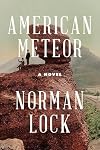
Lock’s “American Meteor” is easy to summarize but hard to categorize. Its narrator is Stephen Moran, who recollects his life for Jay, a doctor friend. His remarkable biography moves from his boyhood as an oysterman in New York, bugle boy in the Civil War, wounded and decorated veteran, mourner of Abraham Lincoln, waiter for a railroad entrepreneur, photographer of the West and finally assassin of Custer. Viewed as history, the book is lacking in detail and seems extremely unrealistic, show more considering that Moran interacts with so many famous Americans (Walt Whitman, Abraham Lincoln, Ulysses Grant, Thomas Durant, William Henry Jackson, George Armstrong Custer and Crazy Horse). Clearly the novel has elements of the long-form poem with evocative descriptions, extreme detail and use of symbolism. Moreover, it certainly is a coming-of-age picaresque. However, in the end, “American Meteor” may best be viewed as an allegory on the many flaws in the American psyche, as illustrated by personalities who inhabited the post-Civil War West.
Stephen is foremost a clear-eyed observer. His one eye, goal to become a photographer and the mentorship of William Henry Jackson seem to represent his bona fides as an observer. Clearly, we are meant to see the flaws in the American personality: greed, racism, genocide, environmental disregard, corporatism, pragmatism and delusion. These traits are on display for Stephen to observe in the historical figures Lock chooses to portray. Not unlike the plethora of historical characters in the book, Stephen’s observations about these flaws seem outside what might be expected of a young man of his time and background. But as an allegory, this seems reasonable. We are left to wonder if this long list of character flaws will represent the seeds of our own destruction as seen in the apocalyptic vision of Crazy Horse or will redemption be possible. Based on our lack of progress since that time, the latter seems unlikely. show less
Stephen is foremost a clear-eyed observer. His one eye, goal to become a photographer and the mentorship of William Henry Jackson seem to represent his bona fides as an observer. Clearly, we are meant to see the flaws in the American personality: greed, racism, genocide, environmental disregard, corporatism, pragmatism and delusion. These traits are on display for Stephen to observe in the historical figures Lock chooses to portray. Not unlike the plethora of historical characters in the book, Stephen’s observations about these flaws seem outside what might be expected of a young man of his time and background. But as an allegory, this seems reasonable. We are left to wonder if this long list of character flaws will represent the seeds of our own destruction as seen in the apocalyptic vision of Crazy Horse or will redemption be possible. Based on our lack of progress since that time, the latter seems unlikely. show less
This review was written for LibraryThing Early Reviewers.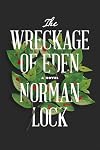
U.S. Army Chaplain Robert Winter had the misfortune of meeting the young Emily Dickinson, for whom he developed a lifelong attachment, one that endured years of separation while he served in several wars, his short marriage, and Emily’s determined resistance. The Wreckage of Eden is his narrative of their history and addressed to Emily. Winter himself decribes it as an argument in the case of Winter v. Dickinson, a sort of Airing of Grievances in their relationship.
Winter is the saddest show more sort of sad man, a chaplain who has lost his faith. He recounts his service in the Mexican War, the Mormon Rebellion, and at Harper’s Ferry, the abortive slave rebellion led by John Brown. In many ways, he is a man of his time, indifferent to the genocide of the indigenous tribes and while he may note the hypocrisy of calling atrocities by the enemy a massacre while calling our own atrocities a battle, nothing leads him to challenge the presumptions of Manifest Destiny.
He is honest in describing his relationship with Dickinson, a very assymmetric relationship. He is infatuated and made inarticulate by passion. She is oblivious and treats him as a friend and confidante. She is brilliant, her facility with language leaving him tongue-tied and resentful. The reader can only be relieved that Dickinson avoided what would have been a hideous marriage with a man who was made angry by her quicker, brighter wit.
Winter is also the Era of Good Feelings very own Zelig, living in Springfield, Illinois, and befriending Abe and Mary Lincoln. He takes a trip with his wife and has a conversation with a young Mark Twain. He meets Robert E. Lee and John Brown. The movers and shakers of the era show up everywhere in the book. His meeeting with John Brown the night before Brown is hung for his insurrection is critical because it helps him understand his role as a chaplain without faith.
I enjoyed the writing in The Wreckage of Eden. I think Norman Lock did a good job of evoking that time with his use of language. He also did a great job of mirroring the thoughts and phrasing of Dickinson. She came alive in the story.
Nearly ninety years ago, Miguel de Unamuno wrote about a priest who lost his faith but continued to serve his community, giving sermons, leading prayers, baptisms, and last rites while never betraying his loss of faith to the townspeople who got so much succor and security from their religion. Winter is another San Manuel Bueno, Martir, but a resentful martyr, not a willing one like Manuel and Lazaro, his friend who takes over for him after his death. John Brown makes an argument that San Manuel might have made, but for Winter, his continued service as a chaplain does not feel like that of a martyr for his flock, but more the kind of slogging in place of a person who made a bad career choice, but lacked the imagination to change.
I did not like Robert Winter, he does not hide his weaknesses and failings in his narrative, but I sure did like The Wreckage of Eden.
I received a copy of The Wreckage of Eden from the publisher.
The Wreckage of Eden at Bellevue Literary Press
Norman Lock author site
The American Novels series at Bellevue Literary Press
★★★★
https://tonstantweaderreviews.wordpress.com/2019/06/24/the-wreckage-of-eden-by-n... show less
Winter is the saddest show more sort of sad man, a chaplain who has lost his faith. He recounts his service in the Mexican War, the Mormon Rebellion, and at Harper’s Ferry, the abortive slave rebellion led by John Brown. In many ways, he is a man of his time, indifferent to the genocide of the indigenous tribes and while he may note the hypocrisy of calling atrocities by the enemy a massacre while calling our own atrocities a battle, nothing leads him to challenge the presumptions of Manifest Destiny.
He is honest in describing his relationship with Dickinson, a very assymmetric relationship. He is infatuated and made inarticulate by passion. She is oblivious and treats him as a friend and confidante. She is brilliant, her facility with language leaving him tongue-tied and resentful. The reader can only be relieved that Dickinson avoided what would have been a hideous marriage with a man who was made angry by her quicker, brighter wit.
Winter is also the Era of Good Feelings very own Zelig, living in Springfield, Illinois, and befriending Abe and Mary Lincoln. He takes a trip with his wife and has a conversation with a young Mark Twain. He meets Robert E. Lee and John Brown. The movers and shakers of the era show up everywhere in the book. His meeeting with John Brown the night before Brown is hung for his insurrection is critical because it helps him understand his role as a chaplain without faith.
I enjoyed the writing in The Wreckage of Eden. I think Norman Lock did a good job of evoking that time with his use of language. He also did a great job of mirroring the thoughts and phrasing of Dickinson. She came alive in the story.
Nearly ninety years ago, Miguel de Unamuno wrote about a priest who lost his faith but continued to serve his community, giving sermons, leading prayers, baptisms, and last rites while never betraying his loss of faith to the townspeople who got so much succor and security from their religion. Winter is another San Manuel Bueno, Martir, but a resentful martyr, not a willing one like Manuel and Lazaro, his friend who takes over for him after his death. John Brown makes an argument that San Manuel might have made, but for Winter, his continued service as a chaplain does not feel like that of a martyr for his flock, but more the kind of slogging in place of a person who made a bad career choice, but lacked the imagination to change.
I did not like Robert Winter, he does not hide his weaknesses and failings in his narrative, but I sure did like The Wreckage of Eden.
I received a copy of The Wreckage of Eden from the publisher.
The Wreckage of Eden at Bellevue Literary Press
Norman Lock author site
The American Novels series at Bellevue Literary Press
★★★★
https://tonstantweaderreviews.wordpress.com/2019/06/24/the-wreckage-of-eden-by-n... show less
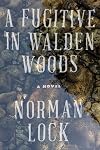
The latest installment in the author's American Novels Series, A FUGITIVE IN WALDEN WOODS looks at Henry David Thoreau's time at Walden Pond from a novel lens. Norman Lock introduces the reader to a character named Samuel Long, an escaped slave from a plantation in Virginia, who has been given refuge in a shack in the woods nearby to Thoreau's cabin. It is from Long's point of view that we experience New England as it was in the mid-nineteenth century.
Arriving in Concord, MA through the show more network of the Underground Railroad, Samuel is welcomed into the home of Ralph Waldo Emerson and his wife, and later introduced to his contemporaries. These are essentially a who's who of the Transcendentalism Club - Emerson, Thoreau, Bronson Alcott, Nathaniel Hawthorne, and many others. Samuel spends some time with each of them, and comments on his impressions of them as individuals and abolitionists. He also encounters tradespeople, such as the ice harvesters who undertake the dangerous task of collecting the frozen layer of Walden Pond for its eventual use as ice cubes. All the while, he and Thoreau talk about themes that would later make their way into his book WALDEN - neighbors, house construction, visitors, wildlife, the pond itself. As Thoreau is philosophizing, he uses Samuel as a kind of sounding board, and gradually Samuel gains the confidence to talk to this man, even challenging his points when the fugitive slave experience differs from that of his companion. Thoreau's meandering philosophy is in contrast to his lived experience of bondage and unimaginable suffering. This is a constant and recurring theme, and something that Samuel struggles with when interacting with just about every white person he meets. He recognizes and acknowledges their socioeconomic privilege and freedom of movement in comparison to his fragile status and complete and utter dependency.
As Samuel gets acquainted with Thoreau, so does the reader. He describes him as a dreamer, someone who bristles against social convention and expectation. He desires to understand the meaning of life, and partakes in experiments to understand what "living" means. Some of the events and dialogue are factually based, and others are fiction invented by the author but ringing as true. This is also the case with the other Transcendentalists. The audience learns of these men and women through Samuel's eyes, with his preconceptions and assumptions as well as his great capacity for learning and understanding. One thing that this book does brilliantly is portray these individuals as interesting and flawed individuals, from the perspective of one who has never encountered men like them before.
When Samuel accompanies Nathaniel Hawthorne to Boston via train, he meets with William Lloyd Garrison. A prominent abolitionist, he is the publisher of an anti-slavery magazine "The Liberator". At his office, Samuel tells his story of escaping from the plantation where he had toiled, how he severed his own hand to be able to flee his manacle, the circumstances under which he joined the Underground Railroad, and was eventually delivered to the Emerson home. His story is published, and leads to some interesting consequences.
Prior to this meeting, Samuel struggled with whether or not to participate in the abolition movement, and what role he might play. Would he be paraded around as an oddity - the negro who is an accomplished orator? He would rather live a quiet life, a decision that puts him in conflict with another escaped slave who was determined to return to the South and take up violent action against the institution of slavery. He eventually decides to participate in some consciousness-raising meetings and talk about his experiences. It's important to note that he decides never to show the audiences his welt-covered back, believing that people are willing to engage with slavery as an intellectual concept, but not as a concrete reality.
Norman Lock's A FUGITIVE IN WALDEN WOODS is a beautifully written, with heartbreaking tenderness and brutal savagery. You are well and truly transported to the Walden Pond with Thoreau, to Concord with Emerson, and Boston with Hawthorne. The author speaks to the differences between philosophy and lived experience, the horrors of slavery, and their long-lasting effects on both sides of the Mason-Dixon Line. Not a re-telling of WALDEN, but more of an engagement with it, this period in history is given a new perspective that speaks as clearly to that time as it does to ours. show less
Arriving in Concord, MA through the show more network of the Underground Railroad, Samuel is welcomed into the home of Ralph Waldo Emerson and his wife, and later introduced to his contemporaries. These are essentially a who's who of the Transcendentalism Club - Emerson, Thoreau, Bronson Alcott, Nathaniel Hawthorne, and many others. Samuel spends some time with each of them, and comments on his impressions of them as individuals and abolitionists. He also encounters tradespeople, such as the ice harvesters who undertake the dangerous task of collecting the frozen layer of Walden Pond for its eventual use as ice cubes. All the while, he and Thoreau talk about themes that would later make their way into his book WALDEN - neighbors, house construction, visitors, wildlife, the pond itself. As Thoreau is philosophizing, he uses Samuel as a kind of sounding board, and gradually Samuel gains the confidence to talk to this man, even challenging his points when the fugitive slave experience differs from that of his companion. Thoreau's meandering philosophy is in contrast to his lived experience of bondage and unimaginable suffering. This is a constant and recurring theme, and something that Samuel struggles with when interacting with just about every white person he meets. He recognizes and acknowledges their socioeconomic privilege and freedom of movement in comparison to his fragile status and complete and utter dependency.
As Samuel gets acquainted with Thoreau, so does the reader. He describes him as a dreamer, someone who bristles against social convention and expectation. He desires to understand the meaning of life, and partakes in experiments to understand what "living" means. Some of the events and dialogue are factually based, and others are fiction invented by the author but ringing as true. This is also the case with the other Transcendentalists. The audience learns of these men and women through Samuel's eyes, with his preconceptions and assumptions as well as his great capacity for learning and understanding. One thing that this book does brilliantly is portray these individuals as interesting and flawed individuals, from the perspective of one who has never encountered men like them before.
When Samuel accompanies Nathaniel Hawthorne to Boston via train, he meets with William Lloyd Garrison. A prominent abolitionist, he is the publisher of an anti-slavery magazine "The Liberator". At his office, Samuel tells his story of escaping from the plantation where he had toiled, how he severed his own hand to be able to flee his manacle, the circumstances under which he joined the Underground Railroad, and was eventually delivered to the Emerson home. His story is published, and leads to some interesting consequences.
Prior to this meeting, Samuel struggled with whether or not to participate in the abolition movement, and what role he might play. Would he be paraded around as an oddity - the negro who is an accomplished orator? He would rather live a quiet life, a decision that puts him in conflict with another escaped slave who was determined to return to the South and take up violent action against the institution of slavery. He eventually decides to participate in some consciousness-raising meetings and talk about his experiences. It's important to note that he decides never to show the audiences his welt-covered back, believing that people are willing to engage with slavery as an intellectual concept, but not as a concrete reality.
Norman Lock's A FUGITIVE IN WALDEN WOODS is a beautifully written, with heartbreaking tenderness and brutal savagery. You are well and truly transported to the Walden Pond with Thoreau, to Concord with Emerson, and Boston with Hawthorne. The author speaks to the differences between philosophy and lived experience, the horrors of slavery, and their long-lasting effects on both sides of the Mason-Dixon Line. Not a re-telling of WALDEN, but more of an engagement with it, this period in history is given a new perspective that speaks as clearly to that time as it does to ours. show less
This review was written for LibraryThing Early Reviewers.Lists
Awards


You May Also Like


Associated Authors
Statistics
- Works
- 26
- Also by
- 2
- Members
- 565
- Popularity
- #44,254
- Rating
- 3.7
- Reviews
- 157
- ISBNs
- 58
- Languages
- 2
