
Cynan Jones
Author of The Dig
About the Author
Works by Cynan Jones
"Murder, Magic, Merthings, More." 2 copies
The Edge of the Shoal 1 copy
Associated Works
Tagged
Common Knowledge
- Birthdate
- 1975
- Gender
- male
- Nationality
- UK
- Birthplace
- Aberaeron, Ceredigion, Wales, UK
- Associated Place (for map)
- Wales, UK
Members
Reviews
Cove by Cynan Jones
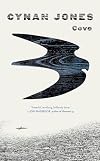
A raw, mesmerising, narrative poem, albeit disguised as prose.
A-lone, in a kayak, to scatter his father’s ashes.
A communion - with memories, with the elements.
Lightning!
A transformation in an instant - disconnected from everything, from himself.
A battle to survive - to get to safety, to return to “her” and their unborn child...
"If you disappear you will grow into a myth for them.
You will exist only as absence.
If you get back, you will exist as a legend."
Image: Calm before the storm. show more “Catch the Breeze” (west coast of Ireland) by Stephen McGuinness. (Source)
Injured and adrift without a paddle.
He swishes back and forth:
between life and death,
between tenses,
between “I” and “you”.
I too was at sea,
with little sense of time or distance,
his or mine.
Rippled memories recall my father’s ashes
as they caught the light,
like the stardust we’re made of.
Sparkling a startling final farewell,
as they fanned across the surface,
sinking slowly on their final journey.
Ashes to water.
And a stream of silent tears.
Salt water into fresh.
Communion and coalescence.
Distillation and transfiguration.
The circle of life.
Image: Alone in a boat, under threatening skies. “Mercy Seat”, by Stephen McGuinness. (Source)
Quotes
The book is written in short paragraphs, with extra space between each one. I’ve added line breaks to emphasise the poetry of it, but not changed any words.
“He swings the fish from the water…
It gasps, thrashes, drums.
Something rapid and primal,
ceremonial,
in the shallow of the open boat.”
“He’d had to go through so many possessions,
things that exploded with memories…
but it was the opposite with the ashes.
He was trying to hold away the fact that they knew nothing of what they were.”
“The water beneath him, suddenly aglut.
Sentinel somehow, with jellyfish.”
“His consciousness a snapped cord
his mind was trying to pull back together.”
“A sense of himself,
a fly trapped the wrong side of glass.”
“It is a spell.
They are a quick shape,
a liquid in their own right
through the black water,
bright spirits under him.” [dolphins]
“The sand is wet, intimate.”
“The smell of the jumper triggers something,
but it is like a piano key hitting strings that are gone.”
“A flock of jellyfish, like negligées.”
“A metallic sheen comes to the water, like cutlery.
Like metal much touched.
The white clouds glow, a sort of leaden at the edge.”
Image: A cove, a safe haven. “Inishowen, Donegal” by Stephen McGuinness. (Source)
Elephant in the boat?
It’s impossible to read this and not think of Hemingway’s The Old Man and the Sea (see my review HERE). But it’s unfair to both. Yes, this is also a poetic, multi-sensory, almost liturgical story about surviving alone at sea, while remembering loved ones back on land, but it is very much its own story, told in its own way. Also, Hemingway was adamant that "There isn't any symbolism” in his tale, whereas Jones explicitly mentions auguries, signs, and echoes, and the many likely candidates include a dolphin, doll, butterfly, wren, banner, and sunfish, as well as sunken towns and u-boats.
It may also be similar to the 2014 Robert Redford film, All Is Lost, but I’ve not watched it.
Celtic waters
Stephen McGuinness’ pictures echo my journey through Cynan Jones’ story. But McGuinness is Irish whereas Jones is Welsh. I hope they don’t mind: they’re both Celts, from lands where the sun sets over the sea, to the west. show less
A-lone, in a kayak, to scatter his father’s ashes.
A communion - with memories, with the elements.
Lightning!
A transformation in an instant - disconnected from everything, from himself.
A battle to survive - to get to safety, to return to “her” and their unborn child...
"If you disappear you will grow into a myth for them.
You will exist only as absence.
If you get back, you will exist as a legend."
Image: Calm before the storm. show more “Catch the Breeze” (west coast of Ireland) by Stephen McGuinness. (Source)
Injured and adrift without a paddle.
He swishes back and forth:
between life and death,
between tenses,
between “I” and “you”.
I too was at sea,
with little sense of time or distance,
his or mine.
Rippled memories recall my father’s ashes
as they caught the light,
like the stardust we’re made of.
Sparkling a startling final farewell,
as they fanned across the surface,
sinking slowly on their final journey.
Ashes to water.
And a stream of silent tears.
Salt water into fresh.
Communion and coalescence.
Distillation and transfiguration.
The circle of life.
Image: Alone in a boat, under threatening skies. “Mercy Seat”, by Stephen McGuinness. (Source)
Quotes
The book is written in short paragraphs, with extra space between each one. I’ve added line breaks to emphasise the poetry of it, but not changed any words.
“He swings the fish from the water…
It gasps, thrashes, drums.
Something rapid and primal,
ceremonial,
in the shallow of the open boat.”
“He’d had to go through so many possessions,
things that exploded with memories…
but it was the opposite with the ashes.
He was trying to hold away the fact that they knew nothing of what they were.”
“The water beneath him, suddenly aglut.
Sentinel somehow, with jellyfish.”
“His consciousness a snapped cord
his mind was trying to pull back together.”
“A sense of himself,
a fly trapped the wrong side of glass.”
“It is a spell.
They are a quick shape,
a liquid in their own right
through the black water,
bright spirits under him.” [dolphins]
“The sand is wet, intimate.”
“The smell of the jumper triggers something,
but it is like a piano key hitting strings that are gone.”
“A flock of jellyfish, like negligées.”
“A metallic sheen comes to the water, like cutlery.
Like metal much touched.
The white clouds glow, a sort of leaden at the edge.”
Image: A cove, a safe haven. “Inishowen, Donegal” by Stephen McGuinness. (Source)
Elephant in the boat?
It’s impossible to read this and not think of Hemingway’s The Old Man and the Sea (see my review HERE). But it’s unfair to both. Yes, this is also a poetic, multi-sensory, almost liturgical story about surviving alone at sea, while remembering loved ones back on land, but it is very much its own story, told in its own way. Also, Hemingway was adamant that "There isn't any symbolism” in his tale, whereas Jones explicitly mentions auguries, signs, and echoes, and the many likely candidates include a dolphin, doll, butterfly, wren, banner, and sunfish, as well as sunken towns and u-boats.
It may also be similar to the 2014 Robert Redford film, All Is Lost, but I’ve not watched it.
Celtic waters
Stephen McGuinness’ pictures echo my journey through Cynan Jones’ story. But McGuinness is Irish whereas Jones is Welsh. I hope they don’t mind: they’re both Celts, from lands where the sun sets over the sea, to the west. show less
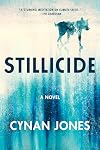
"People have always got on with it. Dystopia is as ridiculous a concept as Utopia."
This is a near-future post-apocalyptic/dystopian novel that, unlike many works of this genre, is quiet and lyrical. Climate change has caused water shortages, and water has become a valuable commodity. In a series of apparently unrelated vignettes we meet various characters, in various settings, each in more or less dire circumstances. The novel opens as a mercenary guard on the track carrying the "water show more train" to the city is sent to investigate a possible intruder along the tracks, with orders to shoot to kill if necessary. In other vignettes we meet a stray dog, two boys who adopt it, a nurse on a cancer ward, a reporter, an elderly couple who harvest limpets for food, the seashore now encroaching their home.
I liked this book a lot, and I think even those who are not fans of the dystopian/post-apocalyptic genre would find a lot to like here. The writing is beautiful, and part of the genius of the book is how it is put together with these unrelated parts that in the end, the author is able to pull together. A review on Amazon described it as "minimalist" and a "sparse apocalyptic slice of life," and these descriptions are apt. But it is very well-done.
And I learned a new word: "Stillicide--1. A continual dripping of water; 2. A right or duty relating to the collection of water from or onto adjacent land."
Recommended.
3 1/2 stars show less
This is a near-future post-apocalyptic/dystopian novel that, unlike many works of this genre, is quiet and lyrical. Climate change has caused water shortages, and water has become a valuable commodity. In a series of apparently unrelated vignettes we meet various characters, in various settings, each in more or less dire circumstances. The novel opens as a mercenary guard on the track carrying the "water show more train" to the city is sent to investigate a possible intruder along the tracks, with orders to shoot to kill if necessary. In other vignettes we meet a stray dog, two boys who adopt it, a nurse on a cancer ward, a reporter, an elderly couple who harvest limpets for food, the seashore now encroaching their home.
I liked this book a lot, and I think even those who are not fans of the dystopian/post-apocalyptic genre would find a lot to like here. The writing is beautiful, and part of the genius of the book is how it is put together with these unrelated parts that in the end, the author is able to pull together. A review on Amazon described it as "minimalist" and a "sparse apocalyptic slice of life," and these descriptions are apt. But it is very well-done.
And I learned a new word: "Stillicide--1. A continual dripping of water; 2. A right or duty relating to the collection of water from or onto adjacent land."
Recommended.
3 1/2 stars show less
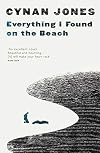
Cynan Jones is a talented young Welsh writer and this is the second of his books I have read after [b:The Dig|19102837|The Dig|Cynan Jones|https://images.gr-assets.com/books/1386012144s/19102837.jpg|27135563]. Once again, this is spare, bleak, poetic and visceral, and once again he is inhabiting the minds of people on the borders of society facing elemental struggles.
The book opens with a body being found on the beach, with wounds that suggest foul play, but we only discover its significance show more much later in the book.
The two main characters are Grzegorz, a Polish immigrant who works in an abattoir and is desperate to find enough money to move his young family out of an overcrowded shared house, and Holden (Hold) whose little money comes from fishing and shooting rabbits - he dreams of owning his own boat and creating a better life for his dead best friend's widow and her son.
Both are driven to take risks involving drug dealers to pursue these ambitions, and there is never much hope for either of them. What rescues the book from bleak savagery is the language, Jones's feeling for its Welsh coastal landscape and the depth of his characterisation, which includes giving equal weight to the thoughts of the Irish thugs hired by the drug dealers.
Like The Dig, this is a vividly realised story but not one for the easily shocked. show less
The book opens with a body being found on the beach, with wounds that suggest foul play, but we only discover its significance show more much later in the book.
The two main characters are Grzegorz, a Polish immigrant who works in an abattoir and is desperate to find enough money to move his young family out of an overcrowded shared house, and Holden (Hold) whose little money comes from fishing and shooting rabbits - he dreams of owning his own boat and creating a better life for his dead best friend's widow and her son.
Both are driven to take risks involving drug dealers to pursue these ambitions, and there is never much hope for either of them. What rescues the book from bleak savagery is the language, Jones's feeling for its Welsh coastal landscape and the depth of his characterisation, which includes giving equal weight to the thoughts of the Irish thugs hired by the drug dealers.
Like The Dig, this is a vividly realised story but not one for the easily shocked. show less
Cove by Cynan Jones
I can not forget this read. I refer to it in my head, I think about its stark, vividly limned images. I am so deeply glad Author Cynan wrote it. This is my 2021 Six-Stars-of-Five read.
Rating:5* 6 stars of five
Don't ever, ever think you're in a dark place again, is the primary message of this novella-cum-prose poem.
Our nameless point-of-view man is busy preparing to take his kayak out of the cove near his home. With his experienced preparations, catching a fish for his supper and with the material goods he needs to make the short trip comfortable, there is a heaviness. The foreboding the above passage evokes in me is matched by the fact that he's there to scatter his father's ashes. But the world doesn't have time to mourn:
These passages make me think I live in Author Cynan's head. I see and hear them in realtime. I am deeply unsettled...what is coming must be difficult because these quotidian sensations are so powerful. The ashes, the small moments of daily reality going on despite the huge gaping hole of his father's death...going out of the shelter of this homely cove, noticing its real-world comforts...
...
...
...I've read your books before, Author Cynan, something terrible this way comes.
A moment truly as before-and-after as it is portrayed to be: A lightning strike.
While alone at sea. In a kayak. With a few hours' trip supplies.
Waking up alive, though after how long he doesn't know and with the arm that conducted the current dead (the fern-like pattern of Lichtenberg figures disfiguring his now-useless hand and arm), he inventories his few supplies and begins preparations to survive. It is grueling to read and almost reeks of experience, which I hope is second-hand:
That image is both terrifying to me, and gorgeous to read. What a superbly wrought way to describe the sensation of losing a piece of yourself, your experience. Where one expects resonant musical pleasure, there is the presence of silence and not just the absence of sound.
There is a miserable fight, with the good luck of an itchy sunfish rubbing against his kayak and beneficently steering it towards land; there is a moment of aesthetic joy as night luminescent seas trace the presence of his hand; there is so much work and so much pain:
That's effective self-talk for a man who's been through some huge change. "They" are the woman pregnant with his child, and the unborn person itself. For, as the sea's many thefts (water, skin) bite ever deeper, he needs this goal to focus on, and needs also his dead father's ghost in his own head reminding him how to do this, how to survive.
An image of fatherhood that I am so unspeakably glad to see in fiction, littered as it is with cheating lying beating abusing men.
The ordeal continues. The night and the day and then there is land...land within sight...with lights...and he MacGyvers up a sail to speed his bonny boat...
...
...into a squall.
Here is a man driven to Be There, never to leave, always support and defend, finally driven to his uttermost extreme in search of survival.
And that is where we end.
I close my remarks by noting that this is the book I wish The Old Man and the Sea had been, but was not. show less
Rating:
Don't ever, ever think you're in a dark place again, is the primary message of this novella-cum-prose poem.
He is holding his hands in the water, rubbing the blood from them, when the hairs on his arms stand up. The sway briefly, like seaweed in the current. Then lie down again.show more
He looks
up. A strange ruffle come across the surface.
The birds had lifted suddenly & gone away. As if there were some signal. They are flecks now, a hiatus disappearing against the light off the sea.
He is far enough out for the land to have paled in view.
Our nameless point-of-view man is busy preparing to take his kayak out of the cove near his home. With his experienced preparations, catching a fish for his supper and with the material goods he needs to make the short trip comfortable, there is a heaviness. The foreboding the above passage evokes in me is matched by the fact that he's there to scatter his father's ashes. But the world doesn't have time to mourn:
There was a piping of oystercatchers, a clap of water as a fish jumped. He saw it for a moment, a silver nail. A thing deliberately, for a brief astounding moment, broken from its element.
These passages make me think I live in Author Cynan's head. I see and hear them in realtime. I am deeply unsettled...what is coming must be difficult because these quotidian sensations are so powerful. The ashes, the small moments of daily reality going on despite the huge gaping hole of his father's death...going out of the shelter of this homely cove, noticing its real-world comforts...
...
...
...I've read your books before, Author Cynan, something terrible this way comes.
A moment truly as before-and-after as it is portrayed to be: A lightning strike.
While alone at sea. In a kayak. With a few hours' trip supplies.
Waking up alive, though after how long he doesn't know and with the arm that conducted the current dead (the fern-like pattern of Lichtenberg figures disfiguring his now-useless hand and arm), he inventories his few supplies and begins preparations to survive. It is grueling to read and almost reeks of experience, which I hope is second-hand:
He takes off the buoyancy aid & pulls on the thick sweater, useless arm first. The smell of the sweater triggers something, but it is like a piano key hitting strings that are gone.
That image is both terrifying to me, and gorgeous to read. What a superbly wrought way to describe the sensation of losing a piece of yourself, your experience. Where one expects resonant musical pleasure, there is the presence of silence and not just the absence of sound.
There is a miserable fight, with the good luck of an itchy sunfish rubbing against his kayak and beneficently steering it towards land; there is a moment of aesthetic joy as night luminescent seas trace the presence of his hand; there is so much work and so much pain:
If you disappear you will grow into a myth for them. You will exist only as an absence. If you get back, you will exist as a legend.
That's effective self-talk for a man who's been through some huge change. "They" are the woman pregnant with his child, and the unborn person itself. For, as the sea's many thefts (water, skin) bite ever deeper, he needs this goal to focus on, and needs also his dead father's ghost in his own head reminding him how to do this, how to survive.
An image of fatherhood that I am so unspeakably glad to see in fiction, littered as it is with cheating lying beating abusing men.
The ordeal continues. The night and the day and then there is land...land within sight...with lights...and he MacGyvers up a sail to speed his bonny boat...
...
...into a squall.
All of his life he's had a recurring dream: the car leaves the road. It is never the impact that terrifies him, wakes him. His fear comes the moment he feels the car go.
His life does not pass before his eyes. There is even a point he feels calm. But then he sees the faces of the people he loves. He sees their faces as they see him go.
Here is a man driven to Be There, never to leave, always support and defend, finally driven to his uttermost extreme in search of survival.
And that is where we end.
I close my remarks by noting that this is the book I wish The Old Man and the Sea had been, but was not. show less
Lists
Awards


You May Also Like


Associated Authors
Statistics
- Works
- 15
- Also by
- 1
- Members
- 734
- Popularity
- #34,611
- Rating
- 3.8
- Reviews
- 44
- ISBNs
- 63
- Languages
- 7
- Favorited
- 3