
Carys Davies
Author of Clear
Works by Carys Davies
Precious - short story 1 copy
Associated Works
A Paper Heart Is Beating, A Paper Boat Sets Sail: Fish Anthology 2007 (2007) — Contributor — 4 copies
Tagged
Common Knowledge
- Birthdate
- 1964
- Gender
- female
- Education
- St. Anne's College, Oxford University [Modern Languages]
- Occupations
- journalist
novelist - Organizations
- Fellow of the Royal Society of Literature
Folio Academy - Awards and honors
- Royal Society of Literature's V.S. Pritchett Prize
Society of Authors' Olive Cook Short Story Award
Northern Writers' Award
Cullman Center for Scholars and Writers fellowship - Nationality
- UK (Wales)
- Birthplace
- Llangollen, Wales, UK
- Places of residence
- New York, USA
Chicago, Illinois, USA
Edinburgh, Scotland, UK
Newport, South Wales
Midlands, England, UK
Lancaster, Lancashire, England, UK - Associated Place (for map)
- UK
Members
Reviews
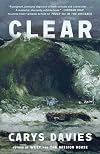
The Publisher Says: A stunning, exquisite novel from an award-winning writer about a minister dispatched to a remote island off of Scotland to “clear” the last remaining inhabitant, who has no intention of leaving—an unforgettable tale of resilience, change, and hope.
John, an impoverished Scottish minister, has accepted a job evicting the lone remaining occupant of an island north of Scotland—Ivar, who has been living alone for decades, with only the animals and the sea for company. show more Though his wife, Mary, has serious misgivings about the errand, he decides to go anyway, setting in motion a chain of events that neither he nor Mary could have predicted.
Shortly after John reaches the island, he falls down a cliff and is found, unconscious and badly injured, by Ivar who takes him home and tends to his wounds. The two men do not speak a common language, but as John builds a dictionary of Ivar’s world, they learn to communicate and, as Ivar sees himself for the first time in decades reflected through the eyes of another person, they build a fragile, unusual connection.
Unfolding in the 1840s in the final stages of the infamous Scottish Clearances—which saw whole communities of the rural poor driven off the land in a relentless program of forced evictions—this singular, beautiful, deeply surprising novel explores the differences and connections between us, the way history shapes our deepest convictions, and how the human spirit can survive despite all odds. Moving and unpredictable, sensitive and spellbinding, Clear is a profound and pleasurable read.
I RECEIVED A DRC FROM THE PUBLISHER VIA NETGALLEY. THANK YOU.
My Review: What a simple, joyful story. A pair of souls are separated and so each is dissatisfied with Life. Neither knows the other exists. As the wheels of Fate catch and shudder away in the eternal darkness of chimrie (Heaven in Norn), bringing Ivar the endling of his people, and John the prodigal son of the Presbyterian faith, into their close communion, the story moves its calm inexorable way forward. Every time Ivar speaks in his dying tongue (Norn went extinct around 1850 in reality), John strains to learn what his words mean, what they describe and therefore come to form in John's mind.
The fact that John, clergyman, does this work is very telling. That he does it with the man he's been sent to dispossess of his lifelong home is...crucial. That he does this work with this man after taking this job to support Mary, his newly-wed wife, left behind on mainland Scotland; that he has sided with the anti-capitalists in the Disruption of 1843 and reluctantly took this job anyway; all these details add up to an ending that I found deeply moving, satisfying, and intensely soothing. I'm not going to spoil it for you because Author Carys makes it into quite the reveal.
I do not for a second believe it could have ended this way. I am sure it could have happened this way, though. But...well...1843, Presbyterians, human jealousy...it was a huge stretch for me to get over even one of those hurdles to accept that situation as presented as the ending of the story.
I will not downgrade this beautifully written fairy tale for lacking verisimilitude. I will go with the logic that Author Carys employs, and recommend the same course to you in your own read of the story.
Which, it being a short, fast read with the kind of language use that makes me wish this is what y'all called poetry, should be done soonest.
*NB: the blogged review has links to sources of more information show less
John, an impoverished Scottish minister, has accepted a job evicting the lone remaining occupant of an island north of Scotland—Ivar, who has been living alone for decades, with only the animals and the sea for company. show more Though his wife, Mary, has serious misgivings about the errand, he decides to go anyway, setting in motion a chain of events that neither he nor Mary could have predicted.
Shortly after John reaches the island, he falls down a cliff and is found, unconscious and badly injured, by Ivar who takes him home and tends to his wounds. The two men do not speak a common language, but as John builds a dictionary of Ivar’s world, they learn to communicate and, as Ivar sees himself for the first time in decades reflected through the eyes of another person, they build a fragile, unusual connection.
Unfolding in the 1840s in the final stages of the infamous Scottish Clearances—which saw whole communities of the rural poor driven off the land in a relentless program of forced evictions—this singular, beautiful, deeply surprising novel explores the differences and connections between us, the way history shapes our deepest convictions, and how the human spirit can survive despite all odds. Moving and unpredictable, sensitive and spellbinding, Clear is a profound and pleasurable read.
I RECEIVED A DRC FROM THE PUBLISHER VIA NETGALLEY. THANK YOU.
My Review: What a simple, joyful story. A pair of souls are separated and so each is dissatisfied with Life. Neither knows the other exists. As the wheels of Fate catch and shudder away in the eternal darkness of chimrie (Heaven in Norn), bringing Ivar the endling of his people, and John the prodigal son of the Presbyterian faith, into their close communion, the story moves its calm inexorable way forward. Every time Ivar speaks in his dying tongue (Norn went extinct around 1850 in reality), John strains to learn what his words mean, what they describe and therefore come to form in John's mind.
The fact that John, clergyman, does this work is very telling. That he does it with the man he's been sent to dispossess of his lifelong home is...crucial. That he does this work with this man after taking this job to support Mary, his newly-wed wife, left behind on mainland Scotland; that he has sided with the anti-capitalists in the Disruption of 1843 and reluctantly took this job anyway; all these details add up to an ending that I found deeply moving, satisfying, and intensely soothing. I'm not going to spoil it for you because Author Carys makes it into quite the reveal.
I do not for a second believe it could have ended this way. I am sure it could have happened this way, though. But...well...1843, Presbyterians, human jealousy...it was a huge stretch for me to get over even one of those hurdles to accept that situation as presented as the ending of the story.
I will not downgrade this beautifully written fairy tale for lacking verisimilitude. I will go with the logic that Author Carys employs, and recommend the same course to you in your own read of the story.
Which, it being a short, fast read with the kind of language use that makes me wish this is what y'all called poetry, should be done soonest.
*NB: the blogged review has links to sources of more information show less

This is a lovely book of short, snippy chapters, delving into the Shetlands and their now lost language.
John Ferguson, a Scottish minister of a rebellious 19th-century Scottish church sect who finds himself out of work takes the job to clear the sole resident off an isolated island. Ivar lives on an isolated island past the Shetland Islands. He was born there and has lived alone there his adult life. But the island has an owner who wants to clear off Ivar and raise sheep there. John's job show more is to convey the message. But he's not the right person for this job. Instead of reaching Ivar, Ivar finds John, near death, and coaxes him back to health. The two can't talk because John speaks English and Ivar speaks his Norn, a Shetland and Orkney island language of Scandinavian descent (that has now died out).
As a reader, the scenes flip quickly, from John, to Ivar, to John's wife, Mary, left alone near Edinburgh, back to John again. Bearded, gray-haired rustic rough Ivar does his chores, knits and tenderly cares for John. Mary worries about him. John is clueless but comes to admire Ivar and tries to learn his language. The island itself just hovers, grass covered, wind-swept, alone in the cold sea. I have a thing for islands.
This little book strikes a lot of notes, the main ones being it's both interesting and fun, with endearing characters. It's also quick, very efficient, yet full of historical information, with an exploration the Norn language. It made for some really enjoyable reading. An easy recommendation.
2025
https://www.librarything.com/topic/372264#8967225 show less
John Ferguson, a Scottish minister of a rebellious 19th-century Scottish church sect who finds himself out of work takes the job to clear the sole resident off an isolated island. Ivar lives on an isolated island past the Shetland Islands. He was born there and has lived alone there his adult life. But the island has an owner who wants to clear off Ivar and raise sheep there. John's job show more is to convey the message. But he's not the right person for this job. Instead of reaching Ivar, Ivar finds John, near death, and coaxes him back to health. The two can't talk because John speaks English and Ivar speaks his Norn, a Shetland and Orkney island language of Scandinavian descent (that has now died out).
As a reader, the scenes flip quickly, from John, to Ivar, to John's wife, Mary, left alone near Edinburgh, back to John again. Bearded, gray-haired rustic rough Ivar does his chores, knits and tenderly cares for John. Mary worries about him. John is clueless but comes to admire Ivar and tries to learn his language. The island itself just hovers, grass covered, wind-swept, alone in the cold sea. I have a thing for islands.
This little book strikes a lot of notes, the main ones being it's both interesting and fun, with endearing characters. It's also quick, very efficient, yet full of historical information, with an exploration the Norn language. It made for some really enjoyable reading. An easy recommendation.
2025
https://www.librarything.com/topic/372264#8967225 show less
West by Carys Davies
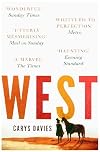
In the early years of the nineteenth century Cyrus Bellman leaves his farm and his daughter in Pennsylvania to head west. He wears his thick woollen coat and his brand new stovepipe hat (all the better to impress any Native Americans he might encounter). As trade goods he takes his dead wife's blouse, her steel knitting needles, her copper thimble and a tin trunk full of beads - objects are important in this book. All because after reading a newspaper account of the discovery of the bones of show more massive and unknown creatures in a Kentucky bog, Bellman's mind will not let go of the conviction that the creatures must be alive somewhere in the relatively unexplored West, and he is determined to find them. Perhaps not such a strange conviction in an age when the idea of extinction itself was relatively new.
The novel alternates from the viewpoints of Cyrus and his guide (an unfortunately named Shawnee boy called Old Woman From a Distance) in the West and Cyrus's ten year old daughter Bess who has been left behind with her Aunt Julie in Pennsylvania. Each of these three characters tries to make sense of the world in which they find themselves, with Bess facing dangers at home no less real than those faced by her father.
Carys Matthews won thé Wales Book of the Year Fiction Award in 2019 and was a worthy winner in my opinion. (I don't know why L.T. seems to think she is Australian - it doesn't mention anything about Australia on her own website.) With sparse prose and each word carefully placed, this short book – more of a novella rather than a novel – is beautifully written and lays bare the unexpressed emotions of Bess and her father.
Highly recommended. show less
The giant beasts drifted across his mind like the vast creature-shaped clouds he saw when he stood in the yard behind the house and tipped his head up to the sky. When he closed his eyes, they moved behind the lids in the darkness, slowly, silently, as if through water—they walked and they drifted, pictures continually blooming in his imagination and then vanishing into the blackness beyond it, where he could not grasp them, the only thing left in his head the thought of them being alive and perambulating out there in the unknown, out there in the west beyond the United States in some kind of wilderness of rivers and trees and plains and mountains and there to behold with your own two eyes if you could just get yourself out there and find them.
The novel alternates from the viewpoints of Cyrus and his guide (an unfortunately named Shawnee boy called Old Woman From a Distance) in the West and Cyrus's ten year old daughter Bess who has been left behind with her Aunt Julie in Pennsylvania. Each of these three characters tries to make sense of the world in which they find themselves, with Bess facing dangers at home no less real than those faced by her father.
Carys Matthews won thé Wales Book of the Year Fiction Award in 2019 and was a worthy winner in my opinion. (I don't know why L.T. seems to think she is Australian - it doesn't mention anything about Australia on her own website.) With sparse prose and each word carefully placed, this short book – more of a novella rather than a novel – is beautifully written and lays bare the unexpressed emotions of Bess and her father.
Highly recommended. show less
Rating: 4* of five
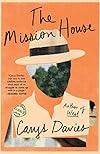
The Publisher Says: In The Mission House, Hilary Byrd flees his demons and the dark undercurrents of contemporary life in England for a former British hill station in south India. Charmed by the foreignness of his new surroundings and by the familiarity of everything the British have left behind, he finds solace in life’s simple pleasures, travelling by rickshaw around the small town with his driver Jamshed and staying in a mission house beside the local presbytery where, show more after a chance meeting, the Padre and his adoptive daughter Priscilla take Hilary under their wing.
The Padre is concerned for Priscilla’s future, and as Hilary’s friendship with the young woman grows, he begins to wonder whether his purpose lies in this new relationship. But religious tensions are brewing and the mission house may not be the safe haven it seems
I RECEIVED A DRC FROM THE PUBLISHER VIA NETGALLEY. THANK YOU.
My Review: Hilary Byrd is coming unglued. He's in the early stages of a mental breakdown, he's fast departing the middle-aged years with their gradual loss of the pleasant illusion of a limitless future, and he's at odds with modern England at every turn. His rock of a sister can't seem to save him from this sense of being cut off, so for once in his life he takes a decision. He decides, about his own life's direction, that he will go Find Himself in India.
She disapproves of this, really for quite sensible reasons, but the time to be sensible is past.
I was ready, at that point, to stop reading for good. After all, I liked—a lot—but didn't love Author Carys's novella West, with its gorgeous sentences and its superbly concentrated plotting. I thought this read would be a similar exercise. So I put it down at this rather mundane point, and didn't pick it up until I read this year's glorious paean to Love, and lovingkindness, Clear.
This turbocharged my willingness to look further into this take on self-discovery through travel to "exotic" locale...a drearily bourgeois genre that I really, really do not like. Elizabeth Gilbert and Peter Mayles ruined it for me with their icky Othering search for "Authenticity" which comes across to me in this elder stage of my life as "authentoxicity." I am shocked at anyone, in the twenty-first century, who can make it all the way through a story like those without thinking, "interrogate your privilege, or at the very least recognize it!" That is, of course, the person of the Twenties talking to people of the Nineties...societal advances do not travel against time's arrow.
But this story isn't of its time...its time is now...nor is it about another time, it's set now. Just not here. Ooty, the old British "hill station" where the book is set, is in South India. Are your feelies itching as much as mine right now? I mean...hill station! That really übercolonial concept of "place the colonizers go to escape the commonfolk when it gets too hot." And a British guy rents a mission house, where the imperialists of the spirit retired from their efforts to screw up the indigenous population's relationship to their own souls with the caustic bleach of christiainty!
The icks are building steadily.
This, then, was not the most satifying of follow-up reads to my joyously absorbed Clear. I'm not revealing my dark corners when I say that all things christian leave me coldly hostile. Hilary isn't much of a christian, demonstrating a glancing awareness of but no familiarity with the mythos. His occupancy of a younger colonialist man's living quarters that were built as, and still serve as, a locus for slopping this terrible blighting thought pollution all over poor India (which, not coincidentally, has its own history of exporting religious intolerance). That young man's rush home to Canada is, permaybehaps, intended to serve as a kind of Divine Will's invitation for void-of-course Hilary to come be a white savior. I got that vibe as his relationship with Priscilla deepened, mostly because of "the Padre," who I took against from giddy-up to whoa.
Nonetheless, I can say that my tonal twangs where I was likely meant to thrum instead, were idiosyncratic to me. I think a person less repulsed by christian overtones might not even see them in this story. My discomfort with the ableist misogyny, the colonialist-Finding-Himself in the former colony, and that really terrible Padre, means all my stars are for the beautiful sentences, unfolded with the inevitability of flower petals obeying Bernoulli's spiral.
Not my most resounding recommendation, I fear. show less
The Publisher Says: In The Mission House, Hilary Byrd flees his demons and the dark undercurrents of contemporary life in England for a former British hill station in south India. Charmed by the foreignness of his new surroundings and by the familiarity of everything the British have left behind, he finds solace in life’s simple pleasures, travelling by rickshaw around the small town with his driver Jamshed and staying in a mission house beside the local presbytery where, show more after a chance meeting, the Padre and his adoptive daughter Priscilla take Hilary under their wing.
The Padre is concerned for Priscilla’s future, and as Hilary’s friendship with the young woman grows, he begins to wonder whether his purpose lies in this new relationship. But religious tensions are brewing and the mission house may not be the safe haven it seems
I RECEIVED A DRC FROM THE PUBLISHER VIA NETGALLEY. THANK YOU.
My Review: Hilary Byrd is coming unglued. He's in the early stages of a mental breakdown, he's fast departing the middle-aged years with their gradual loss of the pleasant illusion of a limitless future, and he's at odds with modern England at every turn. His rock of a sister can't seem to save him from this sense of being cut off, so for once in his life he takes a decision. He decides, about his own life's direction, that he will go Find Himself in India.
She disapproves of this, really for quite sensible reasons, but the time to be sensible is past.
I was ready, at that point, to stop reading for good. After all, I liked—a lot—but didn't love Author Carys's novella West, with its gorgeous sentences and its superbly concentrated plotting. I thought this read would be a similar exercise. So I put it down at this rather mundane point, and didn't pick it up until I read this year's glorious paean to Love, and lovingkindness, Clear.
This turbocharged my willingness to look further into this take on self-discovery through travel to "exotic" locale...a drearily bourgeois genre that I really, really do not like. Elizabeth Gilbert and Peter Mayles ruined it for me with their icky Othering search for "Authenticity" which comes across to me in this elder stage of my life as "authentoxicity." I am shocked at anyone, in the twenty-first century, who can make it all the way through a story like those without thinking, "interrogate your privilege, or at the very least recognize it!" That is, of course, the person of the Twenties talking to people of the Nineties...societal advances do not travel against time's arrow.
But this story isn't of its time...its time is now...nor is it about another time, it's set now. Just not here. Ooty, the old British "hill station" where the book is set, is in South India. Are your feelies itching as much as mine right now? I mean...hill station! That really übercolonial concept of "place the colonizers go to escape the commonfolk when it gets too hot." And a British guy rents a mission house, where the imperialists of the spirit retired from their efforts to screw up the indigenous population's relationship to their own souls with the caustic bleach of christiainty!
The icks are building steadily.
This, then, was not the most satifying of follow-up reads to my joyously absorbed Clear. I'm not revealing my dark corners when I say that all things christian leave me coldly hostile. Hilary isn't much of a christian, demonstrating a glancing awareness of but no familiarity with the mythos. His occupancy of a younger colonialist man's living quarters that were built as, and still serve as, a locus for slopping this terrible blighting thought pollution all over poor India (which, not coincidentally, has its own history of exporting religious intolerance). That young man's rush home to Canada is, permaybehaps, intended to serve as a kind of Divine Will's invitation for void-of-course Hilary to come be a white savior. I got that vibe as his relationship with Priscilla deepened, mostly because of "the Padre," who I took against from giddy-up to whoa.
Nonetheless, I can say that my tonal twangs where I was likely meant to thrum instead, were idiosyncratic to me. I think a person less repulsed by christian overtones might not even see them in this story. My discomfort with the ableist misogyny, the colonialist-Finding-Himself in the former colony, and that really terrible Padre, means all my stars are for the beautiful sentences, unfolded with the inevitability of flower petals obeying Bernoulli's spiral.
Not my most resounding recommendation, I fear. show less
Lists
Awards


You May Also Like


Associated Authors
Statistics
- Works
- 7
- Also by
- 2
- Members
- 1,504
- Popularity
- #17,082
- Rating
- 3.9
- Reviews
- 125
- ISBNs
- 62
- Languages
- 8
- Favorited
- 1