
Matthew Harffy
Author of The Serpent Sword (The Bernicia Chronicles) (Volume 1)
About the Author
Image credit: Matthew Harffy
Series
Works by Matthew Harffy
Tagged
Common Knowledge
- Gender
- male
- Occupations
- author
English teacher
translator
vocalist - Places of residence
- Northumberland, England, UK
Spain
Wiltshire, England, UK - Associated Place (for map)
- England, UK
Members
Reviews
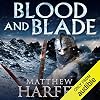
‘Blood and Blade’ features a blend of quality battles, tense encounters, and some decent drama.
I liked it in the most part, but as with many historical novels, the author puts so much effort in getting the history elements correct that essential creative writing skills are neglected. Main problem being too much ‘telling’ and not enough ‘showing’. Don’t tell the reader that Beobrand ‘seemed mollified’ – show *how* he seemed with action, or body language, or a facial show more expression.
Adverb overuse is another evil, and the biggest problem with adverbs is that they ‘tell’. For example, when a male character ‘made his way quietly”, this tells us how the character got from A to B but we don’t see it. He ‘crept’, for example, not only ‘shows’ the action, it flows better because it’s more concise.
The adverb in ‘shifted uncomfortably’ isn’t necessary, as ‘shifted’ alone implies the discomfort.
Adverbs are at their most superfluous with this kind of thing: ‘more quickly’ and ‘more tightly’, whereas ‘quicker’ and ‘tighter’ convey the meaning with a concise verb.
Adverbs and ‘telling’ are blatant in instances like these: ‘walked purposefully’, which could be ‘shown’ with ‘strode’ or ‘marched’, and ‘He stepped quickly forward’, when ‘He darted’ would’ve ‘shown’ the action. There’s always a stronger verb than ‘walked’, all of which do not require any help from adverbs.
To tell the reader that ‘The man was clearly distressed’ is ‘telling’ at its worst. In fiction, if you use ‘clearly’ or ‘obviously’, be assured that you’re not ‘showing’ the reader anything.
Two style issues that irritated me are the overuse of ‘then’ (to state what happens next), and ‘had’ (past perfect).
To keep using ‘then’ is lazy and unimaginative. It’s fine in children’s books, but for gritty historical fiction I expect more imagination. Most can be cut, the rest replaced.
The frequent use of ‘had’ in the past perfect tense is something all authors should avoid, as it reports on the scene as opposed to taking the reader into the action as it unfolds. The odd one is inevitable, but in this book it’s consistent, even though it’s easy to cut them down.
For one thing, this narrative is in the past tense, so ‘had’ should only be used if a sentence sounds odd without it. For example, ‘He had said’ works fine as ‘he said’ because ‘said’ is in the past tense. ‘She had sat down’ works better as ‘She sat down’ because ‘sat’ is past tense. If a scene that’s past is being recalled, all that’s needed is to inform the reader that these events have already happened, after which the frequent use of ‘had’ is unnecessary.
In this novel, we get the likes of ‘had begun’ and ‘had run’, which annoys and baffles me when ‘began’ and ‘ran’ are available.
On the plus side, this author uses some excellent similes. I was impressed with his creativity in this department. Also, he recreates the period well, making me feel like I’m in the seventh century.
Despite the criticisms, I liked this novel well enough to read the next in the series. show less
I liked it in the most part, but as with many historical novels, the author puts so much effort in getting the history elements correct that essential creative writing skills are neglected. Main problem being too much ‘telling’ and not enough ‘showing’. Don’t tell the reader that Beobrand ‘seemed mollified’ – show *how* he seemed with action, or body language, or a facial show more expression.
Adverb overuse is another evil, and the biggest problem with adverbs is that they ‘tell’. For example, when a male character ‘made his way quietly”, this tells us how the character got from A to B but we don’t see it. He ‘crept’, for example, not only ‘shows’ the action, it flows better because it’s more concise.
The adverb in ‘shifted uncomfortably’ isn’t necessary, as ‘shifted’ alone implies the discomfort.
Adverbs are at their most superfluous with this kind of thing: ‘more quickly’ and ‘more tightly’, whereas ‘quicker’ and ‘tighter’ convey the meaning with a concise verb.
Adverbs and ‘telling’ are blatant in instances like these: ‘walked purposefully’, which could be ‘shown’ with ‘strode’ or ‘marched’, and ‘He stepped quickly forward’, when ‘He darted’ would’ve ‘shown’ the action. There’s always a stronger verb than ‘walked’, all of which do not require any help from adverbs.
To tell the reader that ‘The man was clearly distressed’ is ‘telling’ at its worst. In fiction, if you use ‘clearly’ or ‘obviously’, be assured that you’re not ‘showing’ the reader anything.
Two style issues that irritated me are the overuse of ‘then’ (to state what happens next), and ‘had’ (past perfect).
To keep using ‘then’ is lazy and unimaginative. It’s fine in children’s books, but for gritty historical fiction I expect more imagination. Most can be cut, the rest replaced.
The frequent use of ‘had’ in the past perfect tense is something all authors should avoid, as it reports on the scene as opposed to taking the reader into the action as it unfolds. The odd one is inevitable, but in this book it’s consistent, even though it’s easy to cut them down.
For one thing, this narrative is in the past tense, so ‘had’ should only be used if a sentence sounds odd without it. For example, ‘He had said’ works fine as ‘he said’ because ‘said’ is in the past tense. ‘She had sat down’ works better as ‘She sat down’ because ‘sat’ is past tense. If a scene that’s past is being recalled, all that’s needed is to inform the reader that these events have already happened, after which the frequent use of ‘had’ is unnecessary.
In this novel, we get the likes of ‘had begun’ and ‘had run’, which annoys and baffles me when ‘began’ and ‘ran’ are available.
On the plus side, this author uses some excellent similes. I was impressed with his creativity in this department. Also, he recreates the period well, making me feel like I’m in the seventh century.
Despite the criticisms, I liked this novel well enough to read the next in the series. show less
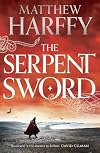
This is the first in a series of novels set in early 7th century Anglo-Saxon England. Beobrand is a young warrior from Kent who, seeking to avenge his murdered brother, now finds himself in the north of the country in the kingdom of Bernicia (the northern half of what would later be Northumbria). This is a time of struggle between the Saxons and the "Waelisc", or Celts, and between emerging Christianity and the old Celtic and Saxon gods. The atmosphere in this feels a lot like Bernard show more Cornwell's Uhtred series, though that is set some three centuries later. While I have got slightly tired of the latter series over the years due to the endless setpiece battle scenes, The Serpent Sword feels like a more plot-driven book and Beobrand is a more sympathetic central character (after an initial morally dubious sequence and a horrible murder and rape incident in which he is peripherally involved and fails to prevent). I will pursue this series. show less
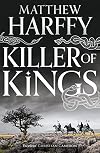
This is the fourth in the author's series of novels set in 7th century England featuring Beobrand, an originally Kentish thane who is now in service of King Oswald of Northumbria. Here he is charged with delivering some relics to King Sigeberht of East Anglia. However, he finds that Sigeberht has resigned his throne to become a monk and passed it to his rather inadequate relative Ecgric, who then has to attempt to defend his people against an invasion by the pagan King Penda of Mercia. show more Beobrand and his gesithas fight in the shieldwall alongside the East Anglians but suffer a crushing defeat. Beobrand is rescued from the slaughter by his old friend Acennan, as his other gesithas all seem to have perished in the fighting.
I felt that the plot rather lost impetus after this battle and I got a little confused temporarily about the timeline. Much of the rest of the plot was taken up by Beobrand’s pursuit of and vengeance against Wybert, who killed our hero’s wife Sunniva in the first novel in the series. Despite this slight unevenness, I enjoyed this entry in the series, and will continue to pursue it - there was a gap of over two and half years between my reading of books 3 and 4 and it will be much less time before I read the next one.
One final small point - I feel that this series could do with a glossary of terms, as well as the existing one listing place names with their modern equivalents. show less
I felt that the plot rather lost impetus after this battle and I got a little confused temporarily about the timeline. Much of the rest of the plot was taken up by Beobrand’s pursuit of and vengeance against Wybert, who killed our hero’s wife Sunniva in the first novel in the series. Despite this slight unevenness, I enjoyed this entry in the series, and will continue to pursue it - there was a gap of over two and half years between my reading of books 3 and 4 and it will be much less time before I read the next one.
One final small point - I feel that this series could do with a glossary of terms, as well as the existing one listing place names with their modern equivalents. show less
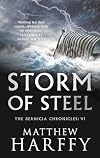
‘Storm of Steel’ features a blend of quality battles, tense encounters, and some decent drama; however, of Books 1–6, I feel this is the weakest in the series. I liked it in parts rather than on the whole.
Like with many historical novels I’ve read, the author puts so much effort in getting the history elements correct that essential creative writing skills are neglected. Main problem being too much ‘telling’ and not enough ‘showing’. Don’t tell the reader that a character show more ‘was confused’ – show his confusion with action, or body language, or a facial expression.
Adverb overuse is another evil, and the biggest problem with adverbs is they ‘tell’. For example, at one point we’re told that someone ‘walked determinedly’, which tells us the character got from A to B but we don’t see it. Cut the adverb and use a strong verb to ‘show’ the determination.
Adverbs are pointless in instances like ‘vomited noisily’ (do people ever vomit at any other volume?) and ‘squirmed uncomfortably’ (‘squirmed’ alone implies the discomfort).
Among the worst adverbs is ‘clearly’. To tell the reader that a character was ‘clearly waiting’ or ‘clearly curious’ is ‘telling’ at its worst. In fiction, if you use ‘clearly’ or ‘obviously’, be assured that you’re not ‘showing’ the reader anything.
Two other style issues that irritated me are the overuse of ‘then’ (to state what happens next), and ‘had’ (past perfect).
To keep using ‘then’ is lazy and unimaginative. It’s fine in children’s books, but for gritty historical fiction I expect more imagination. Most can be cut, the rest replaced.
‘Had’ appears in this and previous novels in the series like an infection. It may not bother most readers, but I find it a major distraction. In fact, before I started reading ‘Storm of Steel’, I made a bet with myself that ‘had’ would feature in the first sentence. It did – and in most sentences of the opening page.
The frequent use of ‘had’ in the past perfect tense is something all authors should avoid. It reports on the scene as opposed to taking the reader into the action as it unfolds. The odd one is inevitable, but in this book it’s consistent, even though it’s easy to cut them down.
For one thing, this narrative is in the past tense, so ‘had’ should only be used if a sentence sounds odd without it. For example, ‘He had said’ works fine as ‘he said’ because ‘said’ is in the past tense. ‘She had sat down’ works better as ‘She sat down’ because ‘sat’ is past tense. If a scene that’s past is being recalled, all that’s needed is to inform the reader that these events have already happened, after which the frequent use of ‘had’ is unnecessary.
In this novel, we get the likes of ‘had come', which annoys and baffles me when ‘came’ is available.
The frequency of ‘had’ stands out in all novels in this series, but in this one and Book 5 most prominently, owing to a lot of jumping around the story’s chronology. In several cases, I pondered why this scene or that scene couldn’t have been fitted in as they happened, rather than open with a character located in a certain place, only to start with the, ‘He had done this, and then he had done that’ type of thing. Stories flow better if kept linear, and when backstory is needed, there’s no need to over-swell it with ‘had, had, had’.
So, the opening scene is slowed down through the overuse of ‘had’, as is the final chapter. The penultimate chapter, which features an exciting battle with pirates, is great, but in last chapter, scenes from the battle are told from different viewpoints after the event, rather than being dramatized alongside the main character’s point of view, leading once again to ‘he had done this, he had done that’, etc. It’s devoid of drama this way. It would’ve been way better to have included these scenes alongside the main character’s actions *as they happened*, and not report it afterwards as added information.
Similar, in the last chapter, we see events from an antagonist's viewpoint, which is dramatized and engaging. Following this, we see the scene from one of the protagonists, only this time it’s like reading another report, as we’re told ‘He had done this, he had done that’, etc.
One other general criticism I have for this novel, and all sequels in the series, is that every so often a character from a previous book is referred to with the assumption that the reader has read all previous novels. Not everyone reads full series. Some people might see Book 5 for sale, like the synopsis, and decided to buy. So, if a character who dies in, say, Book 3 is briefly referred to when the main character is reminded of them, the reader is locked out of the story.
Also, those people who do read an entire series may have long gaps between books, in which case it could be a challenge to remember a character from Book 1 when you’re reading Book 6 five years later.
Sometimes an explanation is given regarding who a past character is, but even then it’s debatable whether there’s much point in mentioning them if it has no real significance to the current narrative. To me, I see no point in having main character Beobrand remember a friend being hanged in Book 1 because he sees someone hanging in Book 6.
Another downside to remarking on characters killed off in earlier books, or recalling in detail past battles or such like, is that if someone picks up Book 6 first, they may not want to go back to the beginning and read through the series because they’ve now read several spoilers.
While it’s good to have continuity in a series, an ideal sequel should also work as a stand-alone novel. Thinking about it, a key to writing a quality novel is to always keep the story moving forwards, so this trait should apply even more so to a series.
Criticisms aside, this author uses some excellent similes. I was impressed with his creativity in this department. Also, he recreates the period well, making me feel like I’m in the seventh century.
He’s gifted at creating child characters. Children don’t surface often in this novel or its predecessors, but when they do appear, they’re vivid and believable. Better still are his depictions of animals and birds. show less
Like with many historical novels I’ve read, the author puts so much effort in getting the history elements correct that essential creative writing skills are neglected. Main problem being too much ‘telling’ and not enough ‘showing’. Don’t tell the reader that a character show more ‘was confused’ – show his confusion with action, or body language, or a facial expression.
Adverb overuse is another evil, and the biggest problem with adverbs is they ‘tell’. For example, at one point we’re told that someone ‘walked determinedly’, which tells us the character got from A to B but we don’t see it. Cut the adverb and use a strong verb to ‘show’ the determination.
Adverbs are pointless in instances like ‘vomited noisily’ (do people ever vomit at any other volume?) and ‘squirmed uncomfortably’ (‘squirmed’ alone implies the discomfort).
Among the worst adverbs is ‘clearly’. To tell the reader that a character was ‘clearly waiting’ or ‘clearly curious’ is ‘telling’ at its worst. In fiction, if you use ‘clearly’ or ‘obviously’, be assured that you’re not ‘showing’ the reader anything.
Two other style issues that irritated me are the overuse of ‘then’ (to state what happens next), and ‘had’ (past perfect).
To keep using ‘then’ is lazy and unimaginative. It’s fine in children’s books, but for gritty historical fiction I expect more imagination. Most can be cut, the rest replaced.
‘Had’ appears in this and previous novels in the series like an infection. It may not bother most readers, but I find it a major distraction. In fact, before I started reading ‘Storm of Steel’, I made a bet with myself that ‘had’ would feature in the first sentence. It did – and in most sentences of the opening page.
The frequent use of ‘had’ in the past perfect tense is something all authors should avoid. It reports on the scene as opposed to taking the reader into the action as it unfolds. The odd one is inevitable, but in this book it’s consistent, even though it’s easy to cut them down.
For one thing, this narrative is in the past tense, so ‘had’ should only be used if a sentence sounds odd without it. For example, ‘He had said’ works fine as ‘he said’ because ‘said’ is in the past tense. ‘She had sat down’ works better as ‘She sat down’ because ‘sat’ is past tense. If a scene that’s past is being recalled, all that’s needed is to inform the reader that these events have already happened, after which the frequent use of ‘had’ is unnecessary.
In this novel, we get the likes of ‘had come', which annoys and baffles me when ‘came’ is available.
The frequency of ‘had’ stands out in all novels in this series, but in this one and Book 5 most prominently, owing to a lot of jumping around the story’s chronology. In several cases, I pondered why this scene or that scene couldn’t have been fitted in as they happened, rather than open with a character located in a certain place, only to start with the, ‘He had done this, and then he had done that’ type of thing. Stories flow better if kept linear, and when backstory is needed, there’s no need to over-swell it with ‘had, had, had’.
So, the opening scene is slowed down through the overuse of ‘had’, as is the final chapter. The penultimate chapter, which features an exciting battle with pirates, is great, but in last chapter, scenes from the battle are told from different viewpoints after the event, rather than being dramatized alongside the main character’s point of view, leading once again to ‘he had done this, he had done that’, etc. It’s devoid of drama this way. It would’ve been way better to have included these scenes alongside the main character’s actions *as they happened*, and not report it afterwards as added information.
Similar, in the last chapter, we see events from an antagonist's viewpoint, which is dramatized and engaging. Following this, we see the scene from one of the protagonists, only this time it’s like reading another report, as we’re told ‘He had done this, he had done that’, etc.
One other general criticism I have for this novel, and all sequels in the series, is that every so often a character from a previous book is referred to with the assumption that the reader has read all previous novels. Not everyone reads full series. Some people might see Book 5 for sale, like the synopsis, and decided to buy. So, if a character who dies in, say, Book 3 is briefly referred to when the main character is reminded of them, the reader is locked out of the story.
Also, those people who do read an entire series may have long gaps between books, in which case it could be a challenge to remember a character from Book 1 when you’re reading Book 6 five years later.
Sometimes an explanation is given regarding who a past character is, but even then it’s debatable whether there’s much point in mentioning them if it has no real significance to the current narrative. To me, I see no point in having main character Beobrand remember a friend being hanged in Book 1 because he sees someone hanging in Book 6.
Another downside to remarking on characters killed off in earlier books, or recalling in detail past battles or such like, is that if someone picks up Book 6 first, they may not want to go back to the beginning and read through the series because they’ve now read several spoilers.
While it’s good to have continuity in a series, an ideal sequel should also work as a stand-alone novel. Thinking about it, a key to writing a quality novel is to always keep the story moving forwards, so this trait should apply even more so to a series.
Criticisms aside, this author uses some excellent similes. I was impressed with his creativity in this department. Also, he recreates the period well, making me feel like I’m in the seventh century.
He’s gifted at creating child characters. Children don’t surface often in this novel or its predecessors, but when they do appear, they’re vivid and believable. Better still are his depictions of animals and birds. show less
Lists
Awards

You May Also Like


Statistics
- Works
- 23
- Members
- 482
- Popularity
- #51,207
- Rating
- 4.1
- Reviews
- 39
- ISBNs
- 87
- Languages
- 1
- Favorited
- 1
