
Tom Burns (3) (1946–)
Author of Psychiatry: A Very Short Introduction
For other authors named Tom Burns, see the disambiguation page.
About the Author
Tom Burns is Professor of Social Psychiatry at Oxford University. In addition to his clinical and teaching work, he has produced nearly two hundred peer-reviewed scientific articles. He lives in England.
Works by Tom Burns
Tagged
Common Knowledge
- Canonical name
- Burns, Tom
- Legal name
- Burns, Thomas Patrick
- Birthdate
- 1946-09-20
- Gender
- male
- Education
- University of Cambridge (MD)
- Occupations
- Professor of Community Psychiatry (St George's Hospital Medical School)
Professor of Social Psychiatry (Oxford) - Organizations
- St. George's Hospital Medical School
- Relationships
- Burns-Lundgren, Eva (wife)
- Nationality
- UK
- Associated Place (for map)
- UK
Members
Reviews

[b:Our Necessary Shadow: The Nature and Meaning of Psychiatry|18476770|Our Necessary Shadow The Nature and Meaning of Psychiatry|Tom Burns|https://i.gr-assets.com/images/S/compressed.photo.goodreads.com/books/1406055716l/18476770._SX50_.jpg|25519742] is a history of psychiatry, a discussion of important issues in the field at the time of initial publication in 2013, and a professional memoir. In the introduction, Burns clearly sets out his intentions for the book. It is deliberately partial, show more based on his personal views after decades of professional experience, rather than trying to present a neutral synopsis. I appreciated this being stated up front. The writing style is accessible rather than academic; a selected bibliography is included rather than footnotes. I found it a very thought-provoking examination of mental illness and its treatment by doctors.
Initial chapters concern the historical origins of psychiatry, including the rise and fall of institutionalisation and of psychoanalysis. Burns does not hesitate to acknowledge the terrible cruelties perpetrated in the name of mental healthcare over the centuries, with particular reference to enabling mass murder of the mentally ill in Nazi Germany. For me the most informative part of this historical context concerned military psychiatry, which began during the First World War and adapted to the differing conditions in WWII and the Vietnam War. Another chapter that was particularly new to me concerned the interplay between psychiatry and the legal system. The effects of a shift to criteria-based diagnosis were also striking to discover.
The latter half of the book deals with contemporary issues for psychiatry, providing a perspective on mental health and illness that I haven't really come across before. As Burns mentions early on, most books by psychiatrists are intended for academic audiences or as self-help. This one attempts more of a demystification, while not downplaying the range of complexities, unknowns, and ambiguities inherent in the field. I was struck by how Burns defined mental illness as, 'individuals have become different from their 'normal' selves in some fairly recognisable way'. To my surprise, this doesn't mention distress or suffering. There is a strong tension between such a definition and the range of conditions routinely diagnosed by psychiatrists that aren't impermanent: autism, ADHD, and personality disorders. Burns discusses the latter particularly candidly:
Although popular discussion of mental health has moved on since [b:Our Necessary Shadow: The Nature and Meaning of Psychiatry|18476770|Our Necessary Shadow The Nature and Meaning of Psychiatry|Tom Burns|https://i.gr-assets.com/images/S/compressed.photo.goodreads.com/books/1406055716l/18476770._SX50_.jpg|25519742] was first published a decade ago, it remains highly relevant. Burns mentions an NHS shortage of psychiatrists, which evidently continues. As far as I can tell, these days GPs do not refer anyone but the highest risk cases to a psychiatrist, instead offering medication, online CBT, and/or waiting lists for counselling to those presenting with mental health problems. Burns' musings on the future of psychiatry remain relevant and thought-provoking. The only parts to age notably badly are his comments on Chronic Fatigue Syndrome, which seem short-sighted in the era of Long Covid. Throughout, Burns argues that psychiatry has been justly critiqued, but is still valuable for its alleviation of mental suffering. He claims it is unique within medicine, yet states it should not be judged more harshly than other specialisms. I found his writing insightful throughout, whether I agreed with him or not. [b:Our Necessary Shadow: The Nature and Meaning of Psychiatry|18476770|Our Necessary Shadow The Nature and Meaning of Psychiatry|Tom Burns|https://i.gr-assets.com/images/S/compressed.photo.goodreads.com/books/1406055716l/18476770._SX50_.jpg|25519742] provides a valuable perspective on psychiatry then and now. show less
Initial chapters concern the historical origins of psychiatry, including the rise and fall of institutionalisation and of psychoanalysis. Burns does not hesitate to acknowledge the terrible cruelties perpetrated in the name of mental healthcare over the centuries, with particular reference to enabling mass murder of the mentally ill in Nazi Germany. For me the most informative part of this historical context concerned military psychiatry, which began during the First World War and adapted to the differing conditions in WWII and the Vietnam War. Another chapter that was particularly new to me concerned the interplay between psychiatry and the legal system. The effects of a shift to criteria-based diagnosis were also striking to discover.
The latter half of the book deals with contemporary issues for psychiatry, providing a perspective on mental health and illness that I haven't really come across before. As Burns mentions early on, most books by psychiatrists are intended for academic audiences or as self-help. This one attempts more of a demystification, while not downplaying the range of complexities, unknowns, and ambiguities inherent in the field. I was struck by how Burns defined mental illness as, 'individuals have become different from their 'normal' selves in some fairly recognisable way'. To my surprise, this doesn't mention distress or suffering. There is a strong tension between such a definition and the range of conditions routinely diagnosed by psychiatrists that aren't impermanent: autism, ADHD, and personality disorders. Burns discusses the latter particularly candidly:
But are personality disorders the same as mental illnesses? Is it proper to diagnose them? Does treatment work, and is there ever justification for compulsory treatment? In practise these questions only arise with the disruptive personality disorders. These are antisocial or psychopathic personality in men, which is associated with violence, and borderline personality in women, which is associated with self-harm. Both are regularly complicated by alcohol and drug misuse or by depression or anxiety so regularly come to psychiatrists. Most psychiatrists are reluctant to treat people compulsorily whose only diagnosis is personality disorder. Despite the claims of some enthusiasts, no-one really knows what to do for these very troublesome individuals, although governments and prisons are keen that we do so.
Psychiatrists are reluctant to treat people with personality disorders compulsorily for two reasons. First it seems illogical. We override personal autonomy in compulsory treatment on the grounds that someone is 'not their normal self', but a personality is the normal self, even if an unusual and distressed one. Second there is very little evidence that any of our treatments work, certainly no evidence that they work to change the personality itself.
Although popular discussion of mental health has moved on since [b:Our Necessary Shadow: The Nature and Meaning of Psychiatry|18476770|Our Necessary Shadow The Nature and Meaning of Psychiatry|Tom Burns|https://i.gr-assets.com/images/S/compressed.photo.goodreads.com/books/1406055716l/18476770._SX50_.jpg|25519742] was first published a decade ago, it remains highly relevant. Burns mentions an NHS shortage of psychiatrists, which evidently continues. As far as I can tell, these days GPs do not refer anyone but the highest risk cases to a psychiatrist, instead offering medication, online CBT, and/or waiting lists for counselling to those presenting with mental health problems. Burns' musings on the future of psychiatry remain relevant and thought-provoking. The only parts to age notably badly are his comments on Chronic Fatigue Syndrome, which seem short-sighted in the era of Long Covid. Throughout, Burns argues that psychiatry has been justly critiqued, but is still valuable for its alleviation of mental suffering. He claims it is unique within medicine, yet states it should not be judged more harshly than other specialisms. I found his writing insightful throughout, whether I agreed with him or not. [b:Our Necessary Shadow: The Nature and Meaning of Psychiatry|18476770|Our Necessary Shadow The Nature and Meaning of Psychiatry|Tom Burns|https://i.gr-assets.com/images/S/compressed.photo.goodreads.com/books/1406055716l/18476770._SX50_.jpg|25519742] provides a valuable perspective on psychiatry then and now. show less
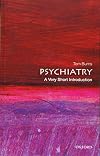
From the Very Short Introduction series, which runs into the hundreds, this volume was written by an Oxford Professor of Psychiatry. It includes types of mental illness, their history of treatments and the current treatments. There is a history of asylums and hospitals, and the types of treatments, including drugs, that have been tried and that are in current use.
Written with the layperson in mind, it's a clear and very interesting history of illness and treatments that brings us up to show more current methods. show less
Written with the layperson in mind, it's a clear and very interesting history of illness and treatments that brings us up to show more current methods. show less
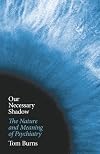
A thoughtful attempt to describe what psychiatry is - starting with a historical overview - and how mental illnessess are tied to our humanity. - Recommended by Outi Pickering
You May Also Like


Associated Authors
Statistics
- Works
- 9
- Members
- 283
- Popularity
- #82,294
- Rating
- 3.8
- Reviews
- 3
- ISBNs
- 161
- Languages
- 7