
Javier Cercas
Author of Soldiers of Salamis
About the Author
Javier Cercas is the author of Soldiers of Salamis (which sold more than a million copies worldwide), The Tenant and the Motive, and The Speed of Light. He has taught at the University of Illinois and for many years was a lecturer in Spanish literature at the University of Gerona. His books have show more been translated into more than twenty languages. show less
Series
Works by Javier Cercas
The Anatomy of a Moment: Thirty-Five Minutes in History and Imagination (2009) 708 copies, 39 reviews
MONARKU I HIJEVE 1 copy
El castillo de Barbazul 2022 1 copy
El mejor artifice 2002 1 copy
Η ανεξαρτησία 1 copy
Bibliorelatos 1 copy
USHTARË TË SALAMINËS 1 copy
Associated Works
The Origins of Desire: Modern Spanish Short Stories (Modern European Short Stories) (1993) — Contributor — 14 copies
Tagged
Common Knowledge
- Canonical name
- Cercas, Javier
- Legal name
- Cercas Mena, Javier
- Birthdate
- 1962-04-06
- Gender
- male
- Education
- Autonomous University of Barcelona (classical Spanish literature)
- Occupations
- professor of Spanish Literature
- Organizations
- University of Girona, Spain
- Short biography
- Since 1989, Professor of Spanish literature at the University of Girona, Spain. He is a frequent contributor to the Catalan edition of El País and the Sunday supplement. He worked for two years at the University of Illinois at Urbana-Champaign in the United States.
- Nationality
- Spain
- Birthplace
- Ibahernando, Cáceres, Extremadura, Spain
- Places of residence
- Barcelona, Catalonia, Spain
Illinois, USA - Associated Place (for map)
- Spain
Members
Reviews

Enric Marco, Enrique Marco Batlle: who was this person? In 2005, just before the sixtieth anniversary of the liberation of the concentration camps was held at Mauthausen, Marco, as he was then known, was to speak at the commemoration, which would include for the first time the Spanish Prime Minister. Marco would speak in his capacity as a survivor of the Flossenburg camp, and as a former president of Amical de Mauthausen, the Spanish survivors’ association. Marco was known as one who had show more fled Spain at the end of the Civil War, helped the French resistance, only to be deported to the camp. His more recent history included official roles in the CNT, the anarcho-syndicalist union, and in the federation of school parents’ associations. He had been awarded the Catalan government’s Creu de Sant Jordi.He was a mechanic who went on to obtain a degree in history. All in all, he definitely appeared to be a solid citizen.
Then, just days before the commemoration ceremony, the Spanish historian Benito Bermejo unmasked him. He had never been a prisoner in a camp. He had gone to Germany after the Civil War as part of a Spanish German agreement which provided labour for the German factories, and more importantly for people like Marco, allowed them to escape military service in Spain.
Cercas, like most people who heard the story, wanted to know not only how Marco had deceived people for years, but more importantly, why? What makes someone tell such egregious lies?
This book is not just about Marco, however. It is just as much about Cercas’s own exploration of the nature of truth, the reworking of facts, and what is served by misrepresentation. As Marco tried to say in justifying his actions, are lies told in the interest of more people discovering the truth to be considered evil? Are these Plato’s noble lies, Montaigne’s altruistic lies, or Kant’s downright lies? Marco had not said any historical untruths, had never denied real events.
Cercas explores how Marco absorbed historical events into his own narrative. If he spent time in a jail in Kiel, why couldn’t his experience have been that of someone in nearby Flossenburg? If the anarchists down the street were engaged in a skirmish, why couldn’t he have been there?This ability to absorb outside events into a personal history so much that one becomes convinced that the experience was actually theirs, is not all that rare.
Cercas spends time discussing what he calls Historical Memory*, the need to recover information about forced disappearances and executions and bringing perpetrators to justice, versus the Spanish government’s Amnesty Law, which prevented persecution for war crimes committed by public officials, a law created in the interest of easing the transition from dictatorship to democracy after Franco. He repeatedly quotes Faulkner’s maxim that “the past is not ever dead; it’s not even past; the past is merely a dimension of the present”. Questioning the idea of truth, Cercas asks Is there actually an industry of memory, which allows non historians to create their own history, to create it as they would like it to be, while at the same time, inserting themselves into it?
A recurring theme is that of Don Quixote. Just as Alonso Quixano decided he wanted a better life, and invented it for himself as Don Quixote, so Marco needed something more, something which would allow him to escape the tedium of his life. Each in the end reverted to their more mundane existences, and became reconciled with truth. However, while Don Quixote had deceived himself out of madness; Marco could not plead this. Cercas's musing over this, in which he wondered if he was Marco's Cervantes, were a bit of a stretch, but the idea of Quixote and Marco sharing certain traits was an interesting notion.
All in all though, this is a book to ponder. It reads slowly, as Cercas circles back again and again to certain themes and events, but this reenforcement over time creates a certain rhythm to the story, uncovering yet another layer.
--------
* the Association for the Recovery of Historical Memory is a human rights organization working to defend human rights, to recover documents, exhume mass graves, and to centralise information about forced disappearances. show less
Then, just days before the commemoration ceremony, the Spanish historian Benito Bermejo unmasked him. He had never been a prisoner in a camp. He had gone to Germany after the Civil War as part of a Spanish German agreement which provided labour for the German factories, and more importantly for people like Marco, allowed them to escape military service in Spain.
Cercas, like most people who heard the story, wanted to know not only how Marco had deceived people for years, but more importantly, why? What makes someone tell such egregious lies?
This book is not just about Marco, however. It is just as much about Cercas’s own exploration of the nature of truth, the reworking of facts, and what is served by misrepresentation. As Marco tried to say in justifying his actions, are lies told in the interest of more people discovering the truth to be considered evil? Are these Plato’s noble lies, Montaigne’s altruistic lies, or Kant’s downright lies? Marco had not said any historical untruths, had never denied real events.
Cercas explores how Marco absorbed historical events into his own narrative. If he spent time in a jail in Kiel, why couldn’t his experience have been that of someone in nearby Flossenburg? If the anarchists down the street were engaged in a skirmish, why couldn’t he have been there?This ability to absorb outside events into a personal history so much that one becomes convinced that the experience was actually theirs, is not all that rare.
Cercas spends time discussing what he calls Historical Memory*, the need to recover information about forced disappearances and executions and bringing perpetrators to justice, versus the Spanish government’s Amnesty Law, which prevented persecution for war crimes committed by public officials, a law created in the interest of easing the transition from dictatorship to democracy after Franco. He repeatedly quotes Faulkner’s maxim that “the past is not ever dead; it’s not even past; the past is merely a dimension of the present”. Questioning the idea of truth, Cercas asks Is there actually an industry of memory, which allows non historians to create their own history, to create it as they would like it to be, while at the same time, inserting themselves into it?
A recurring theme is that of Don Quixote. Just as Alonso Quixano decided he wanted a better life, and invented it for himself as Don Quixote, so Marco needed something more, something which would allow him to escape the tedium of his life. Each in the end reverted to their more mundane existences, and became reconciled with truth. However, while Don Quixote had deceived himself out of madness; Marco could not plead this. Cercas's musing over this, in which he wondered if he was Marco's Cervantes, were a bit of a stretch, but the idea of Quixote and Marco sharing certain traits was an interesting notion.
All in all though, this is a book to ponder. It reads slowly, as Cercas circles back again and again to certain themes and events, but this reenforcement over time creates a certain rhythm to the story, uncovering yet another layer.
--------
* the Association for the Recovery of Historical Memory is a human rights organization working to defend human rights, to recover documents, exhume mass graves, and to centralise information about forced disappearances. show less

Es gibt ein italienisches Lied (Il bandito e il campione, von Francesco De Gregori), in dem eine Zeile lautet: "Jeder gute Polizist, der seinen Beruf kennt, weiß, dass jeder Mensch ein Laster hat, das ihn zu Fall bringt".
Und Melchor Marín ist tatsächlich ein guter Polizist, vielleicht weil er, bevor er Polizist wurde, auf der anderen Seite der Barrikade stand. Er wird nach Terra Alta, einer verarmten Region Spaniens, geschickt, um ihn vor dem übermäßigen Lärm seines show more außergewöhnlichen Anti-Terror-Einsatzes zu schützen. Die Belastung, dass es ihm nicht gelungen ist, die Mörder seiner Mutter, die von Beruf Prostituierte ist, zu entlarven, lastet noch immer auf seinen Schultern, aber er findet an diesem abgelegenen Ort Frieden und sogar Liebe, bis ein brutaler Mord alle Karten neu mischt und ihn schließlich zwingt, sein Leben zu überdenken.
Ein Roman, den ich anfangs nur mit Mühe verstand, der mich dann aber so fesselte, dass ich vergaß, dass ich ein ins Deutsche übersetztes spanisches Werk las. Die ständigen Anspielungen auf "Les Miserables", Malchors Identifikation mit Javert und schließlich seine Weigerung, sich von dieser Figur leiten zu lassen, sind ein wunderbares Beispiel dafür, wie die Literatur aus sich selbst heraus neue Werke von großer Tiefe hervorbringt. Jeder Charakter ist wunderbar konstruiert, doch das Werk hat einen kleinen Makel, und zwar in der Auflösungsmechanik. Obwohl in dem Werk häufig Andeutungen über den Bürgerkrieg gemacht werden, ist der erzählerische Vorwand, der zur Lösung führt, meiner Meinung nach ein wenig schwach. Eine einfachere Darstellung der Ereignisse wäre meiner Meinung nach effektiver gewesen. show less
Und Melchor Marín ist tatsächlich ein guter Polizist, vielleicht weil er, bevor er Polizist wurde, auf der anderen Seite der Barrikade stand. Er wird nach Terra Alta, einer verarmten Region Spaniens, geschickt, um ihn vor dem übermäßigen Lärm seines show more außergewöhnlichen Anti-Terror-Einsatzes zu schützen. Die Belastung, dass es ihm nicht gelungen ist, die Mörder seiner Mutter, die von Beruf Prostituierte ist, zu entlarven, lastet noch immer auf seinen Schultern, aber er findet an diesem abgelegenen Ort Frieden und sogar Liebe, bis ein brutaler Mord alle Karten neu mischt und ihn schließlich zwingt, sein Leben zu überdenken.
Ein Roman, den ich anfangs nur mit Mühe verstand, der mich dann aber so fesselte, dass ich vergaß, dass ich ein ins Deutsche übersetztes spanisches Werk las. Die ständigen Anspielungen auf "Les Miserables", Malchors Identifikation mit Javert und schließlich seine Weigerung, sich von dieser Figur leiten zu lassen, sind ein wunderbares Beispiel dafür, wie die Literatur aus sich selbst heraus neue Werke von großer Tiefe hervorbringt. Jeder Charakter ist wunderbar konstruiert, doch das Werk hat einen kleinen Makel, und zwar in der Auflösungsmechanik. Obwohl in dem Werk häufig Andeutungen über den Bürgerkrieg gemacht werden, ist der erzählerische Vorwand, der zur Lösung führt, meiner Meinung nach ein wenig schwach. Eine einfachere Darstellung der Ereignisse wäre meiner Meinung nach effektiver gewesen. show less

Cercas uses metafiction—a technique in which the author focuses as much on a work’s own structure (regularly intruding the remind the reader that he is reading fiction) as on its story—as a way of analyzing the relationship between literature and reality or between life and art. The ostensible subject of the book is an investigation (by a novelist/journalist named Javier Cercas) into an incident that took place during the Spanish Civil War: a founder and key thinker in the Falangist show more (fascist) party miraculously escapes execution only to be found by a Republican soldier who unaccountably spares his life. The Fascist becomes a national hero under Franco; the soldier is forgotten. Cercas, the character, suffers from career-ending writer's block, but hopes that by discovering what “really” happened, he may be able to resuscitate his novelistic career. The book is divided into three parts: the first part is the story of his research; the second part is the story resulting from the first part. Had the book ended here, it would have been mildly interesting but, ultimately, tedious. Too much detail, far more than you are likely to want to know about this Falangist hero. Ah…but the third part: this is the key. This is where story and history intertwine, where memory and forgetting become an inescapable part of the meaning of life and death. This last part is riveting and beautifully told. The book is even more complex than I suggest and worthy of a graduate school seminar to unpack its meanings. Whether you’ll have the patience for it only you can say. But if you make it to the end, I think you’ll agree it was time well spent.
(P.S. I have just read a fascinating essay on the book which suggests, quite plausibly, that the middle third of the book, the "report" resulting from part one, is intentionally boring and tedious. By writing it that way, Javier Cercas the author (as opposed to Javier Cercas the character) demonstrates that the writer's block is still there and only when the new "assignment" that is part three of the novel comes about does Cercas the character succeed...on multiple levels. The analysis makes great sense and, after further reflection, I have decided to raise my rating.) show less
(P.S. I have just read a fascinating essay on the book which suggests, quite plausibly, that the middle third of the book, the "report" resulting from part one, is intentionally boring and tedious. By writing it that way, Javier Cercas the author (as opposed to Javier Cercas the character) demonstrates that the writer's block is still there and only when the new "assignment" that is part three of the novel comes about does Cercas the character succeed...on multiple levels. The analysis makes great sense and, after further reflection, I have decided to raise my rating.) show less
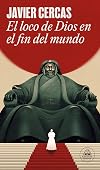
«Soy ateo. Soy anticlerical. Soy un laicista militante, un racionalista contumaz, un impío riguroso. Pero aquí me tienen, volando en dirección a Mongolia con el anciano vicario de Cristo en la Tierra, dispuesto a interrogarle sobre la resurrección de la carne y la vida eterna. Para eso me he embarcado en este avión: para preguntarle al papa Francisco si mi madre verá a mi padre más allá de la muerte, y para llevarle a mi madre su respuesta. He aquí un loco sin Dios persiguiendo al show more loco de Dios hasta el fin del mundo».
Este es el arranque fulgurante de este libro único, que nadie había tenido la oportunidad de escribir, entre otras razones porque el Vaticano jamás le había abierto de par en par sus puertas a un escritor. Pero, además de único, este es un libro de plenitud, donde su autor logra convertir una propuesta insólita en un relato propio y magistral: un thriller sobre el mayor misterio de la historia de la Humanidad. Con esta novela sin ficción, Javier Cercas vuelve a su línea más personal, en la que logra enlazar sus obsesiones íntimas con una de las preocupaciones fundamentales de la sociedad actual: el papel en la vida humana de lo espiritual y lo transcendente, el lugar en ella de la religión y el ansia de inmortalidad. show less
Este es el arranque fulgurante de este libro único, que nadie había tenido la oportunidad de escribir, entre otras razones porque el Vaticano jamás le había abierto de par en par sus puertas a un escritor. Pero, además de único, este es un libro de plenitud, donde su autor logra convertir una propuesta insólita en un relato propio y magistral: un thriller sobre el mayor misterio de la historia de la Humanidad. Con esta novela sin ficción, Javier Cercas vuelve a su línea más personal, en la que logra enlazar sus obsesiones íntimas con una de las preocupaciones fundamentales de la sociedad actual: el papel en la vida humana de lo espiritual y lo transcendente, el lugar en ella de la religión y el ansia de inmortalidad. show less
Lists
Awards


You May Also Like


Associated Authors
Statistics
- Works
- 38
- Also by
- 3
- Members
- 4,978
- Popularity
- #5,032
- Rating
- 3.7
- Reviews
- 198
- ISBNs
- 374
- Languages
- 22
- Favorited
- 7

