
Kelly Jones (1) (1948–)
Author of The Seventh Unicorn
For other authors named Kelly Jones, see the disambiguation page.
Works by Kelly Jones
Tagged
Common Knowledge
- Legal name
- Jones, Mary Kelleen
- Birthdate
- 1948
- Gender
- female
- Education
- Gonzaga University
- Nationality
- USA
- Places of residence
- Boise, Idaho, USA
Twin Falls, Idaho, USA - Associated Place (for map)
- Idaho, USA
Members
Reviews
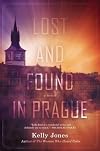
LOST AND FOUND IN PRAGUE is a complex, multi-layered mystery involving a politician’s recent murder that has possible ties to a priceless holy relic and events that took place during the Velvet Revolution. Dana, an American journalist, last visited Prague in 1989 during the protests of Communist rule. Her cousin Caroline stayed in the city, but she has called Dana back to help investigate a suspicious death at Our Lady Victorious church. She then gets pulled into an even bigger mystery show more involving the murder of a senator and the Infant of Prague holy relic.
The plot was complicated, but I was intrigued to find out how all the pieces of the puzzle fit together. My mind was spinning at times trying to keep the details straight, since past events kept overlapping with the present. I enjoyed learning the back stories of the characters (most of whom where troubled) and how they related to the mystery. I was especially curious about Caroline, and her decision to stay in Prague 20 years earlier. My favorite character was the city of Prague itself. The author did a great job bringing this fascinating Eastern European city and its rich history to life.
Disclosure: I received a copy of this book from the publisher in exchange for an honest review. show less
The plot was complicated, but I was intrigued to find out how all the pieces of the puzzle fit together. My mind was spinning at times trying to keep the details straight, since past events kept overlapping with the present. I enjoyed learning the back stories of the characters (most of whom where troubled) and how they related to the mystery. I was especially curious about Caroline, and her decision to stay in Prague 20 years earlier. My favorite character was the city of Prague itself. The author did a great job bringing this fascinating Eastern European city and its rich history to life.
Disclosure: I received a copy of this book from the publisher in exchange for an honest review. show less
This book has many layers of mystery and intrigue. Chief Investigator Damek of the Czech National Police Force is investigating the murder of a prominent politician. Dana Pierson, an American reporter, is returning to Prague after a twenty-year absence to visit her cousin Caroline, who is now Sister Agnes. On the flight to Prague, she meets Father Borelli who has been called to Prague by his friend Father Ruffino. Sister Agnes does not show up for her set appointment with Dana as there has show more been a death among the order, an elderly nun. However Sister Agnes does leave a note indicating that the famous Infant of Prague has been stolen and a fake is in its place. Thus begins a dangerous cat and mouse chase that brings Dana, Damek and Borelli together. It quickly comes to Dana that perhaps the youth she and Caroline were involved with twenty years previously, the time of the Velvet Revolution, may be behind these strange occurrences.
I had to read slowly and carefully as there were several plots involved. Also the unfamiliarity with Czech names and places required a bit more effort. However, it was worth the effort. The writing is quite descriptive and I could feel the emotions of the characters. I really cared about Damek, Dana, and Borelli. They had their flaws which made them that much more real. I got wrapped up in the personal stories of Damek and Dana. The political intrigue kept me wondering as to who could trust whom. I loved how the author brought Prague to life through her descriptions. I definitely will be reading more of her books.
Additional note: Visit her website at kellyjonesbooks.com to see photos of the places mentioned in the book. show less
I had to read slowly and carefully as there were several plots involved. Also the unfamiliarity with Czech names and places required a bit more effort. However, it was worth the effort. The writing is quite descriptive and I could feel the emotions of the characters. I really cared about Damek, Dana, and Borelli. They had their flaws which made them that much more real. I got wrapped up in the personal stories of Damek and Dana. The political intrigue kept me wondering as to who could trust whom. I loved how the author brought Prague to life through her descriptions. I definitely will be reading more of her books.
Additional note: Visit her website at kellyjonesbooks.com to see photos of the places mentioned in the book. show less
I think I've been gifted every book by an American set in Prague, and I never enjoy them. Am I overprotective and hypocritical? Probably, but I didn't write a book so y'all can't judge me back. There are some errors here, in geography and language, which stand out because it does seem that care was taken in being accurate - just not quite enough. But more importantly this ultimately isn't a story of Prague, despite the trappings of political intrigue and general scenery. There is a way to show more tell an interesting and even fun mystery that also explores the difficulties of lustration and post-revolution politics, and this isn't it. show less
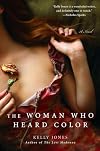
Art detective Lauren O'Farrell is on a mission. She's seeking art believed lost in the second World War with the goal of returning pieces to their rightful owners. While gathering research, she comes across the name Hanna Fleishmann -- a woman who purportedly collaborated with the Nazis to rid Germany of "degenerate" art. Obsessed with her discovery and eager to see it through to a recovery, Lauren digs deeper and eventually locates a woman whom she believes to be Hanna's surviving, though show more elderly, daughter Isabella. What she's looking for, and what she hopes to get from Isabella, doesn't compare to what she ends up finding.
As Isabella relays to Lauren what she knows of her mother's life, the reader is treated to a much more detailed experience--a rich, vibrant and beautiful story that touches all of the senses. If you think about it, the film "Titanic" is very similar -- Bill Paxton's character is looking for the diamond, he discovers that the elderly Rose has information about it, we kind of get glimpses into what she's telling him, but the real treat is in her memories, where we learn she's not necessarily sharing, or able to share, everything...but the viewer gets to see it all.
Hanna Fleishmann, born Hanna Schmidt, was a young Barvarian girl who found work with her sister in the home of an art dealer in Munich. Though a humble beginning, she becomes the key figure -- the champion, really -- of modern art in Nazi Germany. Hanna is a synesthete--her brain confuses the stimuli of one sense with the effect of another; specifically, she hears music when she sees color, and she sees color when she hears music. It is this condition, this gift really, that endears her to her employers and ensures her future happiness, a contentment that sees her through her education, her marriage, and the birth of her children. But after a whirlwind of terrible misfortune, and after numerous attempts to join her children sent ahead to America, Hanna is hired by the Third Reich to catalogue an entire warehouse of "degenerate" art, taken by Hitler from museums, private collections, and homes. Knowing that the future is bleak for most of these pieces, she convinces the government to sell many of them off to other countries as a way of getting money for the purchase of classical German art (the kind approved of by the Führer). Meanwhile, she scrambles and manages to hide some other pieces away, keeping secret records, and saving even more of the art for posterity.
Historical fiction can be tricky. On the one hand, you want the author to provide you with a realistic rendering of a particular time period. But what you can often end up with is an abuse of cameos. If Adolf Hitler had appeared once in this novel, particularly toward the end of Hanna's time in Germany, that would have been appropriate. But he's in the story at least three separate times. The first is a foundation scene that, given the later bits, seems to be innocuous. The second is gratuitous (he eats a lot of potatoes). The third is the only one that really makes sense--a speaking engagement at which Hanna, as a special guest of the Führer, is present. His presence seems a little over the top. But I opine that Jones makes up for this by allowing Hanna's tale to be so moving. Her story is reminiscent of Ian McEwan's Atonement in that the reader doesn't really understand how much was kept secret, doesn't understand what our protagonist's burden really was--what she took with her to the grave--until the end. As a work of Holocaust fiction it's somewhat benign, but as a story about art and love, it's beautiful.
Lauren Cartelli
www.theliterarygothamite.com show less
As Isabella relays to Lauren what she knows of her mother's life, the reader is treated to a much more detailed experience--a rich, vibrant and beautiful story that touches all of the senses. If you think about it, the film "Titanic" is very similar -- Bill Paxton's character is looking for the diamond, he discovers that the elderly Rose has information about it, we kind of get glimpses into what she's telling him, but the real treat is in her memories, where we learn she's not necessarily sharing, or able to share, everything...but the viewer gets to see it all.
Hanna Fleishmann, born Hanna Schmidt, was a young Barvarian girl who found work with her sister in the home of an art dealer in Munich. Though a humble beginning, she becomes the key figure -- the champion, really -- of modern art in Nazi Germany. Hanna is a synesthete--her brain confuses the stimuli of one sense with the effect of another; specifically, she hears music when she sees color, and she sees color when she hears music. It is this condition, this gift really, that endears her to her employers and ensures her future happiness, a contentment that sees her through her education, her marriage, and the birth of her children. But after a whirlwind of terrible misfortune, and after numerous attempts to join her children sent ahead to America, Hanna is hired by the Third Reich to catalogue an entire warehouse of "degenerate" art, taken by Hitler from museums, private collections, and homes. Knowing that the future is bleak for most of these pieces, she convinces the government to sell many of them off to other countries as a way of getting money for the purchase of classical German art (the kind approved of by the Führer). Meanwhile, she scrambles and manages to hide some other pieces away, keeping secret records, and saving even more of the art for posterity.
Historical fiction can be tricky. On the one hand, you want the author to provide you with a realistic rendering of a particular time period. But what you can often end up with is an abuse of cameos. If Adolf Hitler had appeared once in this novel, particularly toward the end of Hanna's time in Germany, that would have been appropriate. But he's in the story at least three separate times. The first is a foundation scene that, given the later bits, seems to be innocuous. The second is gratuitous (he eats a lot of potatoes). The third is the only one that really makes sense--a speaking engagement at which Hanna, as a special guest of the Führer, is present. His presence seems a little over the top. But I opine that Jones makes up for this by allowing Hanna's tale to be so moving. Her story is reminiscent of Ian McEwan's Atonement in that the reader doesn't really understand how much was kept secret, doesn't understand what our protagonist's burden really was--what she took with her to the grave--until the end. As a work of Holocaust fiction it's somewhat benign, but as a story about art and love, it's beautiful.
Lauren Cartelli
www.theliterarygothamite.com show less
You May Also Like


Statistics
- Works
- 7
- Members
- 342
- Popularity
- #69,720
- Rating
- 3.3
- Reviews
- 25
- ISBNs
- 73
- Languages
- 9