
Toni Sala
Author of The Boys
About the Author
Image credit: Toni Sala
Works by Toni Sala
Associated Works
Tagged
Common Knowledge
- Canonical name
- Sala, Toni
- Legal name
- Sala Isern, Toni
- Birthdate
- 1969-04-02
- Gender
- male
- Nationality
- Spain
Catalonia - Places of residence
- Sant Feliu de Guíxols, Baix Empordà, Catalunya
Members
Reviews
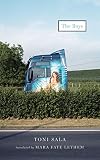
“The Boys” is a dark meditation on many things but principally on death and the meaninglessness of life. Jaume and Xavi die in an inexplicable car crash. They were too young to die and leave a fiancé, a family, a farm legacy, and a community to cope with the loss. Sala uses this tragedy to explore multiple themes from four perspectives: Ernest is a local banker; Miqui, a truck driver; Iona, Jaume’s fiancé; and Nil, a failed artist.
The setting is Vidreres, a rural village in the show more Catalan region of Spain. Sala captures its beauty with much lyrical description, but also relates its decimation from Spain’s harsh recession. What was once a thriving agrarian region is now struggling. Now that the boys are gone, their family cannot hope to maintain their farm and must sell, but who will get it?
The meaninglessness of these deaths and life is Sala’s main theme. As an outsider in the community, Ernest observes the grieving and is troubled by the apparent wastefulness of these deaths. He can’t help but see the deaths in relation of his own highly ordered but meaningless existence. Miqui is struggling to make ends meet. He believes that his father’s generation left him with nothing but debt and a future of work until he dies. He is a misogynistic sex addict who spends most of his free time with prostitutes and Internet porn. Iona has lost her secure future with the death of Jaume. Her parents want to use her as a means of acquiring the farmland that the boy’s parents must sell. Nil has left the farm to attend art school, but has given up that goal. He sees his future in recovering his place on his father’s farm, but is suffering serious psychological problems involving sadism and death. His father has enlisted his help in a strange plot to acquire the farmland.
Another theme in the novel is the irony of isolation in a time of intense connectivity. Sala’s characters have lost a sense of community that previously existed in small towns. Instead they live isolated existences coping alone with modern existence that often seems meaningless. Greed, misogyny, online anonymity, economic collapse, loss of family ties and the struggle to express oneself artistically are explored.
Sala’s pacing is slow, but assured. The characters are vividly drawn and the place is fully realized. Because of his use of four separate inner monologues with the natural human tendency for circular thinking and rumination, Sala’s narratives often seem obscure and meandering, but they merge well into a coherent plot by the end of the novel. show less
The setting is Vidreres, a rural village in the show more Catalan region of Spain. Sala captures its beauty with much lyrical description, but also relates its decimation from Spain’s harsh recession. What was once a thriving agrarian region is now struggling. Now that the boys are gone, their family cannot hope to maintain their farm and must sell, but who will get it?
The meaninglessness of these deaths and life is Sala’s main theme. As an outsider in the community, Ernest observes the grieving and is troubled by the apparent wastefulness of these deaths. He can’t help but see the deaths in relation of his own highly ordered but meaningless existence. Miqui is struggling to make ends meet. He believes that his father’s generation left him with nothing but debt and a future of work until he dies. He is a misogynistic sex addict who spends most of his free time with prostitutes and Internet porn. Iona has lost her secure future with the death of Jaume. Her parents want to use her as a means of acquiring the farmland that the boy’s parents must sell. Nil has left the farm to attend art school, but has given up that goal. He sees his future in recovering his place on his father’s farm, but is suffering serious psychological problems involving sadism and death. His father has enlisted his help in a strange plot to acquire the farmland.
Another theme in the novel is the irony of isolation in a time of intense connectivity. Sala’s characters have lost a sense of community that previously existed in small towns. Instead they live isolated existences coping alone with modern existence that often seems meaningless. Greed, misogyny, online anonymity, economic collapse, loss of family ties and the struggle to express oneself artistically are explored.
Sala’s pacing is slow, but assured. The characters are vividly drawn and the place is fully realized. Because of his use of four separate inner monologues with the natural human tendency for circular thinking and rumination, Sala’s narratives often seem obscure and meandering, but they merge well into a coherent plot by the end of the novel. show less
«Salí con un hombre durante un año, hasta que me enteré de que había matado a su mujer. Él mismo me lo dijo». Albert Jordi y Èlia llevan un año saliendo cuando de repente, una noche, él le confiesa que estuvo en la cárcel por haber matado a su mujer con un cuchillo. Èlia lo echa de casa de inmediato, pero las preguntas y las dudas no tardan en atormentarla: ¿Cómo era posible que un hombre que siempre la había tratado tan bien hubiera sido capaz de asesinar a su mujer? ¿Por show more qué lo había hecho? ¿Estaba arrepentido? ¿Cuánto tiempo hacía que había salido de la cárcel cuando se conocieron? ¿Por qué había decidido confesárselo en aquel momento? Èlia decide ir a buscarlo para pedirle explicaciones, pero Albert Jordi ha desaparecido en una huida que arrastrará a más perseguidores tras de sí. show less
El pueblo de Vidreres amanece conmocionado. Dos jóvenes hermanos han muerto en un accidente de coche en las afueras. En la onda sísmica de esta doble tragedia, un banquero vive atrapado en su rutina y un camionero adicto al sexo acaricia su escopeta con la esperanza de reventarlo todo algún día, mientras la novia desde el instituto de uno de los hermanos fallecidos, el que conducía, intenta encajar los fragmentos de su vida rota y un solitario artista regresa derrotado de la ciudad.
Con show more la crisis económica como telón de fondo, Toni Sala se acerca en esta novela a las coordenadas de unos personajes perdidos que deambulan por los márgenes de una sociedad que los rechaza o, en el mejor de los casos, los ignora. La muerte, epicentro de la historia, es a la vez el amuleto que esconden todos ellos. show less
Con show more la crisis económica como telón de fondo, Toni Sala se acerca en esta novela a las coordenadas de unos personajes perdidos que deambulan por los márgenes de una sociedad que los rechaza o, en el mejor de los casos, los ignora. La muerte, epicentro de la historia, es a la vez el amuleto que esconden todos ellos. show less
Al llarg de la vida, anem entenent els nostres pares a mesura que anem trepitjant el seu mateix tros de camí. Com més anys fem, més superfície reflectim. Llegim els nostres pares a través nostre, però també ens llegim a través seu, també ells ens emmirallen. Si superem l'edat de la seva mort, el mirall ja no reflecteix res
Aug 9, 2021Catalan
Lists
Awards


You May Also Like


Associated Authors
Statistics
- Works
- 21
- Also by
- 2
- Members
- 257
- Popularity
- #89,244
- Rating
- 3.3
- Reviews
- 10
- ISBNs
- 33
- Languages
- 3