
Edison Marshall (1894–1967)
Author of Caravan to Xanadu
About the Author
Series
Works by Edison Marshall
The stolen god 6 copies
Jungle Hunting Thrills 3 copies
The Deadfall 3 copies
The Inevitable Hour 2 copies
The Light in the Jungle 2 copies
Tähdenlento 2 copies
El hijo de la furia 2 copies
Mies ja hänen kohtalonsa I 2 copies
Ulvene tuter 1 copy
Mies ja hänen kohtalonsa II 1 copy
Le sorcier blanc 1 copy
The Land of Forgotten Men 1 copy
Den sköna äventyrerskan 1 copy
John Smith's store eventyr 1 copy
Sabreur 1 copy
The Flying Lion 1 copy
Associated Works
Great American Short Stories: O. Henry Memorial Prize Winning Stories, 1919-1934 (1935) — Contributor — 11 copies, 1 review
Friends to Man: The Wonderful World of Animals — Contributor — 2 copies
Tagged
Common Knowledge
- Canonical name
- Marshall, Edison
- Legal name
- Marshall, Edison Tesla
- Birthdate
- 1894-08-28
- Date of death
- 1967-10-30
- Gender
- male
- Education
- University of Oregon
- Occupations
- writer
- Nationality
- USA
- Birthplace
- Rensselaer, Indiana, USA
- Places of residence
- Medford, Oregon, USA
Augusta, Georgia, USA - Place of death
- Augusta, Georgia, USA
- Burial location
- Westover Memorial Park Augusta, Richmond County, Georgia, USA
- Associated Place (for map)
- USA
Members
Reviews

As a long- time Pagan how can I resist a version of the story of King Arthur titled _The Pagan King_ ? Well actually I resisted it for some time. Don't even recall how I acquired it but have been giving it shelf space and moving it for a couple of decades. Finally I read it.
This is not a new book but appears to be one of the earlier efforts (1959) to write a more historically likely story of the legendary King Arthur. While I would agree that this version of the Arthurian myth seems to have show more more historically accurate detail than the versions based on Mallory's Middle Ages, it does have its problems. Ambrose, who becomes Artay and then Arthur, is a rustic living with the old druid Merdin, a serving woman who never speaks, and Gerald, a 1/4 Roman who teaches him swordsmanship and tactics and eventually becomes his general. Merdin eventually reveals that Ambrose is the son of Vortigern and his first queen, exposed to die by the King's order and rescued by Merdin. When Ambrose fights and wounds his half-brother Mordred at the King's Beltane games, his identity is revealed and he and the household must flee. Ambrose eventually puts together a small band of followers which grows larger as he defeats other rulers and eventually Vortigern. In the meantime, a prophetic song says that he must wed a woman named Wander, but he has fallen in love with Elain of the lake and is bedeviled with lust for Vivain, who claims to be of Witch blood and have prophetic dreams.
The changes that Marshall rings upon the basic Arthurian story are interesting. However his treatment of his pagan characters is uneven. Merdin, for example is called a druid, not a wizard, yet professes admiration for the law and order than the Romans had enforced in Britain. This seems strange given that the Romans banned and massacred the Druids. Merdin seems to feel that he is serving a sacred cause in trying to fulfill the predictions of Arthur's ruler ship, yet he lies and deceives in the furtherance of that cause, which doesn't seem to display much faith in the gods. Artay is also inconsistent. For instance at one point he vows to Elain, in the names of the Great Gods, that he will free 5 prisoners who otherwise would be hanged. But a few pages later he seems to have forgotten this pledge and has to be persuaded by Merdin to free a particular criminal for purely strategic reasons. Another time a character refers to the false gods of the Saxons. Pagans were not generally given to considering the gods of other peoples as false, merely not their gods. The idea of false gods is a Christian one (or Jewish in origin). Why would a Briton accept that he worships Lud and Romans worship Jove, yet regard the Saxon Odin as false? The characters also speak and act as though Christians were rare in Britain, yet the Romans did not leave until some time after Constantine's conversion, so a good number of Romans or Romanized Britons would have been Christians. Many of these details would not be noticed by readers unfamiliar with the history, but they are distracting for those who do. show less
This is not a new book but appears to be one of the earlier efforts (1959) to write a more historically likely story of the legendary King Arthur. While I would agree that this version of the Arthurian myth seems to have show more more historically accurate detail than the versions based on Mallory's Middle Ages, it does have its problems. Ambrose, who becomes Artay and then Arthur, is a rustic living with the old druid Merdin, a serving woman who never speaks, and Gerald, a 1/4 Roman who teaches him swordsmanship and tactics and eventually becomes his general. Merdin eventually reveals that Ambrose is the son of Vortigern and his first queen, exposed to die by the King's order and rescued by Merdin. When Ambrose fights and wounds his half-brother Mordred at the King's Beltane games, his identity is revealed and he and the household must flee. Ambrose eventually puts together a small band of followers which grows larger as he defeats other rulers and eventually Vortigern. In the meantime, a prophetic song says that he must wed a woman named Wander, but he has fallen in love with Elain of the lake and is bedeviled with lust for Vivain, who claims to be of Witch blood and have prophetic dreams.
The changes that Marshall rings upon the basic Arthurian story are interesting. However his treatment of his pagan characters is uneven. Merdin, for example is called a druid, not a wizard, yet professes admiration for the law and order than the Romans had enforced in Britain. This seems strange given that the Romans banned and massacred the Druids. Merdin seems to feel that he is serving a sacred cause in trying to fulfill the predictions of Arthur's ruler ship, yet he lies and deceives in the furtherance of that cause, which doesn't seem to display much faith in the gods. Artay is also inconsistent. For instance at one point he vows to Elain, in the names of the Great Gods, that he will free 5 prisoners who otherwise would be hanged. But a few pages later he seems to have forgotten this pledge and has to be persuaded by Merdin to free a particular criminal for purely strategic reasons. Another time a character refers to the false gods of the Saxons. Pagans were not generally given to considering the gods of other peoples as false, merely not their gods. The idea of false gods is a Christian one (or Jewish in origin). Why would a Briton accept that he worships Lud and Romans worship Jove, yet regard the Saxon Odin as false? The characters also speak and act as though Christians were rare in Britain, yet the Romans did not leave until some time after Constantine's conversion, so a good number of Romans or Romanized Britons would have been Christians. Many of these details would not be noticed by readers unfamiliar with the history, but they are distracting for those who do. show less
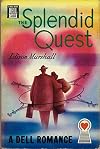
This is a story very much of its time; it was published in 1934, and it seems longer ago than that when considering the sea change in attitudes since then. The story begins with two young Americans, Joe and Charley, setting forth by boat from Seattle to Shanghai to make their fortunes. Joe is a mining engineer; Charley is a doctor. No sooner do they get underway than Joe spots Donna, an American girl traveling with her mother and headed to Shanghai to meet her finance, Keith. Joe falls for show more Donna and the two keep company, though she makes it clear that she's not available.
When they arrive in Shanghai, they find that Keith is under the spell of Sonia, a beautiful Russian emigre. Donna's mother is adamant that Donna should fight for her man, so when Keith is headed off for Vietnam to investigate reports of gold fields there, Donna and her mother show up with a gift for him and find that Sonia has joined him on the ship, and Donna's mother suggests that they all go. A note from Donna to Joe prompts him and Charley to show up, also, so the whole group sets off together. Donna gives Keith his ring back after finding Sonia with him, but agrees not to make a final decision about their relationship until they return to Shanghai.
The travelers, in the care of native boatmen, choose the wrong fork in a river and are soon stuck on an island in the jungle without their boat. They go about their own little game of Survivor, complete with everything from smallpox to gangrene.
I had an easier time accepting the casual racism that litters the text (yellow hordes, savages, little natives, and the like), but I had some trouble with scenes between Donna and her mother, including one in which her mother seems to be saying that Donna's father cheated on her but men are like that and she thought it was worth hanging on to the marriage. When her mother suggests accompanying Keith and Sonia to Vietnam, I wondered what on earth she was thinking, although she's painted as a wise and knowing woman; as events unfold, Donna figures out what she really wants.
Somehow, the author manages to make everyone seem noble in his or her own way, although I'd characterize at least one of them as very badly behaved, indeed, not to mention weak.
I can say that although the end was extremely predictable, the journey there was not entirely what I expected; despite my irritation with the outdated views (oddly, this may be more evident in books from this period than ones written a hundred years earlier, though maybe it's just a reflection on the quality of the writer), I did keep turning the pages and wanting to know what happened next--which is, to me, the litmus test of a book. Plot rules! show less
When they arrive in Shanghai, they find that Keith is under the spell of Sonia, a beautiful Russian emigre. Donna's mother is adamant that Donna should fight for her man, so when Keith is headed off for Vietnam to investigate reports of gold fields there, Donna and her mother show up with a gift for him and find that Sonia has joined him on the ship, and Donna's mother suggests that they all go. A note from Donna to Joe prompts him and Charley to show up, also, so the whole group sets off together. Donna gives Keith his ring back after finding Sonia with him, but agrees not to make a final decision about their relationship until they return to Shanghai.
The travelers, in the care of native boatmen, choose the wrong fork in a river and are soon stuck on an island in the jungle without their boat. They go about their own little game of Survivor, complete with everything from smallpox to gangrene.
I had an easier time accepting the casual racism that litters the text (yellow hordes, savages, little natives, and the like), but I had some trouble with scenes between Donna and her mother, including one in which her mother seems to be saying that Donna's father cheated on her but men are like that and she thought it was worth hanging on to the marriage. When her mother suggests accompanying Keith and Sonia to Vietnam, I wondered what on earth she was thinking, although she's painted as a wise and knowing woman; as events unfold, Donna figures out what she really wants.
Somehow, the author manages to make everyone seem noble in his or her own way, although I'd characterize at least one of them as very badly behaved, indeed, not to mention weak.
I can say that although the end was extremely predictable, the journey there was not entirely what I expected; despite my irritation with the outdated views (oddly, this may be more evident in books from this period than ones written a hundred years earlier, though maybe it's just a reflection on the quality of the writer), I did keep turning the pages and wanting to know what happened next--which is, to me, the litmus test of a book. Plot rules! show less

When June Harte was very young, she and her father stumbled upon a magnificent deposit of jade along the border of China and Tibet. Her father spent his life trying to raise the money for an expedition to return and cull the treasure. Now June is a young woman of twenty-two and along with an old friend of her mothers‘, geologist Dr. Harper, has returned to China. The White Brigand by Edison Marshall is an old-school adventure story, June is quickly abducted and becomes the prisoner in a show more magnificent oriental palace. Gathered here are an strange and international group of people, all intent upon the jade.
Edison Marshall wrote many adventure stories of daring men and women, surmounting all obstacles to win out over cruel and sinister villains. The White Brigand is no exception, an exciting but dated story full of color, romance and intrigue. I had trouble getting past the fact that in his books women are admired more for the size of their bust than for their brains. The whole time I was reading this book I couldn’t help but picture Tyrone Power as the mysterious Lee and Virginia Mayo as his feminine counterpart. I think my days of truly enjoying an Edison Marshall read are in the past show less
Edison Marshall wrote many adventure stories of daring men and women, surmounting all obstacles to win out over cruel and sinister villains. The White Brigand is no exception, an exciting but dated story full of color, romance and intrigue. I had trouble getting past the fact that in his books women are admired more for the size of their bust than for their brains. The whole time I was reading this book I couldn’t help but picture Tyrone Power as the mysterious Lee and Virginia Mayo as his feminine counterpart. I think my days of truly enjoying an Edison Marshall read are in the past show less

There was a long, diffuse novel titled "Anthony Adverse", and this is Marshall's attempt to capture the market created by that monster hit. Our hero, Benjamin is the orphaned result of an adultery by a titled Englishman and the wife of a local gunsmith. Benjamin flees his servitude to his wicked uncle and after voyaging to the exotic south seas returns to displace the villain
getting all of the goodies left from his father's life. As escapism, it is adequate, if not very original for the show more fiction of the time. show less
getting all of the goodies left from his father's life. As escapism, it is adequate, if not very original for the show more fiction of the time. show less
Lists
Awards

You May Also Like


Associated Authors
Statistics
- Works
- 69
- Also by
- 10
- Members
- 807
- Popularity
- #31,608
- Rating
- 3.4
- Reviews
- 10
- ISBNs
- 45