

Michael Prestwich
Author of Edward I
About the Author
Michael Prestwich is Emeritus Professor of History at Durham University.
Works by Michael Prestwich
Thirteenth Century England X: Proceedings of the Durham Conference, 2003 (2005) — Editor — 11 copies
Thirteenth Century England IX: Proceedings of the Durham Conference, 2001 (2003) — Editor — 4 copies
Thirteenth Century England VIII: Proceedings of the Durham Conference, 1999 (2001) — Editor — 4 copies
Thirteenth Century England VII: Proceedings of the Durham Conference, 1997 (1999) — Editor — 3 copies
Thirteenth Century England VI: Proceedings of the Durham Conference, 1995 (1997) — Editor — 2 copies
Associated Works
The Normans and their Adversaries at War: Essays in Memory of C. Warren Hollister (2001) — Contributor — 18 copies
Warriors and Churchmen in the High Middle Ages: Essays Presented to Karl Leyser (1992) — Contributor — 12 copies
MHQ: The Quarterly Journal of Military History — Autumn 2000 (2000) — Author "Reassessing the Hammer of the Scots" — 9 copies
The Medieval Way of War: Studies in Medieval Military History in Honor of Bernard S. Bachrach (2015) — Contributor — 7 copies
Thirteenth Century England III: Proceedings of the Newcastle upon Tyne Conference, 1989 (1991) — Contributor — 4 copies
Thirteenth Century England I: Proceedings of the Newcastle upon Tyne Conference 1985 (1986) — Contributor — 3 copies
Desperta Ferro Antigua y Medieval. La Guerra de los Cien Años (I) — Contributor — 2 copies
Tagged
Common Knowledge
- Other names
- Prestwich, Michael Charles
- Birthdate
- 1943-01-30
- Gender
- male
- Education
- University of Oxford (Magdalen College, Christ Church)
- Occupations
- historian
university professor - Awards and honors
- Royal Aeronautical Society (Fellow)
Society of Antiquaries of London (Fellow) - Nationality
- UK
- Places of residence
- Oxford, Oxfordshire, England, UK
Durham, England, UK - Associated Place (for map)
- England, UK
Members
Reviews
Medieval People: Vivid Lives in a Distant Landscape – From Charlemagne to Piero della Francesca by Michael Prestwich
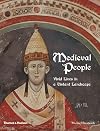
Michael Prestwich’s well-written and informative book offers a collection of 70 short biographies of important, notable and remarkable people (mainly from western Europe and the Near and Middle East, though one example each from Central Asia and the Far East is included as well) in the medieval age, spanning from 800 to the beginning of the early modern period in 1500. It is divided into five sections: An Age of Empire, An Age of Confidence, An Age of Maturity, An Age of Plague and An Age show more of Transition, with a brief general overview of the main events and people before the actual individual profiles.
While the readership receives an increased diversity of subjects, this is achieved at the cost of necessary brevity, with biographies ranging from two to four pages on average, including often half- or full-page illustrations. Several times the author makes reference to intriguing events that were no further explored, and I often felt that a certain individual’s life could have been described in more detail, rather than being painted in fairly broad strokes. This certainly whets the appetite for further discovery, and there is an extensive Further reading list in the Appendix. The illustrations are breathtakingly wonderful, serving to underline Michael Prestwich’s assertion that the medieval period was not the Dark Ages of popular impression, but an era of invention, innovation and some remarkably progressive people.
While women make up 15 per cent of all the biographies, these generally fall – perhaps predictably – into the categories of nun, saint, princess, duchess and queen, with only one exception. For the remainder, there are kings, emperors, statesmen, nobles, popes, friars, hermits, conquerors and warriors, but also artists, builders, merchants, craftsmen, inventors, poets, scientific pioneers, architects, travellers, chroniclers and even a pirate. While it is probably necessary to include several monarchs and other leaders of men, in my opinion there were a few too many, and I found the lives of ordinary individuals far more illuminating. I guess it is understandable that the lives of people connected to religion and faith should feature heavily in a book that covers an era marked by religious strife (the Crusades, persecution of so-called heathens and heretics), but again I found that perhaps there were again slightly too many; after reading for a third time how ruthlessly heretics were persecuted or another religious order was established, it began to feel a bit repetitive.
The things that have stayed most in my mind are the occasional very personal glimpses of a life lived in the distant past, such as that Charlemagne suffered from insomnia, that Pope Innocent III had a sense of humour, and that Giotto was quick-witted and sharp when taunted about his supposed ugliness.
I think this book is probably better suited for dipping in and out at leisure, rather than being read from cover to cover like I did (with a review deadline to keep), but it gives the reader a fascinating glimpse of life that is in many respects far removed from ours; recommended.
(This review was originally written for Amazon's Vine programme.) show less
While the readership receives an increased diversity of subjects, this is achieved at the cost of necessary brevity, with biographies ranging from two to four pages on average, including often half- or full-page illustrations. Several times the author makes reference to intriguing events that were no further explored, and I often felt that a certain individual’s life could have been described in more detail, rather than being painted in fairly broad strokes. This certainly whets the appetite for further discovery, and there is an extensive Further reading list in the Appendix. The illustrations are breathtakingly wonderful, serving to underline Michael Prestwich’s assertion that the medieval period was not the Dark Ages of popular impression, but an era of invention, innovation and some remarkably progressive people.
While women make up 15 per cent of all the biographies, these generally fall – perhaps predictably – into the categories of nun, saint, princess, duchess and queen, with only one exception. For the remainder, there are kings, emperors, statesmen, nobles, popes, friars, hermits, conquerors and warriors, but also artists, builders, merchants, craftsmen, inventors, poets, scientific pioneers, architects, travellers, chroniclers and even a pirate. While it is probably necessary to include several monarchs and other leaders of men, in my opinion there were a few too many, and I found the lives of ordinary individuals far more illuminating. I guess it is understandable that the lives of people connected to religion and faith should feature heavily in a book that covers an era marked by religious strife (the Crusades, persecution of so-called heathens and heretics), but again I found that perhaps there were again slightly too many; after reading for a third time how ruthlessly heretics were persecuted or another religious order was established, it began to feel a bit repetitive.
The things that have stayed most in my mind are the occasional very personal glimpses of a life lived in the distant past, such as that Charlemagne suffered from insomnia, that Pope Innocent III had a sense of humour, and that Giotto was quick-witted and sharp when taunted about his supposed ugliness.
I think this book is probably better suited for dipping in and out at leisure, rather than being read from cover to cover like I did (with a review deadline to keep), but it gives the reader a fascinating glimpse of life that is in many respects far removed from ours; recommended.
(This review was originally written for Amazon's Vine programme.) show less
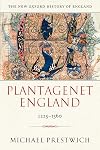
“Plantagenet England 1225–1360” covers a lot of ground and is, on the most part, an engaging history, not a stuffy textbook.
I was amused by some of my country’s long-forgotten surnames, like William Standupryght for example, or the gentleman referred to in the following quote.
“In 1347 Roger Sweatinbed of Friesthorpe was accused of fornication with Letitia Bat.”
English surnames aren’t what they used to be.
It’s amazing how people thought during those times. The following quote show more of man’s knowledge of woman’s body made me eyebrows move in an upward direction:
“Nor was the female anatomy understood; one view was that it was similar to the male, but turned inside out. In comparison to the male, however, the female body ‘hath smalle ballokkys’, as a late medieval writer put it. Even odder, but well founded in classical writings, was the notion that the uterus was capable of wandering about the body, causing great problems should it lodge in an inappropriate place, such as the chest.”
Medical knowledge has grown considerably since medieval times! show less
I was amused by some of my country’s long-forgotten surnames, like William Standupryght for example, or the gentleman referred to in the following quote.
“In 1347 Roger Sweatinbed of Friesthorpe was accused of fornication with Letitia Bat.”
English surnames aren’t what they used to be.
It’s amazing how people thought during those times. The following quote show more of man’s knowledge of woman’s body made me eyebrows move in an upward direction:
“Nor was the female anatomy understood; one view was that it was similar to the male, but turned inside out. In comparison to the male, however, the female body ‘hath smalle ballokkys’, as a late medieval writer put it. Even odder, but well founded in classical writings, was the notion that the uterus was capable of wandering about the body, causing great problems should it lodge in an inappropriate place, such as the chest.”
Medical knowledge has grown considerably since medieval times! show less
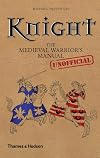
This book is just as good as its companion, Legionary: The Roman Soldier's (Unofficial) Manual. I learned a great deal about 14th-century warfare and life in general. All of it was interesting, and much of it was amusing. I had no idea, for example, that Ulrich Von Liechtenstein was a real knight (and he liked to disguise himself too, although he did not come from Gelderland), or that the Scots were once able to sneak into a besieged castle under cover of night by going on all fours and show more mooing like cattle. Any history buff will love this book. show less
Enjoyed reading this book as a way to further explore the life, career, training and way of life for knights. The author focuses mainly on English and French knights, with a few other examples here and there. I found the book very accessible and well illustrated with historical images. The further reading section was also interesting. The coverage of warfare - including arms, amour, horses and sieges - was quite good. If you've ever wondered about the practicalities of life as a knight, this show more is the book for you. show less
Lists
You May Also Like


Associated Authors
Statistics
- Works
- 18
- Also by
- 11
- Members
- 1,120
- Popularity
- #22,934
- Rating
- 3.8
- Reviews
- 8
- ISBNs
- 68
- Languages
- 6
- Favorited
- 3