

John Metcalf (1) (1938–)
Author of An Aesthetic Underground: A Literary Memoir
For other authors named John Metcalf, see the disambiguation page.
About the Author
Canadian writer and editor, John Metcalf was born in Carlisle, England on November 12, 1938. He attended the University of Bristol and moved to Canada in 1962. In addition to writing on his own, he is the Senior Editor of the Porcupine's Quill of Erin, Ontario and editor of Canadian Notes and show more Queries. Some of his works include The Lady Who Sold Furniture, Adult Entertainment, Kicking Against the Pricks, and Acts of Kindness and of Love. His memoir An Aesthetic Underground was published in 2003. He has won the Canadian Fiction Magazine's Contributor's Prize and the Periodical Distributor's Association Prize. (Bowker Author Biography) show less
Works by John Metcalf
best canadian stories 11 2 copies
A pearl of great price 1 copy
Associated Works
Tagged
Common Knowledge
- Birthdate
- 1938-11-12
- Gender
- male
- Education
- Bristol University (BA|1960)
- Awards and honors
- Order of Canada
- Nationality
- UK (birth)
Canada (1970) - Birthplace
- Carlisle, Cumbria, England, UK
- Places of residence
- Ottawa, Ontario, Canada
Members
Reviews
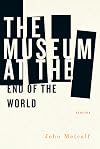
Two novellas and two shorter works comprise The Museum at the End of the World, which features John Metcalf’s erudite, beleaguered and occasionally inebriated alter-ego Robert Forde, who last appeared in the novella Forde Abroad. It’s nice to see Forde still casting a jaundiced eye upon a world that mystifies, disappoints and occasionally offends. “Medals and Prizes” covers Forde’s entire life: his formative years as a jazz-smitten teenager growing up in 1950s England, his college show more years and his decision to emigrate, his first teaching job in Montreal, and his later life as an elder statesman of Canadian letters being awarded the Order of Canada. In “Ceazar Salad,” Forde is smarting from a hostile review of his recent novel. Venturing out of the house to do some errands, he encounters more that drives him to distraction, beginning with an epidemic of ungrammatical signage that nobody else seems to notice or care about. In “The Lives of the Poets,” Forde is committed to a long-term sentence as Writer-in-Residence at the University of New Brunswick, where once again there is much to try his patience. And the title story finds Forde and his wife Sheila on a bus tour of the Black Sea and environs, where Forde, ever alert to the world’s absurdities, amuses himself by observing the squalid state of everything around him and remarking playfully upon the eccentric behaviour of his fellow travelers. The comedy is boisterous, the humour drawn in broad strokes. But the stories also display an endearing wistfulness, reminding us that Robert Forde, despite the grievances and railing and howling into the void, is a thinking, feeling human being. The Museum at the End of the World, coming to us late in the author’s career, is a gift for which we can be grateful and provides confirmation that Robert Forde and John Metcalf have not mellowed one bit. show less
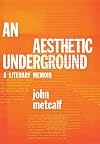
A must read if you're interested in literary fiction in Canada.
John Metcalf is unknown to the wide reading public, but he is arguably one of the most important figures in Canadian writing post-1960. In short, he has tirelessly promoted the short story in Canada through anthologies, launching series (such as Best Canadian Stories and Coming Attractions) which continue to this day, and he has helped to launch the careers of innumerable writers. If Canada is deemed to excel at the short story show more (as some say we do), then Metcalf deserves a large slice of the credit.
At the same time, he's made himself unpopular by adopting controversial positions, and then arguing them in terms that are at times more colourful than accurate. He'll adopt positions so extreme at times that he can't help contradicting himself: having asserted that Canadian literature sucks absolutely, he'll then praise the work of dozens of writers. Metcalf loves rhetoric; some people, I think, fail to see this.
An Aesthetic Underground is a must-read; you don't have to agree with Metcalf, but he'll make you think seriously about important questions. show less
John Metcalf is unknown to the wide reading public, but he is arguably one of the most important figures in Canadian writing post-1960. In short, he has tirelessly promoted the short story in Canada through anthologies, launching series (such as Best Canadian Stories and Coming Attractions) which continue to this day, and he has helped to launch the careers of innumerable writers. If Canada is deemed to excel at the short story show more (as some say we do), then Metcalf deserves a large slice of the credit.
At the same time, he's made himself unpopular by adopting controversial positions, and then arguing them in terms that are at times more colourful than accurate. He'll adopt positions so extreme at times that he can't help contradicting himself: having asserted that Canadian literature sucks absolutely, he'll then praise the work of dozens of writers. Metcalf loves rhetoric; some people, I think, fail to see this.
An Aesthetic Underground is a must-read; you don't have to agree with Metcalf, but he'll make you think seriously about important questions. show less
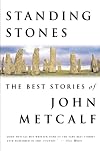
First the positives, superbly written with quite a few passages that made me laugh out loud. The reason for the two stars is it lacks depth. Private Parts, the longish short story, is an example, it ranges from the disgusting to the sublime, making me wish for something more.
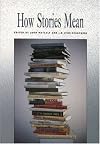
This book carries an ambitious title, but it's something of a mish-mash, much of it reprinted from other sources. At its best, it's brilliant, but in places, it's a little dated.
Consider Ray Smith, complaining about realist stories in "Dinosaur": "it was useful thirty, forty years ago." Smith criticizes writers adhering to a convention forty years out of date, and points to some newer writers:
"Some big dogs in speculative fiction: Jorge Luis Borges, Vladimir Nabokov. Coming big dog: Kurt show more Vonnegut, Jr. Prominent younger dogs: Thomas Pynchon, John Barth, Donald Barthelme, Richard Brautigan."
Say, who is this Pynchon guy, anyway? It's now that you check and discover that this essay dates from 1972; within a few years, Brautigan would be written off (unfairly) as an anachronism. The irony is, of course, that a reader adopting Smith's stance today, in 2009, would be adhering to a convention thirty-seven years out of date. And thirty-seven is perilously close to forty. This is a history lesson.
But there are also some real gems here. "The Same Ticking Clock" by Carol Shields lucidly addresses the ever-popular controversy of gender. "What is Style?" by Mavis Gallant gets right to the point. Margaret Atwood's "Happy Endings" is, of course, well known. And "Soaping a Meditative Foot," "Punctuation as Score" and "That Damn Clock Again" by John Metcalf are indispensable -- Metcalf is one of the collection's most lucid voices. show less
Consider Ray Smith, complaining about realist stories in "Dinosaur": "it was useful thirty, forty years ago." Smith criticizes writers adhering to a convention forty years out of date, and points to some newer writers:
"Some big dogs in speculative fiction: Jorge Luis Borges, Vladimir Nabokov. Coming big dog: Kurt show more Vonnegut, Jr. Prominent younger dogs: Thomas Pynchon, John Barth, Donald Barthelme, Richard Brautigan."
Say, who is this Pynchon guy, anyway? It's now that you check and discover that this essay dates from 1972; within a few years, Brautigan would be written off (unfairly) as an anachronism. The irony is, of course, that a reader adopting Smith's stance today, in 2009, would be adhering to a convention thirty-seven years out of date. And thirty-seven is perilously close to forty. This is a history lesson.
But there are also some real gems here. "The Same Ticking Clock" by Carol Shields lucidly addresses the ever-popular controversy of gender. "What is Style?" by Mavis Gallant gets right to the point. Margaret Atwood's "Happy Endings" is, of course, well known. And "Soaping a Meditative Foot," "Punctuation as Score" and "That Damn Clock Again" by John Metcalf are indispensable -- Metcalf is one of the collection's most lucid voices. show less
Lists
Awards


You May Also Like


Associated Authors
Statistics
- Works
- 47
- Also by
- 4
- Members
- 272
- Popularity
- #85,117
- Rating
- 3.6
- Reviews
- 8
- ISBNs
- 88
- Languages
- 1