
Jane Alison
Author of Meander, Spiral, Explode: Design and Pattern in Narrative
About the Author
Jane Alison has a bachelor's degree in classics from Princeton University & a M.F.A. from Columbia University. She lives in Germany. (Bowker Author Biography)
Image credit: Courtesy of Allen & Unwin.
Works by Jane Alison
Associated Works
The Smiles of Rome: A Literary Companion for Readers and Travelers (2005) — Contributor — 67 copies, 2 reviews
Tagged
Common Knowledge
- Birthdate
- 1961
- Gender
- female
- Education
- Princeton University
Brown University
Columbia University - Occupations
- editor
- Organizations
- Miami New Times
- Nationality
- USA
- Birthplace
- Canberra, Australian Capital Territory, Australia
- Places of residence
- Germany
Miami Beach, Florida, USA - Associated Place (for map)
- Canberra, Australian Capital Territory, Australia
Members
Reviews
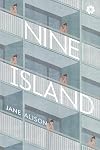
Outstanding. Ovid's tales of transmogrification set the tone for this very smart, funny, offbeat novel that muses on the male gaze, the female gaze, love, lust, loneliness, self-sufficiency, and how hard it is to care for even—or maybe especially—what you love. Including—maybe especially—yourself. It's also gorgeously descriptive, making me almost wish I'd waited a couple of months to read it in Miami, where it's set. But no matter... it's also a good antidote to a New York cold show more spell in December, not just tropical but generally thawing. Definitely one of my favorites of the year. show less
Nine Island by Jane Alison is a beautifully written reflection on life, love and lust, and on when and how to close a chapter of life.
This look at the life and loves of J, the narrator/protagonist, looks critically at the past in determining what to do in the present to arrive at a future she might desire and envision. At what point should one, or should one even, consider ending the search for love? Or even lust for that matter. The intersection of love/lust and closing chapters is show more wonderfully paralleled by her translating of Ovid's stories.
The book is comprised largely of many short chapters, which brought to mind another comparison in my mind. In this case it is not thematic as in contrasting J's ruminations with Ovid. Alison's writing is so poetic that Baudelaire was brought to mind. His prose poems were beautiful but not linked in a narrative manner. Nine Island is a bit like reading prose poems that also combine to form a narrative. I don't remember if she mentions Baudelaire the flaneur or if I imagined it, but the image would be very appropriate.
I would highly recommend this to anyone who enjoys an introspective book and/or beautiful writing. It raises, and offers possible answers, to many questions we face in life.
Reviewed from a copy made available by the publisher via LibraryThing Early Reviewers. show less
This look at the life and loves of J, the narrator/protagonist, looks critically at the past in determining what to do in the present to arrive at a future she might desire and envision. At what point should one, or should one even, consider ending the search for love? Or even lust for that matter. The intersection of love/lust and closing chapters is show more wonderfully paralleled by her translating of Ovid's stories.
The book is comprised largely of many short chapters, which brought to mind another comparison in my mind. In this case it is not thematic as in contrasting J's ruminations with Ovid. Alison's writing is so poetic that Baudelaire was brought to mind. His prose poems were beautiful but not linked in a narrative manner. Nine Island is a bit like reading prose poems that also combine to form a narrative. I don't remember if she mentions Baudelaire the flaneur or if I imagined it, but the image would be very appropriate.
I would highly recommend this to anyone who enjoys an introspective book and/or beautiful writing. It raises, and offers possible answers, to many questions we face in life.
Reviewed from a copy made available by the publisher via LibraryThing Early Reviewers. show less
 This review was written for LibraryThing Early Reviewers.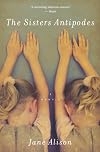
I'll admit it: part of the reason I enjoy reading midlife memoirs like "The Sisters Antipodes" is that they're usually fairly scandalous. They're good stories, yes, and often well-written, but part of the reason I like them is because they showcase instances of nearly unbelievable human misbehavior. "The Sisters Antipodes" doesn't exactly fit that mold. Its tone is literary, lyrical, almost abstract. The author raises some important questions that she can't really find answers for. Why, show more exactly, did her father essentially switch families with another man, and why did the mothers involved accept this bizarre arrangement? Who made the first move? What -- perhaps more precisely, who -- did she lose when she left Australia for the United States? "The Sisters Antipodes" is far from unsatisfying, but I get the impression that the author was far too young during much of what transpired to remember everything she relates here. I suspect that "The Sisters Antipodes" is one half autobiography and one half imaginative writing exercise. It seems that a couple of reviewers expected a more straightforward narrative, but, considering the profound changes she underwent during her childhood, there might not have been any other way that the author could have written this one. She mentions several failed attempts at putting her story on paper in the opening pages. Considering that she lost not just her father but also her nationality at an extremely young age, that hardly comes as a surprise. The writing here, while not always direct, is often beautiful and, on many occasions, positively heart-wrenching. "The Sisters Antipodes" may not be a wholly factual or complete account of what Jane Allison and her sisters went through, but I get the impression that the author wrote it the only way she could.
"The Sisters Antipodes" is also, in its way, a doppelganger story. After the divorce and remarriage, it could be said that the author was twinned with the girl whose father became her step-father. Their relationship is complex and often painful, but also intimate in a way that few of us could possibly understand. Alison foregrounds it to the expense of all others in the book: we hear little, for example, about her own sister and her new opposite. According to the author's recounting, she once was pretty similar to her pseudo-sister: they were both smart, pretty, ruthlessly competitive, and faced enormous emotional challenges. While the author seems to have been able to cope with the psychic damage she suffered, her complement seems to have had a much harder time of it. Although the author never articulates it, this is another one of the unanswerable questions in "The Sisters Antipodes": why did one sister thrive while the other gave way to the pressure she was put under? Were they just different people? Did they face different sorts of challenges? Or was there something in the dynamic of this strange, conjoined family that made things harder on her?
It would be difficult to say that the author is completely at peace with the events she describes here: this is the sort of stuff that keeps people in therapy forever. But, unlikely as it may seem, her family's dramatic separation gave her, in the very long run, a sort of blended family: two fathers and two mothers, and two extra sisters, even if they spent most of their time continents away from each other. Alison is too good a writer to say something as banal as "time heals all wounds": indeed the wounds are still there. But time, along with some human qualities, produces unexpected transformations. Though it shouldn't be confused with a work of investigative journalism, "The Sisters Antipodes" is as close to proof of that as you're likely to find anywhere. show less
"The Sisters Antipodes" is also, in its way, a doppelganger story. After the divorce and remarriage, it could be said that the author was twinned with the girl whose father became her step-father. Their relationship is complex and often painful, but also intimate in a way that few of us could possibly understand. Alison foregrounds it to the expense of all others in the book: we hear little, for example, about her own sister and her new opposite. According to the author's recounting, she once was pretty similar to her pseudo-sister: they were both smart, pretty, ruthlessly competitive, and faced enormous emotional challenges. While the author seems to have been able to cope with the psychic damage she suffered, her complement seems to have had a much harder time of it. Although the author never articulates it, this is another one of the unanswerable questions in "The Sisters Antipodes": why did one sister thrive while the other gave way to the pressure she was put under? Were they just different people? Did they face different sorts of challenges? Or was there something in the dynamic of this strange, conjoined family that made things harder on her?
It would be difficult to say that the author is completely at peace with the events she describes here: this is the sort of stuff that keeps people in therapy forever. But, unlikely as it may seem, her family's dramatic separation gave her, in the very long run, a sort of blended family: two fathers and two mothers, and two extra sisters, even if they spent most of their time continents away from each other. Alison is too good a writer to say something as banal as "time heals all wounds": indeed the wounds are still there. But time, along with some human qualities, produces unexpected transformations. Though it shouldn't be confused with a work of investigative journalism, "The Sisters Antipodes" is as close to proof of that as you're likely to find anywhere. show less
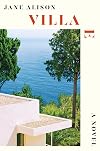
I know nothing of the models for this novel, Le Corbusier (toxic, needy, gargantuan, domineering, consumed with himself) and Eileen Gray (genius, doubting, hidden, longing), but the drama of their characters, particularly when they directly interact, their postures as artists in the best sense, and the interwar period of design and style is vividly rendered in lilting, poetic prose. The aging artists. Reminds of Cusk's Second Place. Interesting, offbeat novel. The villa is this defining and show more confronting work of art, the site of power that should be a site of peace, of joy, of life: his need to possess and the period conveying his privilege by virtue of his sex, his citizenship, and his history overwhelming her. show less
Lists
Awards


You May Also Like


Associated Authors
Statistics
- Works
- 20
- Also by
- 1
- Members
- 1,157
- Popularity
- #22,207
- Rating
- 3.6
- Reviews
- 43
- ISBNs
- 50
- Languages
- 4
- Favorited
- 1
