
Robert Hellenga (1941–2020)
Author of The Sixteen Pleasures
About the Author
Robert Hellenga received a Bachelor's degree in English from the University of Michigan in 1963 and a Ph.D. in English from Princeton University in 1969. After graduation, he taught English literature at Knox College. He has written several novels including The Sixteen Pleasures, The Fall of a show more Sparrow, Philosophy Made Simple, and Snakewoman of Little Egypt. Hellenga was one of 12 writers selected to participate in the first Illinois Arts Council Statewide Reading Series in 1991. Some of his other awards include the 1988 PEN Syndicated Fiction award, the National Endowment for the Arts Artists Fellowship in 1989, the Illinois Arts Council Artist's grant in 1990, and the Society of Midland Authors 1995 Award for Fiction. (Bowker Author Biography) show less
Series
Works by Robert Hellenga
Associated Works
Tagged
Common Knowledge
- Canonical name
- Hellenga, Robert
- Birthdate
- 1941-08-05
- Date of death
- 2020-07-18
- Gender
- male
- Education
- University of Michigan (B.A.|1963)
Princeton University (Ph.D|1969) - Occupations
- professor
literature scholar
novelist - Organizations
- Knox College
- Awards and honors
- National Endowment for the Arts Fellowship
Illinois Arts Council Artists Fellowships (6 times)
Illinois Arts Council Literary Award
PEN Syndicated Fiction Award
The Society of Midland Authors Award for Fiction (1994 | 2014) - Relationships
- Helenga, Virginia (wife)
- Cause of death
- neuroendocrine cancer
- Nationality
- USA
- Birthplace
- Milwaukee, Wisconsin, USA
- Places of residence
- Galesburg, Illinois, USA
- Place of death
- Galesburg, Illinois, USA
- Associated Place (for map)
- Illinois, USA
Members
Reviews
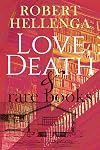
I feel reluctant to review LOVE, DEATH & RARE BOOKS, not because it isn't a wonderful book - it IS! - but because it is Robert Hellenga's last book, published just a few months before his death. I was shocked and deeply saddened at the news of his passing this month (July 2020, he was 78), because I have been reading his work for well over twenty years and would count myself an avid fan. And I had even corresponded aperiodically with Bob over the past ten years, exchanging book chat. So ... show more What to say? Where to begin?
One of the last of Bob's other books that I had read was THE TRUTH ABOUT DEATH, a story collection with that exquisite title novella, about a family-run funeral business that spanned a few generations. Well this one, LD&RB, could easily have been titled "The Truth about Love," because it features a thirty-year love affair between the principal characters - the narrator, Gabe Johnson, and Olivia, a strong-willed woman who passed in and out, and back into Gabe's life. And, as in the aforementioned novella, a three-generation family business is key to the story. Chas. Johnson & Son is a venerated Chicago bookstore and repository of rare books founded in 1932 by Gabe's grandfather. Abandoned by his mother as a boy, and rejected by Olivia, Gabe spends plenty of time and countless occasions pondering the mystery of love, finally arriving at a rather unsatisfactory conclusion as he sits and waits at a deathbed -
"I was thinking that now at last I understood the truth about love. Once again. But what I understood now was that it isn't something you can put into words."
Yes, there is plenty here about the great mysteries of both love and death. (I couldn't help but think of the classic work by literary critic Leslie Fiedler, LOVE AND DEATH IN THE AMERICAN NOVEL, a book I read in grad school decades ago.) But Hellenga's book is also rich in references to books of all kinds, a stew of books great and small that could only come from a life spent studying, teaching and writing. And the references range from Dante, Montaigne, Cicero, Plato, Steinbeck, Wordsworth, Keats, Salman Rushdie, Salinger, and Kraft-Ebbing - and Nancy Friday - to Judy Blume, Beatrix Potter, Walter Moseley, Bulwer-Lytton (originator of the line "It was a dark and stormy night"), Melville, Shakespeare, Kate Chopin, Bellow, Poe, Flaubert, Frank Baum, the Bible (of course), and more and more and on and on. In fact, literary references abound throughout the text, making LD&RB a book lover's delight. Hellenga does not shy away, however, from the current plight of bookstores and the impact of Amazon and ebooks. That issue figures prominently, in fact. And Michigan (my own state) figures in too, as the Johnsons had vacationed regularly for decades at the Lake Michigan beach in the southwest part of that state, just below the St. Joseph/Benton Harbor area. And of course Italy figures in (Hellenga manages to work Italy into almost all of his books, as he was, for most of his life, an ardent Italophile). Gabe's mother is Italian, and left his father for an Italian lover. (In fact, another Hellenga book is titled, THE ITALIAN LOVER.) The rich descriptions of Chicago neighborhoods and the small towns and beaches of Michigan make them almost characters in themselves. And the ethnic foods and various wines play similarly important roles in the story. Oh, and dogs - there are two of them, Punch and Booker.
Hellenga loved all these things - dogs, foods and cooking; fine wines; music (like Hellenga, Gabe plays some blues guitar); books of all kinds, common and rare, classic and pulp; some suspense (there's a bomb in here too); and a good love story, told tastefully. And I could almost feel him placing all these things he loved into this, his last work, mixing and molding them all into a wonderful story that made me both laugh and cry.
It's a beautiful book, Bob. This old book lover absolutely loved it. Thank you. For all of your books. You will be missed. My very highest recommendation.
- Tim Bazzett, author of the memoir, BOOKLOVER show less
One of the last of Bob's other books that I had read was THE TRUTH ABOUT DEATH, a story collection with that exquisite title novella, about a family-run funeral business that spanned a few generations. Well this one, LD&RB, could easily have been titled "The Truth about Love," because it features a thirty-year love affair between the principal characters - the narrator, Gabe Johnson, and Olivia, a strong-willed woman who passed in and out, and back into Gabe's life. And, as in the aforementioned novella, a three-generation family business is key to the story. Chas. Johnson & Son is a venerated Chicago bookstore and repository of rare books founded in 1932 by Gabe's grandfather. Abandoned by his mother as a boy, and rejected by Olivia, Gabe spends plenty of time and countless occasions pondering the mystery of love, finally arriving at a rather unsatisfactory conclusion as he sits and waits at a deathbed -
"I was thinking that now at last I understood the truth about love. Once again. But what I understood now was that it isn't something you can put into words."
Yes, there is plenty here about the great mysteries of both love and death. (I couldn't help but think of the classic work by literary critic Leslie Fiedler, LOVE AND DEATH IN THE AMERICAN NOVEL, a book I read in grad school decades ago.) But Hellenga's book is also rich in references to books of all kinds, a stew of books great and small that could only come from a life spent studying, teaching and writing. And the references range from Dante, Montaigne, Cicero, Plato, Steinbeck, Wordsworth, Keats, Salman Rushdie, Salinger, and Kraft-Ebbing - and Nancy Friday - to Judy Blume, Beatrix Potter, Walter Moseley, Bulwer-Lytton (originator of the line "It was a dark and stormy night"), Melville, Shakespeare, Kate Chopin, Bellow, Poe, Flaubert, Frank Baum, the Bible (of course), and more and more and on and on. In fact, literary references abound throughout the text, making LD&RB a book lover's delight. Hellenga does not shy away, however, from the current plight of bookstores and the impact of Amazon and ebooks. That issue figures prominently, in fact. And Michigan (my own state) figures in too, as the Johnsons had vacationed regularly for decades at the Lake Michigan beach in the southwest part of that state, just below the St. Joseph/Benton Harbor area. And of course Italy figures in (Hellenga manages to work Italy into almost all of his books, as he was, for most of his life, an ardent Italophile). Gabe's mother is Italian, and left his father for an Italian lover. (In fact, another Hellenga book is titled, THE ITALIAN LOVER.) The rich descriptions of Chicago neighborhoods and the small towns and beaches of Michigan make them almost characters in themselves. And the ethnic foods and various wines play similarly important roles in the story. Oh, and dogs - there are two of them, Punch and Booker.
Hellenga loved all these things - dogs, foods and cooking; fine wines; music (like Hellenga, Gabe plays some blues guitar); books of all kinds, common and rare, classic and pulp; some suspense (there's a bomb in here too); and a good love story, told tastefully. And I could almost feel him placing all these things he loved into this, his last work, mixing and molding them all into a wonderful story that made me both laugh and cry.
It's a beautiful book, Bob. This old book lover absolutely loved it. Thank you. For all of your books. You will be missed. My very highest recommendation.
- Tim Bazzett, author of the memoir, BOOKLOVER show less
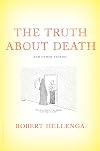
I have begun to think of Robert Hellenga's books as my "Italian Connection." THE TRUTH ABOUT DEATH AND OTHER STORIES is the fifth Hellenga book I have read (there are eight in all), and it seems Italy always crops up. This might seem odd, considering Hellenga has spent most of his professional life teaching at little Knox College in Galesburg, Illinois. But Hellenga's life has been anything but landlocked or isolated. Born in a small town in southwest Michigan and educated at UM and show more Princeton, he has lived in Belfast, Galesburg, Florence, Bologna, Verona, and Rome, and seems to have a special affinity for all things Italian. I think that's called an 'Italophile'.
First things first. This book is worth every penny of the purchase price for the title novella alone. I was immediately caught up in the DEATH story. It is a beautiful portrait of three generations of the Oldfield family, proprietors of a funeral home in Galesburg, Illinois. We learn, in the course of the story, that there has been an Italian connection in all three generations. Louisa, the mother of Simon (the current owner of the business), Elizabeth (Simon's wife), and Hildi (Simon and Elizabeth's daughter) have all had Italian lovers. We see how, through the years, the business evolves and changes. At Hildi's suggestion, the funeral home is brightened up with local art (which is for sale), family members are invited to be present in the washing of the deceased, to hold a hand. There is even a 'therapy dog' named Olive. Much of the story is set in Galesburg, and at the funeral home (and a lot in Italy too), so of course there are deaths, which grow to include some of the principals here. Trigger warning: you may find yourself weeping.
The cover art, a Grim Reaper cartoon from THE NEW YORKER, is significant too. In fact that magazine's cartoon editor, Bob Mankoff, becomes a minor character in Elizabeth's part of the story. Enough said. You HAVE to read the story.
Death is a subject many people prefer not to contemplate, but there is no shrinking from it in "The Truth about Death." It is dealt with in all its complexities. Parts will make you wince, others may bring a chuckle, but there is also a sense of reverence for the mystery that will always surround that place where we are all headed. I loved this story. Louisa, Simon, Elizabeth and Hildi will occupy my mind and heart for a long time.
The other eight stories here are all small gems, many of them written twenty or more years ago, some the seeds for later novels. I enjoyed them all, but I repeat, the title novella is the crown jewel here. And, given the theme of Italian lovers woven throughout the story, I know I absolutely must now read one of Hellenga's earlier novels, titled - naturally - THE ITALIAN LOVER. But this book, THE TRUTH ABOUT DEATH, is just so damn GOOD! You've GOT to read it! My highest recommendation.
- Tim Bazzett, author of the memoir, BOOKLOVER show less
First things first. This book is worth every penny of the purchase price for the title novella alone. I was immediately caught up in the DEATH story. It is a beautiful portrait of three generations of the Oldfield family, proprietors of a funeral home in Galesburg, Illinois. We learn, in the course of the story, that there has been an Italian connection in all three generations. Louisa, the mother of Simon (the current owner of the business), Elizabeth (Simon's wife), and Hildi (Simon and Elizabeth's daughter) have all had Italian lovers. We see how, through the years, the business evolves and changes. At Hildi's suggestion, the funeral home is brightened up with local art (which is for sale), family members are invited to be present in the washing of the deceased, to hold a hand. There is even a 'therapy dog' named Olive. Much of the story is set in Galesburg, and at the funeral home (and a lot in Italy too), so of course there are deaths, which grow to include some of the principals here. Trigger warning: you may find yourself weeping.
The cover art, a Grim Reaper cartoon from THE NEW YORKER, is significant too. In fact that magazine's cartoon editor, Bob Mankoff, becomes a minor character in Elizabeth's part of the story. Enough said. You HAVE to read the story.
Death is a subject many people prefer not to contemplate, but there is no shrinking from it in "The Truth about Death." It is dealt with in all its complexities. Parts will make you wince, others may bring a chuckle, but there is also a sense of reverence for the mystery that will always surround that place where we are all headed. I loved this story. Louisa, Simon, Elizabeth and Hildi will occupy my mind and heart for a long time.
The other eight stories here are all small gems, many of them written twenty or more years ago, some the seeds for later novels. I enjoyed them all, but I repeat, the title novella is the crown jewel here. And, given the theme of Italian lovers woven throughout the story, I know I absolutely must now read one of Hellenga's earlier novels, titled - naturally - THE ITALIAN LOVER. But this book, THE TRUTH ABOUT DEATH, is just so damn GOOD! You've GOT to read it! My highest recommendation.
- Tim Bazzett, author of the memoir, BOOKLOVER show less
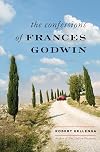
First things first: I LOVED THIS BOOK!! I know, caps and exclamation points - I sound like a teenage girl. But I'm a guy, and I'm more than fifty years past teenage. But Robert Hellenga's newest novel, THE CONFESSIONS OF FRANCES GODWIN, was just so damn good I couldn't believe it. Well, yes I could, because I've already read three other Hellenga novels over the past fifteen years or so - THE SIXTEEN PLEASURES, BLUES LESSONS, and SNAKEWOMAN OF LITTLE EGYPT - and they were all great.
But show more CONFESSIONS may well be Hellenga's best book yet. I think this one is truly a labor of love. The story is set in Galesburg, home of Knox College, where Hellenga taught English for decades and is now a Professor Emeritus and writer-in-residence. The town, lovingly mapped and described, is so important to the story that it practically becomes a character. The title character grew up on a farm nearby and attended Knox College, where she met her husband, Paul Godwin, her Shakespeare teacher (married to someone else at the time).
Galesburg, Milwaukee, Rome, Verona. All important places to Frances Godwin. Parts of her life both with Paul and later with her troubled daughter Stella and by herself. Faith, art, music, life itself. All the big questions are in here, and maybe some answers too. I'm not going to do any plot summaries here. The thing I kept wondering as I was reading was whether Hellenga was intentionally writing a kind of modern version of St. Augustine's CONFESSIONS.
Because narrator Frances calls her story a "spiritual autobiography." A lapsed Catholic, she is fluent in Latin, a dead language, but also the language Augustine wrote in. She has her regrets about things she has done in her life, things recounted in stark and vivid detail, and is constantly toying with the idea of confessing her great sins, and moving "out of the shadows into the light." She has frank conversations with God, a God who seems oddly human and keeps urging her to confess. On one of her trips to Italy she is even carrying a copy of Augustine's CONFESSIONS.
I know a little about St. Augustine, but have to confess I have never read his books. So I am a bit over my head in trying to make a comparison. In the contest of wills between Frances and God, does God win? (Sorry, but I couldn't resist that.) That's something each reader will have to decide. The thing is, this narrative is just so rich with sidebars and details about so many things - all fascinating - that I just did not want it to end. But it does, and when I read that last paragraph, that final line, it gave me goose bumps. It was so perfect, positively perfect.
One more comparison kept popping up as I was reading Hellenga's CONFESSIONS. I kept remembering Agatha McGee, a fictional spinster teacher, the creation of the late Minnesota writer, Jon Hassler, who first appeared in his 1976 novel, STAGGERFORD, and then in several subsequent novels. Like Frances, she was Catholic, but a pragmatic and practical one, who also had her doubts at times.
St Augustine or Jon Hassler? Yeah, there are parallels and comparisons, but Hellenga's Frances Godwin is one of a kind, a kind you don't often see in contemporary fiction. I am selfishly hoping that Hellenga might follow Hassler's lead and bring Frances back again in another novel. She's that fascinating a character. Did I say I LOVED this book? Oh yeah, I guess I did. Terrific book! VERY highly recommended. show less
But show more CONFESSIONS may well be Hellenga's best book yet. I think this one is truly a labor of love. The story is set in Galesburg, home of Knox College, where Hellenga taught English for decades and is now a Professor Emeritus and writer-in-residence. The town, lovingly mapped and described, is so important to the story that it practically becomes a character. The title character grew up on a farm nearby and attended Knox College, where she met her husband, Paul Godwin, her Shakespeare teacher (married to someone else at the time).
Galesburg, Milwaukee, Rome, Verona. All important places to Frances Godwin. Parts of her life both with Paul and later with her troubled daughter Stella and by herself. Faith, art, music, life itself. All the big questions are in here, and maybe some answers too. I'm not going to do any plot summaries here. The thing I kept wondering as I was reading was whether Hellenga was intentionally writing a kind of modern version of St. Augustine's CONFESSIONS.
Because narrator Frances calls her story a "spiritual autobiography." A lapsed Catholic, she is fluent in Latin, a dead language, but also the language Augustine wrote in. She has her regrets about things she has done in her life, things recounted in stark and vivid detail, and is constantly toying with the idea of confessing her great sins, and moving "out of the shadows into the light." She has frank conversations with God, a God who seems oddly human and keeps urging her to confess. On one of her trips to Italy she is even carrying a copy of Augustine's CONFESSIONS.
I know a little about St. Augustine, but have to confess I have never read his books. So I am a bit over my head in trying to make a comparison. In the contest of wills between Frances and God, does God win? (Sorry, but I couldn't resist that.) That's something each reader will have to decide. The thing is, this narrative is just so rich with sidebars and details about so many things - all fascinating - that I just did not want it to end. But it does, and when I read that last paragraph, that final line, it gave me goose bumps. It was so perfect, positively perfect.
One more comparison kept popping up as I was reading Hellenga's CONFESSIONS. I kept remembering Agatha McGee, a fictional spinster teacher, the creation of the late Minnesota writer, Jon Hassler, who first appeared in his 1976 novel, STAGGERFORD, and then in several subsequent novels. Like Frances, she was Catholic, but a pragmatic and practical one, who also had her doubts at times.
St Augustine or Jon Hassler? Yeah, there are parallels and comparisons, but Hellenga's Frances Godwin is one of a kind, a kind you don't often see in contemporary fiction. I am selfishly hoping that Hellenga might follow Hassler's lead and bring Frances back again in another novel. She's that fascinating a character. Did I say I LOVED this book? Oh yeah, I guess I did. Terrific book! VERY highly recommended. show less
This book follows the life of protagonist Gabe Johnson. Written in first person from Gabe’s perspective we learn about his family’s business selling books, with an emphasis on rare books. His grandfather started the business in Chicago. The storyline revolves around the major episodes in Gabe’s life – his coming of age, education, and becoming an integral part of his family’s book business. His mother deserts the family. He falls in love and gets hurt. He examines what is entailed show more in leading a meaningful life.
“I’d learned enough about happiness to know that you can’t aim at it directly. You have to sight off to one side. But what are you supposed to aim at in the first place, before you sight off to one side?”
It is an ode to the love of books, and there are plenty of literary references sprinkled throughout.
It is quiet, reflective, and philosophical. It details the decline of the traditional brick and mortar bookstore, as well as the rise of online bookselling. Simultaneously, it relates fifty years of Gabe’s life. Though it is fiction, it has the feel of a memoir. The writing is elegant and descriptive.
This is a book about life. It provides a great deal of food for thought, particularly about the choices we make, and their short-and-long-term consequences. This is my first book by Robert Hellenga, and I can see why he was nominated as one of our group’s favorite authors. I enjoyed it very much and plan to read more of his work. show less
“I’d learned enough about happiness to know that you can’t aim at it directly. You have to sight off to one side. But what are you supposed to aim at in the first place, before you sight off to one side?”
It is an ode to the love of books, and there are plenty of literary references sprinkled throughout.
It is quiet, reflective, and philosophical. It details the decline of the traditional brick and mortar bookstore, as well as the rise of online bookselling. Simultaneously, it relates fifty years of Gabe’s life. Though it is fiction, it has the feel of a memoir. The writing is elegant and descriptive.
This is a book about life. It provides a great deal of food for thought, particularly about the choices we make, and their short-and-long-term consequences. This is my first book by Robert Hellenga, and I can see why he was nominated as one of our group’s favorite authors. I enjoyed it very much and plan to read more of his work. show less
Lists
Awards


You May Also Like


Associated Authors
Statistics
- Works
- 9
- Also by
- 1
- Members
- 2,546
- Popularity
- #10,090
- Rating
- 3.5
- Reviews
- 116
- ISBNs
- 71
- Languages
- 5
- Favorited
- 4
