
Julia Blackburn
Author of Daisy Bates in the Desert: A Woman's Life Among the Aborigines
About the Author
Image credit: Jerry Bauer
Works by Julia Blackburn
The Wren 1 copy
Associated Works
Tagged
Common Knowledge
- Canonical name
- Blackburn, Julia
- Birthdate
- 1948
- Gender
- female
- Occupations
- writer
- Relationships
- Blackburn, Thomas (father)
- Short biography
- Daughter of poet Thomas Blackburn (1916-1977).
- Nationality
- England
UK - Birthplace
- London, England, UK
- Associated Place (for map)
- England, UK
Members
Reviews
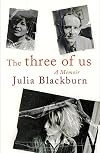
I've read more than my fair share of midlife memoirs written by authors with troubled childhoods: they're a guilty pleasure of mine. Most of them should be subtitled "Here's Why Not Everyone Should Raise Kids." Having said that, I don't know if I've ever read any account of parental behavior that was so literally beastial as what's described in Julia Blackburn's "The Three of Us." To say that they didn't have much regard for social niceties doesn't just understate the case, it misses the show more tenor of their behavior by a couple of miles. At one point, Blackburn's father gets so high on barbiturates that he barks at his family from under a table. Her mother's sexual advances are so blatant that she makes animals that actually have mating dances seem subtle by comparison. In other scenes she comes off as pathologically self-centered and unfeeling. The fact that all of this plays out against the backdrop of gray, more-or-less respectable middle class life in the the grey nineteen fifties makes this story seem even more bizarre. I hope, for your sake, you've never had dinner party guests that were anything like the Blackburns.
What's also odd about this one is how straightforward it is: Julia Blackburn's written more than her share of books, but her narrative style is curiously blank. Curiously, but maybe not surprisingly. Faced with a domestic situation that would drive most kids insane, she seems to have become rather emotionally vacant. While she often comes off as observant and has a genuine fondness for animals, ranging from insects on up, we hear a psychoanalyst describe her, at nineteen, as not having formed a personality. It's not all that hard to believe. Throughout the book, she seems curiously aimless and receptive of her parents' misbehavior, of drugs, of sex, and of life in general. It was, perhaps a coping mechanism, and certainly preferable to active self-harm. But it doesn't always make for compelling reading. as always, it's wonderful to see that she made it through, and that she can construct any narrative at all of her wildly unstable childhood and teen years.
Blackburn brings more in the way of documentary evidence to her narrative than do most midlife memoirists: she draws on years of diaries and letters and includes numerous photographs of herself and her parents. This first-hand documentary material adds a lot to the story, as well providing some temporal structure to what might have been a rather confusing account. The author mentions that she's unable to recall certain meetings or dramas that are nonetheless described in these documents. But she also includes an account of her mother's mercifully peaceful last month, during which they reached a reconciliation of sorts, and faxes she sent during this period to a once and future romantic partner who also appears in the story. These faxes -- which already seem dated by the passage of time! -- contain the book's most artful writing, but these aren't necessarily the most interesting parts of "The Three of Us", though they do, I suppose wrap up the author's own account nicely and prove that she's grown into an admirably stable adulthood. Maybe I should just admit that I, like most readers, don't pick these sorts of books up to hear about the good times.
"The Three of Us" is a solid, and, at times, admirably brave account, but it also seems emotionally detached. Recommended to fans of the genre and, as a sort of public service message, to people unsure about whether they should have kids. If you've ever gotten so out of your head that you've imitated the family pet while on all fours, the answer is probably, "no." show less
What's also odd about this one is how straightforward it is: Julia Blackburn's written more than her share of books, but her narrative style is curiously blank. Curiously, but maybe not surprisingly. Faced with a domestic situation that would drive most kids insane, she seems to have become rather emotionally vacant. While she often comes off as observant and has a genuine fondness for animals, ranging from insects on up, we hear a psychoanalyst describe her, at nineteen, as not having formed a personality. It's not all that hard to believe. Throughout the book, she seems curiously aimless and receptive of her parents' misbehavior, of drugs, of sex, and of life in general. It was, perhaps a coping mechanism, and certainly preferable to active self-harm. But it doesn't always make for compelling reading. as always, it's wonderful to see that she made it through, and that she can construct any narrative at all of her wildly unstable childhood and teen years.
Blackburn brings more in the way of documentary evidence to her narrative than do most midlife memoirists: she draws on years of diaries and letters and includes numerous photographs of herself and her parents. This first-hand documentary material adds a lot to the story, as well providing some temporal structure to what might have been a rather confusing account. The author mentions that she's unable to recall certain meetings or dramas that are nonetheless described in these documents. But she also includes an account of her mother's mercifully peaceful last month, during which they reached a reconciliation of sorts, and faxes she sent during this period to a once and future romantic partner who also appears in the story. These faxes -- which already seem dated by the passage of time! -- contain the book's most artful writing, but these aren't necessarily the most interesting parts of "The Three of Us", though they do, I suppose wrap up the author's own account nicely and prove that she's grown into an admirably stable adulthood. Maybe I should just admit that I, like most readers, don't pick these sorts of books up to hear about the good times.
"The Three of Us" is a solid, and, at times, admirably brave account, but it also seems emotionally detached. Recommended to fans of the genre and, as a sort of public service message, to people unsure about whether they should have kids. If you've ever gotten so out of your head that you've imitated the family pet while on all fours, the answer is probably, "no." show less

I knew very little about Daisy Bates before reading this book and it seems that she was not keen for people to know her true self. But the amazing story of an independent women at a time in history when women were not encouraged to think or do for themselves was fascinating. To choose to move to Australia in the latter half of the 19th century, then to go and live among the aborigines for seriously long years, in a tent, with little or no comforts, must have been confounding to men and women show more in Britain and in the regions and administrations of Australia who heard and encountered her. She must have had an uphill task to get any authorities to see value in the aborigines or their lives and even if she believed they were doomed to extinction she showed respect for their cultures at a time when very few did. show less
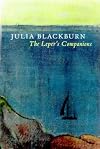
'The Leper's Companions' is a dreamlike narrative rather akin to a prose poem. In it a woman retreats from sadness into the year 1410, following the lives of people in a Suffolk village. The writing is intensely atmospheric, combining the fantastical and mundane. At first it feels episodic, as each chapter seems largely concerned with a single household in the village. Then a group of villagers decide to make a pilgrimage to Jerusalem, and the woman follows them there. Death's proximity to show more life is a major theme. In this 15th century world, death can take both literal and figurative forms:
Although the narrative follows many different characters, the reader learns most about the leper's life. He recalls episodes from his past in Venice, when he contracted leprosy, and how he miraculously recovered. There is an ambiguity about his memories and, as in the rest of the novel, a constant search for meaning in arbitrary events. Time is elastic and the past very close:
Blackburn's writing is beguiling and quietly beautiful. The book ends suddenly and arbitrarily, but this did not detract from my enjoyment of what had come before. show less
But after three days of flickering on the edge, Catherine slept peacefully and when she woke she was fully recovered. The priest was very shocked by the mistake he had made. He explained to her that she was now, as it were, dead to the world because of the prayers he has said over her. She must never again wear shoes or eat meat or be intimate with a man. She laughed when he told her this and didn't seem at all upset.
The priest was eager to know if she had any experience of dying that she could share with him, since people were always asking him what they might expect.
Although the narrative follows many different characters, the reader learns most about the leper's life. He recalls episodes from his past in Venice, when he contracted leprosy, and how he miraculously recovered. There is an ambiguity about his memories and, as in the rest of the novel, a constant search for meaning in arbitrary events. Time is elastic and the past very close:
He was given a lighted candle to hole and then he was swept along shoulder to shoulder with all the others, moving in a daze from one sacred site to the next. He saw where Christ's naked foot had stepped on a slab of marble, leaving a print that was streaked with blood. Here a dead man had been brought to life, and here the crown of thorns had been put on. And here, and here; every bit of space thick with the knowledge of the things it had witnessed long ago.
He walked up the eighteen steps to the summit of Mount Calvary, pausing to look at Adam's skull trapped within a narrow crack of the rock. He put his hand in the socket inlaid with lead which had held the wood of the cross. The coldness and slipperiness of it shocked him; it was like touching an open wound.
A man was kneeling on the floor with the heavy wings of his cloak spread out around him. He was murmuring a prayer but at the same time the leper could hear a gentle tapping and chiselling noise emanating from the secrecy of the cloak, as he carved his initials or perhaps even the intricacy of a family crest into the white side of the rock. It was such an odd thought to want to leave a memory behind rather than take it with you, to presume that this place which had seen so much would now never forget a man with a hammer and chisel.
Blackburn's writing is beguiling and quietly beautiful. The book ends suddenly and arbitrarily, but this did not detract from my enjoyment of what had come before. show less
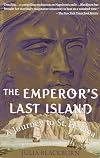
Published in 1991, I found this copy at a free English-language book exchange shelf in a tiny ice cream parlor in Arles, France. It seemed an appropriate place to read about the Emperor Napoleon. Somehow, I had the mistaken idea that he had been exiled to Elba (due to the palindrome, "Able was I, ere I saw Elba") rather than to St. Helena, which is 1800 miles from Brazil, 1200 miles from Africa, and 700 miles from its nearest neighbor! Julia Blackburn does a magnificent job of telling the show more history of the island, how it was "discovered" time and again, exploited, nearly ruined, barely revived. And how it became the prison for the remaining bombastic, regal, and pitiful years of Napoleon's life. She writes beautifully, as when she describes her own trip to the Island during a storm: "You wake up out of a restless dream to a tremendous hubbub of noise and movement and your body is so busy with its own private battle that you can't ask anything of it. There is only passivity, the passivity of waiting for something to change, and you lie there throughout a long day, watching the reflection the waves outside throw on the ceiling of the cabin: a fleeting patterns of light and thin shadows that rushes with a relentless flickering energy like the shadow of smoke in a wind." show less
Lists
Slightly Foxed 1 (1)
Magic Realism (1)
Awards


You May Also Like


Associated Authors
Statistics
- Works
- 19
- Also by
- 3
- Members
- 1,456
- Popularity
- #17,648
- Rating
- 3.6
- Reviews
- 53
- ISBNs
- 118
- Languages
- 10
- Favorited
- 6