
About the Author
Michael T. Klare is Director of the Five College Program in Peace & World Security Studies in Amherst, Mass., & author of numerous books on the changing nature of warfare, including "Low-Intensity Warfare", "Word Security", & "Rogue States" & "Nuclear Outlaws". He lives in Northhampton, show more Massachusetts. (Bowker Author Biography) show less
Works by Michael T. Klare
Blood and Oil: The Dangers and Consequences of America's Growing Dependency on Imported Petroleum (American Empire Project) (2004) 270 copies, 2 reviews
The Race for What's Left: The Global Scramble for the World's Last Resources (2012) 99 copies, 5 reviews
Low Intensity Warfare: Counterinsurgency, Proinsurgency, and Antiterrorism in the Eighties (1987) 57 copies
Resurgent militarism 1 copy
Low intensity warfare 1 copy
The Great South Asian War 1 copy
Guerra senza fine 1 copy
Blood and Oil (DVD) 1 copy
Associated Works
The World According to Tomdispatch: America In The New Age of Empire (2008) — Contributor — 31 copies
Power Trip: U.S. Unilateralism and Global Strategy After September 11 (2003) — Contributor — 22 copies, 1 review
Tagged
Common Knowledge
- Birthdate
- 1942
- Gender
- male
- Education
- Union Institute (PhD|1976)
Columbia University (AM|1968)
Columbia University (AB|1963) - Organizations
- Hampshire College (Professor ∙ World Security Studies)
Five Colleges--Amherst, MA (Five College Professor of Peace and World Security Studies) - Nationality
- USA
- Associated Place (for map)
- USA
Members
Reviews
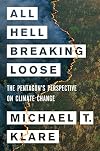
Reporters, researchers and other scribes have long noted the biggest block of attendees at environmental conferences have been military. If it’s environmental, they want to know about it. In Michael Klare’s All Hell Breaking Loose, we learn the finer points of why.
The armed forces need to be prepared for any number of contingencies. They need to be ready for war, obviously, but they are also focused on their own bases, supplies, equipment and people. Plus, as more and more “natural” show more disasters occur with ever fiercer destructive force, the armed forces get called in to rescue, remove, restore, feed and help. They can end up having to deploy to three different theaters in the same month. None of which was a planned operation. This has already happened, as hurricanes battered Puerto Rico as well as Texas, and wildfires raged in California. It will happen again, and they know it.
To all these ends, the military brass has wisely focused on climate change. Klare gives the interesting example of Pakistan, a nuclear-armed nation on the verge of collapse. A killer typhoon, sandstorm, heatwave or flood could tip the balance to chaos there. The government is so weak, it wouldn’t be able to deliver on a rescue or evacuation, let alone a rebuild. US forces have plans laid out to essentially take over in such a case, parachuting in, rolling in, and sailing in to secure the nation from itself. Similarly all over the world, the US military is continually preparing for environmental disaster. It’s a major reason why they have more than 840 overseas bases.
But the military has its own issues too, Klare explains. Not only are its east coast bases flooding, (some of them 85% of the time) but hundred million dollar planes must be evacuated to the interior in the face of hurricanes. Ships must put to sea to avoid a battering. Thousands of staff have to be sent elsewhere too. Out west, meanwhile, excessive heat can mean training is curtailed, flights cancelled and weapons non-functioning. Trying to aim and fire a black metal semi-automatic that is 125 degrees hot itself can pose problems. And then there are the wildfires.
The military is striking out on its own, Klare says. They are looking at redesigns with a goal of “net zero” fossil fuel consumption. They are leaders in biofuel and solar. They are converting to electric vehicles far faster than the country itself. They want to be far less dependent on fuel convoys in overseas conflicts, for one. They don’t trust their “allies” and fuel deliveries make them vulnerable. And it’s getting expensive.
They are putting solar panels on tents and backpacks – anything to make themselves more self-sufficient. They are not waiting for hearings, approvals or tests; they are deploying on a daily basis in their quest for independence and mobility. One day the rest of society might be wise to take a tip or two from their approaches.
The book has issues. Klare writes ponderously, setting up thoughts clumsily. He takes forever to make a point with the groundwork forest he sets up first. He finds himself repeatedly excusing the military in advance, handling them with kid gloves. Clearly, he depends on his access and their openness to him, and his gratitude shows. He is also annoyingly repetitive. For example, he says halfway through that the new ocean opening up in the arctic is expected to have 13% of the world’s unknown oil reserves, and 30% of its gas (making it a potential military hotspot). Two pages later, he quotes Secretary of State Pompeo saying exactly the same thing. And then he repeats it in the conclusion. It desperately needs editing.
But the most striking thing about All Hell Breaking Loose is political, rather than environmental, though Klare downplays it. Despite the president’s direction to eliminate all references to climate change, the military is focused on it. Despite rollbacks of rules and laws and gagging of science and scientists, which the president characterizes as a Chinese hoax, the military says there is no alternative for them; it’s what they face in the world and they need to master it. Wisely, they don’t flaunt it, but the orders, manuals, strategies, roadmaps and buildouts are clearly climate change oriented, in total defiance of their commander in chief. Operating a base under water is not an option, regardless of political fashion. The top brass stand their ground in Congressional hearings, despite badgering by the more extreme lawmakers, as Klare shows. The military sees climate as a real threat and possibly the biggest threat on a global scale. Therefore it must focus on it, cope with it and seek to overcome it. Or at least remediate the damage from it.
“At some point, officers who view national security as a sacred obligation will have no choice but to confront those who persist in climate denial,” Klare says at his most definitive. I wish the whole book was written like that.
David Wineberg show less
The armed forces need to be prepared for any number of contingencies. They need to be ready for war, obviously, but they are also focused on their own bases, supplies, equipment and people. Plus, as more and more “natural” show more disasters occur with ever fiercer destructive force, the armed forces get called in to rescue, remove, restore, feed and help. They can end up having to deploy to three different theaters in the same month. None of which was a planned operation. This has already happened, as hurricanes battered Puerto Rico as well as Texas, and wildfires raged in California. It will happen again, and they know it.
To all these ends, the military brass has wisely focused on climate change. Klare gives the interesting example of Pakistan, a nuclear-armed nation on the verge of collapse. A killer typhoon, sandstorm, heatwave or flood could tip the balance to chaos there. The government is so weak, it wouldn’t be able to deliver on a rescue or evacuation, let alone a rebuild. US forces have plans laid out to essentially take over in such a case, parachuting in, rolling in, and sailing in to secure the nation from itself. Similarly all over the world, the US military is continually preparing for environmental disaster. It’s a major reason why they have more than 840 overseas bases.
But the military has its own issues too, Klare explains. Not only are its east coast bases flooding, (some of them 85% of the time) but hundred million dollar planes must be evacuated to the interior in the face of hurricanes. Ships must put to sea to avoid a battering. Thousands of staff have to be sent elsewhere too. Out west, meanwhile, excessive heat can mean training is curtailed, flights cancelled and weapons non-functioning. Trying to aim and fire a black metal semi-automatic that is 125 degrees hot itself can pose problems. And then there are the wildfires.
The military is striking out on its own, Klare says. They are looking at redesigns with a goal of “net zero” fossil fuel consumption. They are leaders in biofuel and solar. They are converting to electric vehicles far faster than the country itself. They want to be far less dependent on fuel convoys in overseas conflicts, for one. They don’t trust their “allies” and fuel deliveries make them vulnerable. And it’s getting expensive.
They are putting solar panels on tents and backpacks – anything to make themselves more self-sufficient. They are not waiting for hearings, approvals or tests; they are deploying on a daily basis in their quest for independence and mobility. One day the rest of society might be wise to take a tip or two from their approaches.
The book has issues. Klare writes ponderously, setting up thoughts clumsily. He takes forever to make a point with the groundwork forest he sets up first. He finds himself repeatedly excusing the military in advance, handling them with kid gloves. Clearly, he depends on his access and their openness to him, and his gratitude shows. He is also annoyingly repetitive. For example, he says halfway through that the new ocean opening up in the arctic is expected to have 13% of the world’s unknown oil reserves, and 30% of its gas (making it a potential military hotspot). Two pages later, he quotes Secretary of State Pompeo saying exactly the same thing. And then he repeats it in the conclusion. It desperately needs editing.
But the most striking thing about All Hell Breaking Loose is political, rather than environmental, though Klare downplays it. Despite the president’s direction to eliminate all references to climate change, the military is focused on it. Despite rollbacks of rules and laws and gagging of science and scientists, which the president characterizes as a Chinese hoax, the military says there is no alternative for them; it’s what they face in the world and they need to master it. Wisely, they don’t flaunt it, but the orders, manuals, strategies, roadmaps and buildouts are clearly climate change oriented, in total defiance of their commander in chief. Operating a base under water is not an option, regardless of political fashion. The top brass stand their ground in Congressional hearings, despite badgering by the more extreme lawmakers, as Klare shows. The military sees climate as a real threat and possibly the biggest threat on a global scale. Therefore it must focus on it, cope with it and seek to overcome it. Or at least remediate the damage from it.
“At some point, officers who view national security as a sacred obligation will have no choice but to confront those who persist in climate denial,” Klare says at his most definitive. I wish the whole book was written like that.
David Wineberg show less

The author details the resource race that is on for the remaining mineral resources of the planet, and the players involved. He adds a crucial resource missed by most others writing on this subject: agricultural land. The work is thorough and detailed, and it's difficult not to be impressed with the extent of effort corporations put into plundering the planet. It is also difficult not to realize while reading this why we not only keep getting lousy climate agreements, we will likely continue show more getting lousy climate agreements. The main weakness of the book is that the author sort of just waves his hand in the direction of the global warming science and other aspects of environmental science, referring only to "some people" or "environmental activists" who "fear" using the resources will lead to problematic climatic changes. This is probably not out of any undue sympathy for the resource exploiters, but appears instead to be an attempt to appear non-partisan, which should not be an issue with reporting scientific findings and accepting the scientific consensus. Overall, a valuable resource, but a bit annoying in the pursuit of so-called objectivity that results in a lack of objectivity by effectively branding scientists as "activists". show less
Blood and Oil: The Dangers and Consequences of America's Growing Dependency on Imported Petroleum by Michael T. Klare
Rather than simply denounce Bush and issue yet another jeremiad against the neo-cons Klare digs a bit deeper and situates the American dependence on foreign where properly it should begin: with FDR. Moving through successive administrations Klare demonstrates how the Carter Doctrine more deeply entrenched an American over-dependence on foreign oil. He is less reliable as he comes to his conclusions and his political biases impair the clarity that he traced from FDR to Carter.
FDR's meeting show more with King Abdul Aziz ibn Saud of Saudi Arabia "produced the unprecedented oil-for-protection arrangement that has governed American ties with Saudi Arabia ever since" (xiii). During World War II it became clear that reserves of American oil were inadequate for wartime and the post-war peace. American policy makers were determined to ensure an assured pipeline (p. 29). As "codified in the Foreign Petroleum Policy of the United States, a policy statement released by the State Department in 1944" (p. 30). show less
FDR's meeting show more with King Abdul Aziz ibn Saud of Saudi Arabia "produced the unprecedented oil-for-protection arrangement that has governed American ties with Saudi Arabia ever since" (xiii). During World War II it became clear that reserves of American oil were inadequate for wartime and the post-war peace. American policy makers were determined to ensure an assured pipeline (p. 29). As "codified in the Foreign Petroleum Policy of the United States, a policy statement released by the State Department in 1944" (p. 30). show less
A satisfactory summary of the worlds upcoming resource shortages, and the main focal points for what's left. Many previously ignored areas in great power geopolitics could suddenly become flash points.
Shale oil, deep water mining, rare earth elements, food supply. It's all there. An excellent point to begin discussion.
Shale oil, deep water mining, rare earth elements, food supply. It's all there. An excellent point to begin discussion.
Lists
You May Also Like


Associated Authors
Statistics
- Works
- 23
- Also by
- 2
- Members
- 1,018
- Popularity
- #25,308
- Rating
- 3.3
- Reviews
- 9
- ISBNs
- 55
- Languages
- 3
- Favorited
- 2