
Clark Blaise
Author of Time Lord: The Remarkable Canadian Who Missed His Train and Changed the World
About the Author
Clark Blaise was born April 10, 1940 in Fargo, North Dakota. He is a graduate of the Iowa Writers' Workshop at the University of Iowa, and he was also the director of the International Writing Program. While living in Montreal in the early 1970s he joined with authors Raymond Fraser, Hugh Hood, show more John Metcalf and Ray Smith to form the celebrated Montreal Story Tellers Fiction Performance Group. In 2009, he was made an Officer of the Order of Canada "for his contributions to Canadian letters as an author, essayist, teacher, and founder of the post-graduate program in creative writing at Concordia University. His works include Southern Stories, Time Lord, Pittsburgh Stories, and Montreal Stories. (Bowker Author Biography) show less
Image credit: photo credit: chip cooper
Works by Clark Blaise
Time Lord: The Remarkable Canadian Who Missed His Train and Changed the World (2000) 381 copies, 7 reviews
Going To India 2 copies
Best Canadian stories, 79 1 copy
Associated Works
The Workshop: Seven Decades of the Iowa Writers Workshop - 43 Stories, Recollections, & Essays on Iowa's Place in Twentieth-Century American Literature (1999) — Contributor — 197 copies, 1 review
Rediscoveries II: Important Writers Select Their Favorite Works of Neglected Fiction (1988) — Contributor — 31 copies, 1 review
Tagged
Common Knowledge
- Birthdate
- 1940-04-10
- Gender
- male
- Education
- University of Iowa (MFA)
Denison University (BA) - Occupations
- writer
- Awards and honors
- Order of Canada, 2009
American Academy of Arts and Letters Academy Award, 2003 - Relationships
- Mukherjee, Bharati (spouse)
- Nationality
- USA (birth)
Canada (Canadian parents) - Birthplace
- Fargo, North Dakota, USA
- Places of residence
- Montréal, Québec, Canada
Toronto, Ontario, Canada
San Francisco, California, USA - Associated Place (for map)
- USA
Members
Reviews

Clark Blaise's I HAD A FATHER is perhaps the best memoir I have read since George Bowering's PINBOY. (And I read a LOT of memoirs, one of my favorite genres.) Both are Canadian writers and in fact I learned of Blaise from reading Bowering. As Blaise puts it, the two were "softball buddies" in Montreal back in the 70s. Bowering went on to become Canada's first Poet Laureate and achieved considerable fame. Blaise not so much. But it's certainly not because of a lack of talent. Because his tale show more of a poorly educated, reckless and ill-fated French-Canadian father who married several times - "an opportunist, a self-deceiver, and a con-man" - is an absolutely fascinating read.
And Clark's own story is no less absorbing. Born with a mysterious type of dystrophy, he didn't walk until three or talk until four. But his mother was his champion, nurturning and encouraging him throughout his hardscrablle childhood, lived in backwater Florida swamp country (where worms invaded his soles and rectum), inner city Cincinnati (where he was taunted and beaten) and various other short term places all over the U.S. and Canada. But he overcame all this to earn graduate degrees and several prestigious administrative and teaching positions at various colleges and universities, most notably at the University of Iowa, where he stayed for many years.
At the heart of this book, however, is an attempt to understand who his father was and where Blaise himself belongs in the overall scheme of things. Is he Canadian or is he an American? Because although both his parents were Canadian, Blaise was born in Fargo. His whole life has seemed to be a quest for a lasting identity.
But I don't want to overanalyze this book. It is simply a beautifully told story of one man's unusual life, which also sheds valuable light on the history of the French-Canadian people - their insularity, their Catholicism and their refusal to respect international borders, a diaspora of sorts.
This was simply one hell of a good read, hard to put down. Very highly recommended. As a writer, Clark Blaise may be somewhat obscure, but now that he's on my reader's radar I've got to read a few more of his books. Soon, I hope. show less
And Clark's own story is no less absorbing. Born with a mysterious type of dystrophy, he didn't walk until three or talk until four. But his mother was his champion, nurturning and encouraging him throughout his hardscrablle childhood, lived in backwater Florida swamp country (where worms invaded his soles and rectum), inner city Cincinnati (where he was taunted and beaten) and various other short term places all over the U.S. and Canada. But he overcame all this to earn graduate degrees and several prestigious administrative and teaching positions at various colleges and universities, most notably at the University of Iowa, where he stayed for many years.
At the heart of this book, however, is an attempt to understand who his father was and where Blaise himself belongs in the overall scheme of things. Is he Canadian or is he an American? Because although both his parents were Canadian, Blaise was born in Fargo. His whole life has seemed to be a quest for a lasting identity.
But I don't want to overanalyze this book. It is simply a beautifully told story of one man's unusual life, which also sheds valuable light on the history of the French-Canadian people - their insularity, their Catholicism and their refusal to respect international borders, a diaspora of sorts.
This was simply one hell of a good read, hard to put down. Very highly recommended. As a writer, Clark Blaise may be somewhat obscure, but now that he's on my reader's radar I've got to read a few more of his books. Soon, I hope. show less

I'm pleased that I searched out LUNAR ATTRACTIONS (1979), Clark Blaise's first novel, a book that has sadly, I suspect, been largely forgotten today. I recently read Blaise's fine literary memoir, I HAD A FATHER, which piqued my curiosity about his writing career. LUNAR ATTRACTIONS was a revelation. Highly autobiographical in nature, it tells the story of David Greenwood, son of Canadian parents, raised in the swamps of south central Florida. But Blaise's portrait of that area and its poorly show more educated, worm-ridden inhabitants bears little resemblance to, say, the Florida depicted by Marjorie Kinnan Rawlings in THE YEARLING, or the cleaned-up terrain in the TV series, "Gentle Ben." An overweight, unathletic mama's boy who loves maps and memorizing things, David suffers the usual fears and uncertainties of childhood and then some. And then, when the family moves to a large Ohio city the awful pangs of adolescence and David's late-blooming sexual awakening take center stage. About this an early review from "The National Review" stated -
"The most ferocious and astonishing scene of adolescent sexual first contact ever written in English: in fiction"
Amen, brother. That comment says it all about one of the most pivotal scenes in the novel. Blaise's book is a story that builds slowly and artfully to the aforementioned sexual encounter, and then tries to make sense of it all as David continues his education, sexual and otherwise.
I suspect LUNAR ATTRACTIONS was considered a shocking novel in its day for its unusually frank treatment of sexual matters. Hell, it would probably be considered pretty shocking even today. But it works. It all fits within the framework of this unusual coming of age tale set in the early 1950s. Soon I'll have to try some of Blaise's short stories, but in the meantime I'll be thinking of this one for quite a while. Highly recommended. show less
"The most ferocious and astonishing scene of adolescent sexual first contact ever written in English: in fiction"
Amen, brother. That comment says it all about one of the most pivotal scenes in the novel. Blaise's book is a story that builds slowly and artfully to the aforementioned sexual encounter, and then tries to make sense of it all as David continues his education, sexual and otherwise.
I suspect LUNAR ATTRACTIONS was considered a shocking novel in its day for its unusually frank treatment of sexual matters. Hell, it would probably be considered pretty shocking even today. But it works. It all fits within the framework of this unusual coming of age tale set in the early 1950s. Soon I'll have to try some of Blaise's short stories, but in the meantime I'll be thinking of this one for quite a while. Highly recommended. show less

Have you ever imagined what life was like before time zones? Every village had their own time. Noon was when the sun stood directly overhead. New Year's Eve was a wave of celebration that spread town-by-town across the country. None of this was really a problem until the advent of railways. All of a sudden you had to explain to people at both ends of a route what time the train was leaving and arriving. You can imagine the confusion.
Time Lord is marketed as a biography of Sir Sanford show more Fleming, but it's really much broader than that. It's a history of the late Victorian era when people's understanding of time radically shifted. Blaise's work draws significantly on literature to describe people's attitudes towards time.
Fleming is the perfect candidate through which to explore this era. He's known for three main things: surveying a good portion of Canada's cross-country railroad, leading the world to a conference where time was standardized, and laying a world-circling sub-Pacific cable. All three major elements of life swirl around the question of what time is and how it should be described.
Some might feel that the book meanders a little too much. One of the chapters, for example, is almost exclusively devoted to Sherlock Holmes. I, on the other hand, found the leisurely journey through the late nineteenth-century quite fascinating. show less
Time Lord is marketed as a biography of Sir Sanford show more Fleming, but it's really much broader than that. It's a history of the late Victorian era when people's understanding of time radically shifted. Blaise's work draws significantly on literature to describe people's attitudes towards time.
Fleming is the perfect candidate through which to explore this era. He's known for three main things: surveying a good portion of Canada's cross-country railroad, leading the world to a conference where time was standardized, and laying a world-circling sub-Pacific cable. All three major elements of life swirl around the question of what time is and how it should be described.
Some might feel that the book meanders a little too much. One of the chapters, for example, is almost exclusively devoted to Sherlock Holmes. I, on the other hand, found the leisurely journey through the late nineteenth-century quite fascinating. show less
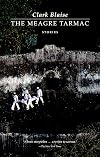
Clark Blaise is a Canadian writer living in the United States, married to Bharti Mukerjeee, also a writer, and the Blaise have spent a great deal of time in India. Much of his work is concerned with questions of immigration, identity and exile and just what 'home' means. In THE MEAGRE TARMAC, a novel of linked short stories, Blaise explores these questions again, dealing here with the lives, desires, disappointments and dreams of Indo-Americans.
In lessor hands, a non-Indian's writing about show more the internal lives of Indians (and much of the book is internal) would be considered unseemly, but Blaise is so good at it, so insightful and compassionate that the question is entirely moot. He writes about people you feel he knows at least at as well as he knows himself.
Many of the characters in these stories are professionally successful, even as their personal lives, and their sense of meaning, disintegrates. One does not have to be Indian to recognize the alienation, longing and loneliness of these people, which Blaise so beautifully and compassionately reveals.
These characters are on journey's inward. They are taking stock of their lives, of their failings, of their illusions and their hopes. Blaise's previous books, which you can find here: http://www.clarkblaise.com/p/books.html have covered similar ground, in different locales, but nobody does it better. His prose is wonderful, his vision clear, his perspective at once deeply moving and yet utterly unsentimental. I have no idea why he doesn't have a broader readership and a big whacking US publisher behind him. He certainly deserves such attention. show less
In lessor hands, a non-Indian's writing about show more the internal lives of Indians (and much of the book is internal) would be considered unseemly, but Blaise is so good at it, so insightful and compassionate that the question is entirely moot. He writes about people you feel he knows at least at as well as he knows himself.
Many of the characters in these stories are professionally successful, even as their personal lives, and their sense of meaning, disintegrates. One does not have to be Indian to recognize the alienation, longing and loneliness of these people, which Blaise so beautifully and compassionately reveals.
These characters are on journey's inward. They are taking stock of their lives, of their failings, of their illusions and their hopes. Blaise's previous books, which you can find here: http://www.clarkblaise.com/p/books.html have covered similar ground, in different locales, but nobody does it better. His prose is wonderful, his vision clear, his perspective at once deeply moving and yet utterly unsentimental. I have no idea why he doesn't have a broader readership and a big whacking US publisher behind him. He certainly deserves such attention. show less
Awards


You May Also Like


Associated Authors
Statistics
- Works
- 23
- Also by
- 9
- Members
- 650
- Popularity
- #38,840
- Rating
- 3.8
- Reviews
- 12
- ISBNs
- 55
- Languages
- 3