
J. L. Locher
Author of The World of M.C. Escher
About the Author
Works by J. L. Locher
M.C. Escher : his life and complete graphic work ; with a fully illustrated catalogue (1981) — Editor — 653 copies, 6 reviews
Stilstaan bij wat zichtbaar is : vier teksten over inhoud, vorm en functie bij het bekijken van kunst (2006) 3 copies, 1 review
Paul Klee 2 copies
Josephine Sloet Paintings 1 copy
Tagged
Common Knowledge
- Legal name
- Locher, Johannes Lodewijk
- Birthdate
- 1938
- Gender
- male
- Occupations
- museum director
university professor - Organizations
- Gemeentemuseum The Hague
- Nationality
- Netherlands
- Birthplace
- Kupang, Timor, Indonesia (Dutch East Indies)
- Associated Place (for map)
- Kupang, Timor, Indonesia
Members
Reviews
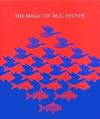
“For the first time, Escher’s most important pictures and drawings are presented as a true spectacle. This is done in unusual sequences of images with, at relevant points, enlarged details that strengthen the visual sensations evoked by Escher’s particular imagery.” This quote from art historian and Escher expert J.L. Locher’s introduction. For me, the sheer size of Escher’s bizarre, mathematically precise illustrations greatly enhance the visual impact of all the stunning show more combinations and permutations of intertwining, interconnecting, interweaving images, images that dazzle, surprise and open one’s imagination as if by a powerful hallucinogen. Sure, those South American shamans can take their ayahuasca, but we in the modern world have the magic of M. C. Escher and this exquisite coffee table book only heightens the magic.
Escher is famous for his use of complex tessellation, those interlocking images of birds, frogs, fish, griffin, angels, demons, lizards, gnomes and various other beings, geometries and patterns. Commenting on his own creations, Escher states, “At moments of great enthusiasm it seems to me that no one in the world has ever made something this beautiful and important.” And if any viewer questions the quality of beauty in Escher’s images, reflecting that such odd, distorted amalgamations contain more of the ugly than any usual, “normal” measure of attractiveness, then these words of the artist might be illuminating: “Perhaps all I pursue is astonishment and so I try to awaken only astonishment in my viewers. Sometimes “beauty” is a nasty business.”
Another great Escher quote: “An artist’s aim is to depict dreams, ideas or problems in such a way that other people can observe and consider them.” What I personally find so compelling is all of Escher’s fantastic dreamscapes, whimsical and unbelievable, curious and out-of-this-world, are in a kind of visual tension with the undeniable fact that these impossible images exist in the first place and my eyes tell me “seeing is believing,” – yes, I see those hooded men walking down the steps and other hooded men walking up the same steps but, wait, that’s not even remotely doable, you can’t go up and down ad infinitum leading nowhere at the same time! Yet this is exactly what I see happening in “Ascending and Descending.” As if perhaps anticipating the tension I allude to here, Escher writes, “The illusion that an artist wishes to create is much more subjective and far more important than the objective, physical means with which he tries to create it.”
My absolute favorite Escher in this book is “Encounter,” where two figures, one white, one black, are locked in multiple tessellations on the back wall, the white one grinning, holding his right hand out ready to receive a handshake, the black one with his huge head and enormous pointed nose in the posture more of a chimpanzee then a man, Both white and black men emerge from the wall’s tessellation and walk in their respective single files around a circular pool, finally meeting one another for a handshake at the front. Actually, Escher’s illustration only captures the first handshake. We as viewers are left, via our imagination, to envision the next steps (no pun intended) leading up to a string of black and white handshakes. And to add even more spice to this series of quizzical encounters, at the point of shaking hands, each black man will issue what looks like a warning with his up pointed left index finger. Escher had this comment on his work: “I was asked, among other things, why does the black on have such a big nose. Well that’s pretty obvious. That’s because he’s inside the belly of the white one. I can’t help that.”
Let me ask: what other artist surpasses M.C. Escher in combining mathematical exactitude, including such specialties as hyperbolic geometry and topology, with creative imagination and the sheer joy of expressing visual possibilities and impossibilities? If there are such artists out there, I will make it my business to become acquainted with their work sooner rather than later. And how did M. C. Escher use his eyes to penetrate the world? I’ll let the artist answer in his own words: “That which an artist makes is a mirror image of what he sees around him.” What do you see around you? Need some inspiration to expand your vision? Here is your book. show less
“For the first time, Escher’s most important pictures and drawings are presented as a true spectacle. This is done in unusual sequences of images with, at relevant points, enlarged details that strengthen the visual sensations evoked by Escher’s particular imagery.” This quote from art historian and Escher expert J.L. Locher’s introduction. For me, the sheer size of Escher’s bizarre, mathematically precise illustrations greatly enhance the visual impact of all the stunning show more combinations and permutations of intertwining, interconnecting, interweaving images, images that dazzle, surprise and open one’s imagination as if by a powerful hallucinogen. Sure, those South American shamans can take their ayahuasca, but we in the modern world have the magic of M. C. Escher and this exquisite coffee table book only heightens the magic.
Escher is famous for his use of complex tessellation, those interlocking images of birds, frogs, fish, griffin, angels, demons, lizards, gnomes and various other beings, geometries and patterns. Commenting on his own creations, Escher states, “At moments of great enthusiasm it seems to me that no one in the world has ever made something this beautiful and important.” And if any viewer questions the quality of beauty in Escher’s images, reflecting that such odd, distorted amalgamations contain more of the ugly than any usual, “normal” measure of attractiveness, then these words of the artist might be illuminating: “Perhaps all I pursue is astonishment and so I try to awaken only astonishment in my viewers. Sometimes “beauty” is a nasty business.”
Another great Escher quote: “An artist’s aim is to depict dreams, ideas or problems in such a way that other people can observe and consider them.” What I personally find so compelling is all of Escher’s fantastic dreamscapes, whimsical and unbelievable, curious and out-of-this-world, are in a kind of visual tension with the undeniable fact that these impossible images exist in the first place and my eyes tell me “seeing is believing,” – yes, I see those hooded men walking down the steps and other hooded men walking up the same steps but, wait, that’s not even remotely doable, you can’t go up and down ad infinitum leading nowhere at the same time! Yet this is exactly what I see happening in “Ascending and Descending.” As if perhaps anticipating the tension I allude to here, Escher writes, “The illusion that an artist wishes to create is much more subjective and far more important than the objective, physical means with which he tries to create it.”
My absolute favorite Escher in this book is “Encounter,” where two figures, one white, one black, are locked in multiple tessellations on the back wall, the white one grinning, holding his right hand out ready to receive a handshake, the black one with his huge head and enormous pointed nose in the posture more of a chimpanzee then a man, Both white and black men emerge from the wall’s tessellation and walk in their respective single files around a circular pool, finally meeting one another for a handshake at the front. Actually, Escher’s illustration only captures the first handshake. We as viewers are left, via our imagination, to envision the next steps (no pun intended) leading up to a string of black and white handshakes. And to add even more spice to this series of quizzical encounters, at the point of shaking hands, each black man will issue what looks like a warning with his up pointed left index finger. Escher had this comment on his work: “I was asked, among other things, why does the black on have such a big nose. Well that’s pretty obvious. That’s because he’s inside the belly of the white one. I can’t help that.”
Let me ask: what other artist surpasses M.C. Escher in combining mathematical exactitude, including such specialties as hyperbolic geometry and topology, with creative imagination and the sheer joy of expressing visual possibilities and impossibilities? If there are such artists out there, I will make it my business to become acquainted with their work sooner rather than later. And how did M. C. Escher use his eyes to penetrate the world? I’ll let the artist answer in his own words: “That which an artist makes is a mirror image of what he sees around him.” What do you see around you? Need some inspiration to expand your vision? Here is your book. show less

Maybe you've heard of M. C. Escher, the famous woodblock artist known for his Italian landscape prints? Don't associate him with landscapes? There's a fascinating story here.
Escher was born on June 17th, 1898, in the Netherlands. He did poorly in school, but excelled at woodblock print, and was already producing compelling material by his early twenties.
When Escher was 23, he set off for Italy, a landscape with which he quickly became enamored. During the first decade-and-a-half of his show more professional life as a print maker, he was known for his Italian landscapes.
All of this changed in Escher's mid thirties. First, visited the Alhamba (a 13th-Century Islamic palace in Spain) for his second time and became entranced by the "field patterns" in the ornamentation.
With WWII impending, Escher left Italy (to Switzerland, Belgium, and Holland). He says, "I found the outward appearance of landscape and architecture less striking...Thus I felt compelled to withdraw from...illustrating of my surroundings...bringing my inner vision into being."
When Escher was 40, his father died. From this point forward, Escher's distinctive style comes to the fore, and with it, the renown he is now associated with, in contrast with his earlier period dominated by landscape art.
Bruno Ernst, a teacher of mathematics, has categorized Escher's later works into seven domains:
1. Penetration of worlds
2. The illusion of space
3. The regular division of the plane
4. Perspective
5. Regular solids and spirals
6. The impossible
7. The infinite
Personally, I am most fascinated with Escher's depiction of what architect Christopher Alexander would refer to as "deep interlock," or what Escher saw as "interpenetration." For example, "Three World," in which we can simultaneously view the fish, the leaves, and the trees.
This also becomes apparent in Escher's "field patterns." In these images, there is no "negative space," as each "figure" is surrounded by the "ground" of another, equally engaging figure. Alexander refers to this concept as "positive space."
Tragically, despite his exposure to the Alhambra, Escher failed to realize that his art fell within a rich and storied craft stretching back at least a millennium. “I have often wondered why, in their decorative zeal, the designers of patterns such as these [at the Alhambra] never, as far as I know, went beyond abstract motifs to recognizable representation.”
Whereas Escher saw his work as contributing to a narrative arc in a progression of art from geometric figures to realistic depictions, Alexander deftly articulates the exact opposite thesis in his masterwork on carpets—that such a trend represents the degeneration of an art form.
Questions of generation and degeneration aside, we can all agree that Escher's work is playful. I first fell in love with his work as a child, and much of his material has the spark of fantasy and magic.
A few notes on the book:
It isn't quite a biography. The editors cover the first part of Escher's life in what you might refer to as a biography, but then the book moves into letters exchanged an essays. Although the letters are interesting, and would make for good appendices, the quality of the description of Escher's life suffers as a result of them becoming the primary narrative.
It is interesting to reflect on the fact that, for Escher, form was far more important than color. As a result, it isn't surprising he chose printmaking as opposed to, say watercolor. show less
Escher was born on June 17th, 1898, in the Netherlands. He did poorly in school, but excelled at woodblock print, and was already producing compelling material by his early twenties.
When Escher was 23, he set off for Italy, a landscape with which he quickly became enamored. During the first decade-and-a-half of his show more professional life as a print maker, he was known for his Italian landscapes.
All of this changed in Escher's mid thirties. First, visited the Alhamba (a 13th-Century Islamic palace in Spain) for his second time and became entranced by the "field patterns" in the ornamentation.
With WWII impending, Escher left Italy (to Switzerland, Belgium, and Holland). He says, "I found the outward appearance of landscape and architecture less striking...Thus I felt compelled to withdraw from...illustrating of my surroundings...bringing my inner vision into being."
When Escher was 40, his father died. From this point forward, Escher's distinctive style comes to the fore, and with it, the renown he is now associated with, in contrast with his earlier period dominated by landscape art.
Bruno Ernst, a teacher of mathematics, has categorized Escher's later works into seven domains:
1. Penetration of worlds
2. The illusion of space
3. The regular division of the plane
4. Perspective
5. Regular solids and spirals
6. The impossible
7. The infinite
Personally, I am most fascinated with Escher's depiction of what architect Christopher Alexander would refer to as "deep interlock," or what Escher saw as "interpenetration." For example, "Three World," in which we can simultaneously view the fish, the leaves, and the trees.
This also becomes apparent in Escher's "field patterns." In these images, there is no "negative space," as each "figure" is surrounded by the "ground" of another, equally engaging figure. Alexander refers to this concept as "positive space."
Tragically, despite his exposure to the Alhambra, Escher failed to realize that his art fell within a rich and storied craft stretching back at least a millennium. “I have often wondered why, in their decorative zeal, the designers of patterns such as these [at the Alhambra] never, as far as I know, went beyond abstract motifs to recognizable representation.”
Whereas Escher saw his work as contributing to a narrative arc in a progression of art from geometric figures to realistic depictions, Alexander deftly articulates the exact opposite thesis in his masterwork on carpets—that such a trend represents the degeneration of an art form.
Questions of generation and degeneration aside, we can all agree that Escher's work is playful. I first fell in love with his work as a child, and much of his material has the spark of fantasy and magic.
A few notes on the book:
It isn't quite a biography. The editors cover the first part of Escher's life in what you might refer to as a biography, but then the book moves into letters exchanged an essays. Although the letters are interesting, and would make for good appendices, the quality of the description of Escher's life suffers as a result of them becoming the primary narrative.
It is interesting to reflect on the fact that, for Escher, form was far more important than color. As a result, it isn't surprising he chose printmaking as opposed to, say watercolor. show less

A collection of Escher in large format, with a short introduction and bio of the artist. I love the art, but this book only reproduces 9 of Escher's works in color - the rest are black and white. For these the colors used are noted in the descriptions (!). Maybe the editors will do a companion for Michelangelo, with the Sistine Chapel in monochrome Poloroids...
Lists
Awards

You May Also Like


Associated Authors
Statistics
- Works
- 25
- Members
- 1,821
- Popularity
- #14,127
- Rating
- 4.3
- Reviews
- 18
- ISBNs
- 45
- Languages
- 6