
Dan J. Marlowe (1914–1987)
Author of The Name of the Game is Death
About the Author
Series
Works by Dan J. Marlowe
The Vengeance Man / Park Avenue Tramp / the Prettiest Girl I Ever Killed: A Trio of Gold Medals (2007) 21 copies, 1 review
The Name of the Game is Death / One Endless Hour (Dan J. Marlowe Bibliography) (2013) 16 copies, 1 review
Comme à confesse 1 copy
Black Lizard 1 copy
Décarrade aux bahamas 1 copy
L'assassino aveva la chiave 1 copy
Jeu de quilles 1 copy
Farliga planer 1 copy
Operation kidnappning 1 copy
Svarta planer 1 copy
Knock-out mortal 1 copy
Belas e perigosas 1 copy
One Endless Hour 1 copy
Associated Works
The Best of Mystery: 63 Short Stories Chosen by the Master of Suspense (1982) — Contributor — 429 copies
Lighthouse Horrors: Tales of Adventure, Suspense and the Supernatural (1993) — Contributor — 80 copies, 1 review
Tricks and Treats: An Anthology of Mystery Stories by the Mystery Writers of America (1976) — Contributor — 16 copies
Tagged
Common Knowledge
- Legal name
- Marlowe, Dan James
- Other names
- Avellano, Albert
Sandaval, Jaime - Birthdate
- 1914
- Date of death
- 1987
- Gender
- male
- Nationality
- USA
- Birthplace
- Lowell, Massachusetts, USA
- Associated Place (for map)
- Massachusetts, USA
Members
Reviews

A sweet slice of old-school action-adventure pulp is an effective diversion from current affairs.
Marlowe gives us a first-rate amnesiac noir with slow-burn suspense, a voluptuous wife with murderous intentions, a guy named Jackrabbit who blows off steam by chopping wood, alcohol, blackmail, stud poker, international intrigue, alcohol, grownup spanking, anti-communism, a shrimp boat shootout—
Many threads, but Marlowe never fumbles the spool. Lots of good sentences, and a few days of relief.
Marlowe gives us a first-rate amnesiac noir with slow-burn suspense, a voluptuous wife with murderous intentions, a guy named Jackrabbit who blows off steam by chopping wood, alcohol, blackmail, stud poker, international intrigue, alcohol, grownup spanking, anti-communism, a shrimp boat shootout—
Many threads, but Marlowe never fumbles the spool. Lots of good sentences, and a few days of relief.

I’m more of what you’d call a casual fan of the noir genre. Sure I love Chandler, respect Hammett and pick up a MacDonald now and again, but I don’t follow the type and it doesn’t make up a lot of my reading. I can’t remember when I first heard about Dan Marlowe; it might have been as a result of a mention by Stephen King on his first Hard Case Crime offering. That must have generated a flurry of interest into who this unknown writer was to deserve such an accolade. King called him show more the “hardest of the hardboiled” and it is not misplaced.
What is our fascination with criminals? Psychopaths, sociopaths, devious thieves, liars, cheats, murderers...all’s jake with us if they do these things from a good place. Righteous revenge for example. If someone goes on a bloody rampage, leaving bodies in his wake like piles of twisted rack on a beach, and it’s in the name of righting a wrong, why is that something we can get behind? Why the hell did I root for Chet Arnold (aka Roy Martin, aka Drake) all during this book? Why could I not wait to see how those who deserved it got what was coming to them? Why could I overlook a brutal and sadistic rape (which wouldn’t have happened to the male party of this particular duo)? Why indeed. I don’t know if I want to probe my own psyche that deeply to find out.
Marlowe plunges us right into the set up on page 1 and he never lets up. In a few paragraphs the bank job is in the rear view and Bunny and Roy get their heads down. Not a long time goes by and Roy gets evidence that Bunny is no longer in the picture. Through shrewd planning, luck and a ruthless disposition, he sets himself on a path of revenge. Properly outfitted his road trip goes smoothly and he even turns the bumps in the road to good use and soon arrives where Bunny was holed up. As a nominal tree surgeon, he garners good will in the small town and soon has friends and contacts enough to suss who killed Bunny. With the pair in his sights, he stalks them like any predator would and his revenge is anything but served cold.
Interspersed with the present day action are flashbacks to Drake’s past. With these flashbacks Marlowe builds sympathy and even empathy for his anti-hero. True to the “show a cat in act 1 and it must die in act 3” meme, we’ve got Drake’s number now. His eventual descent into a rage-driven psychopath seems right and proper. The subsequent flashbacks about how he tried to straighten up and fly right only to become the subject of police brutality and abuse, make his plight even more sympathetic. What else could a poor boy do except turn master criminal? Only to be expected.
Even in present day, Drake is a man with two distinct sides. He’ll casually plot your death and execute you with cold precision, free of detection or guilt and the next minute he’ll be rescuing a dog from certain death or making love with abandon and skill. Marlowe made him so likable that I was able to overcome one of my triggers in fiction that usually makes me stop reading (I definitely stop watching a movie with a rape in it). Because the book is told in the first person, it’s obvious that Drake lives to tell his tale, but the ending is quick, mysterious, precarious and open. A sequel didn’t appear for another 7 years, but Drake comes back and drives hard for another dozen books or so. Goody. show less
What is our fascination with criminals? Psychopaths, sociopaths, devious thieves, liars, cheats, murderers...all’s jake with us if they do these things from a good place. Righteous revenge for example. If someone goes on a bloody rampage, leaving bodies in his wake like piles of twisted rack on a beach, and it’s in the name of righting a wrong, why is that something we can get behind? Why the hell did I root for Chet Arnold (aka Roy Martin, aka Drake) all during this book? Why could I not wait to see how those who deserved it got what was coming to them? Why could I overlook a brutal and sadistic rape (which wouldn’t have happened to the male party of this particular duo)? Why indeed. I don’t know if I want to probe my own psyche that deeply to find out.
Marlowe plunges us right into the set up on page 1 and he never lets up. In a few paragraphs the bank job is in the rear view and Bunny and Roy get their heads down. Not a long time goes by and Roy gets evidence that Bunny is no longer in the picture. Through shrewd planning, luck and a ruthless disposition, he sets himself on a path of revenge. Properly outfitted his road trip goes smoothly and he even turns the bumps in the road to good use and soon arrives where Bunny was holed up. As a nominal tree surgeon, he garners good will in the small town and soon has friends and contacts enough to suss who killed Bunny. With the pair in his sights, he stalks them like any predator would and his revenge is anything but served cold.
Interspersed with the present day action are flashbacks to Drake’s past. With these flashbacks Marlowe builds sympathy and even empathy for his anti-hero. True to the “show a cat in act 1 and it must die in act 3” meme, we’ve got Drake’s number now. His eventual descent into a rage-driven psychopath seems right and proper. The subsequent flashbacks about how he tried to straighten up and fly right only to become the subject of police brutality and abuse, make his plight even more sympathetic. What else could a poor boy do except turn master criminal? Only to be expected.
Even in present day, Drake is a man with two distinct sides. He’ll casually plot your death and execute you with cold precision, free of detection or guilt and the next minute he’ll be rescuing a dog from certain death or making love with abandon and skill. Marlowe made him so likable that I was able to overcome one of my triggers in fiction that usually makes me stop reading (I definitely stop watching a movie with a rape in it). Because the book is told in the first person, it’s obvious that Drake lives to tell his tale, but the ending is quick, mysterious, precarious and open. A sequel didn’t appear for another 7 years, but Drake comes back and drives hard for another dozen books or so. Goody. show less

At his best, Marlowe is very good, but a serious misogynous thread runs through his work. Women are treated as objects at best, and in this book, one woman is treated far worse than that. She is a doctor who has helped the protagonist recover from a serious accident which has left him with amnesia. As readers, we know that the protagonist's wife and brother tried to kill him by running his car into a Florida canal. Miraculously, he survives, and the rest of the story is pretty fascinating as show more he reunites with his wife, who has a change of heart when she sees her "dead" husband return home thirty pounds lighter and sexually reinvigorated. There is a lot of interesting stuff here and some good action, but it's hard to like this book too much. show less
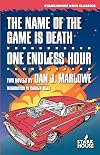
Sometimes, when I skim the reviews of The Name of the Game is Death, I get the odd but distinct impression that I read an altogether different book. Stephen King has called Dan J. Marlowe "the hardest of the hard-boiled," and reviews of Marlowe's novels tend to read like a Yosemite Sam boast (i.e., Marlowe was the roughest, toughest, rootinest, tootinest, shootinest crime author whose work ever graced the printed page). This is his magnum opus, and while it does contain enough violence to show more rattle the nerves of even the most jaded crime thriller fan, to ascribe the book's brilliance to its high body count rather misses the point. Marlowe's antihero Drake is not mindlessly, unfeelingly hostile like Kells in Paul Cain's Fast One, nor is he a cartoon tough guy like Carroll John Daly's Race Williams: he's a human being, and Marlowe went to great pains to underscore his humanity.
Yes, this novel lives up to its reputation for teeth-grinding intensity, but it's got more to offer than just action. What sets Name of the Game apart is its profoundly damaged but relatable central character. show less
Yes, this novel lives up to its reputation for teeth-grinding intensity, but it's got more to offer than just action. What sets Name of the Game apart is its profoundly damaged but relatable central character. show less
Lists
Edgar Award (1)
Awards

You May Also Like


Associated Authors
Statistics
- Works
- 73
- Also by
- 11
- Members
- 800
- Popularity
- #31,871
- Rating
- 3.7
- Reviews
- 36
- ISBNs
- 129
- Languages
- 4
- Favorited
- 1