
Rich Larson (1) (1992–)
Author of Annex
For other authors named Rich Larson, see the disambiguation page.
Series
Works by Rich Larson
Asimov's Science Fiction: Vol. 48, No. 5 & 6 [May/June 2024] — Contributor — 5 copies
An Evening With Severyn Grimes 3 copies
Sparks Fly {short story} 2 copies
The Conceptual Shark {short story} 2 copies
You Make Pattaya 2 copies
All That Robot ... {short story} 2 copies
Water Scorpions {short story} 2 copies
The Rise Of Alpha Gal 1 copy
Last {short story} 1 copy
Tidings {short story} 1 copy
Barbarians 1 copy
Ice {short story} 1 copy
The Singularity: Issue 2 — Contributor — 1 copy
Cupido {short story} 1 copy
Meshed {short story} 1 copy
Masked {short story} 1 copy
Associated Works
The Year's Best Science Fiction: Thirty-Second Annual Collection (2015) — Contributor — 203 copies, 8 reviews
The Year's Best Science Fiction: Thirty-Third Annual Collection (2016) — Contributor — 189 copies, 2 reviews
The Very Best of the Best: 35 Years of The Year's Best Science Fiction (2019) — Contributor — 180 copies, 1 review
Some of the Best from Tor.com: 2019 Edition: A Tor.com Original (2020) — Contributor — 157 copies, 3 reviews
The Year's Best Science Fiction: Thirty-Fifth Annual Collection (2018) — Contributor — 151 copies, 3 reviews
The Year's Best Science Fiction: Thirty-Fourth Annual Collection (2017) — Contributor — 147 copies, 4 reviews
The Year's Best Science Fiction Vol. 1: The Saga Anthology of Science Fiction 2020 (2020) — Contributor — 109 copies, 7 reviews
Some of the Best from Tor.com: 2020 Edition: A Tor.com Original (2021) — Contributor — 101 copies, 3 reviews
The Best Science Fiction and Fantasy of the Year Volume Thirteen (2019) — Contributor — 67 copies, 3 reviews
The Year's Best Science Fiction Vol. 2: The Saga Anthology of Science Fiction 2021 (2021) — Contributor — 58 copies
The Long List Anthology Volume 5: More Stories from the Hugo Award Nomination List (The Long List Anthology Series) (2019) — Contributor — 53 copies
The Best Science Fiction and Fantasy of the Year Volume Twelve (2018) — Contributor — 47 copies, 2 reviews
Life Beyond Us: An Original Anthology of SF Stories and Science Essays (2023) — Contributor — 35 copies, 1 review
Asimov's Science Fiction: Vol. 42, No. 3 & 4 [March/April 2018] (2018) — Contributor — 12 copies, 1 review
The Magazine of Fantasy and Science Fiction January/February 2017, Vol. 132, Nos. 1 & 2 (2017) — Contributor — 11 copies, 1 review
Asimov's Science Fiction: Vol. 39, No. 12 [December 2015] (2015) — Contributor — 10 copies, 1 review
Asimov's Science Fiction: Vol. 40, No. 10 & 11 [October/November 2016] (2016) — Contributor — 10 copies
Asimov's Science Fiction: Vol. 41, No. 7 & 8 [July/August 2017] (2017) — Contributor — 9 copies, 1 review
Dark Matter Presents Monstrous Futures: A Sci-Fi Horror Anthology (2023) — Contributor — 7 copies, 1 review
Asimov's Science Fiction: Vol. 43, No. 9 & 10 [September/October 2019] (2019) — Contributor — 7 copies
Beneath Ceaseless Skies Issue #245, Special Double-Issue for BCS Science-Fantasy Month 4 (2018) — Contributor — 4 copies, 1 review
Asimov's Science Fiction: Vol. 44, No. 9 & 10 [September/October 2020] (2020) — Contributor — 3 copies
Martian: The Magazine of Science Fiction Drabbles (Martian Magazine Book 1) (2021) — Contributor — 3 copies, 1 review
Compelling Science Fiction Issue 4 — Contributor — 2 copies
Over the Brink: Tales of Environmental Disaster (Third Flatiron Anthologies Book 1) (2012) — Contributor — 1 copy
Andromeda Spaceways Inflight Magazine 61 — Contributor — 1 copy
Tales to Terrify, #293: The Blurry Man / In the Octopus's Garden (1999) — Contributor — 1 copy, 1 review
Tagged
Common Knowledge
- Birthdate
- 1992
- Gender
- male
- Birthplace
- Galmi, Niger
- Places of residence
- Ottawa, Ontario, Canada
Prague, Czech Republic - Map Location
- Canada
Members
Reviews
Ymir by Rich Larson
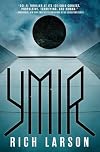
I received this novel from Orbit Books, through NetGalley, in exchange for an honest review: my thanks to both of them for this opportunity.
Chillingly grim but totally fascinating. If I were asked to sum up my experience with Ymir in five words, these would be the perfect choice: this novel’s blurb likens it to a spacefaring version of Beowulf, and there are indeed some connections to that famous epic (including a request for a monster’s arm as a trophy), but Ymir is very much its own show more story, and a compelling - if sometimes harsh - one.
The alien planet of Ymir is a frozen, forbidding wasteland in which humanity (or rather a genetically modified branch of it) toils by mining its resources under the aegis of the Company, a ruthless cartel which grinds its employees with little or no regards for their rights or comforts, and quashes any attempt at rebellion with swift brutality. But the Company’s profit is threatened by grendels, alien constructs which are part flesh and part cybernetic components: a recent attack from a grendel in the depths of a mine cost the Company a number of workers and, far worse from their point of view, a stop to the extraction activities, so Yorick, the best grendel hunter in their employ, is dispatched to Ymir to solve the problem.
Yorick was kept in torpor (a sort of cold-storage suspended animation the Company employs to make its assets last longer, among other uses) for a long time, and once awakened he’s not happy to be returned to his home planet, from which he’s been absent for a subjective time of ten years, while on the world twenty have effectively elapsed. The hunter is considered a traitor on his home world, since he joined the ranks of the Company and committed some serious atrocities in their employ, but what’s worse he has some huge unfinished business to deal with: before he left he violently clashed with his brother Thello, who shot him with a needle gun taking away the lower half of Yorick’s face, which has since then been replaced by a prosthesis (warning: this is something of a gross detail in the narrative).
The timing for the hunt could not be worse, however, because a widespread rebellion against the Company is brewing under the icy surface of the planet, and Thello might be at the center of it, forcing Yorick to deal with the conflicting emotions generated by his past associations and his present duties: the road he finds himself traveling is fraught with dangers, and they don’t come only from the grendel’s threat…
‘Fascinating’ was the word I first used for this novel, and it is indeed despite its bleakness, which starts with the descriptions of Ymir, where darkness and ice extend as far as the eye can see, taking their toll on the miners and reflecting in their living spaces, where there is almost no respite from the harshness of the land. The workers are just as hard and unforgiving as the environment they live in, the physical changes wrought on them from generations turning them into creatures as alien as the place they live in: there are several flashbacks from Yorick as he recalls his and Thello’s childhood, marred by the lack of acceptance from their peers - who called them half-breeds - and by their mother’s abusive behavior, a consequence of her though living and working conditions. Young Yorick wanted nothing else but to escape from Ymir, taking Thello with him, while his younger brother felt stronger ties with the place and its people, and that difference was the spark that ultimately led to their final, bloody encounter.
Still, family ties can exert a strong pull on Yorick, and from the start we see him torn between love and hate for Thello and the planet were they were born: getting to know Yorick, and connecting with him as a character, is the most difficult part of the book, because he’s not an easy or relatable figure. Past actions have branded him a monster, and the old disfigurement added to the image, but what makes Yorick such a anti-hero is his self-destructive attitude: we see him literally wallowing in recreative drugs or in performance-enhancing drugs, and it’s clear that what’s left under that mountain of self abuse is a broken individual with little hope and almost no dreams - only nightmares. The skilled, heartless hunter is nothing but a shell under which the damaged child still dwells:
He takes his space like a gas giant, making his body as big as he can. […] Inside, when nobody can see him, he always makes himself small.
What ultimately saves Yorick from being a despicable character (and I assure you that looking past that constantly drugged fog is NOT easy…) is his desire to re-establish a bond with Thello, to still try and save him as he was unable to in the past. I’m sorry I can’t say more because I risk treading on spoiler territory, but Yorick’s attempt at a redemption arc is what manages to bring to the surface what little humanity is left in him. And this is enough.
Ymir might not be the easiest book to read, but it offers such a compelling narrative that it will prove quite difficult to set aside. show less
Chillingly grim but totally fascinating. If I were asked to sum up my experience with Ymir in five words, these would be the perfect choice: this novel’s blurb likens it to a spacefaring version of Beowulf, and there are indeed some connections to that famous epic (including a request for a monster’s arm as a trophy), but Ymir is very much its own show more story, and a compelling - if sometimes harsh - one.
The alien planet of Ymir is a frozen, forbidding wasteland in which humanity (or rather a genetically modified branch of it) toils by mining its resources under the aegis of the Company, a ruthless cartel which grinds its employees with little or no regards for their rights or comforts, and quashes any attempt at rebellion with swift brutality. But the Company’s profit is threatened by grendels, alien constructs which are part flesh and part cybernetic components: a recent attack from a grendel in the depths of a mine cost the Company a number of workers and, far worse from their point of view, a stop to the extraction activities, so Yorick, the best grendel hunter in their employ, is dispatched to Ymir to solve the problem.
Yorick was kept in torpor (a sort of cold-storage suspended animation the Company employs to make its assets last longer, among other uses) for a long time, and once awakened he’s not happy to be returned to his home planet, from which he’s been absent for a subjective time of ten years, while on the world twenty have effectively elapsed. The hunter is considered a traitor on his home world, since he joined the ranks of the Company and committed some serious atrocities in their employ, but what’s worse he has some huge unfinished business to deal with: before he left he violently clashed with his brother Thello, who shot him with a needle gun taking away the lower half of Yorick’s face, which has since then been replaced by a prosthesis (warning: this is something of a gross detail in the narrative).
The timing for the hunt could not be worse, however, because a widespread rebellion against the Company is brewing under the icy surface of the planet, and Thello might be at the center of it, forcing Yorick to deal with the conflicting emotions generated by his past associations and his present duties: the road he finds himself traveling is fraught with dangers, and they don’t come only from the grendel’s threat…
‘Fascinating’ was the word I first used for this novel, and it is indeed despite its bleakness, which starts with the descriptions of Ymir, where darkness and ice extend as far as the eye can see, taking their toll on the miners and reflecting in their living spaces, where there is almost no respite from the harshness of the land. The workers are just as hard and unforgiving as the environment they live in, the physical changes wrought on them from generations turning them into creatures as alien as the place they live in: there are several flashbacks from Yorick as he recalls his and Thello’s childhood, marred by the lack of acceptance from their peers - who called them half-breeds - and by their mother’s abusive behavior, a consequence of her though living and working conditions. Young Yorick wanted nothing else but to escape from Ymir, taking Thello with him, while his younger brother felt stronger ties with the place and its people, and that difference was the spark that ultimately led to their final, bloody encounter.
Still, family ties can exert a strong pull on Yorick, and from the start we see him torn between love and hate for Thello and the planet were they were born: getting to know Yorick, and connecting with him as a character, is the most difficult part of the book, because he’s not an easy or relatable figure. Past actions have branded him a monster, and the old disfigurement added to the image, but what makes Yorick such a anti-hero is his self-destructive attitude: we see him literally wallowing in recreative drugs or in performance-enhancing drugs, and it’s clear that what’s left under that mountain of self abuse is a broken individual with little hope and almost no dreams - only nightmares. The skilled, heartless hunter is nothing but a shell under which the damaged child still dwells:
He takes his space like a gas giant, making his body as big as he can. […] Inside, when nobody can see him, he always makes himself small.
What ultimately saves Yorick from being a despicable character (and I assure you that looking past that constantly drugged fog is NOT easy…) is his desire to re-establish a bond with Thello, to still try and save him as he was unable to in the past. I’m sorry I can’t say more because I risk treading on spoiler territory, but Yorick’s attempt at a redemption arc is what manages to bring to the surface what little humanity is left in him. And this is enough.
Ymir might not be the easiest book to read, but it offers such a compelling narrative that it will prove quite difficult to set aside. show less
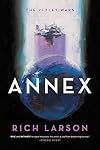
I read this book in an old school way - voraciously, no audio, in the heat of summer, to the exclusion of many other things, in a day or two - and I can say I really enjoyed it. It's engaging YA sci fi with well drawn, well observed characters - including a young woman of trans experience. I thought she was very well written, with a nuance, sensitivity and empathy that was refreshing and, in my experience, extremely uncommon. There are themes in the book that deeply resonated with me, most show more of them centering on her experience - belonging, the price of it, the impossibility of it at times. In short, I think this book is very much worth reading, and I look forward to reading the next one. I'm impressed with this author. show less
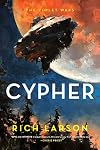
I received a copy of this novel from the publisher in exchange for an honest review.
Yorick is a company man with so much love to give. After nearly twenty years in torpor (think suspended animation but more dead than frozen) he’s back on his home planet of Ymir. It is far from a happy homecoming as Ymir is near bursting with a revolt against the company and Yorick has a history there he’d like to forget. Now he has to hunt a grendel and be haunted by the memories of his brother. With his show more bionic jaw and habitual drug use, he is unwell, but there is no one for whom it is well.
“Ymir” by Rich Larson was sold to me as “BEOWULF IN SPAAAAACE!!!!” And I get that comparison. There is a grim Viking feeling found throughout the book and the monster is referred to as a grendel. However, I found that description lacking. The overall story doesn’t really follow the same beats as “Beowulf,” though there are rather distinct episodes similar to how the saga has three unique parts. Yet, if you’re looking for a one-to-one plot comparison you’ll be left confused.
The main similarity for me is not the plot but the theme. “Beowulf” is at its heart about legacy. Beowulf establishes his legacy as a warrior. Hrothgar is struggling to establish his legacy as king. The saga ends with the future legacy of Beowulf’s reign up in the air as the dragon lays waste and the king dies. Likewise “Ymir” is all about Yorick’s legacy on his home planet, his family, and the Company. He tries to forget the legacy he left behind by using drugs. He attempts to rewrite his legacy by trying to right his longs.
I loved this book. There is a cyberpunk-esque aesthetic that I loved and while the setting was grim it was never hopeless. The author never held your hand and explained everything, but instead, let some mysteries stay hidden. While it was thought-provoking, it was also a quick read.
The only complaint I had was that Yorick was at times a frustrating protagonist. He is made out in the story to be a famed grendel hunter, but all we see for the most part is a broken man. Which is fine, I love a flawed, broken protagonist, but I would have loved to see more moments of competence. Yet, in the end, I also recognize that this is a more thoughtful story than an action-packed thriller.
Definitely give this book a chance. I was so glad I did, and I’m sure you will be too. show less
Yorick is a company man with so much love to give. After nearly twenty years in torpor (think suspended animation but more dead than frozen) he’s back on his home planet of Ymir. It is far from a happy homecoming as Ymir is near bursting with a revolt against the company and Yorick has a history there he’d like to forget. Now he has to hunt a grendel and be haunted by the memories of his brother. With his show more bionic jaw and habitual drug use, he is unwell, but there is no one for whom it is well.
“Ymir” by Rich Larson was sold to me as “BEOWULF IN SPAAAAACE!!!!” And I get that comparison. There is a grim Viking feeling found throughout the book and the monster is referred to as a grendel. However, I found that description lacking. The overall story doesn’t really follow the same beats as “Beowulf,” though there are rather distinct episodes similar to how the saga has three unique parts. Yet, if you’re looking for a one-to-one plot comparison you’ll be left confused.
The main similarity for me is not the plot but the theme. “Beowulf” is at its heart about legacy. Beowulf establishes his legacy as a warrior. Hrothgar is struggling to establish his legacy as king. The saga ends with the future legacy of Beowulf’s reign up in the air as the dragon lays waste and the king dies. Likewise “Ymir” is all about Yorick’s legacy on his home planet, his family, and the Company. He tries to forget the legacy he left behind by using drugs. He attempts to rewrite his legacy by trying to right his longs.
I loved this book. There is a cyberpunk-esque aesthetic that I loved and while the setting was grim it was never hopeless. The author never held your hand and explained everything, but instead, let some mysteries stay hidden. While it was thought-provoking, it was also a quick read.
The only complaint I had was that Yorick was at times a frustrating protagonist. He is made out in the story to be a famed grendel hunter, but all we see for the most part is a broken man. Which is fine, I love a flawed, broken protagonist, but I would have loved to see more moments of competence. Yet, in the end, I also recognize that this is a more thoughtful story than an action-packed thriller.
Definitely give this book a chance. I was so glad I did, and I’m sure you will be too. show less
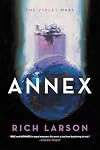
I received this novel from Orbit Books, through NetGalley, in exchange for an honest review: my thanks to both of them for this opportunity.
My previous experience with Rich Larson’s writing is limited to a short story I read some time ago, one that however left a lasting impression on me because of its lucid bleakness, so that once I learned this is his first full-length novel, I did not hesitate to see how that sharp storytelling translated into a longer work – and the answer is, very show more well.
As Annex opens, we readers are immediately thrown into the thick of things: a huge alien ship appeared over the city where the characters live, an image that strongly reminded me of Independence Day, and destroyed a number of buildings with a surgical attack. The surviving adults were then ‘clamped’, fixed with a neural interface connecting them to a virtual reality simulation of their normal lives, while they wander around, zombie-like. The children were rounded up and implanted with what they call a parasite embedded in their stomach, and are held in warehouses where mechanical constructs dubbed ‘whirlybirds’ keep them sedated and docile.
No other explanation is given about the aliens’ motivation or goals and that’s understandable since we witness events from the children’s point of view, and know just as little as they do: this might prove a little jarring at first, but the pace of the story is such that knowing the how and why of things matters less than the characters’ journey. Two of them take the center stage from the very beginning: Bo is an eleven year old boy of Nigerian origins who managed to escape from one of the warehouses, driven by the need to find his older sister Lia, who was moved elsewhere by the aliens. After his breakout, Bo meets with Violet and through her connects with a group of other escapees living in an abandoned theater and calling themselves the Lost Boys, led by teenaged Wyatt. Violet is a transgender on the make: after the alien attack she saw the opportunity of granting herself what family and society denied her until that moment, and she’s been dosing herself with hormones to effect the desired transition.
The outside world Bo finds himself in is revealed in all its horror as he finds his place among the Lost Boys: besides the immanent presence of the ship and the accompanying gloom that prevents the sun from shining through – at some point it’s also shown that there is an impassable barrier at the city’s limits – the ruins are plagued by roving pods that look for stray children to capture and imprison in the warehouses and by the othermothers, bio-mechanical constructs that partly resemble the children’s real mothers and are built by the aliens to lure them out of hiding. Bo’s first act as a Lost Boy must be the killing of his othermother, to show that he’s disenfranchised himself from the world of adults, that his loyalties now lie only with his newfound family.
Both he and Violet were already outsiders before the invasion and this seems to make them uniquely able to survive in this changed world, and to retain a form of independence that the other kids lack, which in turn makes them easy prey for Wyatt’s manipulative skills: there is a strong parallel between Wyatt and the less idealized versions of Peter Pan, those where he looks less like the carefree boy and more like a scheming psychopath. It’s indeed the arrival of Bo, and the discovery of the uncanny power he can wield through his parasite, that changes the dynamics among the Lost Boys and brings Wyatt’s underlying cruelty – and madness – to the surface, creating a dramatic turn of events inside an already tense situation.
What happens at that point requires some suspension of disbelief, since the children embark on a mission to fight the aliens and “save the world”, and frankly the sequence of events goes at times quite over the top, but the breakneck speed of this story, that develops in the brief space of few days, makes it easier to believe it all and to follow with growing nervousness Bo and Violet’s progress through the alien ship and the Lost Boys’ commando action against the alien invaders.
Much as I rooted for Bo and his quest to save his sister Lia, it was Violet’s journey that I found quite compelling: her status as a transgender person is an important issue and I appreciated how it was not her only defining trait but one of the facets that made her who she is. What I loved about her were the layers of inner conflict that made her stand out from the other characters: the struggle inherent in her gender identity; the struggle between her need for independence and her caring attitude toward the younger and needier Lost Boys; the struggle between her attraction toward Wyatt and the perception of his personality’s wrongness. But what really stood out was her inability to let go of her parents – the drunken father and the listless mother – whose house she visits regularly even though they are not aware of her presence, moving inside the implanted hallucinations of the alien clamp: the nightly visits to her former home speak highly of her continuing bond with the two most important people in her life, despite their rejection of her sexual inclination and in spite of Wyatt’s credo about clamped adults being “better off dead”, and make for one of the most deeply emotional scenes in the book.
The slowly accumulating revelations about the aliens’ intention, the children’s plight in this crazy world, their battle against the invader, all contribute to make Annex a compelling read – and I need to also mention the character of Gloom, a different kind of alien that Bo and Violet encounter at some point, a shape-shifting, self-defined saboteur whose true intentions still remain a mystery. As the first book in a trilogy, Annex introduces a fascinating background that begs for further expansion and promises a conflict whose ramifications and outcome are far from certain: I look forward to learning more about Violet & Co. and can hardly wait for the next book in the series.
Originally posted at SPACE and SORCERY BLOG show less
My previous experience with Rich Larson’s writing is limited to a short story I read some time ago, one that however left a lasting impression on me because of its lucid bleakness, so that once I learned this is his first full-length novel, I did not hesitate to see how that sharp storytelling translated into a longer work – and the answer is, very show more well.
As Annex opens, we readers are immediately thrown into the thick of things: a huge alien ship appeared over the city where the characters live, an image that strongly reminded me of Independence Day, and destroyed a number of buildings with a surgical attack. The surviving adults were then ‘clamped’, fixed with a neural interface connecting them to a virtual reality simulation of their normal lives, while they wander around, zombie-like. The children were rounded up and implanted with what they call a parasite embedded in their stomach, and are held in warehouses where mechanical constructs dubbed ‘whirlybirds’ keep them sedated and docile.
No other explanation is given about the aliens’ motivation or goals and that’s understandable since we witness events from the children’s point of view, and know just as little as they do: this might prove a little jarring at first, but the pace of the story is such that knowing the how and why of things matters less than the characters’ journey. Two of them take the center stage from the very beginning: Bo is an eleven year old boy of Nigerian origins who managed to escape from one of the warehouses, driven by the need to find his older sister Lia, who was moved elsewhere by the aliens. After his breakout, Bo meets with Violet and through her connects with a group of other escapees living in an abandoned theater and calling themselves the Lost Boys, led by teenaged Wyatt. Violet is a transgender on the make: after the alien attack she saw the opportunity of granting herself what family and society denied her until that moment, and she’s been dosing herself with hormones to effect the desired transition.
The outside world Bo finds himself in is revealed in all its horror as he finds his place among the Lost Boys: besides the immanent presence of the ship and the accompanying gloom that prevents the sun from shining through – at some point it’s also shown that there is an impassable barrier at the city’s limits – the ruins are plagued by roving pods that look for stray children to capture and imprison in the warehouses and by the othermothers, bio-mechanical constructs that partly resemble the children’s real mothers and are built by the aliens to lure them out of hiding. Bo’s first act as a Lost Boy must be the killing of his othermother, to show that he’s disenfranchised himself from the world of adults, that his loyalties now lie only with his newfound family.
Both he and Violet were already outsiders before the invasion and this seems to make them uniquely able to survive in this changed world, and to retain a form of independence that the other kids lack, which in turn makes them easy prey for Wyatt’s manipulative skills: there is a strong parallel between Wyatt and the less idealized versions of Peter Pan, those where he looks less like the carefree boy and more like a scheming psychopath. It’s indeed the arrival of Bo, and the discovery of the uncanny power he can wield through his parasite, that changes the dynamics among the Lost Boys and brings Wyatt’s underlying cruelty – and madness – to the surface, creating a dramatic turn of events inside an already tense situation.
What happens at that point requires some suspension of disbelief, since the children embark on a mission to fight the aliens and “save the world”, and frankly the sequence of events goes at times quite over the top, but the breakneck speed of this story, that develops in the brief space of few days, makes it easier to believe it all and to follow with growing nervousness Bo and Violet’s progress through the alien ship and the Lost Boys’ commando action against the alien invaders.
Much as I rooted for Bo and his quest to save his sister Lia, it was Violet’s journey that I found quite compelling: her status as a transgender person is an important issue and I appreciated how it was not her only defining trait but one of the facets that made her who she is. What I loved about her were the layers of inner conflict that made her stand out from the other characters: the struggle inherent in her gender identity; the struggle between her need for independence and her caring attitude toward the younger and needier Lost Boys; the struggle between her attraction toward Wyatt and the perception of his personality’s wrongness. But what really stood out was her inability to let go of her parents – the drunken father and the listless mother – whose house she visits regularly even though they are not aware of her presence, moving inside the implanted hallucinations of the alien clamp: the nightly visits to her former home speak highly of her continuing bond with the two most important people in her life, despite their rejection of her sexual inclination and in spite of Wyatt’s credo about clamped adults being “better off dead”, and make for one of the most deeply emotional scenes in the book.
The slowly accumulating revelations about the aliens’ intention, the children’s plight in this crazy world, their battle against the invader, all contribute to make Annex a compelling read – and I need to also mention the character of Gloom, a different kind of alien that Bo and Violet encounter at some point, a shape-shifting, self-defined saboteur whose true intentions still remain a mystery. As the first book in a trilogy, Annex introduces a fascinating background that begs for further expansion and promises a conflict whose ramifications and outcome are far from certain: I look forward to learning more about Violet & Co. and can hardly wait for the next book in the series.
Originally posted at SPACE and SORCERY BLOG show less
Lists
Awards


You May Also Like


Associated Authors
Statistics
- Works
- 60
- Also by
- 145
- Members
- 389
- Popularity
- #62,203
- Rating
- 3.6
- Reviews
- 35
- ISBNs
- 34
- Languages
- 2