
Karin Muller (1) (1965–)
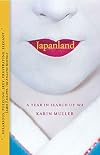
Author of Japanland: A Year in Search of Wa
For other authors named Karin Muller, see the disambiguation page.
About the Author
Image credit: japanlandonline.com
Works by Karin Muller
Tagged
Common Knowledge
- Birthdate
- 1965-06-08
- Gender
- female
- Occupations
- Reiseschriftstellerin
- Nationality
- Switzerland
- Birthplace
- Switzerland
- Places of residence
- Raleigh, North Carolina, USA
Australia
Members
Reviews

I have what some might call a minor major obsession with Japan. As such, it didn't take much convincing for me to buy this book, which is an account of the author spending a year in Japan in search of harmony and balance for her life.
What this is not, I should say, is a travel guide to Japan. It contains a lot of fantastic insights into the culture, both mainstream and more esoteric, but if you plan to read this book thinking that it will make your trip to Tokyo easier, you'll be show more disappointed.
On the other hand, if you have an interest in what Japanese culture is like for both an insider and an outsider, then I definitely recommend this book. From her stay with a host family to her Buddhist pilgrimage, Karin Muller weaves a wonderful story with skill, honesty, and respect. She's not ashamed to reveal her own ignorance of some situations, nor is she ashamed to point out when other people are just plain baffling, at least by Western sensibilities.
I have read this book more than once now, and it's one of the few books that I can safely say I take more away from it each time I read it. It's an engrossing book, with plenty to amuse those who nothing about Japanese culture and those who know quite a bit.
By the end of the book, whether the author feels they've achieved a sense of inner peace and harmony is almost irrelevent. She's learned a great deal, experienced more than most people ever dream of, and she's taken away a little piece of another place to keep inside herself. In a sense, her pilgrimage toward the end of her time in Japan was only a fraction of the pilgrimage she embarked upon, and it left an impression that even the reader can feel as they share the journey from beginning to end. show less
What this is not, I should say, is a travel guide to Japan. It contains a lot of fantastic insights into the culture, both mainstream and more esoteric, but if you plan to read this book thinking that it will make your trip to Tokyo easier, you'll be show more disappointed.
On the other hand, if you have an interest in what Japanese culture is like for both an insider and an outsider, then I definitely recommend this book. From her stay with a host family to her Buddhist pilgrimage, Karin Muller weaves a wonderful story with skill, honesty, and respect. She's not ashamed to reveal her own ignorance of some situations, nor is she ashamed to point out when other people are just plain baffling, at least by Western sensibilities.
I have read this book more than once now, and it's one of the few books that I can safely say I take more away from it each time I read it. It's an engrossing book, with plenty to amuse those who nothing about Japanese culture and those who know quite a bit.
By the end of the book, whether the author feels they've achieved a sense of inner peace and harmony is almost irrelevent. She's learned a great deal, experienced more than most people ever dream of, and she's taken away a little piece of another place to keep inside herself. In a sense, her pilgrimage toward the end of her time in Japan was only a fraction of the pilgrimage she embarked upon, and it left an impression that even the reader can feel as they share the journey from beginning to end. show less
I haven't read many travel memoirs, but I find myself hoping that all of them are as engaging as this one.
Of course, it helps to have an interest in the places the author writes about. My best friend first got me interested in Japan, and there's something about its cultural differences from the West, its contradictory values, and its unique way of blending the past and the present so seamlessly that fascinates me. Karin Muller's journey into this country only deepened my knowledge and show more wonder.
In easy, conversational language, Muller jumps among the people and places she meets, from her up-and-down relations with her host family to various strangers, professionals, roommates, homeless, monks, and pilgrims she interacts with. Sometimes she is met with incredible acts of kindness and understanding, other times with coldness and even cruelty. It serves to underscore the kind of experience a foreigner can have in Japan; either welcomed or shunned, or sometimes both.
Muller's style makes it easy to get to know not only Japan, but also her as a person. I found myself admiring and sympathizing with her; she is honest about her fear, anger, and hopelessness in some situations, and yet she never grows self-pitying or gives up, although I might have many times. She tries her best to understand Japan and its culture, going to sometimes unimaginable lengths to fit in and accept its laws and values. She never judges the culture as right or wrong, instead musing over it, a fact I found very refreshing. She is honest about the good and the bad facets.
All in all, I want to read more of Karin's adventures, if she handles them all with such engaging and unwavering curiosity and aplomb. show less
Of course, it helps to have an interest in the places the author writes about. My best friend first got me interested in Japan, and there's something about its cultural differences from the West, its contradictory values, and its unique way of blending the past and the present so seamlessly that fascinates me. Karin Muller's journey into this country only deepened my knowledge and show more wonder.
In easy, conversational language, Muller jumps among the people and places she meets, from her up-and-down relations with her host family to various strangers, professionals, roommates, homeless, monks, and pilgrims she interacts with. Sometimes she is met with incredible acts of kindness and understanding, other times with coldness and even cruelty. It serves to underscore the kind of experience a foreigner can have in Japan; either welcomed or shunned, or sometimes both.
Muller's style makes it easy to get to know not only Japan, but also her as a person. I found myself admiring and sympathizing with her; she is honest about her fear, anger, and hopelessness in some situations, and yet she never grows self-pitying or gives up, although I might have many times. She tries her best to understand Japan and its culture, going to sometimes unimaginable lengths to fit in and accept its laws and values. She never judges the culture as right or wrong, instead musing over it, a fact I found very refreshing. She is honest about the good and the bad facets.
All in all, I want to read more of Karin's adventures, if she handles them all with such engaging and unwavering curiosity and aplomb. show less
Who can fathom the ways of readers? Here I was, smack-dab in the middle of a book about a person who travels to China, and I suddenly find myself drawn to a book about a person who travels to Japan. This one. Go figure.Nevertheless, a compelling read. Japan is not all it appears, it seems. In fact, that's the central theme of the book, the mask that Japan and the Japanese wear for the rest of the world. All is well, the mask says, while underneath the person dies for another day. This take show more on Japan has altered the appeal Japan has always had for me. Appearance as more important than essence. Hiding sadness and pain with stoic masks. Just an Eastern version of my deep South America. show less
Lately my Netflix queue has been full to the brim with anime and J-Horror movies. I find myself with an insatiable curiosity about most things Japanese (if it's small, fuzzy and saccharine sweet I can usually resist). I dream of packing my bags and heading off to the island 'someday'. So when Amazon recommended this book to me, I felt it was the perfect venue for some armchair travel. And indeed, Muller does give you a sense of what being an outsider, a Gaijin, is like: at the home of her show more host family, at the market, asking directions on the street, in the public baths, etc.
Japanland, as described by Muller, is "an alternate reality", "the mask Japan wears in public". She spent a year documenting various Japanese citizens: monks, sumo wrestlers, drummers, judo practitioners, sword makers, business men, immigrants, geisha, even the homeless, with the purpose of assimilating their true culture. The marketing blurb on the front flap says the book has 'broad scope' and I do agree with that. But it also feels quite shallow, as if Muller never penetrated the 'mask' she speaks of. It's a light, easy read but ultimately I was left somewhat unsatisfied with it and will probably look for another book on the same subject. show less
Japanland, as described by Muller, is "an alternate reality", "the mask Japan wears in public". She spent a year documenting various Japanese citizens: monks, sumo wrestlers, drummers, judo practitioners, sword makers, business men, immigrants, geisha, even the homeless, with the purpose of assimilating their true culture. The marketing blurb on the front flap says the book has 'broad scope' and I do agree with that. But it also feels quite shallow, as if Muller never penetrated the 'mask' she speaks of. It's a light, easy read but ultimately I was left somewhat unsatisfied with it and will probably look for another book on the same subject. show less
Lists
Awards


You May Also Like


Statistics
- Works
- 3
- Members
- 441
- Popularity
- #55,515
- Rating
- 3.5
- Reviews
- 15
- ISBNs
- 99
- Languages
- 6