
William W. Warner (1920–2008)
Author of Beautiful Swimmers: Watermen, Crabs and the Chesapeake Bay
About the Author
Author William W. Warner was born in Manhattan, New York in 1920. In 1943, he received a bachelor's degree in geology from Princeton University. He joined the Naval Reserve and was called to active duty during World War II where he served as an aerial photoanalyst in the South Pacific. After the show more war, he opend a ski lodge in Stowe, Vermount and taught high school English. In 1953, he worked in Central and South America organizing cultural programs for the United States Information Agency. In 1961, he was the Peace Corps. program coordinator for Latin America. He worked at the Smithsonian Institution from 1964 to 1972. He wrote four books during his lifetime. Beautiful Swimmers, a study of crabs and watermen in the Chesapeake Bay, won the Pulitzer Prize for nonfiction in 1977 and has never gone out of print. He also wrote Distant Water: The Fate of the North Atlanic Fisherman, At Peace with All Their Neighbors, and Into the Porcupine Cave and Other Odysseys. He died from complications of Alzheimer's disease on April 18, 2008. (Bowker Author Biography) show less
Works by William W. Warner
Associated Works
Tagged
Common Knowledge
- Birthdate
- 1920-04-02
- Date of death
- 2008-04-18
- Gender
- male
- Education
- Cornell University
Princeton University - Occupations
- foreign service officer
biologist
writer - Organizations
- US Marine Corps (WWII)
Smithsonian Institution
U.S. Foreign Service - Nationality
- USA
- Birthplace
- New York, New York, USA
- Place of death
- Washington, D.C., USA
- Associated Place (for map)
- USA
Members
Reviews

This is a truly wonderful book and it is gratifying to know it won a Pulitzer, because its merits are obvious. The story begins as one about the blue crab—beautiful swimmer—but seamlessly shifts focus to watermen, their lives, and the history, culture and ecology of the Chesapeake. Scenes are vivid, characters leap off the page, and the author’s genuine regard for his subject surges through the work. He deftly applies what must have been extensive scholarly research and considerable show more field observation in a manner that is free from pedantry or the self-indulgence that sometimes colors the exposition of a writer passionate about his subject. It was with eagerness that I returned to each section and with delight that I left it. Warner makes a compelling case for the protection and conservation of the bay without ever preaching or badgering. His admiration, and love for this particular piece of creation, its creatures and the lives of those living there shine through, and make one want to share his concerns. show less

William Warner’s Beautiful Swimmers is a classic piece of narrative non-fiction, and a fine introduction to the blue crabs of Chesapeake Bay and the working lives of the “watermen” who pursue them. It bears comparison to Rachel Carson’s The Edge of the Sea (for its attention to natural history, and its deft integration of the latest scientific data), to Henry Beston’s The Outermost House (for its portrait of a beautiful, isolated coastline), and to Michael Ruhlman’s Wooden Boats show more (for its sympathetic portraits of people whose work keeps alive a slowly dying art), but its greatest strength is the way it combines those elements. The design of Chesapeake Bay workboats, changing state and federal fisheries regulations, the economics of the seafood business, and the changing demographics of the bayside communities come into the story, too. Warner’s goal is to craft a fully rounded, fully integrated portrait of the watermen’s world, and he succeeds – brilliantly.
Published in 1976 and based on visits made over several years, Beautiful Swimmers describes the Cheasapeake, and the watermen, as they existed forty years ago. It is, in other words, a time capsule: A window on a world that no longer exists. The middle-aged watermen that Warner put to sea with are retired or dead, now, and the younger ones now grown to gray-haired patriarchs for whom the early seventies are a distant memory. Development, tourism, pollution, and overfishing have – if four decades of changes to my coastal New England home are a guide – erased some of the uniqueness, and some of the insularity, of the world that Warner wrote about.
If Warner could, as he wrote, see such changes coming, he kept his thoughts about them to himself. Beautiful Swimmers isn’t a prescription for what the Bay should become or a cautionary tale of what it might become. It’s a beautifully crafted declarative sentence of book that quietly says: “At this place, in this time, this is how it was.” show less
Published in 1976 and based on visits made over several years, Beautiful Swimmers describes the Cheasapeake, and the watermen, as they existed forty years ago. It is, in other words, a time capsule: A window on a world that no longer exists. The middle-aged watermen that Warner put to sea with are retired or dead, now, and the younger ones now grown to gray-haired patriarchs for whom the early seventies are a distant memory. Development, tourism, pollution, and overfishing have – if four decades of changes to my coastal New England home are a guide – erased some of the uniqueness, and some of the insularity, of the world that Warner wrote about.
If Warner could, as he wrote, see such changes coming, he kept his thoughts about them to himself. Beautiful Swimmers isn’t a prescription for what the Bay should become or a cautionary tale of what it might become. It’s a beautifully crafted declarative sentence of book that quietly says: “At this place, in this time, this is how it was.” show less
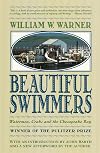
So, there you are, in 2017, reading a 1994 reprint edition of a 1977 Pulitzer Prize winning book in non-fiction. You've already lost the interest of millions of potential readers who believe the only good book is a fictional one, or at least a non-fictional one structured to feel just like a fictional one, with a clear plot, central characters, and the rest. To be sure, this is not one of those books written -- how should I say it? -- with lots of creative flair. Then, to add to its show more problems, it is full of very dated comments about the economy of its day, when prices and wages were dramatically different from today. However, for me, that is all almost besides the point. The author is presenting the intricate interactions of creatures and people in the vast, complex ecosystem of the Chesapeake Bay. First, it has going for it that this reader lives and has spent much time on the water in the fairly comparable Puget Sound and Salish Sea area. There is lots to draw upon for interest. Secondly, being someone who still vividly remembers stopping on a simple but typical two-lane highway and paying only 25 cents a gallon for gasoline during especially contentious price wars, this reader can adjust more quickly than many others much younger to the seemingly bizarre monetary figures thrown about in this book. (Only a couple bucks for a pound of crab, indeed!) And yet, most importantly, the author is so patiently thorough in his investigation of his subject, that his writing eventually wins the reader over. He has just enough background in the subject to know what he doesn't know and how to go about learning the most he can about what he needs to know. In this case, this is a book concentrating on "watermen" making a living on seafood harvesting. Imagine yourself, perhaps, as a person whose mother was a good cook and allowed you to participate fully, as a child, in preparing a variety of foods for family meals. What foods? What kind to buy? What was a good price? What equipment used to prepare them, to cook them? In the author's case, he was brought up on the waters of the Bay, and he almost instinctively knew how to approach and spend time with these watermen. (There is one chapter on his time with a particular crabber that is worth the price of admission all on its own, and there are others nearly as good.) In essence, he was offered a chance to spend a lot of time with his own equivalent of "top chefs" and has passed along what he learned to us. The journey into the ecology, the economy, the personalities, the localities, is ultimately very satisfying. show less
I was asked to read Beautiful Swimmers for our book club. I really enjoyed reading this book about the history of the watermen on the Chesapeake Bay, the blue crab and its life cycles, and the islands on the Eastern Shore of Maryland and Virginia. It was interesting to read about the declining trade and the erosion due to the increase in population. The book is wonderfully descriptive, I enjoyed learning about the various subtleties in color between the male and female crabs. I learned a lot show more about the blue crabs that I have enjoyed my entire life, growing up in Maryland. The sheer physicality of the watermen, and the time on the water to prep and collect their trade was very interesting.
I liked the illustrations in this version, and the afterword, updating the effects of erosion on the community and the seafood trade. Quite an interesting way of life.
#BeautifulSwimmers #WilliamWWarner show less
I liked the illustrations in this version, and the afterword, updating the effects of erosion on the community and the seafood trade. Quite an interesting way of life.
#BeautifulSwimmers #WilliamWWarner show less
Lists
Awards


You May Also Like


Associated Authors
Statistics
- Works
- 5
- Also by
- 1
- Members
- 727
- Popularity
- #34,930
- Rating
- 4.1
- Reviews
- 13
- ISBNs
- 11