
About the Author
Dr. Les Parrott III is founder and codirector of the Center for Relationship Development on the campus of Seattle Pacific University. He is also a professor of psychology and the author of several best-selling books
Works by Les Parrott
Saving Your Marriage Before It Starts: Seven Questions to Ask Before—and After—You Marry (1995) 1,047 copies, 6 reviews
Helping the Struggling Adolescent : A Guide to Thirty-six Common Problems for Counselors, Pastors and Youth Workers (1993) 207 copies, 1 review
When Bad Things Happen to Good Marriages: How to Stay Together When Life Pulls You Apart (2001) 118 copies, 1 review
The Complete Guide to Marriage Mentoring: Connecting Couples to Build Better Marriages (2005) 116 copies
Love Talk Workbook for Women: Speak Each Other's Language Like You Never Have Before (2004) 64 copies
51 Creative Ideas for Marriage Mentors: Connecting Couples to Build Better Marriages (2006) 49 copies
Saving Your Second Marriage Before It Starts Workbook for Men Updated: Nine Questions to Ask Before---and After---You Remarry (2001) 43 copies
Saving Your Second Marriage Before It Starts Workbook for Women Updated: Nine Questions to Ask Before---and After---You Remarry (2001) 43 copies
Your Time-Starved Marriage Workbook for Women: How to Stay Connected at the Speed of Life (2006) 33 copies
Your Time-Starved Marriage Workbook for Men: How to Stay Connected at the Speed of Life (2006) 27 copies
I Love You More Workbook for Men: Six Sessions on How Everyday Problems Can Strengthen Your Marriage (2005) 23 copies
Marriage Mentor Training Manual for Wives: A Ten-Session Program for Equipping Marriage Mentors (2006) 21 copies
I Love You More Workbook for Women: Six Sessions on How Everyday Problems Can Strengthen Your Marriage (2005) 19 copies
Saving Your Marriage Before It Starts Devotional: 52 Meditations for Spiritual Intimacy (2017) 19 copies
When Bad Things Happen to Good Marriages Workbook for Husbands: How to Stay Together When Life Pulls You Apart (2001) 17 copies
When Bad Things Happen to Good Marriages: How to Stay Together When Life Pulls You Apart - Workbook for Wives (2001) 14 copies
dot.com dating: finding your right someone online--avoiding the liars, losers, and freaks (2011) 10 copies, 3 reviews
Parenting Your Teenager Identity 1 8 copies
Parenting Your Teenager Legacy 4 8 copies
Making Marriage work 6 copies
I Love You More 5 copies
The Complete Resource Kit for Marriage Mentoring: Everything You Need to Launch a Marriage Mentoring Program (2006) 5 copies
Survivor Guilt, CD, 50 min 2 copies
The blessing 2 copies
伴青少年渡过挣扎期 1 copy
Wild Heather 1 copy
Relationships 2 Cassettes 1 copy
Relationships Curriculum [With Leader's Guide and 6 Participant's Guides and 60 Minute Video] (2003) 1 copy
Avoiding Report Card Panic 1 copy
Once Upon A Family Leader's Guide: Building a Healthy Home When Your Family Isn't a Fairy Tale (1996) 1 copy
Grace Card 1 copy
I Promise 1 copy
The Language of Sex 1 copy
Jesus is 1 copy
A.M.O.R. Faça o Seu Estilo de Amor Trabalhar a Seu Favor no Casamento (Em Portuguese do Brasil) (2011) 1 copy
Career Directions VHS 50 MIN 1 copy
Associated Works
25 Ways to Win with People: How to Make Others Feel Like a Million Bucks (2005) — Author, some editions — 386 copies, 4 reviews
Tagged
Common Knowledge
- Canonical name
- Parrott, Les
- Legal name
- Parrott, Leslie, III
- Other names
- 賴斯派瑞
帕羅特
帕洛特
派瑞特.雷斯 - Birthdate
- 1961-08-29
- Gender
- male
- Education
- Fuller Theological Seminary (MA|1984|Ph.D|1990)
Olivet Nazarene University (BA|1988) - Occupations
- professor
psycholgist - Organizations
- Seattle Pacific University
Northwest University - Relationships
- Parrott, Leslie L. (wife)
Parrott, Leslie (father)
Parrott, A.L. (grandfather) - Nationality
- USA
- Places of residence
- Seattle, Washington, USA
- Associated Place (for map)
- Washington, USA
Members
Reviews
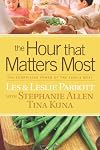
-Tyndale House Publishers has provided me with a complimentary copy of this book in exchange for an honest review-
"This book is devoted to helping you reclaim your family dinnertime and reap the surprising rewards it has to offer" (page xiv). That being said, this book isn't one that *just* talks about the importance of family dinners. Don't get me wrong, it does talk about that, and offers research and statistics in regard to the benefits of a family eating together, but it has much more to show more offer as well. It offers advice on how to make the most of the time you put aside for your family, how to communicate with your children, the importance of empathy, active listening (and the ideas of clarification and reflection when communicating with your children). It contains little exercises, ideas, and games. It addresses how to curb conflict at the dinner table, the idea of criticism vs. complaining, correction and encouragement, good manners, ideas for discussions to try... There are quotes throughout the book, and "try this" sections, as well as recipes scattered throughout.
One thing I particularly enjoyed was the idea of "rubber, metal, glass", in discussing what is really important in our lives. How when you drop rubber it bounces back, metal may make a lot of noise but is something that won't be permanently damaged, but how glass is something that, once broken, will never be the same. It really puts things into perspective.
I also liked how the tone of this book was personal and warm. It wasn't preachy or overly technical, in terms of how they conveyed the information. They were able to present, even their statistics and studies, in an approachable, relate-able way.
This book is one that could be applied to family relationships, even outside of the "dinner hour", and I would recommend it to any parent wanting to cultivate a stronger bond with their children. It's a quick, enjoyable read that leaves the reader with so much to consider, so much to put into practice. I look forward to incorporating what I've learned into my own dinner times and family relationships. :) show less
"This book is devoted to helping you reclaim your family dinnertime and reap the surprising rewards it has to offer" (page xiv). That being said, this book isn't one that *just* talks about the importance of family dinners. Don't get me wrong, it does talk about that, and offers research and statistics in regard to the benefits of a family eating together, but it has much more to show more offer as well. It offers advice on how to make the most of the time you put aside for your family, how to communicate with your children, the importance of empathy, active listening (and the ideas of clarification and reflection when communicating with your children). It contains little exercises, ideas, and games. It addresses how to curb conflict at the dinner table, the idea of criticism vs. complaining, correction and encouragement, good manners, ideas for discussions to try... There are quotes throughout the book, and "try this" sections, as well as recipes scattered throughout.
One thing I particularly enjoyed was the idea of "rubber, metal, glass", in discussing what is really important in our lives. How when you drop rubber it bounces back, metal may make a lot of noise but is something that won't be permanently damaged, but how glass is something that, once broken, will never be the same. It really puts things into perspective.
I also liked how the tone of this book was personal and warm. It wasn't preachy or overly technical, in terms of how they conveyed the information. They were able to present, even their statistics and studies, in an approachable, relate-able way.
This book is one that could be applied to family relationships, even outside of the "dinner hour", and I would recommend it to any parent wanting to cultivate a stronger bond with their children. It's a quick, enjoyable read that leaves the reader with so much to consider, so much to put into practice. I look forward to incorporating what I've learned into my own dinner times and family relationships. :) show less
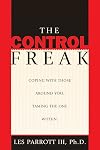
I read through this quickly at a bookstore. It's easy to read and very accessible, and the descriptions of control freak behavior — broken into categories, illustrated with examples, and identifiable with checklists — are excellent. I also appreciate how Parrott shows the diverse, context-specific ways control freak behavior can manifest, with separate chapters like spouse, boss, parent, etc. However, the book has two major flaws. First, Parrott does not contextualize control break show more behavior in a system broader than the individual's own personal history. He fails to acknowledge the relationships between control freak behavior and male power — this is especially clear in the "Supervising Spouse" chapter, where he gives examples of domineering husbands but never makes a link to patriarchy and misogyny — nor does he recognize the connection between controlling behavior and abuse. Second, his advice for dealing with control freaks is rather lacking. He suggests that the victim — that is, the person being controlled — is partially responsible for the behavior of the control freak and offers strategies that will only work if the control freak him/herself is actually willing to change. Overall an interesting read for anyone familiar with control freaks, but you should turn somewhere else if you're looking for stronger analysis and more helpful solutions. show less
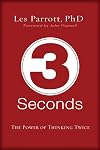
I am not a big fan of self-development books that talk directly to me. Such authors and their tones, for some reason, in my personal opinion, seem a little like that of a kindergarten school teacher.
Having said that, I still gave this book a star more than I usually give such genres of books. This is only because, I believe, out of the all the books, I randomly picked out this for a purpose and it in a way talked about the issues I am currently facing.
However, I am still wondering how the show more author came up with the figure of 3 seconds. No where in his book, does Parrott explain which empirical tests and experiments reveal this number. In my experience, authors that skirt the main topic of such fundamental explanations are of a little suspicious intent.
But this was way better than Anthony Robbin's books. So a combined star for that too. show less
Having said that, I still gave this book a star more than I usually give such genres of books. This is only because, I believe, out of the all the books, I randomly picked out this for a purpose and it in a way talked about the issues I am currently facing.
However, I am still wondering how the show more author came up with the figure of 3 seconds. No where in his book, does Parrott explain which empirical tests and experiments reveal this number. In my experience, authors that skirt the main topic of such fundamental explanations are of a little suspicious intent.
But this was way better than Anthony Robbin's books. So a combined star for that too. show less
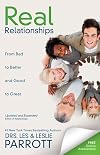
‘Real Relationships’ is written from a Christian perspective, but the faith aspect is quite low-key until the final chapter, which is about relating to God. Earlier chapters deal with human relationships of various kinds.
I thought the book was well-written and interesting. However it was annoying to discover that, to make the best use of it, I should also have bought a related workbook - costing almost as much as the book itself.
I considered the Kindle version of workbook; however the show more ‘look inside’ feature was so limited that there was no way to find out whether it would be helpful. I didn’t buy it - and doubt if I missed out on anything important - but the frequent directions to do another exercise became irritating.
Other than that, I thought it a helpful book which I would recommend to anyone who is interested in learning more about the ways in which relationships of many kinds can work. show less
I thought the book was well-written and interesting. However it was annoying to discover that, to make the best use of it, I should also have bought a related workbook - costing almost as much as the book itself.
I considered the Kindle version of workbook; however the show more ‘look inside’ feature was so limited that there was no way to find out whether it would be helpful. I didn’t buy it - and doubt if I missed out on anything important - but the frequent directions to do another exercise became irritating.
Other than that, I thought it a helpful book which I would recommend to anyone who is interested in learning more about the ways in which relationships of many kinds can work. show less
Awards

You May Also Like


Associated Authors
Statistics
- Works
- 145
- Also by
- 1
- Members
- 6,097
- Popularity
- #4,041
- Rating
- 3.5
- Reviews
- 44
- ISBNs
- 298
- Languages
- 8
- Favorited
- 1