Arnold Rampersad
Author of Jackie Robinson: A Biography
About the Author
Arnold Rampersad is Sara Hart Kimball Professor in the Humanities at Stanford University
Image credit: Brigitte Carnochan
Series
Works by Arnold Rampersad
Associated Works
The Collected Poems of Langston Hughes (Vintage Classics) (1994) — Editor — 1,632 copies, 17 reviews
The New Negro: Voices of the Harlem Renaissance (1925) — Introduction, some editions — 511 copies, 5 reviews
Richard Wright: Early Works: Lawd Today!, Uncle Tom's Children, Native Son (1991) — Editor — 407 copies, 4 reviews
Richard Wright: Later Works: Black Boy {American Hunger}, The Outsider (1991) — Editor — 343 copies, 3 reviews
I Wonder as I Wander: An Autobiographical Journey (1956) — Introduction, some editions — 284 copies, 6 reviews
The Norton Anthology of African American Literature {2nd edition} (2003) — Editor, some editions — 282 copies, 2 reviews
Mule Bone: A Comedy of Negro Life in Three Acts (1991) — Contributor, some editions — 205 copies, 1 review
The Short Stories (Collected Works of Langston Hughes, Vol 15) (2002) — Introduction, chronology — 25 copies, 12 reviews
Tagged
Common Knowledge
- Legal name
- Rampersand, Arnold
- Birthdate
- 1941-11-13
- Gender
- male
- Occupations
- professor emeritus (Humanities)
biographer
literary critic - Organizations
- Stanford University
American Academy of Arts and Sciences
American Philosophical Society - Awards and honors
- MacArthur Fellowship (1991)
National Humanities Medal (2010)
Anisfield-Wolf Book Award (Lifetime Achievement, 2012) - Nationality
- USA
- Birthplace
- Trinidad and Tobago
- Associated Place (for map)
- Trinidad and Tobago
Members
Reviews
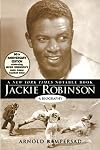
“Jackie Robinson, Negro outspoken.” That’s how the first black man allowed to play twentieth-century major league baseball identified himself. Ask me and I’ll say, modern American sport can’t pretend to have existed until the day he took his position on the field wearing a Brooklyn Dodgers uniform.
Robinson’s life became important beyond sport because his emergence in the white major leagues served as a symbol for the fight against policies supporting racial segregation. Arguments show more for those policies were weird. An example: Pasadena, the city where Robinson grew up in California, claimed that its municipal pool had to be segregated because “swimming offered the opportunity of certain intimacies like marriage and the races should be separated.” If one wished to support a claim that white folk are too witless to be equal, this would be a good start. After years in court Pasadena lost that fight. The city’s reaction was to close the pool and thereby prove that no court could prevent it from serving all its citizens badly.
Author Arnold Rampersad is good at backgrounding Robinson’s athletic history with the events and social currents of the time. He excels at describing Robinson’s life after baseball, especially when detailing Jack’s activity in Republican Party politics. Richard Nixon and Robinson got on well for many years although JR eventually turned against him, exasperated by the Nixon we all know about today. I would like to have learned Robinson’s opinions about the “Great Society” programs instituted during Lyndon Johnson’s presidency, programs which changed the U.S. political landscape and became a source of some policies still spurring resentment among substantial numbers of white people, but this isn’t discussed.
Some of the book’s statements aren’t accurate, as when Luke Easter is called a young player (Easter was 34 as a rookie). That’s a minor error but here’s one that isn’t. When discussing one of Robinson’s teammates, Rampersad states that “In 1947, refusing to play with a black man, [Bobby] Bragan was traded…from the Dodgers.” No, he wasn’t. Bragan did request the trade for this reason but the Dodgers kept him. In getting this wrong, the author misses a nice chance to illustrate Robinson’s positive impact: Bobby’s attitudes changed because of Jackie, and years later the great Henry Aaron, in his autobiography, would speak warmly of Bragan’s tenure as manager of the Braves.
Quibbles aside, Jackie Robinson: A Biography is an essential book for fans keenly interested in baseball of the 1940s and 50s and it will profit readers wishing to learn more about how the politics of color changed during Robinson’s life. He was a man whose dynamism transformed events on the baseball diamond. Energetic in retirement despite deteriorating health, he endeavored as businessman, columnist, civil rights lobbyist/spokesman, family man, and faithful husband to transform others’ lives off it. show less
Robinson’s life became important beyond sport because his emergence in the white major leagues served as a symbol for the fight against policies supporting racial segregation. Arguments show more for those policies were weird. An example: Pasadena, the city where Robinson grew up in California, claimed that its municipal pool had to be segregated because “swimming offered the opportunity of certain intimacies like marriage and the races should be separated.” If one wished to support a claim that white folk are too witless to be equal, this would be a good start. After years in court Pasadena lost that fight. The city’s reaction was to close the pool and thereby prove that no court could prevent it from serving all its citizens badly.
Author Arnold Rampersad is good at backgrounding Robinson’s athletic history with the events and social currents of the time. He excels at describing Robinson’s life after baseball, especially when detailing Jack’s activity in Republican Party politics. Richard Nixon and Robinson got on well for many years although JR eventually turned against him, exasperated by the Nixon we all know about today. I would like to have learned Robinson’s opinions about the “Great Society” programs instituted during Lyndon Johnson’s presidency, programs which changed the U.S. political landscape and became a source of some policies still spurring resentment among substantial numbers of white people, but this isn’t discussed.
Some of the book’s statements aren’t accurate, as when Luke Easter is called a young player (Easter was 34 as a rookie). That’s a minor error but here’s one that isn’t. When discussing one of Robinson’s teammates, Rampersad states that “In 1947, refusing to play with a black man, [Bobby] Bragan was traded…from the Dodgers.” No, he wasn’t. Bragan did request the trade for this reason but the Dodgers kept him. In getting this wrong, the author misses a nice chance to illustrate Robinson’s positive impact: Bobby’s attitudes changed because of Jackie, and years later the great Henry Aaron, in his autobiography, would speak warmly of Bragan’s tenure as manager of the Braves.
Quibbles aside, Jackie Robinson: A Biography is an essential book for fans keenly interested in baseball of the 1940s and 50s and it will profit readers wishing to learn more about how the politics of color changed during Robinson’s life. He was a man whose dynamism transformed events on the baseball diamond. Energetic in retirement despite deteriorating health, he endeavored as businessman, columnist, civil rights lobbyist/spokesman, family man, and faithful husband to transform others’ lives off it. show less
This is a masterful biography - probably the best I've read in recent years - of the author of Invisible Man, one of the unforgettable novels of the past century. It details Ellison’s eventful early life and educational experiences and pursuit of the craft of writing, but also provides a frank appraisal of his increasingly conservative attitudes and self-interested character later in life. Highly recommended as a uniquely American 20th-century biography.
Starting with Ellison's hardscrabble childhood in Oklahoma and his ordeal as a student in Alabama, Rampersad documents his improbable, painstaking rise in New York to a commanding place on the literary scene with his epochal novel Invisible Man. With scorching honesty but also fairness and compassion, the author lays bare his subject's troubled psychology and its impact on his art and on the people around him. This book is both the definitive biography of Ellison and a stellar example of show more literary biography. show less
THE ENIGMATIC GENIUS OF RALPH ELLISON
"Invisible Man," "Shadow and Act," and "Going to the Territory," all books by that quintessential twentieth century literary artist Ralph Waldo Ellison, remain towering masterworks of American literature for their penetrating explorations of racial identity, cultural complexity, and historical consequences in the United States. With Senator Barack Obama’s historic bid for the White House evolving daily into the possibility of an historic win, show more Ellison’s brilliantly charged writings, which first catapulted him to fame in the 1950s, are perhaps more relevant now than ever before, making Arnold Rampersad’s detailed biography of the great writer one of the best reads around during these very exciting times.
Biographies of high-achieving African Americans have too often in the past fallen into one of two categories: those that romanticized their subjects as cultural heroes and those that condemned them as embarrassing villains. Fortunately, in Rampersad, we have a biographer who assigned himself the demanding task of providing as full and honest a portrait of his subject as he could. He does so with balanced assessments of both the publicly applauded Ellison who became a permanent fixture in world literature the moment he won the National Book Award for Invisible Man in 1953, and detailed sketches of the more private Ellison, who bemoaned his lack of children and wrestled for almost half a century with his inability to follow his initial literary victory with a second completed novel.
As one might expect from any capable literary biographer, Rampersad provides readers with a highly engaging dramatic account of Ellison’s beginnings in Oklahoma City and his subsequent rise from demoralizing poverty and tragedy to international literary stardom. Much of the story of Ellison’s youth and his struggles to give birth to his identity as a writer is already well known, both from Ellison’s essays and Lawrence Jackson’s biography of the author: Ralph Ellison, Emergence of Genius. Even so, Rampersad’s own eloquent placement of Ellison within the greater contexts of American social history, and within such specific cultural movements as the Harlem Renaissance, shine an even more revealing light on the author.
Moreover, high school and college students grappling with assignments to write papers on Invisible Man can duly thank Rampersad for his lucid dissection of the surrealistic, historical, and political elements that make the novel the uniquely brilliant American coming of age tale that it is.
Because Invisible Man is a celebrated novel that has sold untold millions of copies in different languages around the world for more than half a century, the stories of cultural politics and extramarital dalliances surrounding its celebrity author may not stun readers too much. What might, though, while reading along, is the realization of just how much cultural and political influence Ellison came to wield based on the strength of that one mighty novel and a couple of volumes of essays. With his role as a founding participant in such organizations as the Commission on Educational Television, which in time would lead to the development of public broadcast stations, and the American Academy of Arts and Letters, Ellison occupied a position in which he could make or break the careers of various writers with his registered approval or disapproval of them.
Oddly enough, despite the fact that he benefited greatly from the influence of such Harlem Renaissance giants as Richard Wright and Langston Hughes, he was not as inclined as they to champion younger upcoming black authors based on notions of racial solidarity or mentorship.
Nevertheless, Presidents Lyndon B. Johnson and Ronald Reagan, both of whom awarded him presidential medals, so respected Ellison’s intellectual prominence that they invited him on a variety of occasions for both social and more official purposes to the White House. Such was his stature that he attended when he felt it important to do so but not when he believed other issues (such as a gathering of literary peers as opposed to one of political statesmen) mattered more.
Of all the mysteries that may be attributed to the life of Ralph Ellison, possibly none are so beguiling as that of his second novel. As early as 1953, the public began to speculate on and query Ellison about his follow-up novel to Invisible Man, and that speculation continued right up until his death on April 16, 1994. First haunted by the pressure of completing a novel as successful as his first had been, Ellison’s 365-page work-in-progress was destroyed by a fire in 1967. Although he managed eventually to re-write more pages than he actually lost, the remaining four decades of Ellison’s life seemed almost dominated by one of the most enduring and over-publicized writing blocks in history. Yet, as Rampersad illustrates, his prominence did not diminish but continued to increase with teaching positions, speaking engagements, appointments to influential boards, and the ever-growing canonization of his one indisputable fiction masterpiece: Invisible Man. A version of his second novel, edited by his friend John F. Callahan and reportedly culled from more than 2,000 pages, would not be published until 1999.
The serious literary author in 2008 still obtains some degree of notable status when he or she wins a significant award but their influence is generally restricted to academic environments, Internet literary communities, or various geographical regions. It would be virtually impossible for a modern author to achieve the level of prestige and actual power Ellison commanded based on his intellectual gifts and pronouncements alone. (And yet such an observation makes one pay serious attention to the role bestselling books play in the careers of political leaders like Hillary Clinton and Barack Obama.)
For that reason, Ellison’s life is indeed one worth celebrating for many decades to come and Rampersad’s biography of that life is a book that has earned its rightful place among the best and most important in the genre.
By Author-Poet Aberjhani
Author of The American Poet Who Went Home Again
and Encyclopedia of the Harlem Renaissance show less
"Invisible Man," "Shadow and Act," and "Going to the Territory," all books by that quintessential twentieth century literary artist Ralph Waldo Ellison, remain towering masterworks of American literature for their penetrating explorations of racial identity, cultural complexity, and historical consequences in the United States. With Senator Barack Obama’s historic bid for the White House evolving daily into the possibility of an historic win, show more Ellison’s brilliantly charged writings, which first catapulted him to fame in the 1950s, are perhaps more relevant now than ever before, making Arnold Rampersad’s detailed biography of the great writer one of the best reads around during these very exciting times.
Biographies of high-achieving African Americans have too often in the past fallen into one of two categories: those that romanticized their subjects as cultural heroes and those that condemned them as embarrassing villains. Fortunately, in Rampersad, we have a biographer who assigned himself the demanding task of providing as full and honest a portrait of his subject as he could. He does so with balanced assessments of both the publicly applauded Ellison who became a permanent fixture in world literature the moment he won the National Book Award for Invisible Man in 1953, and detailed sketches of the more private Ellison, who bemoaned his lack of children and wrestled for almost half a century with his inability to follow his initial literary victory with a second completed novel.
As one might expect from any capable literary biographer, Rampersad provides readers with a highly engaging dramatic account of Ellison’s beginnings in Oklahoma City and his subsequent rise from demoralizing poverty and tragedy to international literary stardom. Much of the story of Ellison’s youth and his struggles to give birth to his identity as a writer is already well known, both from Ellison’s essays and Lawrence Jackson’s biography of the author: Ralph Ellison, Emergence of Genius. Even so, Rampersad’s own eloquent placement of Ellison within the greater contexts of American social history, and within such specific cultural movements as the Harlem Renaissance, shine an even more revealing light on the author.
Moreover, high school and college students grappling with assignments to write papers on Invisible Man can duly thank Rampersad for his lucid dissection of the surrealistic, historical, and political elements that make the novel the uniquely brilliant American coming of age tale that it is.
Because Invisible Man is a celebrated novel that has sold untold millions of copies in different languages around the world for more than half a century, the stories of cultural politics and extramarital dalliances surrounding its celebrity author may not stun readers too much. What might, though, while reading along, is the realization of just how much cultural and political influence Ellison came to wield based on the strength of that one mighty novel and a couple of volumes of essays. With his role as a founding participant in such organizations as the Commission on Educational Television, which in time would lead to the development of public broadcast stations, and the American Academy of Arts and Letters, Ellison occupied a position in which he could make or break the careers of various writers with his registered approval or disapproval of them.
Oddly enough, despite the fact that he benefited greatly from the influence of such Harlem Renaissance giants as Richard Wright and Langston Hughes, he was not as inclined as they to champion younger upcoming black authors based on notions of racial solidarity or mentorship.
Nevertheless, Presidents Lyndon B. Johnson and Ronald Reagan, both of whom awarded him presidential medals, so respected Ellison’s intellectual prominence that they invited him on a variety of occasions for both social and more official purposes to the White House. Such was his stature that he attended when he felt it important to do so but not when he believed other issues (such as a gathering of literary peers as opposed to one of political statesmen) mattered more.
Of all the mysteries that may be attributed to the life of Ralph Ellison, possibly none are so beguiling as that of his second novel. As early as 1953, the public began to speculate on and query Ellison about his follow-up novel to Invisible Man, and that speculation continued right up until his death on April 16, 1994. First haunted by the pressure of completing a novel as successful as his first had been, Ellison’s 365-page work-in-progress was destroyed by a fire in 1967. Although he managed eventually to re-write more pages than he actually lost, the remaining four decades of Ellison’s life seemed almost dominated by one of the most enduring and over-publicized writing blocks in history. Yet, as Rampersad illustrates, his prominence did not diminish but continued to increase with teaching positions, speaking engagements, appointments to influential boards, and the ever-growing canonization of his one indisputable fiction masterpiece: Invisible Man. A version of his second novel, edited by his friend John F. Callahan and reportedly culled from more than 2,000 pages, would not be published until 1999.
The serious literary author in 2008 still obtains some degree of notable status when he or she wins a significant award but their influence is generally restricted to academic environments, Internet literary communities, or various geographical regions. It would be virtually impossible for a modern author to achieve the level of prestige and actual power Ellison commanded based on his intellectual gifts and pronouncements alone. (And yet such an observation makes one pay serious attention to the role bestselling books play in the careers of political leaders like Hillary Clinton and Barack Obama.)
For that reason, Ellison’s life is indeed one worth celebrating for many decades to come and Rampersad’s biography of that life is a book that has earned its rightful place among the best and most important in the genre.
By Author-Poet Aberjhani
Author of The American Poet Who Went Home Again
and Encyclopedia of the Harlem Renaissance show less
Lists
Awards
You May Also Like
Associated Authors
Statistics
- Works
- 15
- Also by
- 24
- Members
- 1,172
- Popularity
- #21,960
- Rating
- 4.0
- Reviews
- 20
- ISBNs
- 46
- Favorited
- 3