
Simon Bucher-Jones
Author of The Taking of Planet 5
About the Author
Image credit: me
Works by Simon Bucher-Jones
The Book of the War 1 copy
Associated Works
Hardboiled Cthulhu: Two-Fisted Tales of Tentacled Terror (2006) — Contributor — 89 copies, 4 reviews
Sherlock Holmes and the Occult Detectives vol. 4 (The Great Detective Universe) (2022) — Author — 3 copies
Occult Detective Magazine #9 — Contributor — 3 copies
Party Like It's 1998 — Author — 2 copies
Tagged
Common Knowledge
- Birthdate
- 1964-09-06
- Gender
- male
- Nationality
- UK
- Associated Place (for map)
- UK
Members
Reviews
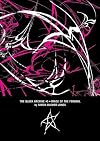
https://nwhyte.livejournal.com/3816574.html
I generally enjoyed this, but I am going to start with a serious imperfection in the .epub version which I bought: endnotes and references to them are wrongly joined up, with individual endnote references sometimes taking you to the start of that chapter’s notes section, rather than to the specific note, and sometimes instead to the start of the bibliography for the book as a whole; meanwhile if you do find your endnote, read it, and then want to show more return to the main text, clicking on the reference instead brings you to the start of the chapter you were in, rather than to the place where you left off. Other books in the Black Archive series have got this right, as most ebooks do, and you would have thought it a fairly straightforward technical tweak, even with 180 notes to a text with rather fewer pages. This may seem like petty whining, but in a book like this where there is a lot of good stuff in the endnotes, the publisher's failure to hyperlink them correctly is a real barrier to reading pleasure.
Which is a shame, because otherwise more than any other book in the series so far, this gave new depths to my enjoyment of something I already really liked. As usual, it is neatly divided into thematic chapters, and as usual, I’ll quickly summarise them in order.
* Looking at the context framed as “audience expectations”, both from the Hinchcliffe era of Who and from wider concerns about TV horror;
a deep dive into the Gothic, especially the 1965 film The Skull;
* the origins of humanity and evolution, as depicted in fiction;
* H.P. Lovecraft, the missing fifth planet and the devastation of Mars;
* ten problems with the script (eg who lets the Doctor out of the cupboard?) and six great things about the story;
* an appendix looking at the novelisation, and at other appearances of the Fendahl;
* another appendix with a carefully argued continuity theory that the destroyed Fifth Planet is actually Minyos from Underworld, the story after next.
This is meaty stuff, all done in tremendous, affectionate and often convincing detail. Recommended. show less
I generally enjoyed this, but I am going to start with a serious imperfection in the .epub version which I bought: endnotes and references to them are wrongly joined up, with individual endnote references sometimes taking you to the start of that chapter’s notes section, rather than to the specific note, and sometimes instead to the start of the bibliography for the book as a whole; meanwhile if you do find your endnote, read it, and then want to show more return to the main text, clicking on the reference instead brings you to the start of the chapter you were in, rather than to the place where you left off. Other books in the Black Archive series have got this right, as most ebooks do, and you would have thought it a fairly straightforward technical tweak, even with 180 notes to a text with rather fewer pages. This may seem like petty whining, but in a book like this where there is a lot of good stuff in the endnotes, the publisher's failure to hyperlink them correctly is a real barrier to reading pleasure.
Which is a shame, because otherwise more than any other book in the series so far, this gave new depths to my enjoyment of something I already really liked. As usual, it is neatly divided into thematic chapters, and as usual, I’ll quickly summarise them in order.
* Looking at the context framed as “audience expectations”, both from the Hinchcliffe era of Who and from wider concerns about TV horror;
a deep dive into the Gothic, especially the 1965 film The Skull;
* the origins of humanity and evolution, as depicted in fiction;
* H.P. Lovecraft, the missing fifth planet and the devastation of Mars;
* ten problems with the script (eg who lets the Doctor out of the cupboard?) and six great things about the story;
* an appendix looking at the novelisation, and at other appearances of the Fendahl;
* another appendix with a carefully argued continuity theory that the destroyed Fifth Planet is actually Minyos from Underworld, the story after next.
This is meaty stuff, all done in tremendous, affectionate and often convincing detail. Recommended. show less

Some interesting ideas and moments, hampered by the fact that the authors for some reason seem to think that people are coming to a Doctor Who tie-in novel for hard SF ideas and Lovecraft crossovers, rather than for more time with the established characters. Give me more Doctor! Heck, at this point give me more Fitz! If you bring in weird/interesting ideas, commit to them! Get weirder—surely we deserve more than a mere paragraph of the Doctor finger-banging the sensual TARDIS jelly! (Look, show more I have my narrative preferences.) There was way too much jargon and far too many POV characters for me to get into this at first, but it does improve as we get to the ending. show less
Apparently the editorial directive to the authors of this series was "We know you're not Douglas Adams, but please pretend to be as hard as you can so that the desperation shines through more clearly with each subsequent sentence."
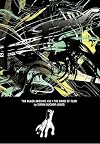
https://fromtheheartofeurope.eu/the-hand-of-fear-tv-novelisation-black-archive-a...
Simon Bucher-Jones has produced a really good Black Archive on this story, considering mainly the horror tropes. It’s quite long but has only four chapters.
The first and longest chapter, “Why Are Hands So Significant?”, looks at the history of the hand in art from the stone age onwards, and at the precedents for detached hands in horror films, looking at the obvious Addams Family, The Beast with Five show more Fingers and Carry On Screaming, but also a 1963 B-Movie called The Crawling Hand which features a detached body part from a spaceship explosion.
The second chapter, “‘Eldrad Must Live’: Three Types of Fear in The Hand of Fear“, points out that the hand itself doesn’t strangle anyone and isn’t bloodied; so why is it scary? Or even, is it scary? Bucher-Jones diverts via the Flixborough disaster to considering the story’s plot structure and how the narrative beats function. He’s not completely certain that it all works, but I’m more confident that it does.
The third chapter, “The Thing from the Aeons: Fossil Horror and The Shadow Out of Time“, looks at how ancient figures coming back to life are treated in Doctor Who, linking Eldrad with Omega, Davros and Rassilon.
The fourth chapter, “Gender (and Other) Issues in The Hand of Fear“, briefly considers a) the fact that Judith Parrish’s female Eldrad is much better than Stephen Thorne’s male version; b) how the Hand could have landed relatively undamaged; c) the morality of the Doctor’s disposal of Eldrad; and d) the perfection of the final scene with Sarah’s departure.
An appendix, “Kastria and the Kastrians”, considers the difficulties of locating Kastria and of the Kastrians’ biology.
It’s a rare case among the Black Archives where I think I like the story more than the writer does, but in any case he does a good job. show less
Simon Bucher-Jones has produced a really good Black Archive on this story, considering mainly the horror tropes. It’s quite long but has only four chapters.
The first and longest chapter, “Why Are Hands So Significant?”, looks at the history of the hand in art from the stone age onwards, and at the precedents for detached hands in horror films, looking at the obvious Addams Family, The Beast with Five show more Fingers and Carry On Screaming, but also a 1963 B-Movie called The Crawling Hand which features a detached body part from a spaceship explosion.
The second chapter, “‘Eldrad Must Live’: Three Types of Fear in The Hand of Fear“, points out that the hand itself doesn’t strangle anyone and isn’t bloodied; so why is it scary? Or even, is it scary? Bucher-Jones diverts via the Flixborough disaster to considering the story’s plot structure and how the narrative beats function. He’s not completely certain that it all works, but I’m more confident that it does.
The third chapter, “The Thing from the Aeons: Fossil Horror and The Shadow Out of Time“, looks at how ancient figures coming back to life are treated in Doctor Who, linking Eldrad with Omega, Davros and Rassilon.
The fourth chapter, “Gender (and Other) Issues in The Hand of Fear“, briefly considers a) the fact that Judith Parrish’s female Eldrad is much better than Stephen Thorne’s male version; b) how the Hand could have landed relatively undamaged; c) the morality of the Doctor’s disposal of Eldrad; and d) the perfection of the final scene with Sarah’s departure.
An appendix, “Kastria and the Kastrians”, considers the difficulties of locating Kastria and of the Kastrians’ biology.
It’s a rare case among the Black Archives where I think I like the story more than the writer does, but in any case he does a good job. show less
Lists
You May Also Like


Associated Authors
Statistics
- Works
- 12
- Also by
- 12
- Members
- 502
- Popularity
- #49,319
- Rating
- 3.5
- Reviews
- 10
- ISBNs
- 11
