
Bob McCabe
Author of The Pythons' Autobiography
About the Author
Bob McCabe has worked as a film critic for the Express on Sunday and for the BBC, and has been film editor for Vox magazine, Blah Blah Blah and Comedy Review.
Works by Bob McCabe
Dark Knights and Holy Fools: The Art and Films of Terry Gilliam: From Before Python to Beyond Fear and Loathing (1999) 176 copies, 1 review
Dreams and Nightmares: Terry Gilliam, The Brothers Grimm, & Other Cautionary Tales of Hollywood (2005) 28 copies
Counterfeiting and Technology: A History Of The Long Struggle Between Paper-Money Counterfeiters And Security Printing (2016) 9 copies
Tagged
Common Knowledge
- Birthdate
- 20th Century
- Gender
- male
- Occupations
- film critic
- Nationality
- England
UK - Places of residence
- London, England, UK
- Associated Place (for map)
- England, UK
Members
Reviews
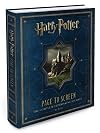
I always have complimentary things to say about the Harry Potter books which explore the wizarding world further than the novels, but this one has to be the best one yet! It's an absolutely massive tome, ringing in at 532 oversized, heavyweight pages, and containing a comprehensive guide to the entire film adaptation saga which includes interview material, concept drawings, props, movie stills, and enough text to keep the whole thing grounded. Granted, if you've read any of the books which show more go into the specifics of sets, characters, or creatures you'll already know some of the content, but I found that this book expands even more so on the subjects for each individual film - breaking down the content in a digestible and logical way that allowed the author to give us details that would have seemed extraneous elsewhere. Specifically, I loved how they broke down so many of the crucial scenes in each film, discussing how certain elements were made with visual effects, while other were digital (and some blending of the two), and how the filmmakers came to these decisions. In some ways, the 10 years of the HP filmmaking journey is a crash course in all aspects of the industry, and it was fascinating to see it all laid out so well in this book. Now, I hope that they do the same treatment for the Fantastic Beasts and Where to Find Them franchise! show less
My parents are responsible for getting me hooked on Monty Python. I remember seeing the dead parrot sketch, the lumberjack song, the Spanish Inquisition, and so much more on PBS back in the day. But what hooked me forever was Monty Python and the Holy Grail. My parents had a copy of the movie on Betamax. I lost track of the number of times I'd watched the film after about the 40th time.
I even got to see Graham Chapman on a speaking tour in 1987 while I was in college. I don't recall much show more from it, but one thing still sticks with me. He was talking about the making of Holy Grail and confessed when he realized that he was an alcoholic. They were in the Scottish Highlands. The weight of playing King Arthur was getting to him. He desperately wanted a drink to steady his nerves, but there was nothing available. Between the cold, the dampness, the pressure, and withdrawal symptoms, he was shaking and feverish in his chain mail and wool. He was completely miserable. The auditorium had grown completely silent as Chapman revealed that he was not an invulnerable comedic hero but a human being with all the frailties of mortality.
In October of 1989 he died of cancer.
This book is an account of the group's lives growing up, their days at university, their early pre-Python work, the coalescence of what would become Monty Python, the TV show, the movies, and the inevitable end. Each of the Pythons provided the information in interview format with Chapman's parts taken from previous memoirs and from his brother and his partner. So you would get each of their recollections about events, what they were doing and thinking.
It's clear to me now that postwar English schools were horrid places. Roger Waters, Bruce Dickinson, and the members of Monty Python have all provided details about how miserable these places were. It's almost as if the adults were punishing the children for not having a dour disposition brought on by the travails of the war.
It was really interesting to see how the Python troupe came together, and I'm curious to know how well the pre-Python work holds up. Of course, with the BBC in the habit of recycling all of its tapes back then, I don't know if any of it still exists.
There was a certain joie de vivre that the group back in the days of the TV show, and it was a delight to read about it. But you could see it start to slip away. Certain members didn't want to do the TV show anymore, so others suggested a movie. And for a while they were happy again. Holy Grail was a success and then Life of Brian. They would separate to work on their personal projects, but they would always come back. But they got the work process wrong with The Meaning of Life. Lessons of creation were forgotten. The joy was gone.
When Chapman died, the unraveling of the knot that kept them together quickened. They tried to reunite, but there was always someone to veto a project, whether it be TV, movie, or tour. While they still professed their love for one another, it was clear to me by this book's publication in 2003 that Monty Python had ceased to be as a creative entity.
While there was an abundance of detailed material for their early years, it seemed like when the joy was gone, so too went many of the details. All of these non-Python side projects they were involved in left huge gaps between events in the Python history. The interview format kind of broke down with grudges and hurt feelings creeping in. Subjective accounts obscured objective reality, forcing the reader to deduce what actually happened.
I'm glad that I read it, but now it's more of a reference book than something to revisit for nostalgia's sake, which I guess is why I read it in the first place. show less
I even got to see Graham Chapman on a speaking tour in 1987 while I was in college. I don't recall much show more from it, but one thing still sticks with me. He was talking about the making of Holy Grail and confessed when he realized that he was an alcoholic. They were in the Scottish Highlands. The weight of playing King Arthur was getting to him. He desperately wanted a drink to steady his nerves, but there was nothing available. Between the cold, the dampness, the pressure, and withdrawal symptoms, he was shaking and feverish in his chain mail and wool. He was completely miserable. The auditorium had grown completely silent as Chapman revealed that he was not an invulnerable comedic hero but a human being with all the frailties of mortality.
In October of 1989 he died of cancer.
This book is an account of the group's lives growing up, their days at university, their early pre-Python work, the coalescence of what would become Monty Python, the TV show, the movies, and the inevitable end. Each of the Pythons provided the information in interview format with Chapman's parts taken from previous memoirs and from his brother and his partner. So you would get each of their recollections about events, what they were doing and thinking.
It's clear to me now that postwar English schools were horrid places. Roger Waters, Bruce Dickinson, and the members of Monty Python have all provided details about how miserable these places were. It's almost as if the adults were punishing the children for not having a dour disposition brought on by the travails of the war.
It was really interesting to see how the Python troupe came together, and I'm curious to know how well the pre-Python work holds up. Of course, with the BBC in the habit of recycling all of its tapes back then, I don't know if any of it still exists.
There was a certain joie de vivre that the group back in the days of the TV show, and it was a delight to read about it. But you could see it start to slip away. Certain members didn't want to do the TV show anymore, so others suggested a movie. And for a while they were happy again. Holy Grail was a success and then Life of Brian. They would separate to work on their personal projects, but they would always come back. But they got the work process wrong with The Meaning of Life. Lessons of creation were forgotten. The joy was gone.
When Chapman died, the unraveling of the knot that kept them together quickened. They tried to reunite, but there was always someone to veto a project, whether it be TV, movie, or tour. While they still professed their love for one another, it was clear to me by this book's publication in 2003 that Monty Python had ceased to be as a creative entity.
While there was an abundance of detailed material for their early years, it seemed like when the joy was gone, so too went many of the details. All of these non-Python side projects they were involved in left huge gaps between events in the Python history. The interview format kind of broke down with grudges and hurt feelings creeping in. Subjective accounts obscured objective reality, forcing the reader to deduce what actually happened.
I'm glad that I read it, but now it's more of a reference book than something to revisit for nostalgia's sake, which I guess is why I read it in the first place. show less
A weighty and impressive-looking coffee-table book, The Pythons makes excellent reading for devoted fans, though it's probably too in-depth for those who aren't interested in the nuts and bolts of how the series were produced. Although they don't deal with everything—understandably, after four decades I'm sure there are some things that can't be recalled, and everyone needs some measure of privacy for themselves—what is discussed is frank and honest, even if that honesty seems to have show more led to some tension and contradiction. show less
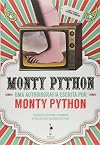
Em honra dos 50 anos do Flying Circus a ser comemorado esse ano.
Depois de ler ess livro não sei gosto mais tanto assim do John Cleese, claro, ele é um gênio da comédia física e verbal, mas ele me parece ser particularmente insuportável de se conviver, mas tudo bem, também acho isso do Peter Sellers e nem por isso ele é menos gênio.
No mais é um livro super informativo para fãs dos Pythons, há diversos detalhes e pequenas informações que me passaram batido em todos essas décadas show more admirando-os, além de também reiterar informações que os fãs de comédia inglesa sabem por osmose, eles nunca deixam de mencionar que foram os Goons e o pessoal do Beyond The Fringe que abriram as portas para o tipo de comédia que faziam, o que achei bem ético da parte deles.
A informação mais interessante desse livro é a afirmação dos Terrys que a influência cinematográfica principal do Holy Grail foi Pasolini. E nóis achando que era o Monicelli. Italiano errado. show less
Depois de ler ess livro não sei gosto mais tanto assim do John Cleese, claro, ele é um gênio da comédia física e verbal, mas ele me parece ser particularmente insuportável de se conviver, mas tudo bem, também acho isso do Peter Sellers e nem por isso ele é menos gênio.
No mais é um livro super informativo para fãs dos Pythons, há diversos detalhes e pequenas informações que me passaram batido em todos essas décadas show more admirando-os, além de também reiterar informações que os fãs de comédia inglesa sabem por osmose, eles nunca deixam de mencionar que foram os Goons e o pessoal do Beyond The Fringe que abriram as portas para o tipo de comédia que faziam, o que achei bem ético da parte deles.
A informação mais interessante desse livro é a afirmação dos Terrys que a influência cinematográfica principal do Holy Grail foi Pasolini. E nóis achando que era o Monicelli. Italiano errado. show less
Awards


You May Also Like


Associated Authors
Statistics
- Works
- 19
- Members
- 2,720
- Popularity
- #9,443
- Rating
- 4.2
- Reviews
- 29
- ISBNs
- 67
- Languages
- 8
- Favorited
- 1