
Susan Greenfield (1) (1950–)
Author of The Private Life of the Brain
For other authors named Susan Greenfield, see the disambiguation page.
About the Author
Susan Greenfield is the Director of the Royal Institution and Professor of Pharmacology at Oxford University.
Image credit: Photograph: Stuart Clarke / Rex Features
Works by Susan Greenfield
Mind Change: How Digital Technologies Are Leaving Their Mark on Our Brains (2014) 135 copies, 2 reviews
Tomorrow's People: How 21st-Century Technology is Changing the Way We Think and Feel (2003) 110 copies, 1 review
A Day in the Life of the Brain: The Neuroscience of Consciousness from Dawn Till Dusk (2016) 44 copies
Vestigia veteris flammae 1 copy
Associated Works
The Science Book: 250 Milestones in the History of Science (2001) — Preface, some editions — 317 copies, 1 review
Tagged
Common Knowledge
- Other names
- Baroness Greenfield, Susan Adele Greenfield,
Greenfield, Susan A. - Birthdate
- 1950-10-01
- Gender
- female
- Education
- St. Hugh's College, Oxford (DPhil|1977)
- Occupations
- pharmacologist
university professor
Chancellor of Heriot-Watt University
Director of the Royal Institution of Great Britain - Organizations
- House of Lords
Neuro-Bio, Ltd.
Heriot-Watt University
Royal Institution of Great Britain - Awards and honors
- Order of the British Empire (Commander)
Royal College of Physicians (Fellow) - Agent
- John Brockman
Katinka Matson - Nationality
- UK
- Birthplace
- Hammersmith, London, England, UK
- Places of residence
- London, England, UK
- Associated Place (for map)
- London, England, UK
Members
Reviews
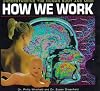
Body and mind , perhaps body and brain. Definitely a game of 2 halves. The first part is detailed anatomy and full of hard facts; the second half starts with the structure of the brain itself, attempting to capture its physical complexity, and then goes off into psychology, sociology and beyond. The difference in tone is marked: in the first half it’s all hard facts, rather a lot of of them, and technical terms mostly new to me - but that’s all the facts when it comes to hard tacks. The show more second half, once it goes beyond the brain's physical structure, is one unknown after another. Speculative guesses abound. These two quotes give a flavour of the difference:
Body:
“The fine tubes containing urine coalesce in the medulla into wider and wider ducts that eventually form a large urine filled space, the renal pelvis, which leads directly to the urethra.”
Brain:
“Physical abnormalities in the brain can be linked to schizophrenia, but it is not certain whether these signs of damage caused the disorder or are caused by it.”
The first half was really difficult for me to grasp, having only a sparse background in biology or medicine (eg, the swallowing mechanism is divided into 4 phases calling for 8 illustrations; not sure I'll ever be able to down a pill again). The second half was something of a breeze; all familiar stuff, whether it’s references to Freud or phobias; a smooth read for any reasonably educated person. Fact is, we humans, or at least our medics, understand how our bodies work but our minds remain a mystery.
The illustrations are bold, spreading dramatically across the pages but oddly enough they don’t do a great deal to help me understand.
An interesting titbit was the tabulation of views of different religions on moral questions. The secular crew is are an easy-going lot. But overall the only thing all agree on is that murder, theft, lying and adultery are Bad Things. How they variously view war, dangerous driving, or the trolley problem would be matters for long debate.
The title itself sits a little uneasily. “How we work“ suggests “We don’t half work hard“. Squirming to avoid an un-PC title like “Man’s body and mind””.
The book is nt new, dating back to 1997. Wonder if some of the hedging of bets about the mind has been settled. I doubt it. show less
Body:
“The fine tubes containing urine coalesce in the medulla into wider and wider ducts that eventually form a large urine filled space, the renal pelvis, which leads directly to the urethra.”
Brain:
“Physical abnormalities in the brain can be linked to schizophrenia, but it is not certain whether these signs of damage caused the disorder or are caused by it.”
The first half was really difficult for me to grasp, having only a sparse background in biology or medicine (eg, the swallowing mechanism is divided into 4 phases calling for 8 illustrations; not sure I'll ever be able to down a pill again). The second half was something of a breeze; all familiar stuff, whether it’s references to Freud or phobias; a smooth read for any reasonably educated person. Fact is, we humans, or at least our medics, understand how our bodies work but our minds remain a mystery.
The illustrations are bold, spreading dramatically across the pages but oddly enough they don’t do a great deal to help me understand.
An interesting titbit was the tabulation of views of different religions on moral questions. The secular crew is are an easy-going lot. But overall the only thing all agree on is that murder, theft, lying and adultery are Bad Things. How they variously view war, dangerous driving, or the trolley problem would be matters for long debate.
The title itself sits a little uneasily. “How we work“ suggests “We don’t half work hard“. Squirming to avoid an un-PC title like “Man’s body and mind””.
The book is nt new, dating back to 1997. Wonder if some of the hedging of bets about the mind has been settled. I doubt it. show less

This is a highly speculative but very stimulating book. Greenfield draws on her neuroscientific background to argue that modern technology and the social changes it's driving are reshaping our brains and hence our identities as individual human beings. She explores human identity through four over-arching personas, which she freely admits are caricatures: Someone, Anyone, Nobody, and Eureka. Very briefly, Someone is characterised by status and relations with others, Anyone by actions and show more prescribed patterns of living within a particular ideology, Nobody by an emphasis on sensation and raw feelings rather than cognition, and Eureka by creativity. These personas not only operate at the level of the individual, but also at the level of society, with history, particularly Western history, a struggle between Someone and Anyone, punctuated by brief periods of Eureka, such as 5th century Athens.Greenfield argues that Someone offers individuality, Anyone fulfilment, Nobody neither fulfilment nor individuality, and only Eureka both fulfilment and individuality. However, the rapid development of info-, bio-, and nano-technologies in the 21st century are pushing identity towards the Nobody scenario because they "will have obliterated the traditional means of individual demarcation, from the familiar firewall of the physical body and brain to our notions of external 'reality', to third-party access to our innermost body processes, to homegenization of generations through homogenized health, appearance and reproductive potential, to a blurring of the daily narrative of work and leisure." The result will be a life of greater comfort and more fun, but less meaning.Greenfield cites a range of fascinating ideas and research for her thesis. She doesn't argue that one persona (Eureka) is to be preferred, or that the other personas are bad, but that society has never had the understanding or tools to get the balance right at either the level of the individual or the level of society. Her theory is very speculative, and she doesn't quite pull it all together for me at the end, but what I liked about this book was the sense of a very smart person thinking aloud about society from a scientific perspective. Having just returned to normal society after six months of mostly solitary walking, I'm struggling to articulate the changes I've observed in myself, and a move away from Nobody towards a mix of Someone, Anyone, and Eureka is proving to be a very useful framework. Definitely going to reread this one. show less

I didn't manage to get into this one, even though it's the sort of essay that would normally be right up my street. There are certainly interesting elements of it, though, and others will likely find it far more to their taste.

In Greenfield's novel, the line that divides humanity is the use of technology by the NPs and the use of technology by the Others. The NPs are extremely ordered with everything action and thought geared towards the stability of the system. NPs use technology to manipulate and explore the human brain and mind for the purposes of intellectual advancement. A rigid order runs through this society. The Others make use of technology for purely hedonistic purposes. Think of a permanent festival show more where food, drugs, accommodation and entertainment is on tap. Implants provide constant auditory and visual stimulus and monitor one's health. One of the NPs, Fred, is tasked with leaving the safety of his structured life to live among the Others and study them.
Greenfield begins with an interesting premise and along the way explores notions of family, our addiction and abuse of technology, social structure, freedom and selfhood. However, her style lacks the elegance needed to propel the story forward and the reader is spoon-fed rather than be entertained by the writing. That being said, I still found the novel's ideas enough to get me to the end. show less
Greenfield begins with an interesting premise and along the way explores notions of family, our addiction and abuse of technology, social structure, freedom and selfhood. However, her style lacks the elegance needed to propel the story forward and the reader is spoon-fed rather than be entertained by the writing. That being said, I still found the novel's ideas enough to get me to the end. show less
Lists
Awards


You May Also Like


Statistics
- Works
- 14
- Also by
- 1
- Members
- 1,382
- Popularity
- #18,610
- Rating
- 3.3
- Reviews
- 14
- ISBNs
- 75
- Languages
- 9