
John Vernon (1)
Author of The Last Canyon: A Novel
For other authors named John Vernon, see the disambiguation page.
About the Author
John Vernon is the author of the novels "La Salle, " "Lindbergh's Son," "Peter Doyle," & "All for Love: Baby Doe & Silver Dollar." He lives in Vestal, New York, & Estes Park, Colorado. (Bowker Author Biography)
Image credit: University of Binghamton
Works by John Vernon
Associated Works
Tagged
Common Knowledge
- Occupations
- author
professor (SUNY Binghamton ∙ English) - Organizations
- Center of the American West (University of Colorado)
- Awards and honors
- National Endowment for the Arts Fellowship (2)
Newman Travel Grant (SUNY Binghamton) - Places of residence
- Estes Park, Colorado, USA
Little Meadows, Pennsylvania, USA - Associated Place (for map)
- USA
Members
Reviews
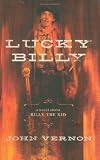
I only got to page 29, where I stopped reading this novel—partly in confusion, partly in frustration. I was in confusion, because the point of view switched abruptly, without any warning. In fact, I got halfway through Garrett’s chapter before realizing that the POV had changed. And, by the way, whose POV was it in the first chapter? I was frustrated because the premise of the book was good; I just didn’t think Vernon delivered it in a way that makes sense to the reader. In the end, show more the author makes a normally intriguing premise seem banal and flat.
I don’t know; maybe I’m a bit of a dolt and don’t get what the author was trying to do. But I still stand by my assertion that Lucky Billy is a pretty uninspired and uninspiring novel. show less
I don’t know; maybe I’m a bit of a dolt and don’t get what the author was trying to do. But I still stand by my assertion that Lucky Billy is a pretty uninspired and uninspiring novel. show less
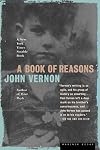
One of the reviewers of Ghosty Men said it was the 2nd best book about hoarding she'd ever read. I had to ask her what was the first, and it was this book. The author inherits his much-older brother's house and discovers he'd been living there in unbelievable squalor. The book is a meditation about objects and their significance, and about his brother's life. It's good.
One of my fellow LTers (Kasthu) wrote that she got to page 29 of this novel by John Vernon before giving up in frustration. I'm afraid I wasn't even that successful: page 19 was the breaking point for me.
And it's a darn shame, because I sure wanted to like this book. I love history, and I love stories about cowboys and the Old West, but this book manages to turn one of the most thrilling legends of American folklore into a dry, confusing, mundane tale.
As a rule, I don't mind POV changes show more within a book, but it needs to be done well. The shifts should be clearly noted, and there should be enough of a difference in tone between the various "voices" to make it easy for the reader to adjust. The first two chapters alternate a third-person omniscient narrator with a first-person narrator, and it. Just. Doesn't. Work. I get that those Old West fellas were laconic cowboy types, but Sheriff Pat Garrett seems to be on tranquilizers.
It was the sheriff's chapter that did me in, sadly: He was describing to some barmates what Billy the Kid (his former pal turned nemesis) was really like, and it just about put me to sleep. Somehow, I don't think that's the intended effect when you're talking about one of the most notorious outlaws of the Wild Wild West.
I guess I'll just stick with Marty Robbins' classic song version of the "Billy the Kid" story. show less
And it's a darn shame, because I sure wanted to like this book. I love history, and I love stories about cowboys and the Old West, but this book manages to turn one of the most thrilling legends of American folklore into a dry, confusing, mundane tale.
As a rule, I don't mind POV changes show more within a book, but it needs to be done well. The shifts should be clearly noted, and there should be enough of a difference in tone between the various "voices" to make it easy for the reader to adjust. The first two chapters alternate a third-person omniscient narrator with a first-person narrator, and it. Just. Doesn't. Work. I get that those Old West fellas were laconic cowboy types, but Sheriff Pat Garrett seems to be on tranquilizers.
It was the sheriff's chapter that did me in, sadly: He was describing to some barmates what Billy the Kid (his former pal turned nemesis) was really like, and it just about put me to sleep. Somehow, I don't think that's the intended effect when you're talking about one of the most notorious outlaws of the Wild Wild West.
I guess I'll just stick with Marty Robbins' classic song version of the "Billy the Kid" story. show less
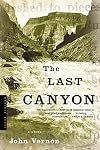
Vernon's historical novel traces John Wesley Powell's exploration of the Grand Canyon, entwining it with the fictional tale of a Paiute Indian family searching the desert above and around the canyon as they seek a stolen child.
All in all, the Indian segments are far more interesting. Powell's group was beset by internal feuding as well as by the physical hardships of the journey. Vernon does the best anyone could with his descriptions of the landscape, but in the end, the Powell story is as show more follows: They floated down the river, hit rapids, damaged the boats, lost some supplies and equipment, hauled ashore, bickered amongst themselves, repaired the boats as best they could, and salvaged as many instruments and as much food as possible. Rinse and repeat daily for three months. show less
All in all, the Indian segments are far more interesting. Powell's group was beset by internal feuding as well as by the physical hardships of the journey. Vernon does the best anyone could with his descriptions of the landscape, but in the end, the Powell story is as show more follows: They floated down the river, hit rapids, damaged the boats, lost some supplies and equipment, hauled ashore, bickered amongst themselves, repaired the boats as best they could, and salvaged as many instruments and as much food as possible. Rinse and repeat daily for three months. show less
You May Also Like


Associated Authors
Statistics
- Works
- 10
- Also by
- 1
- Members
- 253
- Popularity
- #90,474
- Rating
- 3.5
- Reviews
- 8
- ISBNs
- 45
- Languages
- 3