
Michael Hofmann (1) (1957–)
Author of After Ovid: New Metamorphoses
For other authors named Michael Hofmann, see the disambiguation page.
About the Author
Michael Hofmann won the PEN/Book-of-the-Month Club Translation Prize for Roth's The Tale of the 1002nd Night by Joseph Roth. (Bowker Author Biography)
Works by Michael Hofmann
Associated Works
Metamorphosis and Other Stories (Penguin Modern Classics) (1961) — Translator, introduction, some editions — 817 copies, 4 reviews
Metamorphosis and Other Stories (2007) — Translator, some editions; Introduction, some editions — 621 copies, 5 reviews
What I Saw: Reports from Berlin 1920-1933 (1996) — Translator, some editions — 514 copies, 7 reviews
The Stalin Front: A Novel of World War II (1955) — Translator, some editions — 267 copies, 5 reviews
Report from a Parisian Paradise: Essays from France, 1925-1939 (1999) — Translator, some editions — 221 copies, 1 review
The Hotel Years: Wanderings in Europe Between the Wars (2015) — Translator, some editions — 186 copies, 6 reviews
My Marriage (New York Review Books Classics) (1934) — Translator, some editions — 92 copies, 2 reviews
Three Novellas: The Legend of the Holy Drinker / Fallmerayer the Stationmaster / The Bust of the Emperor (1997) — Translator, some editions — 57 copies, 3 reviews
Investigations of a Dog: And Other Creatures (2017) — Translator, some editions — 55 copies, 1 review
Tales from the Underworld: Selected Shorter Fiction (2014) — Translator, some editions — 48 copies, 1 review
The Burrow: Posthumously Published Short Fiction (2017) — Translator, some editions — 47 copies, 1 review
Josephine the Singer, or the Mouse Folk [short story] (1924) — Translator, some editions — 24 copies
The Way Home [short story] — Translator, some editions — 3 copies
Unhappiness [short story] — Translator, some editions — 3 copies
Children on a Country Road [short story] — Translator, some editions — 3 copies
Up in the Gallery [short story] — Translator, some editions — 2 copies
An Old Manuscript [short story] — Translator, some editions — 2 copies
Great Noise [short story] — Translator, some editions — 2 copies
The Rejection [short story] — Translator, some editions — 2 copies
Passers-by [short story] — Translator, some editions — 2 copies
Eleven Sons [short story] — Translator, some editions — 2 copies
Absent-minded Window-gazing [short story] — Translator, some editions — 2 copies
The Businessman [short story] — Translator, some editions — 2 copies
A Visit to the Mine [short story] — Translator, some editions — 1 copy
A Dream [short story] — Translator, some editions — 1 copy
The Next Village [short story] — Translator, some editions — 1 copy
The Cares of a Family Man [short story] — Translator, some editions — 1 copy
Clothes [short story] — Translator, some editions — 1 copy
The New Advocate [short story] — Translator, some editions — 1 copy
The Trees [short story] — Translator, some editions — 1 copy
The Wish to Be An Indian [short story] — Translator, some editions — 1 copy
The Street Window [short story] — Translator, some editions — 1 copy
Reflections for Gentlemen-Jockeys [short story] — Translator, some editions — 1 copy
On the Tram [short story] — Translator, some editions — 1 copy
Bachelor's Ill Luck [short story] — Translator, some editions — 1 copy
Excursion into the Mountains [short story] — Translator, some editions — 1 copy
Resolutions [short story] — Translator, some editions — 1 copy
The Sudden Walk [short story] — Translator, some editions — 1 copy
Unmasking a Confidence Trickster [short story] — Translator, some editions — 1 copy
The Aeroplanes at Brescia [short story] — Translator, some editions — 1 copy
Tagged
Common Knowledge
- Other names
- Hofmann, Michael
- Birthdate
- 1957-08-25
- Gender
- male
- Education
- University of Cambridge (MA) (1984)
University of Cambridge (Magdalene College) (BA) (English Literature and Classics) (1979)
Winchester College, England, UK - Occupations
- poet
translator
Professor and Co-Director of Creative Writing
literary critic - Organizations
- Deutsche Akademie für Sprache und Dichtung
University of Florida - Awards and honors
- Cholmondeley Award (1984)
Schlegel-Tieck Prize (1988, 1993) - Relationships
- Hofmann, Gert (father)
- Nationality
- Germany (birth)
UK (residence) - Birthplace
- Freiburg im Breisgau, Baden-Württemberg, West Germany
- Places of residence
- Freiburg im Breisgau, Baden-Württemberg, West Germany
Bristol, Gloucestershire, England, UK
Edinburgh, Scotland, UK
Queensland, Australia
Gainsville, Florida, USA
Hamburg, Germany (show all 7)
London, England, UK
Members
Reviews
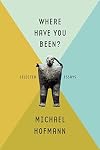
I was rather rudely shocked by the first part of this book. I knew Hofmann entirely from his translations of German poets (e.g., Gottfried Benn) and his glorious destruction of Stefan Zweig in the TLS (which is reprinted here, and deserves to be re-read; surely one of the greatest hit-jobs in all of reviewery).
So imagine my dismay when I learned that Hofmann is actually a devotee of Robert Lowell and Elizabeth Bishop, James Schuyler and Robert Frost, among others. By far the longest pieces show more here are devoted to Bishop and Lowell. Something is up: why is Hofmann's taste so excellent in German, and so dubious in English? It's not that Lowell and Bishop don't have their qualities. They're both good poets. But to set one's direction by them, in this, AD 2000 ? Really?
Anyway, this volume disappointed me, because I was expecting virulent attacks on the one hand, and appreciations of cranks, on the other. But the only attacks were on Zweig, which I'd already read, and a quickie on Grass, which is too obvious to need repeating.
There are some nice appreciations of cranks, though. Seidel, Bunting, Murray, Bernhard, Walser... much better.
The problem with these essays is that you need to be in a very particular position with regard to any author before the essay and him or her can get any purchase on you. I don't need to read 20 pages about Lowell or Bishop. I don't want to read any pages on Hughes or Graham. Only essays about those authors I already love (Berryman, Bernhard, Bunting), or those I know literally nothing about (Kees, Hamilton, Solie) were interesting.
This is mainly due to Hofmann's style, which can be effective (as in the Zweig piece) but rather too often seems like a random cutting-and-pasting of facts or lines that stick in his mind:
"You get a very good set of a very good writer's letters. Graham was bracingly frank... the sentences are often wonderful... there are fine puns... there are some extraordinary documents of friendship and solicitude...", with examples or extensions in the ellipses: that's five paragraph masquerading as a paragraph, and doesn't make for enjoyable reading. This is, perhaps, a poet's problem. Novelists, I imagine, aren't much good at enjambment; why should poets be good at paragraphing? And the examples are too short to tell a reader anything.
If only Hofmann would stick to reviewing books he hates by authors he loathes.
On the upside, the best thing a collection of essays like this can do is kill some time (which it did) and encourage a reader to buy poets' books (which it did: Seidel and the behemoth 'Australian Poetry Since 1788.' Both have already proven their worth). show less
So imagine my dismay when I learned that Hofmann is actually a devotee of Robert Lowell and Elizabeth Bishop, James Schuyler and Robert Frost, among others. By far the longest pieces show more here are devoted to Bishop and Lowell. Something is up: why is Hofmann's taste so excellent in German, and so dubious in English? It's not that Lowell and Bishop don't have their qualities. They're both good poets. But to set one's direction by them, in this, AD 2000 ? Really?
Anyway, this volume disappointed me, because I was expecting virulent attacks on the one hand, and appreciations of cranks, on the other. But the only attacks were on Zweig, which I'd already read, and a quickie on Grass, which is too obvious to need repeating.
There are some nice appreciations of cranks, though. Seidel, Bunting, Murray, Bernhard, Walser... much better.
The problem with these essays is that you need to be in a very particular position with regard to any author before the essay and him or her can get any purchase on you. I don't need to read 20 pages about Lowell or Bishop. I don't want to read any pages on Hughes or Graham. Only essays about those authors I already love (Berryman, Bernhard, Bunting), or those I know literally nothing about (Kees, Hamilton, Solie) were interesting.
This is mainly due to Hofmann's style, which can be effective (as in the Zweig piece) but rather too often seems like a random cutting-and-pasting of facts or lines that stick in his mind:
"You get a very good set of a very good writer's letters. Graham was bracingly frank... the sentences are often wonderful... there are fine puns... there are some extraordinary documents of friendship and solicitude...", with examples or extensions in the ellipses: that's five paragraph masquerading as a paragraph, and doesn't make for enjoyable reading. This is, perhaps, a poet's problem. Novelists, I imagine, aren't much good at enjambment; why should poets be good at paragraphing? And the examples are too short to tell a reader anything.
If only Hofmann would stick to reviewing books he hates by authors he loathes.
On the upside, the best thing a collection of essays like this can do is kill some time (which it did) and encourage a reader to buy poets' books (which it did: Seidel and the behemoth 'Australian Poetry Since 1788.' Both have already proven their worth). show less
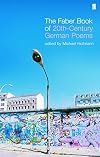
In this book Michael Hofmann puts forward his case for Germany’s inclusion on the table for best poets of the 20Th century, stating his claim that a nation with a roster of poets such as Rilke, Brecht, Benn, poets like Celan, Bobrowski, Stadler, Müller and Trakl, others such as,Bachmann, Grass, Enzensberger and Grünbein - the placemat should already be in situ, the setting card already printed. The poets represented start with Else Lasker-Schüler born 1869 , a Jewish German poet and show more playwright famous for her bohemian lifestyle in Berlin. She was one of the few women affiliated with the Expressionist movement and despite winning the Kleist Prize in 1932, as a Jew she was physically harassed and threatened by the Nazis, forcing her to flee her homeland. The book then ends with Jan Wagner, born 1971 in Hamburg ( living in Berlin since 1995) and who, as well as being a Poet, is a translator of poetry from the English (including Charles Simic, James Tate, Simon Armitage, Jo Shapcott, Louis MacNeice and Kevin Young) and is considered one of the most important German-language poets of the younger generation.
On the way we pass through world war one, the Weimar Republic and it’s failure, followed by the great depression, which pathed the way for Adolf Hitler’s brutal totalitarian regime, the holocaust and the second world war, which then leads on to the Cold war crisis, Berlin and the Iron curtain, before unification and the joys and frustrations this has seen arise. All these points in time have been marked by Germany's poets as they themselves have been marked by the events, some faced them, whilst others were more oblique in their references, but all in one way or another had to come to terms with the world they found themselves in .
Throughout this book Michael Hofmann guides us with a confident hand, always in command, whether discussing Rilke’s lyricism or whether Brecht was better as a poet or as a playwright (according to Hofmann the former) or even how Gottfried Benn was heartrending in a way that the likes of Lowell, Jarrell & Berryman could only aim for, Hofmann’s makes his case with a clarity and passion, backed by a knowledge and a willingness to argue his case with a certain pugnacity for his cause and against any detractors.
This collection has the works of fifty-four poets, but seems to work between the two points of Bertolt Brecht with 19 poems and Hans Magnus Enzensberger with 14 (including the 8 & a bit page poem, Foam) and although there are other books covering this ground for example, Michael Hamburger’s and Christopher Middleton’s Modern German Poetry from 1910-1960. As an introduction to a poetry that can hold it’s head high on the world stage, this book will take some beating, No, It’s not Bilingual, yes it would be probably improved if that was the case, but to most - myself included - that won’t matter, what does matter is that this book will serve as a key to a door that can open up a whole world of poetry. Earlier this year I wrote a post on Faber’s Book of 20Th Century Italian Poems and this will sit nicely alongside that one on my bookshelves.
http://parrishlantern.blogspot.co.uk/2011/11/20th-century-german-poems.html show less
On the way we pass through world war one, the Weimar Republic and it’s failure, followed by the great depression, which pathed the way for Adolf Hitler’s brutal totalitarian regime, the holocaust and the second world war, which then leads on to the Cold war crisis, Berlin and the Iron curtain, before unification and the joys and frustrations this has seen arise. All these points in time have been marked by Germany's poets as they themselves have been marked by the events, some faced them, whilst others were more oblique in their references, but all in one way or another had to come to terms with the world they found themselves in .
Throughout this book Michael Hofmann guides us with a confident hand, always in command, whether discussing Rilke’s lyricism or whether Brecht was better as a poet or as a playwright (according to Hofmann the former) or even how Gottfried Benn was heartrending in a way that the likes of Lowell, Jarrell & Berryman could only aim for, Hofmann’s makes his case with a clarity and passion, backed by a knowledge and a willingness to argue his case with a certain pugnacity for his cause and against any detractors.
This collection has the works of fifty-four poets, but seems to work between the two points of Bertolt Brecht with 19 poems and Hans Magnus Enzensberger with 14 (including the 8 & a bit page poem, Foam) and although there are other books covering this ground for example, Michael Hamburger’s and Christopher Middleton’s Modern German Poetry from 1910-1960. As an introduction to a poetry that can hold it’s head high on the world stage, this book will take some beating, No, It’s not Bilingual, yes it would be probably improved if that was the case, but to most - myself included - that won’t matter, what does matter is that this book will serve as a key to a door that can open up a whole world of poetry. Earlier this year I wrote a post on Faber’s Book of 20Th Century Italian Poems and this will sit nicely alongside that one on my bookshelves.
http://parrishlantern.blogspot.co.uk/2011/11/20th-century-german-poems.html show less
Awards


You May Also Like


Associated Authors
Statistics
- Works
- 19
- Also by
- 110
- Members
- 630
- Popularity
- #39,983
- Rating
- 3.9
- Reviews
- 3
- ISBNs
- 82
- Languages
- 3
