
Fatima Bhutto
Author of The Shadow of the Crescent Moon
About the Author
Image credit: Amean J
Works by Fatima Bhutto
The Hour of the Wolf 1 copy
Associated Works
Tagged
Common Knowledge
- Birthdate
- 1982-05-29
- Gender
- female
- Education
- Barnard College, Columbia University (Middle Eastern Languages and Cultures)
School of Oriental and African Studies (SOAS)
Karachi American School - Occupations
- columnist
poet - Relationships
- Bhutto, Benazir (aunt)
Bhutto, Zulfikar Ali (grandfather) - Nationality
- Pakistan
- Birthplace
- Kabul, Afghanistan
- Places of residence
- Kabul, Afghanistan (birth)
Karachi, Pakistan
New York, USA
Damascus, Syria - Map Location
- Pakistan
Members
Reviews
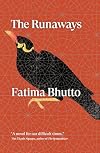
Rating: 3.5* of five
The Publisher Says: The lives of three radicalized Muslim teenagers—two from Pakistan, one from the United Kingdom—intersect in the Iraqi desert as they travel to a jihadi training camp in Mosul.
Anita lives in Karachi’s biggest slum. Her mother is a maalish wali, paid to massage the tired bones of rich women. But Anita’s life will change forever when she meets her elderly neighbor, a man whose shelves of books promise an escape to a different world.
On the other show more side of Karachi lives Monty, whose father owns half the city and expects great things of him. But when a beautiful and rebellious girl joins his school, Monty will find his life going in a very different direction.
Sunny’s father left India and went to England to give his son the opportunities he never had. Yet Sunny doesn't fit in anywhere. It’s only when his charismatic cousin comes back into his life that he realizes his life could hold more possibilities than he ever imagined.
These three lives will cross in the desert, a place where life and death walk hand in hand, and where their closely guarded secrets will force them to make a terrible choice.
I RECEIVED A DRC FROM THE PUBLISHER VIA EDELWEISS+. THANK YOU.
My Review: What is the process of radicalization? It's ever more timely a question. We in the US are not accustomed to thinking the radicalization process applies to women. In this story, Author Bhutto, whose family has been deeply damaged by radicalized people, treats the process as gender-blind.
I'm glad she did that. In 2026, we need to be aware of how readily educated minds can be co-opted into fields of endeavor I can only think of as anti-social. I'm quite sure Author Bhutto knows each of these people. I'm clear she does not want us to think of them as pieces of a monolithic belief group, but people who found a path to serve a larger purpose and discover a way to live a meaningful life.
Religion being a human thing I dislike and decline to participate in, this story is one I simply read to gain some semblance of understanding for its apparent magnetic appeal to others. I'm no more clear about it now. None of these misguided young people, particularly gay young Sunny, make any tiniest bit of sense to me. I understand none of their motivations any better after the read than before. They're tedious rebellious adolescents. Their path to selfhood and separation from their parents is not one I like or support; I expected that. I wanted to understand at least a little better what inflames the young passions in this cause I don't like or wish success for; not forthcoming. Instead there is an animal cruelty scene I'll never be able to unread.
Not a success for my aims, then; as a novel curiously unsuccessful too. Three PoVs, one deep (Sunny the gay lad...what the hell, Sunny, they'll kill you when they know you're queer!); Monty the vapid rich boy, a gray fog of words and no lightning except an obsession with a girl; Anita...well, what was Anita's PoV? Why was she included when she changed the least of the three?
Monty's mother's religious faith, surprisingly, plays a very small role in this tale pf Muslims becoming radicalized. She is a believer who is not radicalized; why is she not given a role in trying to explain his path's consequences to Monty, instead of abetting him in his course? She is not at all committed to it, that's clear.
I wasn't satisfied on a craft level, then; I didn't get what I'd hoped for; so why am I rating it over three stars? Because Author Bhutto herself is part of a family (follow the link above) terribly impacted by the dreadful roiling cauldron of extremism. I felt her presence in the spaces sh left for me to contemplate the fates of her runaways. It was enough for me to connect emotionally with this flawed novel.
I warn off those squeamish about animal cruelty. Others less sensitive, particularly gay Muslim lads, might get more of a satisfying reading experience. show less
The Publisher Says: The lives of three radicalized Muslim teenagers—two from Pakistan, one from the United Kingdom—intersect in the Iraqi desert as they travel to a jihadi training camp in Mosul.
Anita lives in Karachi’s biggest slum. Her mother is a maalish wali, paid to massage the tired bones of rich women. But Anita’s life will change forever when she meets her elderly neighbor, a man whose shelves of books promise an escape to a different world.
On the other show more side of Karachi lives Monty, whose father owns half the city and expects great things of him. But when a beautiful and rebellious girl joins his school, Monty will find his life going in a very different direction.
Sunny’s father left India and went to England to give his son the opportunities he never had. Yet Sunny doesn't fit in anywhere. It’s only when his charismatic cousin comes back into his life that he realizes his life could hold more possibilities than he ever imagined.
These three lives will cross in the desert, a place where life and death walk hand in hand, and where their closely guarded secrets will force them to make a terrible choice.
I RECEIVED A DRC FROM THE PUBLISHER VIA EDELWEISS+. THANK YOU.
My Review: What is the process of radicalization? It's ever more timely a question. We in the US are not accustomed to thinking the radicalization process applies to women. In this story, Author Bhutto, whose family has been deeply damaged by radicalized people, treats the process as gender-blind.
I'm glad she did that. In 2026, we need to be aware of how readily educated minds can be co-opted into fields of endeavor I can only think of as anti-social. I'm quite sure Author Bhutto knows each of these people. I'm clear she does not want us to think of them as pieces of a monolithic belief group, but people who found a path to serve a larger purpose and discover a way to live a meaningful life.
Religion being a human thing I dislike and decline to participate in, this story is one I simply read to gain some semblance of understanding for its apparent magnetic appeal to others. I'm no more clear about it now. None of these misguided young people, particularly gay young Sunny, make any tiniest bit of sense to me. I understand none of their motivations any better after the read than before. They're tedious rebellious adolescents. Their path to selfhood and separation from their parents is not one I like or support; I expected that. I wanted to understand at least a little better what inflames the young passions in this cause I don't like or wish success for; not forthcoming. Instead there is an animal cruelty scene I'll never be able to unread.
Not a success for my aims, then; as a novel curiously unsuccessful too. Three PoVs, one deep (Sunny the gay lad...what the hell, Sunny, they'll kill you when they know you're queer!); Monty the vapid rich boy, a gray fog of words and no lightning except an obsession with a girl; Anita...well, what was Anita's PoV? Why was she included when she changed the least of the three?
Monty's mother's religious faith, surprisingly, plays a very small role in this tale pf Muslims becoming radicalized. She is a believer who is not radicalized; why is she not given a role in trying to explain his path's consequences to Monty, instead of abetting him in his course? She is not at all committed to it, that's clear.
I wasn't satisfied on a craft level, then; I didn't get what I'd hoped for; so why am I rating it over three stars? Because Author Bhutto herself is part of a family (follow the link above) terribly impacted by the dreadful roiling cauldron of extremism. I felt her presence in the spaces sh left for me to contemplate the fates of her runaways. It was enough for me to connect emotionally with this flawed novel.
I warn off those squeamish about animal cruelty. Others less sensitive, particularly gay Muslim lads, might get more of a satisfying reading experience. show less
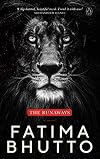
Fatima Bhutto has written a masterpiece. This novel took me into the heart of Karachi and wouldn't let me out until it got to Nineveh.
Bhutto's novel is what I like to call atmospheric. I felt like I was in Karachi, as I read it. Every area and location in the book was described perfectly. I could sense the sadness and despair in the slums, and the emptiness in the houses of the rich. In the second part of the book, set in the desert of Iraq, it felt like I was marching through the hot sun. show more It's tough to describe the atmosphere of a location without getting bogged down in minutiae, but when it's done right, the results are spectacular.
Sunny, the British boy, has a character arc that perfectly describes he alienation first and second generation immigrants feel in a new country. His need to belong and feel like a part of something was real and heartbreaking to read. As a first generation immigrant myself, that feeling like you're from nowhere was something I felt too. Bhutto made a character who could have been painted as a monster into someone deserving sympathy. This aspect of the book will live with me for quite a while.
I recommend this book to anyone trying to understand how and why people can get radicalized. show less
Bhutto's novel is what I like to call atmospheric. I felt like I was in Karachi, as I read it. Every area and location in the book was described perfectly. I could sense the sadness and despair in the slums, and the emptiness in the houses of the rich. In the second part of the book, set in the desert of Iraq, it felt like I was marching through the hot sun. show more It's tough to describe the atmosphere of a location without getting bogged down in minutiae, but when it's done right, the results are spectacular.
Sunny, the British boy, has a character arc that perfectly describes he alienation first and second generation immigrants feel in a new country. His need to belong and feel like a part of something was real and heartbreaking to read. As a first generation immigrant myself, that feeling like you're from nowhere was something I felt too. Bhutto made a character who could have been painted as a monster into someone deserving sympathy. This aspect of the book will live with me for quite a while.
I recommend this book to anyone trying to understand how and why people can get radicalized. show less
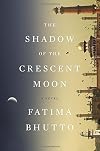
Fatima Bhutto’s The Shadow of the Crescent Moon is a novel that deserves wide reading for its topic—but more than that, it deserves wide reading for its writing. The novel recounts the experiences of three brothers on Eid (the Muslim new year) in Mir Ali, a small town in Pakistan, near the border with Afghanistan, whose populace have been engaged in a long-term civil war against the Pakistani government.
Life in Mir Ali is perpetually violent. In addition to government and local show more combatants, there are US drones, and an influx of guerrillas from Afghanistan, who see themselves as freedom fighters, but who don’t differentiate between government targets and local targets that don’t share their particular branch of Islam. In fact, the violence has become so commonplace that for the first time ever the three brothers will not be attending the same mosque for Eid. Instead, each of them is going to a different mosque, a way of ensuring that at least someone will survive the violence that is apt to occur.
Although the primary action of the novel takes place during a period of a few hours, Bhutto offers enough back story that readers can unravel the complicated politics of the region. Perhaps not completely—but certainly more effectively and thoroughly than I’ve seen them explained in any other popular source.
The use of the three brothers allows Bhutto to offer multiple perspectives. Aman Erum, the eldest, has been studying in the U.S. and is desperate to leave Mir Ali for better opportunities elsewhere. Sikandar, the middle brother, is a physician whose son, an only child, has recently been killed in a bombing. Hayat, the youngest, has devoted his life to independence for Mir Ali, having spent his childhood listening to his father’s tales of earlier uprisings. Two women figure significantly as well: Mina, Sikandar’s wife, who has begun obsessively attending funerals of victims of terrorist violence, even when they are complete strangers to her, and Samarra, loved by both the oldest and the youngest, who has risen from a position as a courier for to leader of one of Mir Ali’s most active rebel cells.
As the few hours’ action plays out, readers are thrown from one crisis to the next. Even as each character strives to do what’s right, he (or she) finds himself trapped by circumstances, forced to betray his deepest convictions.
Don’t wait for this novel to come out in paperback. Read it now—both for its political context and for its crisp prose and rapidly paced plot. show less
Life in Mir Ali is perpetually violent. In addition to government and local show more combatants, there are US drones, and an influx of guerrillas from Afghanistan, who see themselves as freedom fighters, but who don’t differentiate between government targets and local targets that don’t share their particular branch of Islam. In fact, the violence has become so commonplace that for the first time ever the three brothers will not be attending the same mosque for Eid. Instead, each of them is going to a different mosque, a way of ensuring that at least someone will survive the violence that is apt to occur.
Although the primary action of the novel takes place during a period of a few hours, Bhutto offers enough back story that readers can unravel the complicated politics of the region. Perhaps not completely—but certainly more effectively and thoroughly than I’ve seen them explained in any other popular source.
The use of the three brothers allows Bhutto to offer multiple perspectives. Aman Erum, the eldest, has been studying in the U.S. and is desperate to leave Mir Ali for better opportunities elsewhere. Sikandar, the middle brother, is a physician whose son, an only child, has recently been killed in a bombing. Hayat, the youngest, has devoted his life to independence for Mir Ali, having spent his childhood listening to his father’s tales of earlier uprisings. Two women figure significantly as well: Mina, Sikandar’s wife, who has begun obsessively attending funerals of victims of terrorist violence, even when they are complete strangers to her, and Samarra, loved by both the oldest and the youngest, who has risen from a position as a courier for to leader of one of Mir Ali’s most active rebel cells.
As the few hours’ action plays out, readers are thrown from one crisis to the next. Even as each character strives to do what’s right, he (or she) finds himself trapped by circumstances, forced to betray his deepest convictions.
Don’t wait for this novel to come out in paperback. Read it now—both for its political context and for its crisp prose and rapidly paced plot. show less
THE SHADOW OF THE CRESCENT MOON is a riveting story that place over a couple hours on a rainy Friday morning in Mir Ali, a small town in a tribal region bordering Afghanistan, as three brothers and two of the women they love find their past, present, and future merge together. It is the thriller-like anticipation and the elegant language that had me reading this book in one session. I was interested in reading this book on a region in Pakistan that I knew very little about except from the show more pov of news updates regarding the American militia experience so I did “google” the town – Mir Ali before beginning the book and that gave me the necessary understanding to fully appreciate this enthralling storyline.
The prologue sets up the storyline as the three brothers are breakfasting together before going about their day but first they have to decide which mosque each will attend as, “It is too dangerous, too risky, to place all the family together in one mosque that could easily be hit. They no longer know by whom.”
Then as the minutes/hours tick by, we learn actually what each brother is doing and why. The flashbacks provide the necessary background information and the lyrical language shows how the people go about their lives doing ordinary things overshadowed by the hovering violence that is never spoken about out loud. While the stories concentrated mostly on the male characters, it is the two women characters whose resolve and spirit surprise those around them – their love ones and their opposers.
As the pace quickens toward the climax I am holding my breath as I turn the page to see what happens, the story ends. As I re-read the last couple of pages to see if I missed a clue it dawns on me that this ending is intentional by the author. How can she provide an ending when there is no known ending to this conflict and turmoil in this region. I might have finished reading the book but the story is not over.
Overall, this is a thought-provoking book on loyalty, identity, love, and sacrifice. A very solid debut novel and I look forward to reading future books by the author. show less
The prologue sets up the storyline as the three brothers are breakfasting together before going about their day but first they have to decide which mosque each will attend as, “It is too dangerous, too risky, to place all the family together in one mosque that could easily be hit. They no longer know by whom.”
Then as the minutes/hours tick by, we learn actually what each brother is doing and why. The flashbacks provide the necessary background information and the lyrical language shows how the people go about their lives doing ordinary things overshadowed by the hovering violence that is never spoken about out loud. While the stories concentrated mostly on the male characters, it is the two women characters whose resolve and spirit surprise those around them – their love ones and their opposers.
As the pace quickens toward the climax I am holding my breath as I turn the page to see what happens, the story ends. As I re-read the last couple of pages to see if I missed a clue it dawns on me that this ending is intentional by the author. How can she provide an ending when there is no known ending to this conflict and turmoil in this region. I might have finished reading the book but the story is not over.
Overall, this is a thought-provoking book on loyalty, identity, love, and sacrifice. A very solid debut novel and I look forward to reading future books by the author. show less
Lists
Awards


You May Also Like


Associated Authors
Statistics
- Works
- 10
- Also by
- 5
- Members
- 551
- Popularity
- #45,289
- Rating
- 3.6
- Reviews
- 21
- ISBNs
- 50
- Languages
- 3