
Brittney C. Cooper
Author of Eloquent Rage: A Black Feminist Discovers Her Superpower
About the Author
Brittney C. Cooper is an assistant professor of women's and gender studies at Rutgers University. She is coeditor of The Crunk Feminist Collection.
Image credit: University of Illinois Press
Works by Brittney C. Cooper
Associated Works
But Some of Us Are Brave: Black Women's Studies (1982) — Afterword, some editions — 401 copies, 2 reviews
When Chickenheads Come Home to Roost: A Hip-Hop Feminist Breaks It Down (1999) — Introduction, some editions — 247 copies, 4 reviews
Tagged
Common Knowledge
- Birthdate
- 1980
- Gender
- female
- Education
- Howard University (BA)
Emory University (MA) (PhD) - Occupations
- women's and gender studies and Africana studies professor, Rutgers University-New Brunswick
- Agent
- Tanya McKinnon
- Nationality
- USA
- Birthplace
- Ruston, Louisiana, USA
- Map Location
- USA
Members
Reviews

A compelling memoir about growing up fat, Black and "exceptional" and all the things that the author had to learn and unlearn in her journey to claim her power and place in the world. I found so much to relate to in terms of the conflicting messages girls receive when they are raised in conservative Christian environments.
Dr. Cooper writes powerfully about how women are expected to shrink, suppress their emotions, and "be good". She also illuminates the ways in which white supremacy show more amplifies the damage of good old fashion patriarchy. Is there a place at the feminist table for Black women? Historically, this has not always been the case, but Dr. Cooper recounts her reluctant embrace of this term as well as the harnessing of her own rage to drive positive change in the world. show less
Dr. Cooper writes powerfully about how women are expected to shrink, suppress their emotions, and "be good". She also illuminates the ways in which white supremacy show more amplifies the damage of good old fashion patriarchy. Is there a place at the feminist table for Black women? Historically, this has not always been the case, but Dr. Cooper recounts her reluctant embrace of this term as well as the harnessing of her own rage to drive positive change in the world. show less
"This is a book by a grown-ass woman written for other grown ass-women." Black people are usually designated as articulate by whites only when they meet some vague white standards. This immensely powerful screed moves the needle way past that, all the way to commanding, as the author presents both her ideas and her back story in uniquely firm and irrefutable narrative. It's one of the most convincing arguments for feminism, via academic and down-to-earth language that I've ever read, even in show more a recent excellent batch of nonfiction by black women (Morgan Jenkins, Patrice Kahn-Cullors, Ijeoma Oluo).
I recently saw Cooper at a reading, and she's as dynamic in person as her words are in this book, which would truly benefit every reader who is concerned about the intersection of feminism and fighting racism - and even more if that reader never gave it a thought. Truly consciousness-raising in the best sense of those old words. And too many fine quotes to list them all here. This entire book is a fine quote!
"Black women turn to sass when rage is too risky - when we have jobs to keep, families to feed, and bills to pay. Black girl feminism is all the rage, and we need all the rage."
"When I heard Beyoncé articulate friendships with Black women as the core of what feminism was for her...I love being a woman and being a friend to other women should be feminism's tagline. If this isn't true for you, you aren't a feminist."
"We can't let white women become the center of a conversation that isn't about them. Black feminism is not about the damage that white girls do - not solely or primarily. It is about the world Black women and girls can build, if all the haters would raise up and let us get to work."
“When you are twice as good, white folks will resent you for being better.” show less
I recently saw Cooper at a reading, and she's as dynamic in person as her words are in this book, which would truly benefit every reader who is concerned about the intersection of feminism and fighting racism - and even more if that reader never gave it a thought. Truly consciousness-raising in the best sense of those old words. And too many fine quotes to list them all here. This entire book is a fine quote!
"Black women turn to sass when rage is too risky - when we have jobs to keep, families to feed, and bills to pay. Black girl feminism is all the rage, and we need all the rage."
"When I heard Beyoncé articulate friendships with Black women as the core of what feminism was for her...I love being a woman and being a friend to other women should be feminism's tagline. If this isn't true for you, you aren't a feminist."
"We can't let white women become the center of a conversation that isn't about them. Black feminism is not about the damage that white girls do - not solely or primarily. It is about the world Black women and girls can build, if all the haters would raise up and let us get to work."
“When you are twice as good, white folks will resent you for being better.” show less
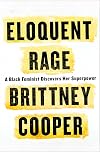
Eloquent Rage is Brittney Cooper's ode to the power, intelligence, and drive of Black women—and an indictment of the structural inequities (sexism, racism, and classism) which work to denigrate and dehumanise them. It's both a deeply personal collection of essays and one informed by Cooper's expertise as a scholar of race and gender. Cooper's writing is sharp, incisive, humane, and frequently left me feeling uncomfortable, defensive, and "what about"-ish—in other words, a lot of feelings show more that I as a white Irishwoman should sit with for a long while to come.
There are critiques to be made of Eloquent Rage—despite the nods to the work of Black queer and trans scholars like Pauli Murray, it's largely a heteronormative book which assumes a straight audience; Cooper pathologises Black feminist critiques of Beyoncé as coming from those who "weren’t popular or cool" as children—but overall it's a highly accessible blend of pop culture and gender/race theory which will no doubt serve as an excellent introduction for many people to the thinking of feminist race scholars. show less
There are critiques to be made of Eloquent Rage—despite the nods to the work of Black queer and trans scholars like Pauli Murray, it's largely a heteronormative book which assumes a straight audience; Cooper pathologises Black feminist critiques of Beyoncé as coming from those who "weren’t popular or cool" as children—but overall it's a highly accessible blend of pop culture and gender/race theory which will no doubt serve as an excellent introduction for many people to the thinking of feminist race scholars. show less
Thoughts on our current crisis from a black feminist perspective. “Black-girl feminism is all the rage, and we need all the rage.” But she recognizes that rage is dangerous, especially for a fat woman: “if you have the nerve to be fat and angry, then you are treated as a bully even if you are doing nothing aggressive at all.” Cooper wants us, especially black women, to respect the messiness of emotion around the work of justice, which also means not condemning members of marginalized show more groups for not being perfect; as she points out, “[v]ery often Black girls don’t get the opportunity to be in process.” Furthermore, “the power of a good political analysis is that it can be a masterful cloak for the emotional work we haven’t done,” which leads us to tear down others just a few steps up the ladder (Beyonce is her example of this among Black feminists). Her job as a Black feminist, she says, is to love Black women and girls. She criticizes those in the community, male and female, who teach girls to distrust each other, and argues that Black men should, but too often do not, stand in solidarity when Black women are killed as Black women have done for Black men.
Relatedly, she discusses her complicated reactions to Hillary Clinton; “white women’s racism has never kept me from admiring them, befriending them, or supporting them,” especially given the “similarities between how Black and white communities constrict and resent women who seek power.” Clinton’s “social awkwardness, her detail-oriented policy-wonk tendencies, and her devotion to the long game of racking up qualifications through intentional resume building feels familiar, because it is the very same strategy of every high-achieving Black woman I know.” Still, white feminists need to do better, since just as Black men have expected Black women to subordinate themselves (and feminism) to equalize male status, white women have put race before gender. [I think she conflates “mainstream media didn’t pay attention to Bill Cosby’s verbal attacks on Black women and Daniel Holtzclaw’s rapes of Black women” with “white feminists didn’t pay attention”--I don’t think even white feminists control the mainstream media, and I did know about these things from mostly white feminists, but that isn’t to say that her main point is wrong.] “White women and Black men share a kind of narcissism that comes from being viewed as the most vulnerable entities within their respective races.” Black men have too often been frustrated patriarchs, seeking the same power white men have rather than seeking to overturn that power—using Cosby and Eldridge Cleaver as horrible examples in which toxic racism produces exactly the monsters that white people fear.
Cooper discusses the childhood lessons about exceptionalism she learned and later discarded, her friendships with white girls and a smaller number of black girls also in advanced programs, and her early conclusion that abstinence was critical to her success. This distrust of sexuality, she argues, is part of why Black women often struggle to find/reclaim their wholeness even when they have material success. “To be Black in the United States is to be taught our flesh is dirty and evil. A liberatory theology for us cannot set us at war with our very bodies.” Thus, she rejects “respectability politics” that try to rely on exceptionalism and performing conservative white values—reframing such politics as “at their core a rage-management project,” a survival strategy for the exceptional that has largely outlived its usefulness, and she prefers to manage her rage differently, especially since “when you are twice as good, white folks will resent you for being better.” Elsehwere: “American democracy is not interested in acknowledging that a Barack Obama can be found in every Black community.” Meanwhile, America legitimizes white rage: “Had Darren Wilson been just a bit more ‘civil,’ Mike Brown might very well be alive.”
I appreciated Cooper’s reading of Michelle Obama’s appearance at the Trump inauguration. Mrs. Obama always had to navigate hugely difficult territory, and she became a fashion icon, but she wore her hair back and a relatively plain dress at the Trump inauguration: a “refusal to perform the public standard” that was itself a statement of rejection: “a signal to the world that what we were about to witness was some bullshit.” I also liked Cooper’s discussion of emotions, including white fear: Emotions just are what they are, but that doesn’t mean that you should let them control your actions. And Black people don’t get to express emotions (or screw up and be redeemed, or carry guns openly) with the same freedom as whites do.
Cooper also discusses the fraught issues of interracial relationships between Black men and white women, and the underemployment plus prison pipeline that severely impairs Black women’s chances of forming long-term relationships with Black men. She describes knowing Black men who are overcompensating for their own fathers’ absence by becoming “super dads”—but notes that “none of you thinks anything about learning to be better partners,” even though one big reason their fathers weren’t around was that they didn’t know how to be good partners to their mothers. “Kanye made millions blaming Black women for desiring men to have some level of economic stability”—that’s the genius of structural violence, that it is often enforced most strongly and intimately by peers. Cooper wants their resentment to turn instead to the structural conditions that made Black men so disadvantaged compared to white men (though still outearning Black women, even though Black women have higher average educational attainment). Ultimately, solutions within the community won’t work—buying Black is all well and good, but it can’t close the wealth gap. She cautions against relying on “resilience,” which is another way of saying “Let’s see just how much we can take away from you, before you break.” show less
Relatedly, she discusses her complicated reactions to Hillary Clinton; “white women’s racism has never kept me from admiring them, befriending them, or supporting them,” especially given the “similarities between how Black and white communities constrict and resent women who seek power.” Clinton’s “social awkwardness, her detail-oriented policy-wonk tendencies, and her devotion to the long game of racking up qualifications through intentional resume building feels familiar, because it is the very same strategy of every high-achieving Black woman I know.” Still, white feminists need to do better, since just as Black men have expected Black women to subordinate themselves (and feminism) to equalize male status, white women have put race before gender. [I think she conflates “mainstream media didn’t pay attention to Bill Cosby’s verbal attacks on Black women and Daniel Holtzclaw’s rapes of Black women” with “white feminists didn’t pay attention”--I don’t think even white feminists control the mainstream media, and I did know about these things from mostly white feminists, but that isn’t to say that her main point is wrong.] “White women and Black men share a kind of narcissism that comes from being viewed as the most vulnerable entities within their respective races.” Black men have too often been frustrated patriarchs, seeking the same power white men have rather than seeking to overturn that power—using Cosby and Eldridge Cleaver as horrible examples in which toxic racism produces exactly the monsters that white people fear.
Cooper discusses the childhood lessons about exceptionalism she learned and later discarded, her friendships with white girls and a smaller number of black girls also in advanced programs, and her early conclusion that abstinence was critical to her success. This distrust of sexuality, she argues, is part of why Black women often struggle to find/reclaim their wholeness even when they have material success. “To be Black in the United States is to be taught our flesh is dirty and evil. A liberatory theology for us cannot set us at war with our very bodies.” Thus, she rejects “respectability politics” that try to rely on exceptionalism and performing conservative white values—reframing such politics as “at their core a rage-management project,” a survival strategy for the exceptional that has largely outlived its usefulness, and she prefers to manage her rage differently, especially since “when you are twice as good, white folks will resent you for being better.” Elsehwere: “American democracy is not interested in acknowledging that a Barack Obama can be found in every Black community.” Meanwhile, America legitimizes white rage: “Had Darren Wilson been just a bit more ‘civil,’ Mike Brown might very well be alive.”
I appreciated Cooper’s reading of Michelle Obama’s appearance at the Trump inauguration. Mrs. Obama always had to navigate hugely difficult territory, and she became a fashion icon, but she wore her hair back and a relatively plain dress at the Trump inauguration: a “refusal to perform the public standard” that was itself a statement of rejection: “a signal to the world that what we were about to witness was some bullshit.” I also liked Cooper’s discussion of emotions, including white fear: Emotions just are what they are, but that doesn’t mean that you should let them control your actions. And Black people don’t get to express emotions (or screw up and be redeemed, or carry guns openly) with the same freedom as whites do.
Cooper also discusses the fraught issues of interracial relationships between Black men and white women, and the underemployment plus prison pipeline that severely impairs Black women’s chances of forming long-term relationships with Black men. She describes knowing Black men who are overcompensating for their own fathers’ absence by becoming “super dads”—but notes that “none of you thinks anything about learning to be better partners,” even though one big reason their fathers weren’t around was that they didn’t know how to be good partners to their mothers. “Kanye made millions blaming Black women for desiring men to have some level of economic stability”—that’s the genius of structural violence, that it is often enforced most strongly and intimately by peers. Cooper wants their resentment to turn instead to the structural conditions that made Black men so disadvantaged compared to white men (though still outearning Black women, even though Black women have higher average educational attainment). Ultimately, solutions within the community won’t work—buying Black is all well and good, but it can’t close the wealth gap. She cautions against relying on “resilience,” which is another way of saying “Let’s see just how much we can take away from you, before you break.” show less
Lists
Awards


You May Also Like


Associated Authors
Statistics
- Works
- 6
- Also by
- 3
- Members
- 1,074
- Popularity
- #23,943
- Rating
- 4.1
- Reviews
- 22
- ISBNs
- 20
- Languages
- 1