
Abraham J. Twerski (1930–2021)
Author of Addictive Thinking
About the Author
Rabbi Dr. Abraham J. Twerski is the founder and Medical Director Emeritus of Gateway Rehabilitation Center, a not-for-profit drug and alcohol treatment system in western Pennsylvania, cited by Forbes magazine as one of the 12 best drug and alcohol treatment centers in the United States. Dr, Tweski show more studies at Marquette University Medical School and Completed his psychiatric residency at the university of Pittsburgh, Western Psychiatrie Institute. He has served as clinical director of the department of psychiatry at St. Francis Hospital and Associate professor of psychiatry at the University of Pittsburgh School of Medicine. Dr. Twerski has written more than 60 books, including Addictive Thinking: Understanding Self-Deception; Waking Up Just in Time, and "When Do the Good Things Start? show less
Works by Abraham J. Twerski
Waking up Just in Time: A Therapist Shows How to use the Twelve Steps Approach to Life's Ups and Downs (1990) 61 copies, 1 review
Artscroll: Haggadah From Bondage to Freedom by Rabbi Abraham J. Twerski (English, Hebrew and Hebrew Edition) (1995) 46 copies
Life's Too Short!: Pull The Plug On Self-Defeating Behavior And Turn On The Power Of Self-Esteem (1995) 41 copies, 1 review
I'd Like to Call for Help, but I Don't Know the Number: The Search for Spirituality in Everyday Life (1991) 31 copies
Happiness and the Human Spirit: The Spirituality of Becoming the Best You Can Be (2007) 29 copies, 1 review
I Didn't Ask to Be in This Family: Sibling Relationships and How They Shape Adult Behavior and Dependencies (1992) 24 copies
It's Not As Tough at Home As You Think: Making Family Life Smoother and Better (1999) 20 copies, 1 review
The Rabbi & the Nuns: The Inside Story of a Rabbi’s Therapeutic Work With the Sisters of St. Francis (2013) 15 copies, 1 review
Getting Up When You're Down: A Mature Discussion of an Adult Malady - Depression and Related Conditions (1997) 14 copies
Ten Steps to Being Your Best: A Practical Handbook to Enhance Your Life in Every Way (2004) 10 copies
The First Year of Marriage: Enhancing the Success of Your Marriage Right from the Start -- And Even Before It Begins (2004) 9 copies
Without a Job Who Am I: Rebuilding Your Self When You've Lost Your Job, Home, or Life Savings (2009) 8 copies
Dear Rabbi, Dear Doctor: The Renowned Rabbi-Psychiatrist Gives Straight Answers to Tough Questions (2005) 7 copies
Schottenstein Daf Yomi Edition of the Talmud - English [#09] - Pesachim 1 (folios 2a-42a) (2005) 7 copies
Zeide Reb Motele: The Life of the Tzaddik Reb Mordechai Dov of Hornosteipel (ArtScroll (Mesorah)) (2002) 7 copies
Successful Relationships: At Home, at Work, and with Friends: Bringing Control Issues Under Control (2003) 4 copies
Who Says You're Neurotic: How to Avoid Mistaken Psychiatric Diagnoses When the Problem May Be a Physical Condition (1984) 4 copies
The Sun Will Shine Again: Coping, Persevering, and Winning in Troubled Economic Times (Pocket Scroll Series) (2009) 4 copies
Schottenstein Daf Yomi Edition of the Talmud - English [#72] - Niddah Volume 2 (folios 40a-73a) (2005) 3 copies
Four Chassidic Masters: The Heart, the Mind, the Eye, and the Tongue- History, Stories, Teachings (2008) 2 copies
I am I 1 copy
Associated Works
Tagged
Common Knowledge
- Legal name
- Twerski, Abraham Joshua Heschel
- Birthdate
- 1930-10-06
- Date of death
- 2021-01-31
- Gender
- male
- Education
- University of Pittsburgh
Marquette University (MD)
Hebrew Theological College - Occupations
- rabbi
psychiatrist - Organizations
- Gateway Rehabilitation Center
Sister Adele at St. Francis Hospital - Cause of death
- COVID-19
- Nationality
- Israel
USA (birth) - Birthplace
- Milwaukee, Wisconsin, USA
- Place of death
- Jerusalem
- Associated Place (for map)
- Milwaukee, Wisconsin, USA
Members
Reviews
The Rabbi & the Nuns: The Inside Story of a Rabbi’s Therapeutic Work With the Sisters of St. Francis by MD Abraham J. Twerski

In short, focused, well-written chapters Rabbi Dr. Abraham Twerski describes his experiences working as director of psychiatry at St. Francis Hospital in Pittsburgh, Pennsylvania. He uses compassion, sincerity, and flexibility, to think outside the box to provide the best type of therapy to the priests and nuns who seek his treatment. He is respectful of the Catholic religion and understands that as human beings we all have failings.
If we are angry, anxious, or depressed psychotherapy can show more help us find our blind spots and come up with solutions. For many believing G-d is in charge is comforting and helpful.
Rabbi Twerski postulates that in general low self-esteem and lack of confidence cause most cases of depression. He advises people, no matter how low they've fallen, that everyone of us has unconditionally beautiful souls. Once we accept that we are all valuable, we will feel the potential of goodness waiting inside us to be expressed, and used purposefully. Regardless of what heartbreaking names we are called, or how badly we are treated, we need to understand that no one can take that divine gift away.
I especially loved that Rabbi Twersky is not arrogant and welcomes learning life lessons from everyone, including a plumber.
Excellent, engaging read. Gives reader lots to think about. show less
If we are angry, anxious, or depressed psychotherapy can show more help us find our blind spots and come up with solutions. For many believing G-d is in charge is comforting and helpful.
Rabbi Twerski postulates that in general low self-esteem and lack of confidence cause most cases of depression. He advises people, no matter how low they've fallen, that everyone of us has unconditionally beautiful souls. Once we accept that we are all valuable, we will feel the potential of goodness waiting inside us to be expressed, and used purposefully. Regardless of what heartbreaking names we are called, or how badly we are treated, we need to understand that no one can take that divine gift away.
I especially loved that Rabbi Twersky is not arrogant and welcomes learning life lessons from everyone, including a plumber.
Excellent, engaging read. Gives reader lots to think about. show less
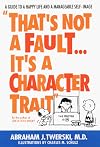
Using Charles Schultz's Peanuts strips, Rabbi Twerski comments on personal characteristics which can help or hinder the reader in personal development. Moderately effective and rather insightful; unfortunately many of the chosen strips are open to interpretation other than the chosen ones. Still, it is an interesting way to look at oneself, comparing one's own reactions and feelings to those of portrayed comic characters. Unfortunately not one of Rabbi Twerski's strongest books.

In this book, Twerski takes one line from scripture or the Talmud and gives a historical Chassidic Rabbi's interpretation of the line. There is frequently a little anecdotal story to illustrate the point. Then Rabbi Twerski puts it into his own words, very clearly and simply delivering the message.
He does all of this in two pages. Then he repeats the process 112 times, with other passages. Every little tiny chapter was helpful and profound, and because the chapters are so extremely short, show more and the book itself a small as well, it was a splendid book to read when I only had a very few minutes to read, but could then meditate on what I'd read while going on with the day. show less
He does all of this in two pages. Then he repeats the process 112 times, with other passages. Every little tiny chapter was helpful and profound, and because the chapters are so extremely short, show more and the book itself a small as well, it was a splendid book to read when I only had a very few minutes to read, but could then meditate on what I'd read while going on with the day. show less
Life's Too Short!: Pull the Plug on Self-Defeating Behavior and Turn on the Power of Self-Esteem by Abraham J. Twerski
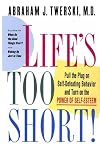
Despite being published in 1958 many of the concepts and ideals still hold true today. Some of the messages might be common sense but a refresher course in common sense is sometimes what we need.
Lists
You May Also Like


Associated Authors
Statistics
- Works
- 92
- Also by
- 1
- Members
- 1,702
- Popularity
- #15,076
- Rating
- 3.8
- Reviews
- 10
- ISBNs
- 152
- Languages
- 7
- Favorited
- 1