
Jewelle Gomez
Author of The Gilda Stories
About the Author
Works by Jewelle Gomez
No day too long 2 copies
Associated Works
Dark Matter: A Century of Speculative Fiction from the African Diaspora (2000) — Contributor — 595 copies, 11 reviews
Chloe Plus Olivia: An Anthology of Lesbian Literature from the 17th Century to the Present (1994) — Contributor — 482 copies, 1 review
The Letter Q: Queer Writers' Notes to their Younger Selves (2012) — Contributor — 297 copies, 5 reviews
Women on Women: An Anthology of American Lesbian Short Fiction (1990) — Contributor — 262 copies, 1 review
Sister and Brother: Lesbians and Gay Men Write About Their Lives Together (1994) — Contributor — 227 copies, 1 review
Gay and Lesbian Poetry in Our Time (Stonewall Inn Editions) (1988) — Contributor — 190 copies, 1 review
Daughters of Africa: An International Anthology of Words and Writings by Women of African Descent from the Ancient Egyptian to the Present (1992) — Contributor — 186 copies
Worlds Apart: An Anthology of Lesbian and Gay Science Fiction and Fantasy (1986) — Contributor — 181 copies, 1 review
Does Your Mama Know? An Anthology of Black Lesbian Coming Out Stories (1997) — Contributor — 137 copies, 1 review
Black Like Us: A Century of Lesbian, Gay, and Bisexual African American Fiction (2002) — Contributor — 127 copies, 1 review
Children of the Night: The Best Short Stories by Black Writers, 1967 to the Present (1995) — Contributor — 126 copies
Nepantla: An Anthology Dedicated to Queer Poets of Color (2018) — Contributor — 125 copies, 2 reviews
In Search of Stonewall: The Riots at 50, The Gay and Lesbian Review at 25, Best Essays 1994-2018 (2019) — Contributor — 94 copies, 1 review
The Columbia Reader on Lesbians & Gay Men in Media, Society, and Politics (1999) — Contributor — 86 copies
The Leading Edge: An Anthology of Lesbian Sexual Fiction (Lady Winston Series) (1987) — Contributor — 76 copies
Somewhere in the Night: Stories of Suspense (1989) — Introduction, some editions — 71 copies, 2 reviews
It's So You: 35 Women Write About Personal Expression Through Fashion and Style (2007) — Contributor — 56 copies, 2 reviews
Angles of Ascent: A Norton Anthology of Contemporary African American Poetry (2013) — Contributor — 49 copies
Heiresses of Russ 2011: The Year's Best Lesbian Speculative Fiction (2011) — Contributor — 41 copies
Heiresses of Russ 2013: The Year's Best Lesbian Speculative Fiction (2013) — Contributor — 32 copies
Voices Rising: Celebrating 20 Years of Black Lesbian, Gay, Bisexual and Transgender Writing (Other Countries) (2007) — Contributor — 25 copies, 1 review
Tagged
Common Knowledge
- Other names
- Gómez, Jewelle L.
- Birthdate
- 1948-09-11
- Gender
- female
- Occupations
- novelist
poet
activist
critic
playwright - Organizations
- Conditions Collective
Gay and Lesbian Alliance Against Defamation (founding board member) - Nationality
- USA
- Birthplace
- Boston, Massachusetts, USA
- Places of residence
- Boston, Massachusetts, USA
San Francisco, California, USA
New York, New York, USA - Associated Place (for map)
- USA
Members
Reviews
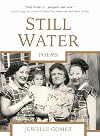
Stunning. I know Gomez through her Gilda Stories, some of which are near-perfect. But her poetry, I was unprepared for such breadth of references literary (Audre Lorde, Gertrude Stein, Angelina Grimke, Tracy Chapman, Tennessee Williams, Gil Scot-Heron), cultural (Eleanor Bumpers, Sally Ride, Cellini), and political (Biden, Trump, Loving v. Virginia). And more: there are odes to streetcars, to a buckskin dress, to a restaurant (which is so superb, you can see, hear, feel the movement in every show more line). Every poem is deeply felt and gorgeously written with surprises in every stanza. The book feels like a meditation on the people, books, traditions that make Gomez who she is, a lesbian poet of color ("I love writing the words: / A coloured lesbian" p.46), of Native ancestry. There is such real feeling here, such wit and intelligence, such unexpected turns. This reminded me of June Jordan in its passion and political engagement, but, really, this book is one of a kind. show less
 This review was written for LibraryThing Early Reviewers.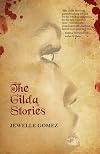
In the Afterword for the 25th Anniversary Edition of The Gilda Stories, Alexis Pauline Gumbs calls the book: "A precise and prophetic work. A neo-slavery escape narrative. An Afro-futuristic projection." And before that, in the introduction to the work, Gomez speaks of how she was spurred into writing the book, and the 'pent-up fury' that went into it. The passion in all of this language, and the way it carefully bleeds through this long-form narrative of vampires and personal history, is show more absolute--and while the book may disappoint readers coming to it from a horror perspective for a tale of vampires and violence, I would answer that it is an important, worthwhile work that takes influence from classic slave narratives, classic novels such as Uncle Tom's Cabin and Giovanni's Room, and moves the narratives into a contemporary space that is at once a coming-of-age tale for a slave-turned-vampire and an examination of growth, love, and hope.
If you're reading this review, and curious about the book, I'm hope you'll read it. It feels like one which should have found its way to my hands much sooner, and one which should be far more widely known, read, and spoken of.
I'd absolutely recommend it. show less
If you're reading this review, and curious about the book, I'm hope you'll read it. It feels like one which should have found its way to my hands much sooner, and one which should be far more widely known, read, and spoken of.
I'd absolutely recommend it. show less
I can’t quite believe that this book was written and published back in 1991, and yet it undoubtedly was. Jewelle Gomez challenges the mythos surrounding vampires in culture and lore by writing her protagonist, Gilda, as a Black American lesbian - the polar opposite of the vampires popularized by authors such as Stoker, Rice, and Süskind. Gilda begins her tale as a nameless Girl, recently run away from the plantation where she was born and raised. As she runs, she is confronted by a man show more who wishes her harm (rape most assuredly and a return to the plantation from where she has run from or at least back to the status of slave), and she proves her mettle from the get go: waiting with preternatural patience until her hidden blade can find his heart. Bathed in blood, nameless, and having shed the painful memories of the remnants of her family that she left behind, she is reborn (literally and figuratively) under the care of Gilda, a vampire who runs a brothel, and her lover and companion Bird, a Lakota woman. As the first Gilda chooses to go into the light for the True Death, Bird completes the process of transformation, and our protagonist begins a new life after taking on the name of her creator. Gomez traces Gilda’s life through 200 years of American history, touching on so many powerful themes around the changing landscape, the face of female survival, the power inherent in Black women, the strength in female relationships (lesbian or otherwise), and created family (just to name a few) that to fully unpack this novel would take an encyclopedia. Suffice to say, that it deserves a place in the canon not just as a powerful piece of vampire literature, but also as a commentary on the evolution of American society. show less

In 1850, A runaway slave hides herself in the cellar of a seemingly abandoned farm. She falls into an exhausted sleep only to be awakened by the white woman who owns the farm. But instead of throwing her back to the men chasing her, the woman -- Gilda -- hides her, provides shelter and a home for her at her brothel near New Orleans, educates the Girl as if she were family, introducing her to her lover Bird, a Lakota woman. Together, the three women form a strong bond, strong enough that show more Gilda decides the she has finally found the one for Bird, to replace her when she takes the true death so that Bird won't be alone in the many hundreds of years she has before her. The three head back to the farm where Gilda asks the Girl if she wants the life of a vampire and all that goes with it.
From that point, the Girl's life changes, she takes on the name of Gilda and learns from Bird and from her new, extended family what it means to be a vampire, to take a little bit of life from a human in exchange for life: pushing them to fulfill a dream or to just ease the mind. No death, that's not what the vampire family is about. Through 200 years, beginning in Louisiana, traveling through the early pioneering days in Yerba Buena, protecting friends and family from her hair salon in the South End of Boston to being hunted as the world lies in ruins due to global climate changes brought about by neglectful politicoes in 2050, Gilda strives to find herself, to uncover what it truly means not just to be a vampire, but to learn what a family really is: the people you care about and who care about you, no matter who or what you are.
What impressed me most about this novel was the humanity of the vampires. Not the typical, cut-throat blood-thirsty fiends from 'Salem's Lot nor the whiney aristocrats from Interview with the Vampire. Instead, they helped those in need, taking only what was necessary to survive, and creating their own family in a world that doesn't understand them. A great book for those who want something other than the typical vampire story. show less
From that point, the Girl's life changes, she takes on the name of Gilda and learns from Bird and from her new, extended family what it means to be a vampire, to take a little bit of life from a human in exchange for life: pushing them to fulfill a dream or to just ease the mind. No death, that's not what the vampire family is about. Through 200 years, beginning in Louisiana, traveling through the early pioneering days in Yerba Buena, protecting friends and family from her hair salon in the South End of Boston to being hunted as the world lies in ruins due to global climate changes brought about by neglectful politicoes in 2050, Gilda strives to find herself, to uncover what it truly means not just to be a vampire, but to learn what a family really is: the people you care about and who care about you, no matter who or what you are.
What impressed me most about this novel was the humanity of the vampires. Not the typical, cut-throat blood-thirsty fiends from 'Salem's Lot nor the whiney aristocrats from Interview with the Vampire. Instead, they helped those in need, taking only what was necessary to survive, and creating their own family in a world that doesn't understand them. A great book for those who want something other than the typical vampire story. show less
Lists
Awards


You May Also Like


Associated Authors
Statistics
- Works
- 21
- Also by
- 59
- Members
- 1,316
- Popularity
- #19,523
- Rating
- 3.8
- Reviews
- 32
- ISBNs
- 28
- Favorited
- 3


