
Gabriela Cabezón Cámara
Author of The Adventures of China Iron
About the Author
Works by Gabriela Cabezón Cámara
Diarios 1 copy
As Meninas do Laranjal 1 copy
Associated Works
Tagged
Common Knowledge
- Canonical name
- Cabezón Cámara, Gabriela
- Legal name
- Cabezón Cámara, Gabriela
- Birthdate
- 1968-11-04
- Gender
- female
- Education
- University of Buenos Aires
- Nationality
- Argentina
- Birthplace
- San Isidro, Buenos Aires, Argentina
- Map Location
- Argentina
Members
Reviews
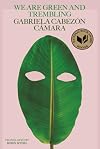
My fifth from the 2026 International Booker Prize longlist has already won the National Book Award for translated literature.
This is a slow book working with a mixture of harsh and gentle literary textures. It's broken a little by a staccato prose - but - I didn't notice the staccato prose until someone pointed it out to me. The blurb draw is that the main character is based on a non-fiction trans Spanish conquistador, Antonio de Erauso, born Catalina.
This book is doing several things at show more once. Three things are taking place on the surface. A 3rd-person story of the escape of Antonio de Erauso from a deranged Spanish encampment full of executed corpses, where Antonio was condemned to execution. This is interwoven with Antonio's writing of sort of private sincere memoir written to his Basque aunt, who knew him as a girl named Catalina in a convent. This Catalina-become-Antonio's writing is interrupted by two little indigenous girls and two monkeys he took with him on his escape. The girls keep asking him about Satan and sin. The monkeys steal his quill. That's just on the surface. There are at least three other important stories in the subtext. The chaotic violence of the Spanish conquest is mixed with an indigenous Guarani origin story, combined, of course, with the nonfictional life of Erauso. He really existed. He apparently wrote his memoirs in Spain about 1626, including his transition story, and became famous during his lifetime. Then left Spain again, for Mexico. (However, his memoirs were 1st published in the 19th-century, the two-hundred-year delay leaving some doubt as to their authenticity.)
The book’s blend of violence and tenderness, the executions and innocent child questions, the empty greedy brute minds of the conquistadors and the tender magical self-protective jungle or rain forest, all mix in the text. What is real and what is magical to Antonio is sometimes unclear. How are the young girls so seemingly wise, and relaxed in the forest? Are they human? Is Antonio becoming a tree, as the novel's title may indicate? The title is echoed throughout the prose - the greenness and the variations on trembling.
Slow but complex and enjoyable (and short). Recommended for the reader ready to get a little lost.
2026
https://www.librarything.com/topic/378447#9154706 show less
This is a slow book working with a mixture of harsh and gentle literary textures. It's broken a little by a staccato prose - but - I didn't notice the staccato prose until someone pointed it out to me. The blurb draw is that the main character is based on a non-fiction trans Spanish conquistador, Antonio de Erauso, born Catalina.
This book is doing several things at show more once. Three things are taking place on the surface. A 3rd-person story of the escape of Antonio de Erauso from a deranged Spanish encampment full of executed corpses, where Antonio was condemned to execution. This is interwoven with Antonio's writing of sort of private sincere memoir written to his Basque aunt, who knew him as a girl named Catalina in a convent. This Catalina-become-Antonio's writing is interrupted by two little indigenous girls and two monkeys he took with him on his escape. The girls keep asking him about Satan and sin. The monkeys steal his quill. That's just on the surface. There are at least three other important stories in the subtext. The chaotic violence of the Spanish conquest is mixed with an indigenous Guarani origin story, combined, of course, with the nonfictional life of Erauso. He really existed. He apparently wrote his memoirs in Spain about 1626, including his transition story, and became famous during his lifetime. Then left Spain again, for Mexico. (However, his memoirs were 1st published in the 19th-century, the two-hundred-year delay leaving some doubt as to their authenticity.)
The book’s blend of violence and tenderness, the executions and innocent child questions, the empty greedy brute minds of the conquistadors and the tender magical self-protective jungle or rain forest, all mix in the text. What is real and what is magical to Antonio is sometimes unclear. How are the young girls so seemingly wise, and relaxed in the forest? Are they human? Is Antonio becoming a tree, as the novel's title may indicate? The title is echoed throughout the prose - the greenness and the variations on trembling.
Slow but complex and enjoyable (and short). Recommended for the reader ready to get a little lost.
2026
https://www.librarything.com/topic/378447#9154706 show less
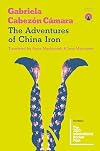
I LOVED THIS BOOK. What did I know about Argentina before reading it? Hardly anything I didn't read in The Satanic Verses, of all places, as I spent my school years studiously avoiding any non-required history courses and skipping World History every time. This is a retelling of "Argentina's foundational guacho epic Martin Fierro," which I also of course knew nothing about, but center a woman, and make it queer, and polyamorous, and anti-colonial, and mushroom-tripping indigenous Utopia in show more the end. Some terrible things happen in this book, but it has Big Myth Energy, so it still ends up feeling kind of rompy throughout. It does feel a little weird that our two heroes are both white? But that may be a function of the original story it expands on, and like I said, there is plenty of colonial critique here. I enjoyed it so much. show less
Some basic background in Argentine-Gaucho poetry is very helpful in enjoying this book. Specifically an epic poem Martin Fierro. As I understand it, this poem holds a similar place of pride as The New Colossus by Emma Lazarus on the base of the Statue of Liberty. Only Martin Fierro is over 2,300 lines long. Luckily, you don't need to actually read Martin Fierro to enjoy this book, just a base-line understanding.
The book is a modern feminist reply to Martin Fierro. The main character is show more Martin's wife. When we meet her, her name is China, pronounced cheena - basically a common and somewhat belittling word for girl or young woman. China is an orphan and abandoned wife who no one ever bothered to name.
She meets up with an English woman named Liz and they go off on a magical adventure across the Argentina pampas - a prairie/plains landscape. Liz gives China a real name - Josephine, and also becomes her first love and true lover.
Liz and Josephine (later shortened to Jo) travel in what seems to be a magical wagon full of food, books, art, dishes and silverware, clothes of all descriptions, a barrel of whiskey, a giant bed - I can only imagine how big this wagon is. They are accompanied by Jo's dog Estraya and quickly collect a fellow traveler on the way Rosario - later shortened to Rosa.
For such a short book, there is a ton going on. Big themes of the violence and brutality of colonialism, Class differences between Spanish, English, Gauchos and Indians. Plenty vs want. Farming vs ranching.
And lots and lots of everybody having sex with just about everybody else. Lots of emphasis on expressions of gender.
Fair warnings - the book isn't over the top graphic, but it was a little more on the erotica side than I thought I was signing up for when I picked up the book. Alternating with the sex scenes, the violence is even more graphic and sometimes really disturbing. show less
The book is a modern feminist reply to Martin Fierro. The main character is show more Martin's wife. When we meet her, her name is China, pronounced cheena - basically a common and somewhat belittling word for girl or young woman. China is an orphan and abandoned wife who no one ever bothered to name.
She meets up with an English woman named Liz and they go off on a magical adventure across the Argentina pampas - a prairie/plains landscape. Liz gives China a real name - Josephine, and also becomes her first love and true lover.
Liz and Josephine (later shortened to Jo) travel in what seems to be a magical wagon full of food, books, art, dishes and silverware, clothes of all descriptions, a barrel of whiskey, a giant bed - I can only imagine how big this wagon is. They are accompanied by Jo's dog Estraya and quickly collect a fellow traveler on the way Rosario - later shortened to Rosa.
For such a short book, there is a ton going on. Big themes of the violence and brutality of colonialism, Class differences between Spanish, English, Gauchos and Indians. Plenty vs want. Farming vs ranching.
And lots and lots of everybody having sex with just about everybody else. Lots of emphasis on expressions of gender.
Fair warnings - the book isn't over the top graphic, but it was a little more on the erotica side than I thought I was signing up for when I picked up the book. Alternating with the sex scenes, the violence is even more graphic and sometimes really disturbing. show less
We Are Green and Trembling // Gabriela Cabezón Cámara // translated from the Spanish by Robin Myers
National Book Award for Translated Lit 2025 Longlist
⭐️⭐️⭐️⭐️⭐️
This novel is lush, surreal, tenderhearted, violent, and intense. Multiple timelines, a letter, a journey from a Spanish convent to life as a Spanish deserter trying to take two young Guaraní girls back to their family in a dense South American rainforest.
I loved everything about this book—rainforest as show more character, the ongoing letter in which Antonio tells his life story, the omniscient narrator that describes scenes and events, all of it. Magnificently organized and imagined and written.
I am going to keep reading from the Longlist, but I think I have found my favorite. show less
National Book Award for Translated Lit 2025 Longlist
⭐️⭐️⭐️⭐️⭐️
This novel is lush, surreal, tenderhearted, violent, and intense. Multiple timelines, a letter, a journey from a Spanish convent to life as a Spanish deserter trying to take two young Guaraní girls back to their family in a dense South American rainforest.
I loved everything about this book—rainforest as show more character, the ongoing letter in which Antonio tells his life story, the omniscient narrator that describes scenes and events, all of it. Magnificently organized and imagined and written.
I am going to keep reading from the Longlist, but I think I have found my favorite. show less
Lists
Awards


You May Also Like


Associated Authors
Statistics
- Works
- 10
- Also by
- 1
- Members
- 522
- Popularity
- #47,609
- Rating
- 3.6
- Reviews
- 13
- ISBNs
- 40
- Languages
- 4
- Favorited
- 1