
Georgia Hunter (1) (1985–)
Author of We Were the Lucky Ones
For other authors named Georgia Hunter, see the disambiguation page.
Works by Georgia Hunter
Tagged
Common Knowledge
- Birthdate
- 1985
- Gender
- female
- Nationality
- USA
- Places of residence
- Rowayton, Connecticut, USA
- Associated Place (for map)
- Connecticut, USA
Members
Reviews
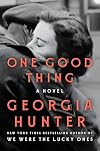
As someone who reads a lot of historical novels about the two world wars, ONE GOOD THING is one of the most compelling I've come across. And it was particularly interesting to learn more about how World War II (1939-1945) and its moral questions played out in Italy.
Best known as the writer of the New York Times bestseller WE WERE THE LUCKY ONES (another absorbing World War II story based on the experiences of the author's own family), this time Georgia Hunter takes us traveling through Italy show more between December 1940 and May 1945.
At the start of the story, we meet the protagonist, Lili, a young Jewish woman who works as a journalist and lives with her widowed father. Almost immediately however we find Lili has lost her job because of new restrictions imposed on Jews in Italy. Like most people in Europe at the start of World War II, Lili and her friends are not too bothered by these initial restrictions, because they cannot even imagine the extent of evil that awaits the Jews of Europe.
But we readers know the restrictions, persecution, violence, arrests, and deportation to death camps that is coming. This knowledge is what underlies the intense tension I felt throughout the book.
As German and Italian soldiers and local police begin to ramp up persecution of Jewish citizens, Lili and her friends face increasingly difficult choices. Until Lili's best friend Esti is forced to leave her young son in Lili's care for his own safety. Most of this novel revolves around how Lili and little Theo manage during the war years.
With infrequent and unreliable communication and few people who can be trusted, Lili's life becomes focused on each day. Will I find enough food to feed us today? Where can I get warmer clothing for a growing child? Will that neighbor turn us in for the reward? Where can we sleep safely tonight? Where can we get false Aryan identification papers?
These daily decisions, each of which might mean life or death, make this a tense book to wade through. It's quite fast-paced but I did find I needed a time out periodically, to relieve my own tension.
ONE GOOD THING is the kind of book that makes you feel you are living right alongside Lili and Theo as they struggle to survive. And the author sprinkles in quite a few anecdotes about the actions of actual historical figures to make the book feel completely authentic. It's an inspiriting story I highly recommended. show less
Best known as the writer of the New York Times bestseller WE WERE THE LUCKY ONES (another absorbing World War II story based on the experiences of the author's own family), this time Georgia Hunter takes us traveling through Italy show more between December 1940 and May 1945.
At the start of the story, we meet the protagonist, Lili, a young Jewish woman who works as a journalist and lives with her widowed father. Almost immediately however we find Lili has lost her job because of new restrictions imposed on Jews in Italy. Like most people in Europe at the start of World War II, Lili and her friends are not too bothered by these initial restrictions, because they cannot even imagine the extent of evil that awaits the Jews of Europe.
But we readers know the restrictions, persecution, violence, arrests, and deportation to death camps that is coming. This knowledge is what underlies the intense tension I felt throughout the book.
As German and Italian soldiers and local police begin to ramp up persecution of Jewish citizens, Lili and her friends face increasingly difficult choices. Until Lili's best friend Esti is forced to leave her young son in Lili's care for his own safety. Most of this novel revolves around how Lili and little Theo manage during the war years.
With infrequent and unreliable communication and few people who can be trusted, Lili's life becomes focused on each day. Will I find enough food to feed us today? Where can I get warmer clothing for a growing child? Will that neighbor turn us in for the reward? Where can we sleep safely tonight? Where can we get false Aryan identification papers?
These daily decisions, each of which might mean life or death, make this a tense book to wade through. It's quite fast-paced but I did find I needed a time out periodically, to relieve my own tension.
ONE GOOD THING is the kind of book that makes you feel you are living right alongside Lili and Theo as they struggle to survive. And the author sprinkles in quite a few anecdotes about the actions of actual historical figures to make the book feel completely authentic. It's an inspiriting story I highly recommended. show less
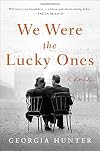
We Were the Lucky Ones is the harrowing story about a Polish Jewish family during the Holocaust and their miraculous survival. It's a story based on a real-life family and the author is the granddaughter of one of the adult children in the book. It is being marketed as a work of fiction and that, in many ways, is the strength but also the weakness of the book. As a factual account of the Holocaust and the annihilation of Polish Jews, I was deeply moved. Every pogrom, every round-up, every show more massacre and every instance of the liquidation of the ghettos, especially the Warsaw ghetto, made my teeth clench and my heart beat wildly. Every scene where it seemed possible that one of the members of the Kruc family might be jailed, or tortured or killed was unbearable. The historical context, the fact-based timeline, the exhaustive descriptions of the destruction of Polish Jewry is so just so vividly written I couldn't put it down.
The challenge of the book for me was the characterizations of each of the family members (fiction) as they strove to survive. They did not individually come to life for me or seem distinct enough. The lack of any tension between them just does not seem real. No family members had cross words with each other, no disagreements, completely conflict free, and given the death and destruction all around them and the fear and terror that this created it's hard to imagine that every interaction was supportive and loving.
We Were Lucky also made me think about what it means to be lucky. It could be easy to think that the Krucs were braver, tougher or more resilient than others but I detest this idea for what does it mean that so many ordinary and extraordinary people did die? It is unimaginable that those who died did not fight for their lives as hard as they could. Maybe we will never really know the how's and why's of survival but I think the author's title of the book and its emphasis on luck is on target and greatly appreciated.
Thank you to NetGalley and Penguin Group Viking for allowing me to review this book for an honest opinion. show less
The challenge of the book for me was the characterizations of each of the family members (fiction) as they strove to survive. They did not individually come to life for me or seem distinct enough. The lack of any tension between them just does not seem real. No family members had cross words with each other, no disagreements, completely conflict free, and given the death and destruction all around them and the fear and terror that this created it's hard to imagine that every interaction was supportive and loving.
We Were Lucky also made me think about what it means to be lucky. It could be easy to think that the Krucs were braver, tougher or more resilient than others but I detest this idea for what does it mean that so many ordinary and extraordinary people did die? It is unimaginable that those who died did not fight for their lives as hard as they could. Maybe we will never really know the how's and why's of survival but I think the author's title of the book and its emphasis on luck is on target and greatly appreciated.
Thank you to NetGalley and Penguin Group Viking for allowing me to review this book for an honest opinion. show less
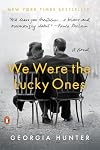
A memoir of a family that survived the horrors of being a Polish Jew during WW II. An interesting recount that leaves out some key elements, but still manages to convey ow lucky so many of the family was able to survive and find one another. Kirkus: Hunter?s debut novel tracks the experiences of her family members during the Holocaust.Sol and Nechuma Kurc, wealthy, cultured Jews in Radom, Poland, are successful shop owners; they and their grown children live a comfortable lifestyle. But that show more lifestyle is no protection against the onslaught of the Holocaust, which eventually scatters the members of the Kurc family among several continents. Genek, the oldest son, is exiled with his wife to a Siberian gulag. Halina, youngest of all the children, works to protect her family alongside her resistance-fighter husband. Addy, middle child, a composer and engineer before the war breaks out, leaves Europe on one of the last passenger ships, ending up thousands of miles away. Then, too, there are Mila and Felicia, Jakob and Bella, each with their own share of struggles¥pain endured, horrors witnessed. Hunter conducted extensive research after learning that her grandfather (Addy in the book) survived the Holocaust. The research shows: her novel is thorough and precise in its details. It?s less precise in its language, however, which frequently relies on clich?. ?You?ll get only one shot at this,? Halina thinks, enacting a plan to save her husband. ?Don?t botch it.? Later, Genek, confronting a routine bit of paperwork, must decide whether or not to hide his Jewishness. ?That form is a deal breaker,? he tells himself. ?It?s life and death.? And: ?They are low, it seems, on good fortune. And something tells him they?ll need it.? Worse than these stale phrases, though, are the moments when Hunter?s writing is entirely inadequate for the subject matter at hand. Genek, describing the gulag, calls the nearest town ?a total shitscape.? This is a low point for Hunter?s writing; elsewhere in the novel, it?s stronger. Still, the characters remain flat and unknowable, while the novel itself is predictable. At this point, more than half a century?s worth of fiction and film has been inspired by the HolocaustÂ¥a weighty and imposing tradition. Hunter, it seems, hasn?t been able to break free from her dependence on it.Too beholden to sentimentality and clich?, this novel fails to establish a uniquely realized perspective. show less
As someone who reads a lot of historical novels about the two world wars, ONE GOOD THING is one of the most compelling I've come across. And it was particularly interesting to learn more about how World War II (1939-1945) and its moral questions played out in Italy.
Best known as the writer of the New York Times bestseller WE WERE THE LUCKY ONES (another absorbing World War II story based on the experiences of the author's own family), this time Georgia Hunter takes us traveling through Italy show more between December 1940 and May 1945.
At the start of the story, we meet the protagonist, Lili, a young Jewish woman who works as a journalist and lives with her widowed father. Almost immediately however we find Lili has lost her job because of new restrictions imposed on Jews in Italy. Like most people in Europe at the start of World War II, Lili and her friends are not too bothered by these initial restrictions, because they cannot even imagine the extent of evil that awaits the Jews of Europe.
But we readers know the restrictions, persecution, violence, arrests, and deportation to death camps that is coming. This knowledge is what underlies the intense tension I felt throughout the book.
As German and Italian soldiers and local police begin to ramp up persecution of Jewish citizens, Lili and her friends face increasingly difficult choices. Until Lili's best friend Esti is forced to leave her young son in Lili's care for his own safety. Most of this novel revolves around how Lili and little Theo manage during the war years.
With infrequent and unreliable communication and few people who can be trusted, Lili's life becomes focused on each day. Will I find enough food to feed us today? Where can I get warmer clothing for a growing child? Will that neighbor turn us in for the reward? Where can we sleep safely tonight? Where can we get false Aryan identification papers?
These daily decisions, each of which might mean life or death, make this a tense book to wade through. It's quite fast-paced but I did find I needed a time out periodically, to relieve my own tension.
ONE GOOD THING is the kind of book that makes you feel you are living right alongside Lili and Theo as they struggle to survive. And the author sprinkles in quite a few anecdotes about the actions of actual historical figures to make the book feel completely authentic. It's an inspiriting story I highly recommended. show less
Best known as the writer of the New York Times bestseller WE WERE THE LUCKY ONES (another absorbing World War II story based on the experiences of the author's own family), this time Georgia Hunter takes us traveling through Italy show more between December 1940 and May 1945.
At the start of the story, we meet the protagonist, Lili, a young Jewish woman who works as a journalist and lives with her widowed father. Almost immediately however we find Lili has lost her job because of new restrictions imposed on Jews in Italy. Like most people in Europe at the start of World War II, Lili and her friends are not too bothered by these initial restrictions, because they cannot even imagine the extent of evil that awaits the Jews of Europe.
But we readers know the restrictions, persecution, violence, arrests, and deportation to death camps that is coming. This knowledge is what underlies the intense tension I felt throughout the book.
As German and Italian soldiers and local police begin to ramp up persecution of Jewish citizens, Lili and her friends face increasingly difficult choices. Until Lili's best friend Esti is forced to leave her young son in Lili's care for his own safety. Most of this novel revolves around how Lili and little Theo manage during the war years.
With infrequent and unreliable communication and few people who can be trusted, Lili's life becomes focused on each day. Will I find enough food to feed us today? Where can I get warmer clothing for a growing child? Will that neighbor turn us in for the reward? Where can we sleep safely tonight? Where can we get false Aryan identification papers?
These daily decisions, each of which might mean life or death, make this a tense book to wade through. It's quite fast-paced but I did find I needed a time out periodically, to relieve my own tension.
ONE GOOD THING is the kind of book that makes you feel you are living right alongside Lili and Theo as they struggle to survive. And the author sprinkles in quite a few anecdotes about the actions of actual historical figures to make the book feel completely authentic. It's an inspiriting story I highly recommended. show less
Lists
Awards


You May Also Like


Statistics
- Works
- 2
- Members
- 2,928
- Popularity
- #8,752
- Rating
- 4.2
- Reviews
- 87
- ISBNs
- 50
- Languages
- 6