

Otis Adelbert Kline (1891–1946)
Author of The Swordsman of Mars
About the Author
Series
Works by Otis Adelbert Kline
The man who limped and other stories 3 copies
Race Around the Moon (Oak Leaves #3) 2 copies
The Modern Detective Story 1 copy
An Eye for an Eye 1 copy
The Dragoman's Slave Girl 1 copy
Lord of the Lamia 1 copy
Filos sangrientos 1 copy
The Robot Beasts 1 copy
Meteor-Men of Mars 1 copy
The Corpse on the Third Slab 1 copy
Writing the Fantastic Story 1 copy
The Bird People 1 copy
The Bride of Osiris 1 copy
The Iron World 1 copy
The Cup of Blood 1 copy
Midnight Madness 1 copy
The Phantom Wolfhound 1 copy
The Man Who Limped 1 copy
The Dragoman's Secret 1 copy
The Dragoman's Confession 1 copy
Associated Works
Weird Vampire Tales: 30 Blood-Chilling Stories from the Weird Fiction Pulps (1992) — Contributor — 98 copies, 3 reviews
Weird Tales: The Best of the 1920s — Contributor — 14 copies
Cats of Shadow, Claws of Darkness: Stories of Were-Cats, Ghost Cats, and Other Supernatural Felines (2012) — Contributor — 2 copies
Weird Tales Volume 19 Number 2, February 1932 — Contributor — 2 copies
Weird Tales Volume 20 Number 5, November 1932 — Contributor — 2 copies
Weird Tales Volume 21 Number 1, January 1933 — Contributor — 2 copies
Weird Tales Volume 21 Number 2, February 1933 — Contributor — 2 copies
Weird Tales Volume 21 Number 3, March 1933 — Contributor — 1 copy
Tagged
Common Knowledge
- Legal name
- Kline, Otis Adelbert
- Birthdate
- 1891-07-01
- Date of death
- 1946-10-24
- Gender
- male
- Occupations
- literary agent (for Robert E. Howard)
adventure novelist - Relationships
- Price, E. Hoffmann (friend and sometime collaborator)
Kline, Allen S. (brother) - Short biography
- Otis Adelbert Kline was born in Chicago, Illinois, USA. He was an adventure novelist and literary agent during the pulp era.
Most of his work first appeared in either Argosy or Weird Tales magazine before being published in their own right (albeit in abridged form).
Like his close friend E. Hoffmann Price, Kline was an amateur Orientalist and studied Arabic in his spare time. - Nationality
- USA
- Birthplace
- Chicago, Illinois, USA
- Associated Place (for map)
- Illinois, USA
Members
Reviews

A very good follow up to The Swordsman of Mars. Here Richard Morgan, the brilliant scientist who initiated the events of that great novel, has figured out how to send his falsely disgraced soldier nephew Jerry Morgan bodily to Mars. Not an exchange of minds like before. Jerry Morgan lands straight in the middle of misunderstandings, political intrigue and lots of deadly action. This novel moves fast but very logically. The fighting is fierce and the women while very beautiful are far from show more demure, de-clawed and dumb. The supporting cast is wonderful if not fully as fleshed out as could be. This is a very fun planetary romance read show less

I had known of Otis Adelbert Kline as a rival for the pulp mantle of exotic adventure accorded to Edgar Rice Burroughs, and was for some years interested to read his Martian sword-and-planet contributions. I expected them to seem derivative from ERB. What I discovered instead is that they appear to have been a significant model for the early Flash Gordon stories. There is a non-trivial extraterrestrial "yellow peril" element (although the yellow Ma Gongi aliens are shown in the cover art of show more my copy as green), and romantic intrigue with the daughter of the evil despot. (The chronology fits, with Swordsman of Mars published throughout 1933 and the earliest Flash Gordon strips appearing in 1934.)
The voyage to Mars is of the esoteric mind-transfer sort, additionally including time travel, so that like the Martian adventures of Leigh Brackett, it is set in the planet's past. Kline surprisingly makes no mention of the lower Martian gravity, which even serves as a plot point for ERB's John Carter. Martian fauna here include a lot of oversized insects, but also some strange vertebrates that I often found difficult to picture. There are giant birds used for mounts, a staple of the sword-and-planet subgenre, here called gawrs.
The book is a fast read, with frequent cliff-hanger chapter endings reflecting its genesis as a pulp serial. The prose is serviceable. I feel I have done my duty by including this book in my readings of Martian tales, and I'd read its sequel to kill some time, but it's not something I'll be in a hurry to seek out. I would recommend it to those who are fond of the old Flash Gordon stories. show less
The voyage to Mars is of the esoteric mind-transfer sort, additionally including time travel, so that like the Martian adventures of Leigh Brackett, it is set in the planet's past. Kline surprisingly makes no mention of the lower Martian gravity, which even serves as a plot point for ERB's John Carter. Martian fauna here include a lot of oversized insects, but also some strange vertebrates that I often found difficult to picture. There are giant birds used for mounts, a staple of the sword-and-planet subgenre, here called gawrs.
The book is a fast read, with frequent cliff-hanger chapter endings reflecting its genesis as a pulp serial. The prose is serviceable. I feel I have done my duty by including this book in my readings of Martian tales, and I'd read its sequel to kill some time, but it's not something I'll be in a hurry to seek out. I would recommend it to those who are fond of the old Flash Gordon stories. show less

Another decent pulp story. A Tony Stark-like protagonist accidentally starts a war with the Moon-Chinese (this section is a twist on Verne's story 'Earth to the Moon'). Yes in this all Chinese and presumably all other asians, are descended from moonmen.
If that sounds a bit racist then you would be right, the descriptions of the moon-chinese are particularly stereotypical. However overall the chinese people on earth are fairly dealt with.
There is of course the requisite princess (a show more caucassian, needless to say), there are also space-ships, deathrays, spacedragons, etc.
This is at least as pulp as 'Princess of Mars' but i liked it far more. One great thing was the background material about a war between Mars and the Moon. That really helped give the story-world a bit of depth. show less
If that sounds a bit racist then you would be right, the descriptions of the moon-chinese are particularly stereotypical. However overall the chinese people on earth are fairly dealt with.
There is of course the requisite princess (a show more caucassian, needless to say), there are also space-ships, deathrays, spacedragons, etc.
This is at least as pulp as 'Princess of Mars' but i liked it far more. One great thing was the background material about a war between Mars and the Moon. That really helped give the story-world a bit of depth. show less
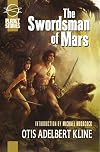
This book has its amusing moments and various points of interest. But I suppose it's rather "average" sword-and-planet fare. It was originally published in the pulp magazine Argosy (1933), and has a definite period vibe about it. Note: I read the RGL edition based on the PG Australia text.
In those days, perhaps in the shadow of ERB, it seems like people needed a gimmick to get their Earthling hero up to Mars (or what have you). This book's gimmick is mind transference machinery that is said show more to transcend space and time, so the big-wig scientist is able to communicate telepathically with counterparts millions of years ago when the Red Planet was habitable and much like Earth. And with a compatible-enough pair of doppelganger bodies, they are able to transfer minds across all that space-time. The first Earth guy to be transferred (before the story opens) went rogue so they decided to transfer gallant Harry Thorne to go fix things. (His mind goes into the Martian body of the person he swapped with, naturally.) Of course he's great with a sword and he's super dependable and wholesome and so forth. One of the first people he meets upon arrival on Mars, aside from the counterpart scientist, is a woman named Thaine, every bit this equal with a sword, which is good. She's the bee's knees. So of course he falls in love with her immediately, but they're just good friends, sort of.
There's another (evil) race on this version of Mars that's kind of a "yellow-peril" analogue typical of American SF in the 1930s. The Martian technology is swords and similar, but centuries before the story begins someone had made destructive "green ray" machines and now the evil government (aided by that previous rogue Earthling) has re-invented the technology. So part of Harry's mission is to overcome and restore the good government. Through various events, he becomes a guard over a "princess" named Neva who's so beautiful everyone falls instantly in love with her, she spurns Harry, etc. But he ends up in prison (sent to labor in the mines), gets away, goes through one harrowing crisis after another, etc. There are a few too many coincidences and lucky breaks along the way, but this is after all red-blooded men's magazine adventure fare of the thirties, so we'll cut it some slack.
In addition to the human-like Martians and the evil yellow-peril type Martians, there are fairies! Well, they're called Ulfi, but they're tiny little people with wings, but they come in handy to help the protagonist who saves their princess' life. And they give him a glittery ring which he can rub to produce a scent that will summon them when needed. Uh huh.
Oh, at one point Thaine, the "girl" (because of course everyone in the 1930s who wasn't a man was a girl), actually gets carried off over the shoulder of the brutish antagonist. LOL. I kid you not. I won't tell you how the "war" was won, or which of the male protagonists ends up with which of the females, but I was mildly surprised when I got there.
Now, moving on to points of interest in the realm of world-building... The machine technology is kind of "big" in the Flash Gordon sense. The flying machines are mechanical birds. And the land vehicles are propelled by legs instead of wheels, basically like mechanical caterpillars with a varying number of legs depending on size and passenger capacity. They have some huge cities with interesting architecture and "baridium" lighting technology.
There are plenty of jungles and some dangerous creatures, too. show less
In those days, perhaps in the shadow of ERB, it seems like people needed a gimmick to get their Earthling hero up to Mars (or what have you). This book's gimmick is mind transference machinery that is said show more to transcend space and time, so the big-wig scientist is able to communicate telepathically with counterparts millions of years ago when the Red Planet was habitable and much like Earth. And with a compatible-enough pair of doppelganger bodies, they are able to transfer minds across all that space-time. The first Earth guy to be transferred (before the story opens) went rogue so they decided to transfer gallant Harry Thorne to go fix things. (His mind goes into the Martian body of the person he swapped with, naturally.) Of course he's great with a sword and he's super dependable and wholesome and so forth. One of the first people he meets upon arrival on Mars, aside from the counterpart scientist, is a woman named Thaine, every bit this equal with a sword, which is good. She's the bee's knees. So of course he falls in love with her immediately, but they're just good friends, sort of.
There's another (evil) race on this version of Mars that's kind of a "yellow-peril" analogue typical of American SF in the 1930s. The Martian technology is swords and similar, but centuries before the story begins someone had made destructive "green ray" machines and now the evil government (aided by that previous rogue Earthling) has re-invented the technology. So part of Harry's mission is to overcome and restore the good government. Through various events, he becomes a guard over a "princess" named Neva who's so beautiful everyone falls instantly in love with her, she spurns Harry, etc. But he ends up in prison (sent to labor in the mines), gets away, goes through one harrowing crisis after another, etc. There are a few too many coincidences and lucky breaks along the way, but this is after all red-blooded men's magazine adventure fare of the thirties, so we'll cut it some slack.
In addition to the human-like Martians and the evil yellow-peril type Martians, there are fairies! Well, they're called Ulfi, but they're tiny little people with wings, but they come in handy to help the protagonist who saves their princess' life. And they give him a glittery ring which he can rub to produce a scent that will summon them when needed. Uh huh.
Oh, at one point Thaine, the "girl" (because of course everyone in the 1930s who wasn't a man was a girl), actually gets carried off over the shoulder of the brutish antagonist. LOL. I kid you not. I won't tell you how the "war" was won, or which of the male protagonists ends up with which of the females, but I was mildly surprised when I got there.
Now, moving on to points of interest in the realm of world-building... The machine technology is kind of "big" in the Flash Gordon sense. The flying machines are mechanical birds. And the land vehicles are propelled by legs instead of wheels, basically like mechanical caterpillars with a varying number of legs depending on size and passenger capacity. They have some huge cities with interesting architecture and "baridium" lighting technology.
There are plenty of jungles and some dangerous creatures, too. show less
You May Also Like


Associated Authors
Statistics
- Works
- 63
- Also by
- 13
- Members
- 837
- Popularity
- #30,526
- Rating
- 3.6
- Reviews
- 19
- ISBNs
- 170
- Languages
- 1
- Favorited
- 5