

William Brinkley (1917–1993)
Author of The Last Ship
About the Author
Works by William Brinkley
Associated Works
Reader's Digest Condensed Books 1978 v04: My Enemy the Queen / The Good Old Boys / By the Rivers of Babylon / Breakpoint (1978) 41 copies
The Last Ship, Season 4 — Author — 8 copies
The Last Ship, Season 5 — Author — 4 copies
Moord en wederwoord; De negen en negentig; Daar komt de bruid; De hoogste hindernis — Author — 1 copy, 1 review
The Last Ship, Seasons 1-3 1 copy
The Last Ship, Seasons 1-5 — Author — 1 copy
Tagged
Common Knowledge
- Other names
- Brinkley, William Clark
- Birthdate
- 1917-09-10
- Date of death
- 1993-11-22
- Gender
- male
- Education
- University of Oklahoma
- Occupations
- journalist
- Organizations
- The Washington Post
Life
U.S. Navy - Awards and honors
- Phi Beta Kappa
- Nationality
- USA
- Birthplace
- Custer City, Oklahoma, USA
- Place of death
- McAllen, Texas, USA
- Associated Place (for map)
- USA
Members
Reviews
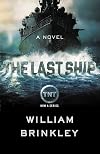
Although Brinkley's writing style is formal (and positively terrifying in its convolutions and uncommon verbiage), the story is fascinating. Set just after woman were allowed aboard Navy cruisers and an end-of-the-world event, it is an interesting comparison to the television series based on it. In the show, women are so integrated into the crew that gender is rarely an issue, while in the novel, it is a major, major issue. Having a plague to deal with rather than the novel's nuclear fallout show more changes the dynamics as well. That said, the novel was fun--but warning! It is a long, long read to the last line. show less

The Last Ship by William Brinkley is a post-nuclear-apocalyptic novel which focuses on the survival of the crew of the destroyer Nathan James. Although, surprisingly, the actual actions of the crew are secondary to the incessant, introspective, ponderous narrative by the ship's captain. Many of the captain's reflections concern how much more wonderful sailors are, in every respect, when compared to other people. I guess it's good sailors are, perhaps, the only known survivors, huh? Someone show more did need a good editor for The Last Ship. I concur with the sentiments expressed by Publishers Weekly: "Perhaps the most surprising thing about this apocalyptic novel of the sea is that Brinkley has been able to spin so slender a plot to so great a length - more than 500 pages." Or, more precisely for my copy, 616 pages - of small type.
It soon became clear that the key for reading The Last Ship was not to savor every word (as one does when reading a truly great author, where it is clear that every word was carefully chosen), but to quickly skim over many sections of the captain's verbosity, while looking for some forward movement of the plot. Oh, and the captain repeats information too - just in case you missed something. (Kudos to the great vocabulary, even though at times reading it felt like I was at a cocktail party stuck listening to some pretentious jerk talking just to show off. See the last quote, chosen because it was actually a typical sentence.) There was also a rather graphic sex scene late in the novel that felt like an unnecessary addition and was totally out of place. Actually, trying for no spoilers here, the arrangement with the women was totally unrealistic. It would have behooved Brinkley to, perhaps, talk with some real women about it rather than relying on his imagination.
Although this is asking a lot of a reader, set the writing aside and the actual plot is decent. We don't get enough information about what started the war, but the premise that only one ship has survived is intriguing. The dilemma is in whether or not I would recommend this book to others. You might enjoy The Last Ship if you like post-apocalyptic fiction and at the same time are not intimidated by an author's excessive use of a large vocabulary (not always correctly used), and pages of complicated sentences.
Recommended for the plot, so-so for the author's writing show less
It soon became clear that the key for reading The Last Ship was not to savor every word (as one does when reading a truly great author, where it is clear that every word was carefully chosen), but to quickly skim over many sections of the captain's verbosity, while looking for some forward movement of the plot. Oh, and the captain repeats information too - just in case you missed something. (Kudos to the great vocabulary, even though at times reading it felt like I was at a cocktail party stuck listening to some pretentious jerk talking just to show off. See the last quote, chosen because it was actually a typical sentence.) There was also a rather graphic sex scene late in the novel that felt like an unnecessary addition and was totally out of place. Actually, trying for no spoilers here, the arrangement with the women was totally unrealistic. It would have behooved Brinkley to, perhaps, talk with some real women about it rather than relying on his imagination.
Although this is asking a lot of a reader, set the writing aside and the actual plot is decent. We don't get enough information about what started the war, but the premise that only one ship has survived is intriguing. The dilemma is in whether or not I would recommend this book to others. You might enjoy The Last Ship if you like post-apocalyptic fiction and at the same time are not intimidated by an author's excessive use of a large vocabulary (not always correctly used), and pages of complicated sentences.
Recommended for the plot, so-so for the author's writing show less
Unlike some who have dissed this book, I wasn't turned off by author William Brinkley's extensive vocabulary in "The Last Ship". For me, the turnoff was the long, overblown scenes which could have been explained or drawn in far fewer pages. By the time I was 100 pages into the book, I found myself skimming - which I absolutely hate to do to a book.
There were plenty of Navy characters introduced throughout the novel, but very few of them were developed to the point where the reader got to show more know much about them or their backstory. The lead (and totally dominate) character throughout the book was Captain Thomas (last name never revealed) who took the reader on a long first-person apocalyptic journey in the aftermath of a nuclear war with the Soviet Union.
I did get the book years before the television show, The Last Ship, hit the airwaves a few years ago, but never got around to reading it. Because I liked the show so much, I thought maybe this was the time to read the novel that it was (supposedly) based on. Well, the show centers around a Navy Destroyer called the Nathan James and has a captain named Thomas, but that's about as closely connected as it gets to the book. (Spoiler alert: The show is much better!)
Actually, the book picks up a little steam (no pun intended) after the Nathan James meets up with the Russian sub, Pushkin. The final 125 pages or so of the book are quite good (if the reader can make it that far) with a couple of excellent plot twists.
Recommended for those who want to learn a lot of new vocabulary words and serious sailors only. show less
There were plenty of Navy characters introduced throughout the novel, but very few of them were developed to the point where the reader got to show more know much about them or their backstory. The lead (and totally dominate) character throughout the book was Captain Thomas (last name never revealed) who took the reader on a long first-person apocalyptic journey in the aftermath of a nuclear war with the Soviet Union.
I did get the book years before the television show, The Last Ship, hit the airwaves a few years ago, but never got around to reading it. Because I liked the show so much, I thought maybe this was the time to read the novel that it was (supposedly) based on. Well, the show centers around a Navy Destroyer called the Nathan James and has a captain named Thomas, but that's about as closely connected as it gets to the book. (Spoiler alert: The show is much better!)
Actually, the book picks up a little steam (no pun intended) after the Nathan James meets up with the Russian sub, Pushkin. The final 125 pages or so of the book are quite good (if the reader can make it that far) with a couple of excellent plot twists.
Recommended for those who want to learn a lot of new vocabulary words and serious sailors only. show less
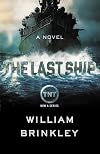
This is a 30+ hour long book. Speech patterns akin to Brit college professor vice gritty sailor. combined with a propensity for verbosity using a plethora of words. This book could be 8-10 hours long with no problem. I learned a new word every day. The story is fascinating. I loved the plot and persevered to the end in spite of the authors writing style.
Lists
Awards


You May Also Like


Associated Authors
Statistics
- Works
- 8
- Also by
- 14
- Members
- 908
- Popularity
- #28,240
- Rating
- 3.4
- Reviews
- 19
- ISBNs
- 29
- Languages
- 1