
Ann Chamberlin
Author of The Merlin of St. Gilles' Well
About the Author
Ann Chamberlin is the best-selling author of fourteen historical novels and numerous plays produced around the United States. Her recent books include The Book of Wizzy and The Sword and the Well trilogy.
Image credit: Photo by Kathleen Dougherty
Series
Works by Ann Chamberlin
Tagged
Common Knowledge
- Birthdate
- 1954
- Gender
- female
- Nationality
- USA
- Birthplace
- Salt Lake City, Utah, USA
- Associated Place (for map)
- Utah, USA
Members
Reviews
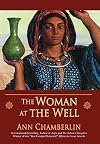
An excellent weaving. Ann Chamberlin (Goodreads Author) takes two historical figures of Syria and, adding a third and fourth, weaves a complex and compelling braid. At times it seems she may have forgotten one strand and then she plucks it up and deftly weaves it in with the other strands. The result is an unexpected pattern, as wild and enchanting as the ever present Syrian desert.
Based in Syria between 638 and 642 (AD), Ann takes Khalid ibn al-Walid, an historical figure also known as the show more Sword of Allah, a girl called Rayeh, her mother Sitt Sameh (whom Ann identifies as an historical figure), and Rayeh's grandmother as the base for the story. Although Ann identifies the first three creating the braid of the story, to me there are four strands, making a weaving of the tale, rather than a braiding of it.
As I finished the book, my thought was "Nooooooooooooooooo! It can't be over! What about ....." Ann identifies there is another volume set to come out next year. For me, it won't be soon enough.
Update: 9 years later, 2nd reading. I was just as enthralled with Woman at the Well as I was the first time through. This time, though, I'll be able to continue the story reading The Sword of God. show less
Based in Syria between 638 and 642 (AD), Ann takes Khalid ibn al-Walid, an historical figure also known as the show more Sword of Allah, a girl called Rayeh, her mother Sitt Sameh (whom Ann identifies as an historical figure), and Rayeh's grandmother as the base for the story. Although Ann identifies the first three creating the braid of the story, to me there are four strands, making a weaving of the tale, rather than a braiding of it.
As I finished the book, my thought was "Nooooooooooooooooo! It can't be over! What about ....." Ann identifies there is another volume set to come out next year. For me, it won't be soon enough.
Update: 9 years later, 2nd reading. I was just as enthralled with Woman at the Well as I was the first time through. This time, though, I'll be able to continue the story reading The Sword of God. show less
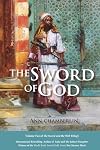
The middle book of a trilogy, the bridge book I call it, is too often lost in the intricacies of setting up the tale for the events in the 3rd book and may tend to drag on due to that role. That is certainly not the case with this middle book.
Chamberlin continues the interweaving of the various characters of the trilogy that helps you know them even better and to understand not only where they have been but where they are going. The story of Khalid ibn al-Walid and his daughter Sitt Sameh show more are interwoven to let the reader piece together two sides of a single story in a way that enhances both the tale and the tension. The battles are thrilling, the danger of the jinn real, the magic surprising and enchanting. Two events in this book made me sad. They did not detract from my love of the story; I had just wanted something else to happen. Now I look forward to the third book and finishing the trilogy. What will be the fate of Rayah, Sitt Sameh's daughter, sought for a bride for al-Walid's grandson and beloved of the jinn. Thanks for a wonderful ride thus far, Ann Chamberlin! show less
Chamberlin continues the interweaving of the various characters of the trilogy that helps you know them even better and to understand not only where they have been but where they are going. The story of Khalid ibn al-Walid and his daughter Sitt Sameh show more are interwoven to let the reader piece together two sides of a single story in a way that enhances both the tale and the tension. The battles are thrilling, the danger of the jinn real, the magic surprising and enchanting. Two events in this book made me sad. They did not detract from my love of the story; I had just wanted something else to happen. Now I look forward to the third book and finishing the trilogy. What will be the fate of Rayah, Sitt Sameh's daughter, sought for a bride for al-Walid's grandson and beloved of the jinn. Thanks for a wonderful ride thus far, Ann Chamberlin! show less
A strong four. I thoroughly enjoyed this journey to the beginnings of Islam and the tribal Days of the Arabs beforehand. In my past I’ve read Ibn Ishaq’s Life of Muhammad that’s a wonderful picture of a culture, and the novel captured that atmosphere for me. Even history on these times can grip you like a novel – fantastic material – so to have authentic-feel fiction was a treat.
It’s named after Khalid and he does get half the space. He’s a sympathetic main, unconverted until show more late in the book, but a peacemaker, at first, as the new religion divides Mecca. I loved his sincerity – not just his; but for instance, he goes through an ordeal-oath to patch a hostility, and people’s commitment to this oath is written of without cynicism. Why do I remark on that? I do find that a modern cynicism intrudes into historical fiction – one of the nastier sorts of anachronism if you ask me.
The other half of the space is the women – daughter, mother, grandmother – and these are identified with the old pagan ways, when Mecca’s sacred precincts housed 360 gods, with the god(esses if you must) of moon and sun... and how fiercely is the sun-divinity described, as fitting in the climate. I was always most fascinated by these pagan days, and came up against the fact there isn’t enough known or left – so I was enthralled by the reconstruction here. This novel is strongly women-focused. But when you have women such as Khadijah -- here as hard as she might have been in life – and “that fearsome lady Hind” whom I’ll never forget from Ibn Ishaq... you can only say, the novel does them justice.
In spite of myself I liked the narrative technique: two people remember the past. With the drawback that Khalid’s memories are in italics – that’s a huge swathe of the book, and I know I’m not the only one who tires at italics. Often I find a loss of immediacy with stories told as memories, but here the stories themselves kept me keen and I didn’t care. It’s true I never worked up much interest in the present, centred on a 12-year-old girl, but she mostly functions as a listener.
I read the second without the first but was never confused (except, to be honest, by the daughter/mother/grandmother, but I’m bad at families and don’t try). --And I did that because I was given a free copy of this one. show less
It’s named after Khalid and he does get half the space. He’s a sympathetic main, unconverted until show more late in the book, but a peacemaker, at first, as the new religion divides Mecca. I loved his sincerity – not just his; but for instance, he goes through an ordeal-oath to patch a hostility, and people’s commitment to this oath is written of without cynicism. Why do I remark on that? I do find that a modern cynicism intrudes into historical fiction – one of the nastier sorts of anachronism if you ask me.
The other half of the space is the women – daughter, mother, grandmother – and these are identified with the old pagan ways, when Mecca’s sacred precincts housed 360 gods, with the god(esses if you must) of moon and sun... and how fiercely is the sun-divinity described, as fitting in the climate. I was always most fascinated by these pagan days, and came up against the fact there isn’t enough known or left – so I was enthralled by the reconstruction here. This novel is strongly women-focused. But when you have women such as Khadijah -- here as hard as she might have been in life – and “that fearsome lady Hind” whom I’ll never forget from Ibn Ishaq... you can only say, the novel does them justice.
In spite of myself I liked the narrative technique: two people remember the past. With the drawback that Khalid’s memories are in italics – that’s a huge swathe of the book, and I know I’m not the only one who tires at italics. Often I find a loss of immediacy with stories told as memories, but here the stories themselves kept me keen and I didn’t care. It’s true I never worked up much interest in the present, centred on a 12-year-old girl, but she mostly functions as a listener.
I read the second without the first but was never confused (except, to be honest, by the daughter/mother/grandmother, but I’m bad at families and don’t try). --And I did that because I was given a free copy of this one. show less
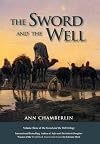
This 3rd book of the series was harder for me to read than the others. An element that pulled me through the first two books no longer existed, having been concluded in the second book. At times I had to push myself to read it. Reading about battles is hard for me in any book so that didn't help with this one. But delightful were the parts of the solidifying relationship between Sejah and Rayah and the intertwining of their relationship with the eunuch scribe Abd Allah and the jinn.
Awards


You May Also Like


Associated Authors
Statistics
- Works
- 24
- Members
- 377
- Popularity
- #64,010
- Rating
- 3.4
- Reviews
- 9
- ISBNs
- 47
- Languages
- 2
- Favorited
- 1