
Frederick Robert Karl (1927–2004)
Author of The Existential Imagination
About the Author
Series
Works by Frederick Robert Karl
The Signet Classic Book of British Short Stories (Signet classics) (1985) — Editor — 56 copies, 1 review
Associated Works
Tagged
Common Knowledge
- Legal name
- Karl, Frederick Robert
- Birthdate
- 1927
- Date of death
- 2004-04-30
- Gender
- male
- Education
- Columbia University (BA, PhD)
Stanford University (MA) - Occupations
- biographer
literary critic
professor emeritus - Organizations
- City College of New York
New York University - Cause of death
- kidney disease
- Nationality
- USA
- Birthplace
- Brooklyn, New York, USA
- Places of residence
- East Hampton, New York, USA
- Place of death
- Manhattan, New York, USA
- Associated Place (for map)
- New York, USA
Members
Reviews
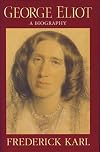
Every now and again it is possible to encounter a book the reading of which should be automatically rewarded with a doctorate. There are some mammoth literary biographical tomes - some of course, like Brian Boyd's two volume masterpiece of Nabokov are far lengthier than Frederick Karl's of George Eliot. But to immerse oneself in such a work is to undertake something of a middle distance run, if not a marathon, and certainly no easy undertaking.
I should perhaps preface any further comment by show more advertsising that I am no Eliot scholar. I read Middlemarch as an undergraduate, and rate it as one of the two or three finest, most satisfying works of literature I have encountered. Beyond that I am an Eliot virgin. So I turned to Karl's work not to criticize but to learn, and learn I have.
Karl's ability to place Eliot in a cultural, theological and literary milieu is masterful. In particular, as someone not unfamiliar with theological discourse, I was impressed at the clarity with which Karl penetrated the influence of Strauss and Feurbach on Eliot's thought - I had often been bemused to find Eliot as the first translator of these monumentally influential German theologians, to the extent I had wondered if there were more than one nineteenth century George Eliot! Karl has made all things clear - and, tangentially, clarified some of my own thoughts not of Eliot but of Strauss and Feurbach.
Generally in fact Karl performs the biographer's task masterfully, weaving from correspondence and journals, contemporary nineteenth century chronicles, and seemlessly from Eliot's writings to her private life. She is an enigmatic, complex person - almost a pantheon of persons - and Karl explores this particularly through the vehicle of her myriad names. It is a tool that works well - perhaps in the end revealing Eliot as a deeply unsettled person, finding fleeting happiness only in creation and not even in completion of her magnificent works of literature. There is of course a sense such an interpretation lends itself to a 'soul sold to the devil' reading of Eliot, for she surrendered her calvinstic adolescent fervour to kiss her muse, but such a reading is too simplistic: Eliot was never a happy Calvinist, and even that theological state was no more than an act of mild rebellion against her father's bland Anglicanism. She was a product of her century, putting God to death but hanging on tenatiously to a collective human spirit, a collective optimism that ultimately was never realised and collapsed, long after Eliot's death, into two world wars.
Karl's is a thorough but imperfect biography. There is a sense in which he himself needed the ghost of Eliot's editor John Blackwood - or perhaps someone far stronger! - leaning over his shoulder. In short Karl needed a critical eye to be cast over his manuscript. He has an irritating habit, at least in this biography (he has written many) of repeating points already made. He mentions that Eliot's translation of Spinoza was never published (202), but has told us this already (197). We are told on 280 that Eliot received £800 for a four year copyright on Adam Bede, only to repeat the information nine pages later. Sometimes Karl handles this better, with an 'as mentioned above' style of rider (392, 415), but it can eventually wear thin. The hermetic life of Eliot and Lewes is mentioned as if for the first time on 550, 551 and 576. References to Thomas Allbutt become a little confusing, as twice Karl explains that Allbutt is the inventor of the thermometer, the second time an occasion not listed under Allbutt in the index (602).
Inevitably errors such as that indexing omission or a slight paragraphing error at 416 can creep into a long work. They detract, but only slightly from the merit of Karl's biography, and do so less than the repetitions. As a non-American reader I am flummoxed occasionally by some Americanisms ('Eliot wrote Sara Hennell, on 22 November': is it obligatory for US writers to drop the preposition?), and the many conversions of Eliot's earnings into, presumably, US dollars in today's currency are always going to date and geographically limit a reader. Perhaps 'left-handed' as a pejorative term (472) too is an Americanism: I have only ever encountered it once before and felt it was a little misguided (a left handed girlfriend once alerted me to the trials of minority-handedness!).
But these small failings a more than compensated by Karl's thoroughness, by his breadth of perspective, and by his obvious awareness of the myriad complexities of his subject, complexities he conveys enormously well. To this he adds his own occasional and subtle flash of humour: Agnes Lewes' failure to cooperate by providing an opportune death (575), or the wry observation that despite Eliot's new-found love of tennis (well into her health-challenged sixth decade) 'we lack precise information about her serve or backhand' (587, a page which incidentally provides another example of Karl's 'touched on above' repetition technique and the delightful introduction of the word 'pastness'). A letter from the long-silent brother Isaac Evans is described as sounding 'as though it were packed in dry ice' (626). Perhaps it is significant that Karl permits these humourous touches late in his work, reward for the hard labour of journeying thus far into the middle distance run.
Karl also lapses or engages, depending on the reader's taste, into occasional psychomatic explorations of Eliot's illness, digressions which are to my taste a little forced. On the other hand illness played a large part in Eliot's life - her own illness and Lewes' - and Karl is correct to address it. It may be churlish of me to be underconvinced at his explanations at these points (486, 492, 521). They are more than compensated for by his outstanding analysis of sexual power in Middlemarch , a theme that fascinated me when I read the novel 30 years ago, but which I lacked Karl or Karl's skills to expurgate in my undergraduate essays.
I am, on one tiny note, not altogether convinced that the 39 Articles to which Karl refers on 529 were a 'religious test for Fellows' of the University of Cambridge, but perhaps there is more than one set of Articles of that number? I would need to do a little more research on the history of the University of Cambridge to be sure of that. And it would be a pedantic response to what is, in the end, a flawed but fine biography that has left me far better informed than any undergarduate flirtations, essays and examinations ever did. show less
I should perhaps preface any further comment by show more advertsising that I am no Eliot scholar. I read Middlemarch as an undergraduate, and rate it as one of the two or three finest, most satisfying works of literature I have encountered. Beyond that I am an Eliot virgin. So I turned to Karl's work not to criticize but to learn, and learn I have.
Karl's ability to place Eliot in a cultural, theological and literary milieu is masterful. In particular, as someone not unfamiliar with theological discourse, I was impressed at the clarity with which Karl penetrated the influence of Strauss and Feurbach on Eliot's thought - I had often been bemused to find Eliot as the first translator of these monumentally influential German theologians, to the extent I had wondered if there were more than one nineteenth century George Eliot! Karl has made all things clear - and, tangentially, clarified some of my own thoughts not of Eliot but of Strauss and Feurbach.
Generally in fact Karl performs the biographer's task masterfully, weaving from correspondence and journals, contemporary nineteenth century chronicles, and seemlessly from Eliot's writings to her private life. She is an enigmatic, complex person - almost a pantheon of persons - and Karl explores this particularly through the vehicle of her myriad names. It is a tool that works well - perhaps in the end revealing Eliot as a deeply unsettled person, finding fleeting happiness only in creation and not even in completion of her magnificent works of literature. There is of course a sense such an interpretation lends itself to a 'soul sold to the devil' reading of Eliot, for she surrendered her calvinstic adolescent fervour to kiss her muse, but such a reading is too simplistic: Eliot was never a happy Calvinist, and even that theological state was no more than an act of mild rebellion against her father's bland Anglicanism. She was a product of her century, putting God to death but hanging on tenatiously to a collective human spirit, a collective optimism that ultimately was never realised and collapsed, long after Eliot's death, into two world wars.
Karl's is a thorough but imperfect biography. There is a sense in which he himself needed the ghost of Eliot's editor John Blackwood - or perhaps someone far stronger! - leaning over his shoulder. In short Karl needed a critical eye to be cast over his manuscript. He has an irritating habit, at least in this biography (he has written many) of repeating points already made. He mentions that Eliot's translation of Spinoza was never published (202), but has told us this already (197). We are told on 280 that Eliot received £800 for a four year copyright on Adam Bede, only to repeat the information nine pages later. Sometimes Karl handles this better, with an 'as mentioned above' style of rider (392, 415), but it can eventually wear thin. The hermetic life of Eliot and Lewes is mentioned as if for the first time on 550, 551 and 576. References to Thomas Allbutt become a little confusing, as twice Karl explains that Allbutt is the inventor of the thermometer, the second time an occasion not listed under Allbutt in the index (602).
Inevitably errors such as that indexing omission or a slight paragraphing error at 416 can creep into a long work. They detract, but only slightly from the merit of Karl's biography, and do so less than the repetitions. As a non-American reader I am flummoxed occasionally by some Americanisms ('Eliot wrote Sara Hennell, on 22 November': is it obligatory for US writers to drop the preposition?), and the many conversions of Eliot's earnings into, presumably, US dollars in today's currency are always going to date and geographically limit a reader. Perhaps 'left-handed' as a pejorative term (472) too is an Americanism: I have only ever encountered it once before and felt it was a little misguided (a left handed girlfriend once alerted me to the trials of minority-handedness!).
But these small failings a more than compensated by Karl's thoroughness, by his breadth of perspective, and by his obvious awareness of the myriad complexities of his subject, complexities he conveys enormously well. To this he adds his own occasional and subtle flash of humour: Agnes Lewes' failure to cooperate by providing an opportune death (575), or the wry observation that despite Eliot's new-found love of tennis (well into her health-challenged sixth decade) 'we lack precise information about her serve or backhand' (587, a page which incidentally provides another example of Karl's 'touched on above' repetition technique and the delightful introduction of the word 'pastness'). A letter from the long-silent brother Isaac Evans is described as sounding 'as though it were packed in dry ice' (626). Perhaps it is significant that Karl permits these humourous touches late in his work, reward for the hard labour of journeying thus far into the middle distance run.
Karl also lapses or engages, depending on the reader's taste, into occasional psychomatic explorations of Eliot's illness, digressions which are to my taste a little forced. On the other hand illness played a large part in Eliot's life - her own illness and Lewes' - and Karl is correct to address it. It may be churlish of me to be underconvinced at his explanations at these points (486, 492, 521). They are more than compensated for by his outstanding analysis of sexual power in Middlemarch , a theme that fascinated me when I read the novel 30 years ago, but which I lacked Karl or Karl's skills to expurgate in my undergraduate essays.
I am, on one tiny note, not altogether convinced that the 39 Articles to which Karl refers on 529 were a 'religious test for Fellows' of the University of Cambridge, but perhaps there is more than one set of Articles of that number? I would need to do a little more research on the history of the University of Cambridge to be sure of that. And it would be a pedantic response to what is, in the end, a flawed but fine biography that has left me far better informed than any undergarduate flirtations, essays and examinations ever did. show less

Well researched and meaty biography of the woman who got to highest rank of English fiction writing. Eliot was tough, determined and hard working to reach this pinnacle, at the same time as she faced self-doubt, opprobrium for her living with George Lewes and chronic bad health.
She drove a hard bargain with publishers because she was so successful with a new type of novel that veered away from the chronological narrative that preceded her.
A great biography that never flags.
She drove a hard bargain with publishers because she was so successful with a new type of novel that veered away from the chronological narrative that preceded her.
A great biography that never flags.

This book contains stories from the mid-19th century up through the mid-20th. An absolutely wonderful book. If you have a liking for British literature, you should read it. I must say though, that I am not nearly as fond of 20th century stories as of earlier. They are too predictably either weird or unhappy. I like to be surprised as to whether my stories will have a happy or unhappy ending.
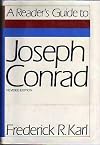
It was not until the late 1930s - after his death - that Joseph Conrad emerged from literary neglect. Critical works on his significant contribution began to surface, many comparing him in talent to Joyce and Faulkner. Frederick R. Karl provides for readers an independent study on the Nostromo manuscript and defends Victory as one of Conrad's greatest novels.
You May Also Like


Associated Authors
Statistics
- Works
- 21
- Also by
- 3
- Members
- 996
- Popularity
- #25,870
- Rating
- 3.9
- Reviews
- 8
- ISBNs
- 51
- Languages
- 5