

Anne Sverdrup-Thygeson
Author of Extraordinary Insects
About the Author
Anne Sverdrup-Thygeson is a professor of conservation biology at the Norwegian University of Life Sciences and a scientific advisor at the Norwegian Institute for Nature Research. Her research concerns nature management and biodiversity, especially the ecological role of insects in trees and show more forests. show less
Image credit: ITV.com
Works by Anne Sverdrup-Thygeson
El tejido de la naturaleza: Diez millones de especies que nos salvan la vida: 20 (Barlin Paisaje) (2023) 6 copies
Planeta dos Insetos - Estranhos. Uteis. Fascinantes.Saiba tudo sobre os minusculos seres dos quais depende nossa vida (Em Portugues do Brasil) (2019) 3 copies
Der Einsiedlersommer: Roman | Der große Sommerroman über die heilsame Kraft von Freundschaft und Natur (German Edition) 2 copies, 1 review
Ekipa do naprawy swiata. Jak dziesiec milionow gatunkow staje na glowie, by uratowac ci tylek (2021) 2 copies
Tagged
Common Knowledge
- Birthdate
- 1966-09-04
- Gender
- female
- Occupations
- professor
- Organizations
- Norwegian University of Life Sciences (NMBU)
- Nationality
- Norway
- Associated Place (for map)
- Norway
Members
Reviews

Overall this is pretty good,if simplistic. At times I felt like it was written for a much younger audience or at least one with little to no science knowledge. Things are explained simply and topics delved into lightly, nothing is explored in depth, but that’s not the point so overall it felt in keeping with the book as a whole. Still, sometimes I wanted a little more information or a deeper dive.The author’s illustrations throughout are charming.
Some things I made note of -
“...many show more people think that all species should have the opportunity to achieve their full life potential - that we humans have no right to play fast and loose with species diversity driven by short-sighted judgments about which species we see as cute or useful.” p x of preface
Spot on. For many years now I’ve had a hard time killing, injuring or interfering with any living thing (well, apart from mosquitos!). I don’t have the right. Who am I to decide that another creature should die? Even wasps get a pass most of the time.
With regard to evolutionary adaptations around seed dispersal -
“It is common for the plant to ensure that there is a sort of payment in the form of a valuable supplement; a packed lunch for the ant.” & “The next time you see a common hepatica in spring, take a closer look when the flowers fall off, and you’ll see the little packed lunches sitting on each seed.” p 74
I’ll have to remember to do this. Hepatica all over the yard.
Regarding wheat production in parts of Australia -
“It turned out that the wheat harvest rose 36 percent where crops had not been sprayed. Why? In areas as arid as this, there are no earthworms, so ants and termites do the earthworms’ job instead, creating corridors that allow more water to trickle down into the soil. The water content was twice as high in the soil where these insects were allowed to live as in the soil where they had been eliminated. In addition, the nitrogen content was much higher. This may be because termites’ guts contain bacteria that capture nitrogen from the air.” p 88
“The mechanism behind locust plagues is like a one-way version of Dr. Jekyll and Mr. Hyde. Normally, the locust is a shy creature that does not cause harm to crops. But when special weather conditions make their numbers surge, space becomes tight and they repeatedly bump into one another, which triggers a hormone that changes both the way they look and the way they behave in a matter of hours. They grow bigger, darker and hungrier, and all of a sudden they feel strongly attracted to one another. Large bands of restless locusts form, moving across the landscape and meeting up with other bands to form even bigger groups. One theory is that starvation can lead to cannibalism in locusts and that the swarming behavior has evolved as an alternative.” p 93-4
CSI China -
“The first time insects helped identify a murderer is supposed to have been in a Chinese village in 1235. A man was brutally murdered with a sickle, and the local peasants were called into a meeting. They were instructed to bring their sickles with them. The investigator made them wait, and, since it was a hot, sunny day, it wasn’t long before flies appeared. When all the flies landed on the same sickle, the owner was so shocked that he confessed on the spot.” p 123
Reverse and delayed ageing in honeybees -
“Bees that are responsible for looking after the young in the hive can live and remain at the height of their mental powers for many weeks. However, worker bees, the ones that go out and gather nectar, die, thoroughly senile, after a couple of weeks. The ingenious thing is that if the worker bees are forced to take on the hive bees’ job again, some of them actually “grow younger” - they have a longer life span with high mental capacity. In honeybees, this is controlled by a special protein, a kind of bee elixir of youth.” p 172 show less
Some things I made note of -
“...many show more people think that all species should have the opportunity to achieve their full life potential - that we humans have no right to play fast and loose with species diversity driven by short-sighted judgments about which species we see as cute or useful.” p x of preface
Spot on. For many years now I’ve had a hard time killing, injuring or interfering with any living thing (well, apart from mosquitos!). I don’t have the right. Who am I to decide that another creature should die? Even wasps get a pass most of the time.
With regard to evolutionary adaptations around seed dispersal -
“It is common for the plant to ensure that there is a sort of payment in the form of a valuable supplement; a packed lunch for the ant.” & “The next time you see a common hepatica in spring, take a closer look when the flowers fall off, and you’ll see the little packed lunches sitting on each seed.” p 74
I’ll have to remember to do this. Hepatica all over the yard.
Regarding wheat production in parts of Australia -
“It turned out that the wheat harvest rose 36 percent where crops had not been sprayed. Why? In areas as arid as this, there are no earthworms, so ants and termites do the earthworms’ job instead, creating corridors that allow more water to trickle down into the soil. The water content was twice as high in the soil where these insects were allowed to live as in the soil where they had been eliminated. In addition, the nitrogen content was much higher. This may be because termites’ guts contain bacteria that capture nitrogen from the air.” p 88
“The mechanism behind locust plagues is like a one-way version of Dr. Jekyll and Mr. Hyde. Normally, the locust is a shy creature that does not cause harm to crops. But when special weather conditions make their numbers surge, space becomes tight and they repeatedly bump into one another, which triggers a hormone that changes both the way they look and the way they behave in a matter of hours. They grow bigger, darker and hungrier, and all of a sudden they feel strongly attracted to one another. Large bands of restless locusts form, moving across the landscape and meeting up with other bands to form even bigger groups. One theory is that starvation can lead to cannibalism in locusts and that the swarming behavior has evolved as an alternative.” p 93-4
CSI China -
“The first time insects helped identify a murderer is supposed to have been in a Chinese village in 1235. A man was brutally murdered with a sickle, and the local peasants were called into a meeting. They were instructed to bring their sickles with them. The investigator made them wait, and, since it was a hot, sunny day, it wasn’t long before flies appeared. When all the flies landed on the same sickle, the owner was so shocked that he confessed on the spot.” p 123
Reverse and delayed ageing in honeybees -
“Bees that are responsible for looking after the young in the hive can live and remain at the height of their mental powers for many weeks. However, worker bees, the ones that go out and gather nectar, die, thoroughly senile, after a couple of weeks. The ingenious thing is that if the worker bees are forced to take on the hive bees’ job again, some of them actually “grow younger” - they have a longer life span with high mental capacity. In honeybees, this is controlled by a special protein, a kind of bee elixir of youth.” p 172 show less
Extraordinary Insects: The Fabulous, Indispensable Creatures Who Run Our World by Anne Sverdrup-Thygeson
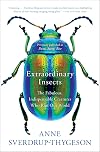
Deciding my reading line up could do with a dash of biology, this month I listened to the audiobook of Extraordinary Insects: Weird, Wonderful, Indispensable - The Ones Who Run Our World by Anne Sverdrup-Thygeson, previously published as Buzz Sting Bite - Why We Need Insects.
Anne Sverdrup-Thygeson is a professor at the Norwegian University of Life Sciences in Norway and a scientific advisor for the Norwegian Institute for Nature Research and has successfully managed to make her research show more interesting for the layperson.
Translated by Lucy Moffatt and narrated by Kristin Milward, this list of chapter titles should give you a clear idea of what to expect:
Chapter 1 Small Creatures, Smart Design: Insect Anatomy
Chapter 2 Six-legged Sex: Dating, Mating and Parenting
Chapter 3 Eat or Be Eaten: Insects in the Food Chain
Chapter 4 Insects and Plants: A Never-ending Race
Chapter 5 Busy Flies, Flavoursome Bugs: Insects and Our Food
Chapter 6 The Circle of Life - and Death: Insects as Caretakers
Chapter 7 From Silk to Shellac: Industries of Insects
Chapter 8 Lifesavers, Pioneers and Nobel Prize-winners: Insights from Insects
Chapter 9 Insects and Us: What's Next?
In Chapter 1, I learned the competition for the noisiest insect most definitely includes the male Water Boatman beetle:
"An aquatic insect a mere 2 millimetres long is the one most likely to walk away with the prize because the male of the Water Boatman species, part of the micronectidae family, competes for the female's attention by making music. But how are you supposed to serenade your sweetheart when you're the size of a coarse ground peppercorn? Well, the little Water Boatman does it by playing himself using his abdomen as a string and his penis as a bow." Chapter 1
Nature never ceases to amaze, and you'd better believe I was off to YouTube to track down a recording of the music which is said to reach 79 decibels but which actually sounds more like a frog than 'music'.
I saw my first bumblebee in London in 2012 and was absolutely transfixed, so when the author mentioned a study where bumblebees were trained to pull on a string to access sugar water, I rushed off to watch the experiments; again on YouTube. Apparently scientists also witnessed the ability of trained bumblebees to teach new ones, just amazing!
As you might expect, Extraordinary Insects is full of insect trivia and some surprising facts like this one: dragon flies can operate each of their 4 wings independently.
I was less convinced when it came to the practice of preparing insects for human consumption. Already a practice and a delicacy in some countries, the author made some convincing arguments although I can't see the West getting over their 'ick factor' any time soon.
I was interested to learn that the keeping of crickets as pets has been a huge hit for modern geriatric care in Asia to treat depression and loneliness. I went down an online rabbit hole and saw potential owners and collectors perusing specimens at a cricket market and was reminded of just how narrow my own experience of the world is.
More generally though, it was troubling to face the facts that many insects are endangered due to loss of habitat, global warming and the endless threat of the human population while science still has so much to learn from them.
Extraordinary Insects by Anne Sverdrup-Thygeson is recommended for nature lovers and those with an interest in biology, conservation and the environment. show less
Anne Sverdrup-Thygeson is a professor at the Norwegian University of Life Sciences in Norway and a scientific advisor for the Norwegian Institute for Nature Research and has successfully managed to make her research show more interesting for the layperson.
Translated by Lucy Moffatt and narrated by Kristin Milward, this list of chapter titles should give you a clear idea of what to expect:
Chapter 1 Small Creatures, Smart Design: Insect Anatomy
Chapter 2 Six-legged Sex: Dating, Mating and Parenting
Chapter 3 Eat or Be Eaten: Insects in the Food Chain
Chapter 4 Insects and Plants: A Never-ending Race
Chapter 5 Busy Flies, Flavoursome Bugs: Insects and Our Food
Chapter 6 The Circle of Life - and Death: Insects as Caretakers
Chapter 7 From Silk to Shellac: Industries of Insects
Chapter 8 Lifesavers, Pioneers and Nobel Prize-winners: Insights from Insects
Chapter 9 Insects and Us: What's Next?
In Chapter 1, I learned the competition for the noisiest insect most definitely includes the male Water Boatman beetle:
"An aquatic insect a mere 2 millimetres long is the one most likely to walk away with the prize because the male of the Water Boatman species, part of the micronectidae family, competes for the female's attention by making music. But how are you supposed to serenade your sweetheart when you're the size of a coarse ground peppercorn? Well, the little Water Boatman does it by playing himself using his abdomen as a string and his penis as a bow." Chapter 1
Nature never ceases to amaze, and you'd better believe I was off to YouTube to track down a recording of the music which is said to reach 79 decibels but which actually sounds more like a frog than 'music'.
I saw my first bumblebee in London in 2012 and was absolutely transfixed, so when the author mentioned a study where bumblebees were trained to pull on a string to access sugar water, I rushed off to watch the experiments; again on YouTube. Apparently scientists also witnessed the ability of trained bumblebees to teach new ones, just amazing!
As you might expect, Extraordinary Insects is full of insect trivia and some surprising facts like this one: dragon flies can operate each of their 4 wings independently.
I was less convinced when it came to the practice of preparing insects for human consumption. Already a practice and a delicacy in some countries, the author made some convincing arguments although I can't see the West getting over their 'ick factor' any time soon.
I was interested to learn that the keeping of crickets as pets has been a huge hit for modern geriatric care in Asia to treat depression and loneliness. I went down an online rabbit hole and saw potential owners and collectors perusing specimens at a cricket market and was reminded of just how narrow my own experience of the world is.
More generally though, it was troubling to face the facts that many insects are endangered due to loss of habitat, global warming and the endless threat of the human population while science still has so much to learn from them.
Extraordinary Insects by Anne Sverdrup-Thygeson is recommended for nature lovers and those with an interest in biology, conservation and the environment. show less
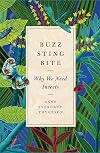
Sprightly, sometimes funny, certainly jammed with interesting, weird, important facts about insects. Sverdrup-Thygeson loves her phylum, and her enthusiasm is infectious - older kids on up to adults would find this a fun read. It is mostly a conglomeration of "cool things about bugs" (yes, I know - she does explain that not all insects are bugs...), and may primarily serve to raise some consciousness and generate curiosity and interest in them and why they are so important to the planet. show more Definitely a purchase for public and school libraries, and an enjoyable couple evenings' learning. show less
Extraordinary insects : weird, wonderful, indispensable, the ones who run our world by Anne Sverdrup-Thygeson
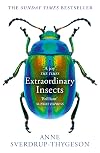
Either something was lost in translation, or this book is a much better fit for middle grade readers. Given the excellent english of absolutely everybody I’ve ever met from Norway (and I worked for a Norwegian company for years), I’m going with this is a great Middle grade read.
Extraordinary Insects is a brief introduction to most of the broad families of Insects, written by an enthusiastic scientist who obviously loves her work. It’s a fun book, engagingly written, but at a level that show more would appeal to strong readers in the, say, 10-13 year old range. That’s not an insult to this book in the slightest, but those who are looking for a deeper overview of the insect world and their importance on Earth (life as we know it can’t exist without insects, but nothing but the rats and cockroaches would even notice our absence), might find this book a little frustrating for its lack of depth, and its very enthusiastic tone. It’s a good book, but I kept thinking it would be a better fit for my niece (who just turned 11).
A great book for a budding young insect enthusiast or for anyone who has avoided ‘bugs’ but would like to dip a toe into learning more about them. show less
Extraordinary Insects is a brief introduction to most of the broad families of Insects, written by an enthusiastic scientist who obviously loves her work. It’s a fun book, engagingly written, but at a level that show more would appeal to strong readers in the, say, 10-13 year old range. That’s not an insult to this book in the slightest, but those who are looking for a deeper overview of the insect world and their importance on Earth (life as we know it can’t exist without insects, but nothing but the rats and cockroaches would even notice our absence), might find this book a little frustrating for its lack of depth, and its very enthusiastic tone. It’s a good book, but I kept thinking it would be a better fit for my niece (who just turned 11).
A great book for a budding young insect enthusiast or for anyone who has avoided ‘bugs’ but would like to dip a toe into learning more about them. show less
Lists
Awards


You May Also Like


Associated Authors
Statistics
- Works
- 21
- Members
- 520
- Popularity
- #47,759
- Rating
- 3.8
- Reviews
- 14
- ISBNs
- 53
- Languages
- 16