

Dave Goulson
Author of A Sting in the Tale: My Adventures with Bumblebees
About the Author
Dave Goulson: School of Biological Sciences, University of Southampton
Works by Dave Goulson
一位昆虫學家的草地探險 1 copy
Tagged
Common Knowledge
Members
Discussions
Spoiler Alarm in Book talk (November 2021)
Reviews
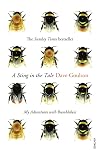
Charming account of conserving the UK's bumblebees, with a strong appearance by New Zealand as a refuge for some species endangered or vanished in their home country. Goulson is very effective at getting you to care as much about rare bees as you do about rare birds or mammals. Fascinating biology of bumblebee nest piracy and parasitism. Unfortunately although he spent weeks in New Zealand he never seemed to notice we don't call them North Island and South Island.
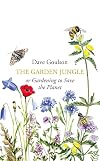
If you are fortunate to have a garden but don’t really pay it much attention, then you might not be aware of the insects and other wildlife that inhabit it at the moment. It is a jungle out there, but one that you need to get down on your hands and knees to see properly. Everything from the microbes, worms and ants in the soil, to the insects that pollinate and right up to the small mammals and birds that prey on all of these creatures lower down the food chain.
If you can tear your show more attention away from the screen and take a few moments to go out into the garden, then we need to understand what makes them tick and some of their lifecycle to help these creatures. For a lot of them, their lives are short, sharp and very often brutal. Oh and weird, very weird. Goulson ventures beneath the soil, into the compost heap and rootles around at the bottom of the pond to find out more about their lives and just how intertwined all layers of life are on this planet.
Insects are the bottom in a very long food chain, if they collapse in numbers then everything further up will suffer and the current evidence is suggesting that that collapse has already started. A garden that is sensitively planted can bring a huge number of insects in and will help all types of wildlife. Some insect-friendly’ plants that are available from garden centres but a crowd-funded PHD project found a cocktail of insecticides, in particular, neonicotinoids, fungicides and other pesticides on them. When Goulson raised this publicly, some organisation have made steps to do something about this, but other organisations who really should know better have maintained a worrying silence about this.
Didn’t feel that this was as good as his previous books, but it is still as well written with the occasional humorous moment. You also get a sense of his anger over the way that some things are continuing with the overwhelming evidence that drenching our land in chemicals, is doing far more harm than companies would have you believe. His greatest ire is for the insect-friendly plants that are being marketed, his advice, don’t look for the label, look at the plants that have lots of insects gathering around them and buy those instead and don’t use chemicals on them when you do get them home. He has a strong message that we would be wise to heed. It is worth reading alongside The Bumble Bee Flies Anyway by Kate Bradbury and her account of changing a garden from a wildlife blackhole to a place full of life. 3.5 stars show less
If you can tear your show more attention away from the screen and take a few moments to go out into the garden, then we need to understand what makes them tick and some of their lifecycle to help these creatures. For a lot of them, their lives are short, sharp and very often brutal. Oh and weird, very weird. Goulson ventures beneath the soil, into the compost heap and rootles around at the bottom of the pond to find out more about their lives and just how intertwined all layers of life are on this planet.
Insects are the bottom in a very long food chain, if they collapse in numbers then everything further up will suffer and the current evidence is suggesting that that collapse has already started. A garden that is sensitively planted can bring a huge number of insects in and will help all types of wildlife. Some insect-friendly’ plants that are available from garden centres but a crowd-funded PHD project found a cocktail of insecticides, in particular, neonicotinoids, fungicides and other pesticides on them. When Goulson raised this publicly, some organisation have made steps to do something about this, but other organisations who really should know better have maintained a worrying silence about this.
Didn’t feel that this was as good as his previous books, but it is still as well written with the occasional humorous moment. You also get a sense of his anger over the way that some things are continuing with the overwhelming evidence that drenching our land in chemicals, is doing far more harm than companies would have you believe. His greatest ire is for the insect-friendly plants that are being marketed, his advice, don’t look for the label, look at the plants that have lots of insects gathering around them and buy those instead and don’t use chemicals on them when you do get them home. He has a strong message that we would be wise to heed. It is worth reading alongside The Bumble Bee Flies Anyway by Kate Bradbury and her account of changing a garden from a wildlife blackhole to a place full of life. 3.5 stars show less
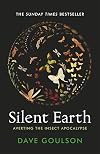
Sobering look at the state of insect biodiversity, especially in Britain, which looks like a ravaged moonscape compared with New Zealand. But our monoculture farming is probably just as bad, and we're certainly using heaps of glyphosate and neonicotinoids, so the reckoning is likely coming. Goulson uses the in-depth research into insect decline and its causes, which has advanced quite a bit since the first alarming data from Germany, to lay out a general environmental programme that ticks show more all the Green boxes. Will hopefully push some people off the fence. He still can't spell Fiordland though. show less
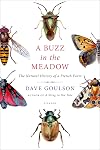
This book is a delight from beginning to end. The catalyst for writing it is his home in the Charente, bought so he could provide home, in the form of an extensive meadow, to a huge variety of wildlife, specifically insects. This is no Aga saga of a Brit in France, but a mixture of reminiscence, hard scientific fact, vivid stories of his own experiments and research, and the work of others. It's a page turner and a tale well told with humour, and an eye for the telling detail. I'm no show more scientist, but I was absorbed from start to finish.
His concluding message is a serious one: through ignorance, through folly, the human race risks destroying natural systems and eroding biodiversity.... and thereby itself. This is the really important message. But the other is that the world of insects and other small 'bugs' is entrancing and intriguing. Notice what we have beneath our feet and at the bottom of the garden! show less
His concluding message is a serious one: through ignorance, through folly, the human race risks destroying natural systems and eroding biodiversity.... and thereby itself. This is the really important message. But the other is that the world of insects and other small 'bugs' is entrancing and intriguing. Notice what we have beneath our feet and at the bottom of the garden! show less
Lists
Awards


You May Also Like


Associated Authors
Statistics
- Works
- 14
- Members
- 1,201
- Popularity
- #21,368
- Rating
- 4.1
- Reviews
- 42
- ISBNs
- 101
- Languages
- 11
- Favorited
- 1