
Alia Trabucco Zerán
Author of Clean
About the Author
Works by Alia Trabucco Zerán
Associated Works
Tagged
Common Knowledge
- Canonical name
- Trabucco Zerán, Alia
- Birthdate
- 1983-08-26
- Gender
- female
- Education
- New York University (MFA, Creative Writing)
University College London (PhD, Spanish and Latin American Studies) - Nationality
- Chile
- Birthplace
- Santiago, Chile
- Map Location
- Chile
Members
Reviews
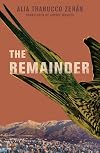
This darkly comic story about three children of ex-militants who opposed the regime of the Chilean dictator Augusto Pinochet is set in the capital of Santiago, a city in a valley surrounded by volcanoes that is encased in ash, a fitting metaphor for the political and social fallout during the last days of the regime and the years that followed. The novel opens in December 1989 during a party hosted by Consuelo, one of the former militants who has changed her identity and her name to remain show more hidden in public view, and her husband, as their friends gather to watch the coverage of the election that would remove Pinochet from power and restore Chile to a democracy that ended with the assassination of Salvador Allende in 1973. Iquela is the teenage daughter of Consuelo, and she is tasked with welcoming Paloma, the moody and defiant daughter of Consuelo's exiled militant in arms, who has come from Germany with her parents to witness this momentous event. The girls bond over cigarettes and alcohol, and Iquela is fascinated by Paloma's European style and self confidence.
The story then fast forwards to modern day Santiago—which is still covered in ash. Paloma's mother has just died in Germany, and Paloma arrives in Santiago in advance of her mother's coffin, as she intends to bury her in her homeland. Paloma arrives safely, but the plane carrying her mother is diverted to Argentina, due to a heavy ash cloud that covers the capital and prevents flights from landing. The two women enlist the help of Felipe, Iquela's disturbed adopted brother and the son of ex-militants who were disappeared during the Pinochet regime, in a half baked and surreal road trip to claim Paloma's mother and bring her back to Santiago.
The three main characters are meant to represent the post-Pinochet generation, who were only children when he was deposed in 1990 but continue to be affected by his regime, and the sacrifices that their parents made during that time for them. Consuelo repeatedly tells her daughter, "I did this all for you", and Iquela is trapped by a daily sense of duty to her mother, and is seemingly more of a post-adolescent who has not yet matured into an independent adult 25 years after Pinochet's downfall. The story is told in alternating chapters, in which Iquela and Felipe are narrators, while Paloma is cast as a secondary character despite being the center of this account.
The Remainder is a very enjoyable and impressive début novel, which is another worthy selection for this year's Man Booker International Prize shortlist. show less
The story then fast forwards to modern day Santiago—which is still covered in ash. Paloma's mother has just died in Germany, and Paloma arrives in Santiago in advance of her mother's coffin, as she intends to bury her in her homeland. Paloma arrives safely, but the plane carrying her mother is diverted to Argentina, due to a heavy ash cloud that covers the capital and prevents flights from landing. The two women enlist the help of Felipe, Iquela's disturbed adopted brother and the son of ex-militants who were disappeared during the Pinochet regime, in a half baked and surreal road trip to claim Paloma's mother and bring her back to Santiago.
The three main characters are meant to represent the post-Pinochet generation, who were only children when he was deposed in 1990 but continue to be affected by his regime, and the sacrifices that their parents made during that time for them. Consuelo repeatedly tells her daughter, "I did this all for you", and Iquela is trapped by a daily sense of duty to her mother, and is seemingly more of a post-adolescent who has not yet matured into an independent adult 25 years after Pinochet's downfall. The story is told in alternating chapters, in which Iquela and Felipe are narrators, while Paloma is cast as a secondary character despite being the center of this account.
The Remainder is a very enjoyable and impressive début novel, which is another worthy selection for this year's Man Booker International Prize shortlist. show less

This is much like a long-form essay examining how the government, press, & the public portrayed four female murderers during the 20th century in Chile, looking at these cases through a lens of 21st century feminism. How do these groups (gov't, press, public) "explain" murder in order to assure the public that there is no need for worry or general panic? Throughout history, the idea of women being dangerous is an idea that has been squelched. It is also a bit of musing on how women's voices show more are silenced through history, their records often erased, as well as the painstaking work to even find old records to research for this book. I'd call this one true-crime-adjacent (because it's not really an examination of the actual crimes or trials) with interesting angles & commentary to ponder in relation to the lens of how these crimes were "marketed" for the court of public opinion. A compelling book. show less

A book club pick
Horrors of ordinary things
While reading this, I was always surrounded by something dark. Undulating, creeping, changing, clinging, swarming. This is very slow-paced tragedy, a story of class and being powerful, a social critique. But above all, it’s about Estela and her voice.
A little girl is dead. Estela was the housemaid of this family for seven years. She is in custody, and she is going to tell her story. All of it. And is this the only way for her to have a voice?
I show more think this is a story of unbecoming. When you are not being treated as a person, your reality begins to twist. Is this when, through unbecoming, you become unforgiving.
”It felt very close-fitting at the neck, too tight for me, but when I went to undo the top button I realised there was no buttonhole. The other five uniforms all had the same fake fastening.”
”That first week they didn’t even know what to call me. They kept going to say the name of the woman who’d worked in the house before.”
This unravelling family is horrible. That little girl did not deserve to be born to these parents. Estrela tried to make her happy. Estrela kept taking care of a family which was not hers, and not out of love, getting used to being in a place that was suffocating her. ”I’ve mentioned before that this story has several beginnings. It started the day I arrived at that house, but also every day I didn’t leave.”
Why write about alien monsters in a city when some people’s comfortable middle-class life is horror enough?
I wish you could go back south, Estela.
P. S. I was so impressed by the translation – seamless, flowing. I had a few bad experiences with books translated from Spanish into English, and unconsciously formed an idea that rendering Spanish into English well was impossible. Not true, of course, as this book shows. show less
Horrors of ordinary things
While reading this, I was always surrounded by something dark. Undulating, creeping, changing, clinging, swarming. This is very slow-paced tragedy, a story of class and being powerful, a social critique. But above all, it’s about Estela and her voice.
A little girl is dead. Estela was the housemaid of this family for seven years. She is in custody, and she is going to tell her story. All of it. And is this the only way for her to have a voice?
I show more think this is a story of unbecoming. When you are not being treated as a person, your reality begins to twist. Is this when, through unbecoming, you become unforgiving.
”It felt very close-fitting at the neck, too tight for me, but when I went to undo the top button I realised there was no buttonhole. The other five uniforms all had the same fake fastening.”
”That first week they didn’t even know what to call me. They kept going to say the name of the woman who’d worked in the house before.”
This unravelling family is horrible. That little girl did not deserve to be born to these parents. Estrela tried to make her happy. Estrela kept taking care of a family which was not hers, and not out of love, getting used to being in a place that was suffocating her. ”I’ve mentioned before that this story has several beginnings. It started the day I arrived at that house, but also every day I didn’t leave.”
Why write about alien monsters in a city when some people’s comfortable middle-class life is horror enough?
I wish you could go back south, Estela.
P. S. I was so impressed by the translation – seamless, flowing. I had a few bad experiences with books translated from Spanish into English, and unconsciously formed an idea that rendering Spanish into English well was impossible. Not true, of course, as this book shows. show less

Estela Garcia is alone in a locked room. The 7 years old daughter of the family Estela worked for as a maid is dead.
That's how this novel start - this is all the reader knows. We do not know why Estela is locked up. We do not know how the girl died. We will learn both things by the end of the novel but there is a lot of time until we get there. And a lot of stories.
The novel is a monologue - Estela talks to the people on the other side of the wall. She tells her own story and the story of show more the family she worked for - her move from her island in the south to Santiago looking for work when she was 33, the birth of the little girl Julia just a few weeks after she took the job (despite making sure that they understand that she has no experience with children) and the next 7 years - all of the stories leading to this one moment in time when Estela is locked in a room and tells the story.
On the surface it is a novel about a crime - a girl is dead after all. But this death while central for Estela at the start of the novel ends up being just part of the story. What comes out is a story of a society, a story of families (both poor and rich) and a story of a place and time. Estela is not always the most reliable narrator - she is ready to admit that reality sometimes blurs for her. And noone is all good or all bad in her story - but everyone sounds real.
When the end comes, you will know what happened to Julia - but you will also come to realize that there is a much bigger story in the novel and that bigger story is never finished. For it is the story of life itself.
It is a slow novel - it builds up towards an ending you know must come and then fails to stop there. It is never about the actions - it is about the whys and about the feeling and minds of the people involved. The maid vs the senor and senora; the rich vs the poor; the lack of choice when you are not born rich contrasted with the girl in the family who can have what she wants. And yet, noone is happy in the novel - money do not buy happiness for anyone.
The story drags a bit in the middle and Estela's choices are not always easy to take (even when she says that she won't lie, one wonders how reliable she really is). The single narrator telling the stories of what happened leaves the story a bit one-dimensional (which is somewhat expected due to the narrative choice but even then, it ends up sounding a bit flat).
But despite that, it does its job - to tell the story of modern Chile (or parts of it anyway). Recommended - if you do not mind the somewhat unfocused storyline. show less
That's how this novel start - this is all the reader knows. We do not know why Estela is locked up. We do not know how the girl died. We will learn both things by the end of the novel but there is a lot of time until we get there. And a lot of stories.
The novel is a monologue - Estela talks to the people on the other side of the wall. She tells her own story and the story of show more the family she worked for - her move from her island in the south to Santiago looking for work when she was 33, the birth of the little girl Julia just a few weeks after she took the job (despite making sure that they understand that she has no experience with children) and the next 7 years - all of the stories leading to this one moment in time when Estela is locked in a room and tells the story.
On the surface it is a novel about a crime - a girl is dead after all. But this death while central for Estela at the start of the novel ends up being just part of the story. What comes out is a story of a society, a story of families (both poor and rich) and a story of a place and time. Estela is not always the most reliable narrator - she is ready to admit that reality sometimes blurs for her. And noone is all good or all bad in her story - but everyone sounds real.
When the end comes, you will know what happened to Julia - but you will also come to realize that there is a much bigger story in the novel and that bigger story is never finished. For it is the story of life itself.
It is a slow novel - it builds up towards an ending you know must come and then fails to stop there. It is never about the actions - it is about the whys and about the feeling and minds of the people involved. The maid vs the senor and senora; the rich vs the poor; the lack of choice when you are not born rich contrasted with the girl in the family who can have what she wants. And yet, noone is happy in the novel - money do not buy happiness for anyone.
The story drags a bit in the middle and Estela's choices are not always easy to take (even when she says that she won't lie, one wonders how reliable she really is). The single narrator telling the stories of what happened leaves the story a bit one-dimensional (which is somewhat expected due to the narrative choice but even then, it ends up sounding a bit flat).
But despite that, it does its job - to tell the story of modern Chile (or parts of it anyway). Recommended - if you do not mind the somewhat unfocused storyline. show less
Lists
Awards


You May Also Like


Associated Authors
Statistics
- Works
- 4
- Also by
- 1
- Members
- 489
- Popularity
- #50,497
- Rating
- 3.7
- Reviews
- 21
- ISBNs
- 44
- Languages
- 8