
Paulo Coelho
Author of The Alchemist
About the Author
Paulo Coelho was born in Rio de Janeiro, Brazil on August 24, 1947. As a teenager, he wanted to become a writer, but his parents wanted him to pursue a more substantial and secure career. At the age of 17, his introversion and opposition to his parents led them to commit him to a mental show more institution. He escaped three times before being released at the age of 20. Once released, he abandoned his ideas of becoming a writer and enrolled in law school to please his parents. He stayed in law school for one year. In 1986, Coelho walked the 500-plus mile Road of Santiago de Compostela in northwestern Spain, a turning point in his life. On the path, he had a spiritual awakening, which he described in his book The Pilgrimage. Before becoming a full-time author, he worked as theatre director and actor, lyricist, and journalist. He wrote song lyrics for many famous performers in Brazilian music including Elis Regina, Rita Lee, and Raul Seixas. His first book, Hell Archives, was published in 1982. He has written over 25 books since then including The Alchemist, Brida, The Fifth Mountain, The Devil and Miss Prym, Eleven Minutes, The Zahir, The Witch of Portobello, Like a Flowing River, and Adultery. He received numerous awards including Las Pergolas Prize, The Budapest Prize, Nielsen Gold Book Award, and the Grand Prix Litteraire Elle. In 1996, he founded the Paulo Coelho Institute, which provides aid to children and elderly people with financial problems. In 2007, Coelho was named a Messenger of Peace to the United Nations. (Bowker Author Biography) show less
Image credit: Paulo Coelho, on October 20, 2009 in Rome, Italy
Series
Works by Paulo Coelho
The Alchemist: A Graphic Novel (an illustrated interpretation of The Alchemist) (2010) 436 copies, 13 reviews
Inspirations: Selections from Classic Literature (Penguin Classics) (2008) — Editor — 124 copies, 4 reviews
A Teacher's Guide to The Alchemist: Common-Core Aligned Teacher Materials and a Sample Chapter (2014) 7 copies
Bosque de Cedros 6 copies
Walking in de voetsporen van Paulo Coelho, Bruce Chatwin, Virginia Woolf, Werner Herzog, Jon Krakauer, Reinold Messner, Thich Nhat Hanh (2001) 6 copies
A Cerimônia do Chá 5 copies
AS VALQUÍRIAS. 4 copies
Doses de Sincronicidade 4 copies
Akan Nehir Gibi 3 copies
Caderno de Anotações I 3 copies
Paulo Coelho - Short Stories 3 copies
Caderno de Anotações II 3 copies
O instante mágico 2 copies
شجرة سانت مارتن 2 copies
LOTE ONCE MINUTOS +BIO. P.C. 2 copies
O DEMÕNIO E A SRTA PRYM 2 copies
A Filosofia Política 2 copies
Paulo Coelho Box Set: Veronika Decides to Die / The Devil and Miss Prym / Eleven Minutes (2009) 2 copies
أنا رجل حر 2 copies
36x Paulo Coelho 2 copies
FITIMTARI ËSHTË I VETËM 1 copy
Nha gia kim 1 copy
MALI I PESTË 1 copy
MATURIA 1 copy
الحياة و قصص أخرى 1 copy
לבד בפסגה 1 copy
Por ele mesmo 1 copy
NJËMBEDHJETË MINUTA 1 copy
FÁBULAS 1 copy
PELEGRINI I KOMPOSTELËS 1 copy
The angels' share 1 copy
Ideias que ajudam a vencer 1 copy
قصة طريقين 1 copy
As valkiras 1 copy
Parceria pecuária 1 copy
doses de sincroncidade 1 copy
coleção contos do alquimista 1 copy
CONFISSÕES DE UM PEREGRINO 1 copy
Ngoại Tình 1 copy
ARIT TE DRITES 1 copy
Nhà giả kim 1 copy
As Walkirias 1 copy
VERONIKA VENDOS TË VDESË 1 copy
PELEGRINI I KOMPOSTELËS 1 copy
VERONIKA VENDOS TË VDESË 1 copy
Алхимик 1 copy
PARCERIA PECUÁRIA 1 copy
CADERNO DE ANOTAÇÕES 1 copy
O QUE VOCÊ SALVARIA 1 copy
O VALOR DAS TRADIÇOES 1 copy
FRASES 1 copy
O DIÁRIO DE MAGO 1 copy
MAKYUB 1 copy
O ALQUIMISTA 20 ANOS 1 copy
O INSTANTE MÁGICO 1 copy
A ESPIÃ 1 copy
الحياة 1 copy
Força 2023 1 copy
El Camino de Santiago 1 copy
Amistad (Agenda 2017) 1 copy
Os Símbolos do Tempo 1 copy
Fīrūnīkā tuqarir an tamūt 1 copy
Discurso de posse 1 copy
Alkemisten - Jubileumsutgåva 1 copy
Manual Prático do Vampirismo 1 copy
ساحرة بورتوبيللو 1 copy
مخطوطة وجدت فى عكرا 1 copy
هيبي 1 copy
الخيميائي 1 copy
إحدى عشر دقيقة 1 copy
Chekuthaanum Oru Penkidaavum 1 copy
O Diário de Um Mago 1 copy
Die Schriften von Accra 1 copy
Diavolul si domnișoara Prym 1 copy
Ermiş'in Aşk Mektupları 1 copy
Вероника реши да умре 1 copy
UTOPIA Easton Press 1 copy
ARGONAUTICA, Easton Press 1 copy
Associated Works
Gather ‘Round the Sound: Holiday Stories from Beloved Authors and Great Performers Across the Globe (2017) — Contributor — 127 copies, 10 reviews
Freedom: Stories Celebrating the Universal Declaration of Human Rights (2009) — Contributor — 85 copies, 2 reviews
New Beginnings: New Writing from Bestselling Authors Sold in Aid of the Indian Ocean Tsunami Earthquake Charities (2005) — Contributor — 48 copies
Gefährliche Ferien - Südfrankreich: mit Martin Walker und vielen anderen (detebe) (2016) — Contributor — 3 copies
Tagged
Common Knowledge
- Legal name
- de Souza, Paulo Coelho
- Birthdate
- 1947-08-24
- Gender
- male
- Education
- Colégio Santo Inácio-Rede Jesuíta de Educação
- Occupations
- writer
author
novelist
theater director
actor
lyricist (show all 8)
journalist
songwriter - Organizations
- United Nations (Messenger of Peace)
European Union (Ambassador for Intercultural Dialogue)
Shimon Peres Institute for Peace
UNESCO (special counsellor for “Intercultural Dialogues and Spiritual Convergences”)
Schwab Foundation for Social Entrepreneurship
Brazilian Academy of Letters - Awards and honors
- Légion d'Honneur
Knight of Arts and Letters ( [1996])
Flaiano (1996)
Comendador de Ordem do Rio Branco ( [1998])
Crystal Award (World Economic Forum ∙ 1999)
Crystal Mirror Award ( [2000]) (show all 18)
Premio Internazionale Fregene ( [2001])
Planetary Arts Award (Club of Budapest ∙ 2002)
Order of St. Sophia (contribution to revival of science and culture ∙ [2004])
Order of Honour (Ukraine ∙ 2004)
Budapest Prize ( [2005])
Goldene Feder Award ( [2005])
International Author Award (DirectGroup ∙ [2005])
Wilbur Award (Religion Communicators Council ∙ [2006])
Cruz do Mérito do Empreendedor Juscelino Kubitschek ( [2006])
I Premio Álava en el Corazón ( [2006])
Las Pergolas Prize (Association of Mexican Booksellers ∙ [2006])
Distinction of Honour (City of Odense - Hans Christian Andersen Award ∙ [2007]) - Agent
- Sant Jordi Asociados, Barcelona
- Relationships
- Oiticica, Christina (wife)
- Short biography
- The Brazilian author PAULO COELHO was born in 1947 in the city of Rio de Janeirom, and died in 2024 at the age of 77. Before dedicating his life completely to literature, he worked as theatre director and actor, lyricist and journalist.
Coelho wrote song lyrics for many famous performers in Brazilian music, such as Elis Regina and Rita Lee. Yet his most well known work has been done with Raul Seixas. Together they wrote such successes as Eu nasci há dez mil anos atrás (I was born ten thousand years ago), Gita and Al Capone, amongst other 60 songs.
His fascination with the spiritual quest dates back to his hippie days, when he travelled the world learning about secret societies, oriental religions, etc.
In 1982 Coelho published his first book, Hell Archives, which failed to make any kind of impact. In 1985 he contributed to the Practical Manual of Vampirism, although he later tried to take it off the shelves, since he considered it “of bad quality”. In 1986, PAULO COELHO did the pilgrimage to Saint James of Compostella, an experience later to be documented in his book The Pilgrimage.
In the following year, COELHO published The Alchemist. Slow initial sales convinced his first publisher to drop the novel, but it went on to become one of the best selling Brazilian books of all time.
Other titles include Brida (1990), The Valkyries (1992), By the river Piedra I sat Down and Wept (1994), the collection of his best columns published in the Brazilian newspaper Folha de São Paulo entitle Maktub (1994), the compilation of texts Phrases (1995), The Fifth Mountain (1996), Manual of a Warrior of Light (1997), Veronika decides to die (1998), The Devil and Miss Prym (2000), the compilation of traditional tales in Stories for parents, children and grandchildren (2001), Eleven Minutes (2003), The Zahir (2005), The Witch of Portobello (2006) and a compilation of texts gathered under the title Like a Flowing River (2006) published in a few countries for the moment.
He also adapted The Gift (Henry Drummond) and Love letters of a prophet (Kalil Gibran).
To date, Coelho has sold a total of 100 million copies and, according to the magazine Publishing Trends; he was the most sold author in the world in 2003 with his book Eleven Minutes – even though at the time it hadn't been released in the United States, Japan or 10 other countries!
Also according to Publishing Trends, The Alchemist was to be found in the 6th place of world sales in 2003. Eleven Minutes topped all lists in the world, except for England, where it was in second place. The Zahir, published in 2005, was in third place of bestsellers according to Publishing Trends, after Dan Brown's The Da Vinci Code and Angels & Demons.
The Alchemist was one of the most important literary phenomena of the 20th century. It reaches the first place in bestselling lists in 18 countries, and so far has sold 30 million copies.
The book has been praised by different personalities ranging from the Nobel Prize Kenzaburo Oe to the singer Madonna, who considers it one of her favourite books. It has equally inspired many projects – such as a musical in Japan, theatre plays in France, Belgium, USA, Turkey, Italy, Switzerland. It is also the theme of two symphonies (Italy and USA) and had its text illustrated by the famous French artist Moebius (author of the sceneries for he Fifth Element and Alien).
His work has been translated in 67 languages and edited in more than 150 countries.
http://www.paulocoelho.com - Nationality
- Brazil
- Birthplace
- Rio de Janeiro, Brazil
- Places of residence
- Rio de Janeiro, Rio de Janeiro, Brasil
France (Pyrenees)
Geneva, Switzerland - Map Location
- Brazil
Switzerland
Members
Discussions
Lyra's Press next title will be "The Alchemist" by Paolo Coelho, illustrated by Gary Gianni in Fine Press Forum (April 2025)
Juli 2013 : "Der Alchimist" von Paulo Coelho in Online-Lesekreis (August 2013)
Paulo Coelho in 1001 Books to read before you die (September 2008)
Reviews

A simplistic fable filled with hokum about listening to your heart and following your dreams. I don't have any problem with that moral, even if we have heard it a thousand times in vapid self-help books, but this story fails as a parable. Everything in it seems so literal, rather than allegorical, meaning you would have to leave your brain at the door in order to absorb any lessons. I'm sure we could all literally achieve our dreams if celestial kings actually appeared before us, and the show more sun/wind/desert could actually talk to us. Even the boy's treasure is a literal treasure chest filled with jewels. How can one take any lessons from that for our own lives? Do we wait for an angel to appear before us, and expect material riches at the end? This is a fantasy story, of sorcery and magic, in which one can converse with the elements and literally turn lead to gold (I thought the title would be allegorical, but unfortunately it is not). Yeah, it probably is easy to achieve your dreams if you're an actual, functioning magician who is visited by angels. You would go forward on your journey with conviction if a messenger of God comes and tells you that it is your destiny. Being an ordinary human, living in the real world and lacking a direct line to a god, we'd have a much harder time of it than the shepherd boy.
What grated me the most was that it is all too easy; there aren't really any trials that the boy must overcome. He doesn't really do anything to earn his shot at the treasure; he's just a simple shepherd who happens to have a dream one night. Then a king comes to him and sets him on his way, which was nice of him. It's all very deus ex machina. In trouble? Talk to your heart, which will literally tell you what to do next! Everyone the boy meets seems to accept omens at face value. Oh, you had a dream, that's a good omen! I had a dream that blah, blah, blah. What can I do to help?" In fact, it's probably the ultimate deus ex machina story, when one remembers that the phrase means 'god from the machine'. Every step of the journey is not because the boy has struggled to overcome problems, but because God has given him signs, little nudges and hints. "When you want something, all the universe conspires in helping you to achieve it," as we are told throughout the book. The boy's journey is a stroll rather than a quest; even towards the end, when we are told that 'the night is darkest just before the day dawns', the most that the shepherd boy has to endure is getting knocked around a bit by an Arab refugee. We're told in the book that life is generous to those who pursue their destiny, but why can't all our destinies be this easy to claim?
I don't think I'm being too narrow-minded here; I'm open to spiritual questions and, even though I'm an atheist, I don't mind that people depict God's hand in everything, shaping our destinies. I just found this story to be simplistic and infantile. There's a lot of tosh about divining meaning from one's dreams, from the position of broken twigs and the flight of birds in the sky. I half-expected someone in the book to read the future in the entrails of a goat, or in some tea leaves - it operates on that level of spiritual maturity. If they made this book into a film, it would be an after-school special at best, aimed at nine-year-olds and funded by some woolly-minded New Age self-help gurus. The narrative was pleasant enough, and the book was agreeably short. Actually, it was mercifully short, as if it was longer I would have been really annoyed at myself for wasting my time on it. As it is, I only wasted a few hours, and so I was disappointed rather than angry (hence, a rating of two stars rather than an angry one star). If you want a short, yet genuinely inspirational and spiritual book full of life lessons, try reading Hermann Hesse's Siddhartha instead." show less
What grated me the most was that it is all too easy; there aren't really any trials that the boy must overcome. He doesn't really do anything to earn his shot at the treasure; he's just a simple shepherd who happens to have a dream one night. Then a king comes to him and sets him on his way, which was nice of him. It's all very deus ex machina. In trouble? Talk to your heart, which will literally tell you what to do next! Everyone the boy meets seems to accept omens at face value. Oh, you had a dream, that's a good omen! I had a dream that blah, blah, blah. What can I do to help?" In fact, it's probably the ultimate deus ex machina story, when one remembers that the phrase means 'god from the machine'. Every step of the journey is not because the boy has struggled to overcome problems, but because God has given him signs, little nudges and hints. "When you want something, all the universe conspires in helping you to achieve it," as we are told throughout the book. The boy's journey is a stroll rather than a quest; even towards the end, when we are told that 'the night is darkest just before the day dawns', the most that the shepherd boy has to endure is getting knocked around a bit by an Arab refugee. We're told in the book that life is generous to those who pursue their destiny, but why can't all our destinies be this easy to claim?
I don't think I'm being too narrow-minded here; I'm open to spiritual questions and, even though I'm an atheist, I don't mind that people depict God's hand in everything, shaping our destinies. I just found this story to be simplistic and infantile. There's a lot of tosh about divining meaning from one's dreams, from the position of broken twigs and the flight of birds in the sky. I half-expected someone in the book to read the future in the entrails of a goat, or in some tea leaves - it operates on that level of spiritual maturity. If they made this book into a film, it would be an after-school special at best, aimed at nine-year-olds and funded by some woolly-minded New Age self-help gurus. The narrative was pleasant enough, and the book was agreeably short. Actually, it was mercifully short, as if it was longer I would have been really annoyed at myself for wasting my time on it. As it is, I only wasted a few hours, and so I was disappointed rather than angry (hence, a rating of two stars rather than an angry one star). If you want a short, yet genuinely inspirational and spiritual book full of life lessons, try reading Hermann Hesse's Siddhartha instead." show less
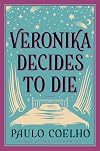
Once again, same post Coelho effect, pure serotonin overload. I won’t lie, it’s not on the exact same level as The Winner Stands Alone, or The Alchemist, but it still holds its own. It’s one of those quietly powerful stories.
The whole thing takes place inside this mental hospital called Villete, and we follow Veronika after she survives a suicide attempt. She’s told she only has a few days left because her heart is damaged, and that deadline kind of flips a switch in her. Suddenly show more she stops caring about playing safe or acting “normal.” She starts doing things she always wanted to do but held back from because she didn’t want people labeling her as crazy. Now she’s literally in a psychiatric hospital, so the label doesn’t matter anymore. There’s something weirdly freeing about that.
Coelho doesn’t really leave you guessing about the message. He spells it out clearly at the end, awareness of death makes us live harder, louder, more honestly. And honestly, he’s right. People change the most when they brush up against mortality. It shocks them awake.
The way I see it, life is like a 3D object. If you keep staring at it from one bad angle, of course it looks meaningless. But when you’re forced to realize it could end, you start turning it around, seeing the full picture. Suddenly the bitterness fades and you just feel this intense attachment to being alive. That reset button energy is exactly what Veronika goes through.
It’s philosophical without being pretentious, emotional without being dramatic. It makes you question things but also leaves you strangely hopeful. Simple story, big impact. show less
The whole thing takes place inside this mental hospital called Villete, and we follow Veronika after she survives a suicide attempt. She’s told she only has a few days left because her heart is damaged, and that deadline kind of flips a switch in her. Suddenly show more she stops caring about playing safe or acting “normal.” She starts doing things she always wanted to do but held back from because she didn’t want people labeling her as crazy. Now she’s literally in a psychiatric hospital, so the label doesn’t matter anymore. There’s something weirdly freeing about that.
Coelho doesn’t really leave you guessing about the message. He spells it out clearly at the end, awareness of death makes us live harder, louder, more honestly. And honestly, he’s right. People change the most when they brush up against mortality. It shocks them awake.
The way I see it, life is like a 3D object. If you keep staring at it from one bad angle, of course it looks meaningless. But when you’re forced to realize it could end, you start turning it around, seeing the full picture. Suddenly the bitterness fades and you just feel this intense attachment to being alive. That reset button energy is exactly what Veronika goes through.
It’s philosophical without being pretentious, emotional without being dramatic. It makes you question things but also leaves you strangely hopeful. Simple story, big impact. show less
What was that? A fairytale for sigmas?
If you're looking to read something profound or spiritual, I would recommend something by Eckhart Tolle. This book has not taught me anything new. And Eckhart Tolle taught way more in 20 pages than he in 200 pages.
Paulo Coelho preaches about things that, to me, are simply part of being human—truths we come to understand naturally through living. Ideas like “Follow your dream, don’t give up!” or “Trust yourself” feel less like profound show more insights and more like clichés.
I even find some of his teachings problematic. Paulo Coelho focuses heavily on achieving one’s goal. But what then? What happens when I’ve “fulfilled my dream”? Isn’t that a recipe for unhappiness—to find the meaning of life in the pursuit of a “Personal Legend”? It might help you accept the moment if you tell yourself you’re doing it for your Personal Legend. But wouldn’t it be more valuable to find happiness independent of external factors? Real contentment? Not just the pursuit of something? Because what then, what if you have finally achieved it? Are you then done?
As other reviewers have pointed out, this book is also somewhat sexist. Men are off on journeys in pursuit of their Personal Legend. A woman in the book is content to wait for her man while he is away on his journey.
I listened to the audiobook on YouTube. It was so bad, I had to check if I’d been scammed and whether it was actually the real book. Lol. show less
If you're looking to read something profound or spiritual, I would recommend something by Eckhart Tolle. This book has not taught me anything new. And Eckhart Tolle taught way more in 20 pages than he in 200 pages.
Paulo Coelho preaches about things that, to me, are simply part of being human—truths we come to understand naturally through living. Ideas like “Follow your dream, don’t give up!” or “Trust yourself” feel less like profound show more insights and more like clichés.
I even find some of his teachings problematic. Paulo Coelho focuses heavily on achieving one’s goal. But what then? What happens when I’ve “fulfilled my dream”? Isn’t that a recipe for unhappiness—to find the meaning of life in the pursuit of a “Personal Legend”? It might help you accept the moment if you tell yourself you’re doing it for your Personal Legend. But wouldn’t it be more valuable to find happiness independent of external factors? Real contentment? Not just the pursuit of something? Because what then, what if you have finally achieved it? Are you then done?
As other reviewers have pointed out, this book is also somewhat sexist. Men are off on journeys in pursuit of their Personal Legend. A woman in the book is content to wait for her man while he is away on his journey.
I listened to the audiobook on YouTube. It was so bad, I had to check if I’d been scammed and whether it was actually the real book. Lol. show less
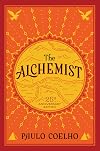
This is a creative, insightful story that mixes in a bit of fairy tale. The book starts off introducing a simple shepherd boy who dreams of treasure buried somewhere in a far-off land. His adventures take him to unexpected places, weaving realism with fantasy. He meets interesting people as his journey presents him with choices and trials faced by most members of the human race. Yet the story allows for events that are indeed magical. The book invites you to ponder deep questions about life, show more agency, and the benefits (or perhaps purpose) of experience. It touches on religious beliefs and universal truths. I very much enjoyed the adventure; it was fun and absorbing. show less
Lists
el (1)
AP Lit (1)
. (1)
Magic Realism (1)
Overdue Podcast (1)
Short and Sweet (1)
Favourite Books (1)
Fave Books (1)
Unread books (1)
BBC Big Read (1)
Cult Classics (1)
Read in 2008 (1)
My TBR (2)
1980s (2)
To Read (2)
Carole's List (1)
psychological (1)
BitLife (1)
Gen X Library (1)
Awards


You May Also Like


Associated Authors
Statistics
- Works
- 231
- Also by
- 10
- Members
- 101,085
- Popularity
- #89
- Rating
- 3.6
- Reviews
- 2,178
- ISBNs
- 2,854
- Languages
- 61
- Favorited
- 242


