
Jostein Gaarder
Author of Sophie's World: A Novel About the History of Philosophy
About the Author
Jostein Gaarder was born in Olso, Norway on August 8, 1952. A former high school philosophy teacher, he now writes numerous novels for children and adults. His best known work is Sophie's World. He has received numerous awards including the Deutscher Jugendliteraturpreis in 1994 for Sophie's World, show more the Buxtehude Bulle in 1997, and the Willy-Brandt-Award in 2004. (Bowker Author Biography) show less
Image credit: Jostein Gaarder Fair on March 24, 2017 in Leipzig, Germany
Works by Jostein Gaarder
Sophie's World: A Novel About the History of Philosophy (1991) — Author — 20,848 copies, 318 reviews
Sophie's World: A Graphic Novel About the History of Philosophy Vol I: From Socrates to Galileo (2022) 44 copies, 3 reviews
BOTA SIPAS ANËS 1 copy
Ei ! Tem alguém aí? 1 copy
Sophie’s World Vol. 1: A Graphic Novel About the History of Philosophy: From Socrates to Galileo (True Stories - SelfMadeHero) (2022) 1 copy
El mundo de Sofía. Novela sobre la historia de la filosofía. Traducción de Mª Asunción Lorenzo Torres y Kirsti Baggethun. (1995) 1 copy
The Magic Library 1 copy
1998 1 copy
Tagged
Common Knowledge
- Canonical name
- Gaarder, Jostein
- Legal name
- Gaarder, Jostein
- Birthdate
- 1952-08-08
- Gender
- male
- Education
- Oslo Katerdralskole
University of Oslo (1976) - Occupations
- teacher
writer - Organizations
- founder of the Sophie Prize (1997)
- Awards and honors
- Willy Brandt Award (2004)
Brage Prize (Honorary Award ∙ 2002)
Deutscher Jugendliteraturpreis (1994)
Buxtehude Bulle (1997)
Peer Gynt Prize (1996)
Commander, The Royal Norwegian Order of St. Olav (2005) - Agent
- Aschehoug Agency
- Relationships
- Dannevig, Siri (wife)
- Nationality
- Norway
- Birthplace
- Oslo, Norway
- Places of residence
- Oslo, Norway (birth)
Bergen, Norway - Associated Place (for map)
- Norway
Members
Reviews

Have you ever heard me say "Man! Philosophy is boring!" Well, if you have, I'm scared, because either you've met my evil twin, or you're stalking me when I'm in a particularly sarcastic mood.
Whichever the reason, please cease your activities as soon as possible.
If you, though, have ever uttered that phrase, I suggest you stop immediately before you pick up House and Philosophy, or even Popular Philosophy and Philosophy, and instead get Sophie's World.
When you read philosophical texts that show more appeal to the masses, you're usually going to get something watered down and easy for you to digest. Sophie's World, however, it a little different. It combines a story with philosophical teachings, and actually makes it more interesting than other authors who try to write philosophical novels and end up writing a 1000 page tome about relative objectivism and how we need to let capitalism run unhindered and how we need a gold standard and how we need less government interference, and well, a 1000 page book is pretty intimidating. Sophie's Wold is about half that size, and takes you on a journey through the ages of philosophy, showing how it influenced things like science and religion, and vice versa.
Sophie's a girl who mysteriously receives letters featuring philosophy lessons. Each day, the mysterious stranger introduces her to a new page in the annals of philosophy, and later that day, she sees it somehow applied in her every day life.
There is a layer of metafiction in this story, and if you know me, you know I love metafiction (if you thought you knew me, and knew that I hated it, you're dealing with my evil twin. Try to break that connection without letting him know you're on to him. He's pretty crafty).
Nevertheless, if you love philosophy, or want to start loving it but just can't wrap your mind around Atlas Shrugged or Republic, then the best place to start is in Sophie's world. Recommended for all fans and wannabe fans of philosophy (and metafiction). show less
Whichever the reason, please cease your activities as soon as possible.
If you, though, have ever uttered that phrase, I suggest you stop immediately before you pick up House and Philosophy, or even Popular Philosophy and Philosophy, and instead get Sophie's World.
When you read philosophical texts that show more appeal to the masses, you're usually going to get something watered down and easy for you to digest. Sophie's World, however, it a little different. It combines a story with philosophical teachings, and actually makes it more interesting than other authors who try to write philosophical novels and end up writing a 1000 page tome about relative objectivism and how we need to let capitalism run unhindered and how we need a gold standard and how we need less government interference, and well, a 1000 page book is pretty intimidating. Sophie's Wold is about half that size, and takes you on a journey through the ages of philosophy, showing how it influenced things like science and religion, and vice versa.
Sophie's a girl who mysteriously receives letters featuring philosophy lessons. Each day, the mysterious stranger introduces her to a new page in the annals of philosophy, and later that day, she sees it somehow applied in her every day life.
There is a layer of metafiction in this story, and if you know me, you know I love metafiction (if you thought you knew me, and knew that I hated it, you're dealing with my evil twin. Try to break that connection without letting him know you're on to him. He's pretty crafty).
Nevertheless, if you love philosophy, or want to start loving it but just can't wrap your mind around Atlas Shrugged or Republic, then the best place to start is in Sophie's world. Recommended for all fans and wannabe fans of philosophy (and metafiction). show less
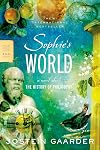
I've actually only read one other book like this in my life. _Ishmael_ by Daniel Quinn. As a textbook of philosophy, this is a work that would easily satisfy any course of Philosophy 101 in college. Gaarder takes the river of thought from the beginning of human thought to almost the present day (as present day thought is not easily seen through the minds of historians) in a flowing narrative of examples, reality-bending tricks, and metaphor.
As a novel, the characters are vividly constructed, show more and while the reality of the situation is odd, at best, the realization that it's "just a book" plays wonderfully into the ideas of Berekly in that, reality, and the world as a whole is "just a dream." The interplay of book and reality, of book being reality, and the "Neverending Story" effect of stories and realities within realities, makes the book one to be read multiple times. As indeed, the facts and ideas in this book cannot be understood in just one reading. It is a book that investigates the totality of life, and finding more questions than answers, cannot help but leave, at the end, you wondering about reality itself. show less
As a novel, the characters are vividly constructed, show more and while the reality of the situation is odd, at best, the realization that it's "just a book" plays wonderfully into the ideas of Berekly in that, reality, and the world as a whole is "just a dream." The interplay of book and reality, of book being reality, and the "Neverending Story" effect of stories and realities within realities, makes the book one to be read multiple times. As indeed, the facts and ideas in this book cannot be understood in just one reading. It is a book that investigates the totality of life, and finding more questions than answers, cannot help but leave, at the end, you wondering about reality itself. show less
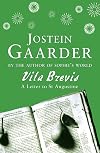
Letto più e più volte, è a mio parere il capolavoro di Gaarder, pieno di sensibilità e di partecipazione, e di segreta, teologica rabbia nei confronti di una chiesa che dai tempi di Agostino è convinta che le donne siano solo un impiccio sulla strada della salvezza degli uomini, al punto di far dire alla sua Floria Emilia "Non credo in un dio che, per salvare l'anima di un uomo, costringe una donna a sprecare la propria vita"

"Where does the world come from?," the interrogative narrator of this thoughtful Norwegian picture-book asks, going on to pose a long string of similar questions about the nature of the world and universe, our role in it as human beings, and our relationship to those around us, and to those no longer with us. The nature of time, the possible existence of angels and/or ghosts, the question of what the world will look like in the distant future, these are all among the 'questions show more asked.'
Originally published in Norway as Det spørs, this thoughtful little book comes from the pen of Josten Gaarder, author of the acclaimed philosophical novel, Sophie's World. Like that earlier work for older readers, in Questions Asked Gaardner is interested in the big issues, and his young narrator raises many questions that philosophers have struggled with for millennia. The accompanying artwork by Turkish-Norwegian illustrator Akin Düzakin is absolutely beautiful, expanding the textual narrative (which is, after all, simply a set of questions) into a real story, as it quickly becomes evident that the young narrator is struggling with some sort of loss. The artwork hints, through its depictions of the boy's memories of playing with a companion (most likely, a twin brother), and then his solitary journey with a box of treasured mementos, a journey in which he is followed by some sort of spirit, that the narrator is being prompted to ask these questions by the death of someone very close to him. That added level of meaning gives the book extra poignancy. Recommended to anyone looking for children's books to start a philosophical and/or theological conversation with young people, or for picture-books that address (albeit indirectly) death and loss. show less
Originally published in Norway as Det spørs, this thoughtful little book comes from the pen of Josten Gaarder, author of the acclaimed philosophical novel, Sophie's World. Like that earlier work for older readers, in Questions Asked Gaardner is interested in the big issues, and his young narrator raises many questions that philosophers have struggled with for millennia. The accompanying artwork by Turkish-Norwegian illustrator Akin Düzakin is absolutely beautiful, expanding the textual narrative (which is, after all, simply a set of questions) into a real story, as it quickly becomes evident that the young narrator is struggling with some sort of loss. The artwork hints, through its depictions of the boy's memories of playing with a companion (most likely, a twin brother), and then his solitary journey with a box of treasured mementos, a journey in which he is followed by some sort of spirit, that the narrator is being prompted to ask these questions by the death of someone very close to him. That added level of meaning gives the book extra poignancy. Recommended to anyone looking for children's books to start a philosophical and/or theological conversation with young people, or for picture-books that address (albeit indirectly) death and loss. show less
Lists
Metafiction (1)
Books I've read (1)
Didactic Fiction (1)
el (1)
Christmas Books (1)
Epistolary Books (1)
Lista d1 (1)
1990s (1)
Nineties (1)
Favourite Books (1)
Unread books (1)
BBC Big Read (1)
Ambleside Books (1)
Formative books (1)
READ 2025 (1)
Magic Realism (1)
2024 Reads (1)
Awards


You May Also Like


Associated Authors
Statistics
- Works
- 49
- Members
- 33,066
- Popularity
- #583
- Rating
- 3.7
- Reviews
- 553
- ISBNs
- 938
- Languages
- 46
- Favorited
- 94


