
Donald Horne (1921–2005)
Author of The Lucky Country
About the Author
Works by Donald Horne
Associated Works
Tagged
Common Knowledge
- Birthdate
- 1921-12-26
- Date of death
- 2005-09-08
- Gender
- male
- Education
- University of Sydney
- Occupations
- journalist
writer
social critic
Professor of Political Science, University of New South Wales
Chancellor, University of Canberra (1992-1995) - Awards and honors
- Australian Living Treasure
- Nationality
- Australia
- Birthplace
- Kogarah, New South Wales, Australia
- Places of residence
- Sydney, New South Wales, Australia
Muswellbrook, New South Wales, Australia - Associated Place (for map)
- New South Wales, Australia
Members
Reviews

Terrible subject, terrific book.When Donald Horne knew he was dying of progressive lung disease he decided to keep a journal of his dying, as well as putting together a number of essays on things he wanted to say about cultural matters before he could no longer write. This book is the result, with the addition of an essay by his long-term companion, wife, editor, lover and friend, Myfanwy Horne narrating the time leading up to his death and shortly afterwards. I litened to it on a car trip, show more which ended halfway through Myfanwy's account of teh funeral, so I haven't heard any of the cultural essays. I intend to get hold of the book and read the rest, because what I did hear was miraculous. In particular the last paragraphs of Donald's narrative is stunning. show less
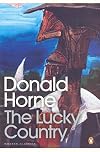
"The lucky country" is a phrase any Australian is familiar with, one often applied with beaming happiness to things like Vegemite advertisements or Australia Day speeches. Yet few Australians would be able to quote the sentence it originally appeared in: "Australia is a lucky country, run mainly by second-rate people who share its luck."
Donald Horne wrote The Lucky Country in the early 1960s as a stark assessment of a nation he felt had lost its way. Australia possessed fabulous natural show more resources and enjoyed one of the highest standards of living in the world; yet, unlike other advanced nations, he felt it had done little to earn its success. It rested on its luck and was unimaginative, uninspired and unexceptional. It was almost a dependency, looking to Britain and the United States to tell it what to do and unable to shake the feeling that it was an unimportant backwater, albeit a pleasant one. It reminded me of an assessment by Ted Simon in Jupiter's Travels, when he visited Australia in the early 1970s:
Like most people everywhere they spent most of their time just getting by, but there was no collective dream or mythology that told them what it was they were supposed to be doing.
Now, The Lucky Country was written half a century ago and much of it is irrelevant today - the influence of the Australian Communist Party, the White Australia Policy, and the tension between Catholics and Protestants, to name a few things. But a larger portion of the book is surprisingly relevant.
The most striking thing to a modern reader is how little has changed. Horne knew Australia was at a tipping point in the 1960s, like much of the world, and that if it was ever going to seize its own destiny, that was the time. And indeed, the 1970s saw the election of Gough Whitlam, a prime minister who stood up to Washington, engaged with Asia, introduced universal healthcare and began the process of recognising Aboriginal land rights. But he was dismissed after only a few short years, and Australia sank back into a swamp of lazy complacency. And now here we are in 2012: still not a republic, still looking to America and Europe for guidance in cultural, political and economic matters, and still relying entirely on our natural resources to maintain our economy. Australia was renowned in 2008 for being the only OECD country which did not enter recession, but virtually the only reason this was so was because our economy is centred around selling ore to China. How lucky.
And our current leaders hardly inspire confidence - indeed, Julia Gillard and Tony Abbott regularly poll less than 40% as preferred prime ministers, among the lowest ratings of all time. Say what you will about John Howard and Kevin Rudd, but they were both titanic figures who led with vision (my vision of hell, in the case of Howard, but vision nonetheless) and imposed themselves mightily upon the Australian psyche. Gillard and Abbott, on the other hand, feel like understudies thrust into the spotlight. They might make able politicians, but in the grand narrative of history, they will never go down as great leaders.
So the Australia of today is strikingly similar to the Australia of The Lucky Country. It reminded me of what Nick Bryant, the BBC's Sydney correspondent for many years, wrote upon leaving the job in 2011:
The anger and hostility [in Australian politics] is currently being compared with the mood in 1975 during the Gough Whitlam dismissal crisis. But it also has a late-60s feel - a post-Menzies, pre-Whitlam interlude when the country appeared to be treading water, and waiting for something to happen.
The curious thing when reading The Lucky Country is that Horne seemed to be optimistic, to believe that change really was around the corner, that the next generation - John Howard's generation - would prove to be far less stagnant and conservative than their predecessors and lead Australia into a bold new future. (He seemed particularly convinced that a republic would happen any year now.) That didn't happen. And while I myself am optimistic that Australia might grow up a little in the coming decades, in an era of global connectivity and an emerging Asia and a rising Green Party, I can't help but feel that perhaps we'll just see a repeat of the last 50 years.
The question is whether this time our luck will run out. show less
Donald Horne wrote The Lucky Country in the early 1960s as a stark assessment of a nation he felt had lost its way. Australia possessed fabulous natural show more resources and enjoyed one of the highest standards of living in the world; yet, unlike other advanced nations, he felt it had done little to earn its success. It rested on its luck and was unimaginative, uninspired and unexceptional. It was almost a dependency, looking to Britain and the United States to tell it what to do and unable to shake the feeling that it was an unimportant backwater, albeit a pleasant one. It reminded me of an assessment by Ted Simon in Jupiter's Travels, when he visited Australia in the early 1970s:
Like most people everywhere they spent most of their time just getting by, but there was no collective dream or mythology that told them what it was they were supposed to be doing.
Now, The Lucky Country was written half a century ago and much of it is irrelevant today - the influence of the Australian Communist Party, the White Australia Policy, and the tension between Catholics and Protestants, to name a few things. But a larger portion of the book is surprisingly relevant.
The most striking thing to a modern reader is how little has changed. Horne knew Australia was at a tipping point in the 1960s, like much of the world, and that if it was ever going to seize its own destiny, that was the time. And indeed, the 1970s saw the election of Gough Whitlam, a prime minister who stood up to Washington, engaged with Asia, introduced universal healthcare and began the process of recognising Aboriginal land rights. But he was dismissed after only a few short years, and Australia sank back into a swamp of lazy complacency. And now here we are in 2012: still not a republic, still looking to America and Europe for guidance in cultural, political and economic matters, and still relying entirely on our natural resources to maintain our economy. Australia was renowned in 2008 for being the only OECD country which did not enter recession, but virtually the only reason this was so was because our economy is centred around selling ore to China. How lucky.
And our current leaders hardly inspire confidence - indeed, Julia Gillard and Tony Abbott regularly poll less than 40% as preferred prime ministers, among the lowest ratings of all time. Say what you will about John Howard and Kevin Rudd, but they were both titanic figures who led with vision (my vision of hell, in the case of Howard, but vision nonetheless) and imposed themselves mightily upon the Australian psyche. Gillard and Abbott, on the other hand, feel like understudies thrust into the spotlight. They might make able politicians, but in the grand narrative of history, they will never go down as great leaders.
So the Australia of today is strikingly similar to the Australia of The Lucky Country. It reminded me of what Nick Bryant, the BBC's Sydney correspondent for many years, wrote upon leaving the job in 2011:
The anger and hostility [in Australian politics] is currently being compared with the mood in 1975 during the Gough Whitlam dismissal crisis. But it also has a late-60s feel - a post-Menzies, pre-Whitlam interlude when the country appeared to be treading water, and waiting for something to happen.
The curious thing when reading The Lucky Country is that Horne seemed to be optimistic, to believe that change really was around the corner, that the next generation - John Howard's generation - would prove to be far less stagnant and conservative than their predecessors and lead Australia into a bold new future. (He seemed particularly convinced that a republic would happen any year now.) That didn't happen. And while I myself am optimistic that Australia might grow up a little in the coming decades, in an era of global connectivity and an emerging Asia and a rising Green Party, I can't help but feel that perhaps we'll just see a repeat of the last 50 years.
The question is whether this time our luck will run out. show less
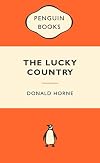
This book is as old to me as the federation of Australia was when it was written. It is a myth that the phrase comes from this book, he doesn't really mention the luckiness of the country at all but there is lot of other juicy shit to sink your greedy teeth into, guy knew what was going on mostly. Whole Menzies chunk is pretty boring like the man himself. I never knew how the Labor party functioned internally before this, still dont really understand the Liberzzzzz... there are dense slogs show more throughout, it took me 2 months to read the last 2 pages. show less
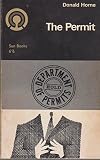
Everyone my age knows the name of the Australian journalist, writer, and public intellectual Donald Horne AO (1921-2005) because everyone my age has either read The Lucky Country (1964), or heard everyone else talk about it so much that they thought they didn't need to read it themselves. Indeed, the title of that book went into the vernacular where it is misused all the time to signify what a beaut country Australia is. Misused because, as the blurb at Goodreads tells anyone who looks it show more up:
Ouch. But true. It was still mostly true when I read it in my young adulthood, even after three years of a progressive government in 1975. Greg at Goodreads thinks it was still true in 2015 and in comments we can see that a reader called Terry Wang thought so too in 2021 ... but I think that's a bit harsh... though you do have to wonder a bit about an electorate that ...
Let's not get sidetracked.
Most people, however, do not know that Horne also ventured into writing fiction. There is probably a good reason for this. As always I am open to correction, but I suspect that his sole venture into the novel, The Permit, which was published in 1965 by the independent publishing company Sun Books, sank like a stone into oblivion. Because, alas, it isn't very good at all. It's derivative, tedious and predictable.
Five or ten pages into 'Monday', the first chapter of this ponderous satire, and a reader will recognise its origins in Franz Kafka's posthumously published The Castle (1926, Das Schloss). With chapter headings named by the days of the week, the reader of The Permit will find by the heavy-handed end of 'Tuesday' that actually, it would be better to re-read The Castle.
And that's what I did. I'd already read The Castle round about 1982, probably as a set text for my BA, but I had a Naxos audio book, narrated brilliantly by Allan Corduner, and translated by David Whiting, and it was a fresh and refreshing experience to revisit this classic of absurdism.
As you can see at Wikipedia, The Castle:
Bureaucrats and politicians have always been cheap targets, but at least Kafka's absurdism is entertaining. K arrives in a village to take up a position as a land surveyor, but it turns out that there has been a mix-up and there is no position. To sort this out, he embarks on a quest to meet with a bureaucrat called Klamm but he soon discovers that the village is so intimidated by the authority of the Castle, that his efforts are considered highly problematic and he gets himself into all sorts of bother. Not least when he decides to marry Frieda so that he overcomes the problem of not having a residency permit. To get accommodation he has to take up work as a cleaner. Although the reader knows that nothing K can do is going to resolve his problem, nothing in the novel is predictable, and much of the absurdism seems perfectly real.
Horne's The Permit, however, plods through his scenario with weighted boots.
To read the rest of my review please visit https://anzlitlovers.com/2023/04/26/the-permit-1965-by-donald-horne-and-a-nod-to... show less
Horne took Australian society to task for its philistinism, provincialism and dependence. The book was a wake-up call to an unimaginative nation, an indictment of a country mired in mediocrity and manacled to its past.
Ouch. But true. It was still mostly true when I read it in my young adulthood, even after three years of a progressive government in 1975. Greg at Goodreads thinks it was still true in 2015 and in comments we can see that a reader called Terry Wang thought so too in 2021 ... but I think that's a bit harsh... though you do have to wonder a bit about an electorate that ...
Let's not get sidetracked.
Most people, however, do not know that Horne also ventured into writing fiction. There is probably a good reason for this. As always I am open to correction, but I suspect that his sole venture into the novel, The Permit, which was published in 1965 by the independent publishing company Sun Books, sank like a stone into oblivion. Because, alas, it isn't very good at all. It's derivative, tedious and predictable.
Five or ten pages into 'Monday', the first chapter of this ponderous satire, and a reader will recognise its origins in Franz Kafka's posthumously published The Castle (1926, Das Schloss). With chapter headings named by the days of the week, the reader of The Permit will find by the heavy-handed end of 'Tuesday' that actually, it would be better to re-read The Castle.
And that's what I did. I'd already read The Castle round about 1982, probably as a set text for my BA, but I had a Naxos audio book, narrated brilliantly by Allan Corduner, and translated by David Whiting, and it was a fresh and refreshing experience to revisit this classic of absurdism.
As you can see at Wikipedia, The Castle:
Dark and at times surreal, The Castle is often understood to be about alienation, unresponsive bureaucracy, the frustration of trying to conduct business with non-transparent, seemingly arbitrary controlling systems, and the futile pursuit of an unobtainable goal.
Bureaucrats and politicians have always been cheap targets, but at least Kafka's absurdism is entertaining. K arrives in a village to take up a position as a land surveyor, but it turns out that there has been a mix-up and there is no position. To sort this out, he embarks on a quest to meet with a bureaucrat called Klamm but he soon discovers that the village is so intimidated by the authority of the Castle, that his efforts are considered highly problematic and he gets himself into all sorts of bother. Not least when he decides to marry Frieda so that he overcomes the problem of not having a residency permit. To get accommodation he has to take up work as a cleaner. Although the reader knows that nothing K can do is going to resolve his problem, nothing in the novel is predictable, and much of the absurdism seems perfectly real.
Horne's The Permit, however, plods through his scenario with weighted boots.
To read the rest of my review please visit https://anzlitlovers.com/2023/04/26/the-permit-1965-by-donald-horne-and-a-nod-to... show less
Lists
Awards


You May Also Like


Associated Authors
Statistics
- Works
- 46
- Also by
- 2
- Members
- 759
- Popularity
- #33,503
- Rating
- 3.3
- Reviews
- 12
- ISBNs
- 61
- Languages
- 1