
Lan Cao (1) (1961–)
Author of Monkey Bridge
For other authors named Lan Cao, see the disambiguation page.
About the Author
Image credit: from Chapman University faculty page
Works by Lan Cao
Associated Works
Watermark: Vietnamese American Poetry and Prose (Asian American Writers Worksh) (1998) — Contributor — 22 copies
Tagged
Common Knowledge
- Birthdate
- 1961
- Gender
- female
- Education
- Mount Holyoke College
Yale Law School (JD) - Occupations
- Law Professor, Chapman University School of Law
- Nationality
- USA
- Birthplace
- Saigon, Vietnam
- Places of residence
- Cholon, Vietnam
- Associated Place (for map)
- Vietnam
Members
Reviews
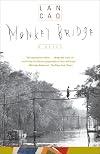
It is always impressive when one can write about the effects of war without succumbing to the tendency to depict gruesome battle scenes and heroic acts of valor and sacrifice. In most of the novels I have read about the Vietnam War, soldiers are forced to commit acts of atrocity and many of the characters eventually become unhinged and alienated from society after returning home. Monkey Bridge takes a different look at the effects of war—the attempt to reinterpret the truth of what show more happened into a narrative that one can live with peaceably. Cao reminds us that after something as traumatic as a war, people must come to grips with what has transpired and integrate it into their postwar experience as smoothly as possible. She also details the experience of postwar dispossession, the intergenerational culture gap that occurs between parents and children in immigrant families, as well as the power of reinforced collective cultural memory among immigrant communities in the United States.
While at first I was not drawn into the narrative of the postwar Vietnamese refugee experience, I became more interested once it appeared that the main character’s mother was attempting to recreate her past and establish a new identity for herself. By the end of the novel, I felt an empathy for both the main character and her mother as the truth was finally revealed after years of family stories that glorified past actions and deeds, many of them false or misleading.
Cao carefully delivers her narrative in a manner that allows the reader to perceive the subtleties of the American immigrant experience. For Mai’s mother, America is a place wholly unfamiliar and suspect. In order to navigate this new cultural milieu, Vietnamese immigrants created a “Little Saigon,” a community of refugees to reinforce cultural connections with their homeland and help one another adapt to their new life in the United States. Mai has chosen to adopt the American Dream and integrate as fully into American society as possible, but Cao illustrates the difficulty that many immigrants have in gaining unfettered access to mainstream American society. Often times, foreign born nationals are reminded of their racial or cultural otherness by native born Americans. Issues of identity become confounded for second generation immigrants when they are pulled between the cultural values of their families and the culture they experience in their day to day life outside of the home. The main argument seems to be that the modern American immigrant must alter or customize their cultural values and historical memory in order to fully integrate into American society. While many of these issues are handled within the context of Vietnamese immigrants in the late 1970s, I think that Cao’s understanding of how many people negotiate their understanding of the past can be expanded to look at many historical movements within and outside of the United States.
The mother in Cao’s novel experiences a sense of cognitive dissonance between her nostalgia for the traditional cultural ways of her little South Vietnamese farming village and its violent and disreputable history. In her mother’s final letter to her before committing suicide, Mai reads the truth of her grandfather, his relationship with the Vietcong, and her mother’s desire to change the past. In one lengthy passage towards the end of this letter, she admits that she still carries the burden of her past in spite of attempting to leave Mai with a “different course” that might have been possible. The burn on her face is a reminder of this burden and the fact that her father’s actions cannot be undone or reconciled. She explains that “karma is exactly like this, a continuing presence that is as ongoing as Baba Quan’s obsession, as indivisible as our notion of time itself. Our reality, you see, is a simultaneous past, present, and future." The past as an indivisible ongoing obsession was quite poetic and powerful to me. Any culture scarred by a past both sordid and sublime may be able to relate to the tendency to battle history daily as it tries to move forward and backwards at the same time. Reconciliation with a tarnished past doesn’t seem possible without acknowledgement, something that both individuals and societies must do if they intend to move forward. In a karmic version of things, the past “rips through one generation and tears apart the next." show less
While at first I was not drawn into the narrative of the postwar Vietnamese refugee experience, I became more interested once it appeared that the main character’s mother was attempting to recreate her past and establish a new identity for herself. By the end of the novel, I felt an empathy for both the main character and her mother as the truth was finally revealed after years of family stories that glorified past actions and deeds, many of them false or misleading.
Cao carefully delivers her narrative in a manner that allows the reader to perceive the subtleties of the American immigrant experience. For Mai’s mother, America is a place wholly unfamiliar and suspect. In order to navigate this new cultural milieu, Vietnamese immigrants created a “Little Saigon,” a community of refugees to reinforce cultural connections with their homeland and help one another adapt to their new life in the United States. Mai has chosen to adopt the American Dream and integrate as fully into American society as possible, but Cao illustrates the difficulty that many immigrants have in gaining unfettered access to mainstream American society. Often times, foreign born nationals are reminded of their racial or cultural otherness by native born Americans. Issues of identity become confounded for second generation immigrants when they are pulled between the cultural values of their families and the culture they experience in their day to day life outside of the home. The main argument seems to be that the modern American immigrant must alter or customize their cultural values and historical memory in order to fully integrate into American society. While many of these issues are handled within the context of Vietnamese immigrants in the late 1970s, I think that Cao’s understanding of how many people negotiate their understanding of the past can be expanded to look at many historical movements within and outside of the United States.
The mother in Cao’s novel experiences a sense of cognitive dissonance between her nostalgia for the traditional cultural ways of her little South Vietnamese farming village and its violent and disreputable history. In her mother’s final letter to her before committing suicide, Mai reads the truth of her grandfather, his relationship with the Vietcong, and her mother’s desire to change the past. In one lengthy passage towards the end of this letter, she admits that she still carries the burden of her past in spite of attempting to leave Mai with a “different course” that might have been possible. The burn on her face is a reminder of this burden and the fact that her father’s actions cannot be undone or reconciled. She explains that “karma is exactly like this, a continuing presence that is as ongoing as Baba Quan’s obsession, as indivisible as our notion of time itself. Our reality, you see, is a simultaneous past, present, and future." The past as an indivisible ongoing obsession was quite poetic and powerful to me. Any culture scarred by a past both sordid and sublime may be able to relate to the tendency to battle history daily as it tries to move forward and backwards at the same time. Reconciliation with a tarnished past doesn’t seem possible without acknowledgement, something that both individuals and societies must do if they intend to move forward. In a karmic version of things, the past “rips through one generation and tears apart the next." show less
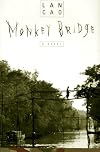
A monkey bridge is a perilous and precarious Vietnamese rope bridge that requires a very delicate balancing act to cross. Mai, the Vietnamese immigrant main character of Lan Cao’s heartbreaking novel has to cross a metaphorical monkey bridge as she simultaneously balances her new life in the United States with her efforts to hold on to her Vietnamese roots and history. Her attempts are complicated even more because the novel’s action takes place in the mid to late 1970’s – a time show more when the U.S. was trying hard to forget its involvement in an unpopular war in that country.
Mai, who came to the U.S. through the benevolence of an American soldier her family befriended, is joined by her mother, Thanh after the fall of Saigon. Her mother has a difficult time adjusting and is dependent on Mai to negotiate and interpret a completely alien culture and lifestyle. When Thanh falls ill, Mai tries to locate her grandfather, Thanh’s father, who was left behind in Vietnam. Mai hopes that his presence will provide comfort for Thanh so that Mai can leave her mother with a support system when she goes away to college.
Immigrant novels abound, but what makes this story unique is the fact that the Vietnam War was so unpopular that once it ended, Americans tried hard to forget it. Unwanted reminders of the war (such as Vietnam vets and Vietnamese refugees) were inconvenient truths who were ignored at best and more typically abandoned. As a result, Thanh makes efforts to present a carefully constructed version of her personal history to her daughter; a history that in the end, she cannot sustain.
It is noteworthy that both mother and daughter have two sets of fathers, each of whom symbolize a distinct and tragic segment of Vietnamese history. Their stories are the story of 20th Century Vietnam.
Cao’s writing is beautiful and successfully blends both ancient Vietnamese mythology and culture with American pop culture.
The author describes the physical shape of Vietnam as a seahorse. Interestingly, she uses that same word to describe Mai’s mother. Mai’s mother is the embodiment of the land and her complicated family history is the history of the country. Balancing past and present, Mai has to navigate her own perilous monkey bridge - an act that requires that she hold on to both her Vietnamese heritage and the new life she is making in the United States. show less
Mai, who came to the U.S. through the benevolence of an American soldier her family befriended, is joined by her mother, Thanh after the fall of Saigon. Her mother has a difficult time adjusting and is dependent on Mai to negotiate and interpret a completely alien culture and lifestyle. When Thanh falls ill, Mai tries to locate her grandfather, Thanh’s father, who was left behind in Vietnam. Mai hopes that his presence will provide comfort for Thanh so that Mai can leave her mother with a support system when she goes away to college.
Immigrant novels abound, but what makes this story unique is the fact that the Vietnam War was so unpopular that once it ended, Americans tried hard to forget it. Unwanted reminders of the war (such as Vietnam vets and Vietnamese refugees) were inconvenient truths who were ignored at best and more typically abandoned. As a result, Thanh makes efforts to present a carefully constructed version of her personal history to her daughter; a history that in the end, she cannot sustain.
It is noteworthy that both mother and daughter have two sets of fathers, each of whom symbolize a distinct and tragic segment of Vietnamese history. Their stories are the story of 20th Century Vietnam.
Cao’s writing is beautiful and successfully blends both ancient Vietnamese mythology and culture with American pop culture.
The author describes the physical shape of Vietnam as a seahorse. Interestingly, she uses that same word to describe Mai’s mother. Mai’s mother is the embodiment of the land and her complicated family history is the history of the country. Balancing past and present, Mai has to navigate her own perilous monkey bridge - an act that requires that she hold on to both her Vietnamese heritage and the new life she is making in the United States. show less
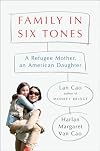
I liked the duo voices of this memoir. In this way, I was able to connect to both Lan and Harlan equally. In addition, there was that strong emotional connection to them as I got to "experience" from each of their different view points.
Although, I was adopted, I was a baby so can't really relate. However, in a way I could as I could imagine I would feel the same way if I had been older when I came over to America. Yet, I did experience some of the racism when I was a young girl. My eyes show more were made fun of and the kids were mean to me. I am lucky that it was not as bad in my times and that the internet was not big either.
The struggle that Lan felt where Harlan was considered was understandable. She did not want to forget her Vietnamese heritage but at the same time wanted her daughter to be American as well. This was her ying and yang. So reading these parts of Lan's voice and then Harlan's was lovely. Anyone who is a refugee can relate to Lan's story. show less
Although, I was adopted, I was a baby so can't really relate. However, in a way I could as I could imagine I would feel the same way if I had been older when I came over to America. Yet, I did experience some of the racism when I was a young girl. My eyes show more were made fun of and the kids were mean to me. I am lucky that it was not as bad in my times and that the internet was not big either.
The struggle that Lan felt where Harlan was considered was understandable. She did not want to forget her Vietnamese heritage but at the same time wanted her daughter to be American as well. This was her ying and yang. So reading these parts of Lan's voice and then Harlan's was lovely. Anyone who is a refugee can relate to Lan's story. show less
An uneven first novel that is by turns compelling and awkward, Monkey Bridge might best be appreciated as a compendium of the ways that post-traumatic stress disorder is experienced and enacted. The voice of the protagonist, a teen who fled Vietnam just before the fall of Saigon, is believable. Since the novel has been described as semi-autobiographical, I would expect this to be the case. The mother's voice in the novel's real time also works; her poetic, literary voice as depicted in her show more writings rings false, and not just for reasons that make sense within the narrative. Unfortunately, this voice keeps sliding into what reads like an imitation of the mother in Amy Tan's The Joy Luck Club. Still, if these awkward passages can be put aside, the novel does an excellent job of depicting the immigrant/refugee experience from a young adult's perspective, the tensions that arise almost immediately between generations of immigrants, and the forces that seem to compel the romantic reconstruction of one's country of origin. show less
Lists
AP Lit (1)
Awards


You May Also Like


Associated Authors
Statistics
- Works
- 4
- Also by
- 3
- Members
- 463
- Popularity
- #53,108
- Rating
- 3.7
- Reviews
- 17
- ISBNs
- 15