
Staughton Lynd (1929–2022)
Author of Wobblies and Zapatistas: Conversations on Anarchism, Marxism and Radical History
About the Author
Staughton Lynd received a BA from Harvard, an MA and PhD from Columbia and a JD from the University of Chicago. He taught American history at Spelman College in Atlanta, where one of his students was the future Pulitzer Prize-winning novelist Alice Walker, and at Yale University. Staughton served show more as director of Freedom Schools in the Mississippi Summer Project of 1964. He has written or editor numerous books, including Rank and File: Personal Histories by Working-Class Organizer, ed. Alice and Staughton Lynd, expanded ed (Haymarket Books, 2011). show less
Image credit: Staughton Lynd (1929- )
courtesy of ZNet
Works by Staughton Lynd
Wobblies and Zapatistas: Conversations on Anarchism, Marxism and Radical History (2008) 204 copies, 2 reviews
Labor Law for the Rank & Filer: Building Solidarity While Staying Clear of the Law (1978) 119 copies, 2 reviews
Doing History from the Bottom Up: On E.P. Thompson, Howard Zinn, and Rebuilding the Labor Movement from Below (2014) 45 copies
Associated Works
New Forms of Worker Organization: The Syndicalist and Autonomist Restoration of Class-Struggle Unionism (2014) — Foreword — 33 copies
We Accuse: A Powerful Statement of the New Political Anger in America (1965) — Contributor — 8 copies
Labor History, Vol. 5 No. 3, Fall 1964 — Contributor — 1 copy
Tagged
Common Knowledge
- Legal name
- Lynd, Staughton Craig
- Birthdate
- 1929-11-22
- Date of death
- 2022-11-17
- Gender
- male
- Education
- Harvard University (BA)
Columbia University (MA & PhD)
University of Chicago Law School (JD) - Occupations
- civil rights activist
historian
professor
author
lawyer - Organizations
- Spelman College
Yale University
Northeast Ohio Legal Services - Relationships
- Lynd, Alice (wife)
Lynd, Helen Merrell (mother)
Lynd, Robert Staughton (father) - Nationality
- USA
- Birthplace
- Philadelphia, Pennsylvania, USA
- Places of residence
- Philadelphia, Pennsylvania, USA
Atlanta, Georgia, USA
New Haven, Connecticut, USA
Chicago, Illinois, USA
Youngstown, Ohio, USA - Place of death
- Warren, Ohio, USA
- Associated Place (for map)
- USA
Members
Reviews
Labor Law for the Rank and Filer: Building Solidarity While Staying Clear of the Law (PM Press) by Staughton Lynd
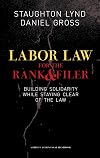
Reviewed by Ernesto Aguilar
Romantic though it seems, the life of labor organizers and unions is messy. Most everyone is familiar with the firings for union organizing from which many a motion picture has borrowed from as grist. But such high drama can easily be avoided by bosses who understand the law and manipulate missteps to their advantage. No doubt corporate attorneys are able to advise their clients to thwart organizing while staying within guidelines. And then there are confused show more organizers who do not grasp the subtleties of labor issues, let alone their own rights, which can further damage the process. With such forces at play, it is a wonder labor organizing happens at all. Enter Labor Law for the Rank and Filer: Building Solidarity While Staying Clear of the Law by Staughton Lynd and Daniel Gross, an essential book for anyone interested in worker activism and doing so in a way that stays unruly while protecting employees.
There is plenty for those interested in labor organizing to be excited about. Lynd and Gross explain the most recent body of law in an easy to understand way. Practical wisdom beyond the law books abounds here as well. In some cases, that practicality is a cold glass of water to the face in terms of reminders. Lawyers and judges are not necessarily (and not historically) friends of labor, the authors caution, and though it is tempting to scuttle mediation, shop stewards and other means, non-litigious methods often serve workers better. They illustrate that point with plenty of examples of company employees applying unique and media-savvy techniques for getting corrective action while staying out of court. Lynd and Gross brand this one of the hallmarks of what they call solidarity unionism.
Solidarity unionism is an intelligible idea that might be distilled down to labor taking less of a defensive position and instead being proactive in addressing its own needs, with splashes of anti-globalization ideas thrown in. The concept of solidarity unionism, as one in which worker involvement ensures day-to-day workplace activities are equitable to labor, offers many stimulating opportunities. How is this organizing model applied longterm? How does one ensure it is sustainable when inevitable tensions and conflicts within the working class occur? Lynd and Gross present an intriguing vision that seems ripe for further application and exploration.
It is all but impossible to address this book without acknowledging the stature of co-author Staughton Lynd. Lynd has dedicated his life to political struggles; he directed the Freedom Schools in the 1964 Mississippi Freedom Summer and led or was actively engaged in countless union drives on the way to becoming one of the most distinguished labor attorneys in the United States. He penned Labor Law over 25 years ago, and this edition’s fresh approaches breathe new life into Lynd’s manifesto, as much Saul Alinsky as it is Joe Hill.
Ticking in at just over 100 pages, Labor Law throws together elements of legal advice, agit-prop and Organizing 101 as a challenge to the way we look at unions and labor activism. One can only hope workers and supporters are listening to words so thoughtful. show less
Romantic though it seems, the life of labor organizers and unions is messy. Most everyone is familiar with the firings for union organizing from which many a motion picture has borrowed from as grist. But such high drama can easily be avoided by bosses who understand the law and manipulate missteps to their advantage. No doubt corporate attorneys are able to advise their clients to thwart organizing while staying within guidelines. And then there are confused show more organizers who do not grasp the subtleties of labor issues, let alone their own rights, which can further damage the process. With such forces at play, it is a wonder labor organizing happens at all. Enter Labor Law for the Rank and Filer: Building Solidarity While Staying Clear of the Law by Staughton Lynd and Daniel Gross, an essential book for anyone interested in worker activism and doing so in a way that stays unruly while protecting employees.
There is plenty for those interested in labor organizing to be excited about. Lynd and Gross explain the most recent body of law in an easy to understand way. Practical wisdom beyond the law books abounds here as well. In some cases, that practicality is a cold glass of water to the face in terms of reminders. Lawyers and judges are not necessarily (and not historically) friends of labor, the authors caution, and though it is tempting to scuttle mediation, shop stewards and other means, non-litigious methods often serve workers better. They illustrate that point with plenty of examples of company employees applying unique and media-savvy techniques for getting corrective action while staying out of court. Lynd and Gross brand this one of the hallmarks of what they call solidarity unionism.
Solidarity unionism is an intelligible idea that might be distilled down to labor taking less of a defensive position and instead being proactive in addressing its own needs, with splashes of anti-globalization ideas thrown in. The concept of solidarity unionism, as one in which worker involvement ensures day-to-day workplace activities are equitable to labor, offers many stimulating opportunities. How is this organizing model applied longterm? How does one ensure it is sustainable when inevitable tensions and conflicts within the working class occur? Lynd and Gross present an intriguing vision that seems ripe for further application and exploration.
It is all but impossible to address this book without acknowledging the stature of co-author Staughton Lynd. Lynd has dedicated his life to political struggles; he directed the Freedom Schools in the 1964 Mississippi Freedom Summer and led or was actively engaged in countless union drives on the way to becoming one of the most distinguished labor attorneys in the United States. He penned Labor Law over 25 years ago, and this edition’s fresh approaches breathe new life into Lynd’s manifesto, as much Saul Alinsky as it is Joe Hill.
Ticking in at just over 100 pages, Labor Law throws together elements of legal advice, agit-prop and Organizing 101 as a challenge to the way we look at unions and labor activism. One can only hope workers and supporters are listening to words so thoughtful. show less
Wobblies and Zapatistas: Conversations on Anarchism, Marxism and Radical History (PM Press) by Staughton Lynd

Wobblies and Zapatistas is basically a long conversation between Grubacic and Lynd about building bridges between the best traditions within anarchism and Marxism written for modern militants, revolutionaries, and working people. It is a series of provocations, led by Grubacic as he asks Lynd probing questions about radical practice contemporarily and historically.
One particular theme of interest is the position of contemporary anarchists in regards to mass social movement work. Grubacic show more (24) writes that “the generation of new anarchists… must learn how to ’swim in the sea of the people’”. Lynd replies with recollections of the Left’s past, focusing at one point on the SDS and how sections would leave school and organize amongst poor populations. Lynd describes the approach as short lived, but offers his own concept for organizing with workers and the poor.
This concept, accompaniment, is a major theme in the book. It is used to describe the ways that radicals might organize alongside marginalized communities. The radical organizer accompanies the struggles of the marginalized like a string quartet might accompany a horn section’s lead. This “lead”, however, isn’t to suggest uncritical acceptance of the politics of marginalized populations. Rather, it asks of us to be honest and vocal about our disagreements without resorting to patronization.
This concept is similar to the idea of social insertion articulated in especifismo, a Latin American variant of anarchism. That is, anarchists should involve (socially insert) themselves in mass movements and actively argue our politics within them. Many anarchist events I’ve attended over the last decade or so have included workshops on bike repair, mushroom foraging, punk music, etc. with little attention paid to involvement in social movements and mass struggles. This missing piece in anarchist practice is also apparent in the ways that modern anarchists at times actively discourage working class organizing. Lynd and Grubacic argue for a radical milieu that involves itself in mass struggles and sees the positive contributions of working class people in fights for social justice, as well as reminding us that without a struggle for socialism-or worker’s self-management-we do not have a movement capable of talking about “justice” in holistic terms.
Other interesting items of discussion include conversations on direct action, dual power, “whiteness theory”, and behaving like comrades (something many of us could learn a lot about on the Left with our entrenched history of denunciations, sectarian squabbling, and our seeming inability to have diplomatic and principled disagreements). Throughout its pages, this book is about drawing those common threads together from the best of anarchism and Marxism. In a time of global economic depression, with factory and school occupations all over the world, as well as radical movements in as disparate places as Greece and Iran having pitched battles in the streets with the state, it is incumbent on us Leftists to work together. There is radical potential in the world right now-potential that need not be wasted over theoretical quibbles. This book is a good start in creating commonalities in practice along the radical Left-and at just the right historical juncture.
Reviewed by Deric Shannon show less
One particular theme of interest is the position of contemporary anarchists in regards to mass social movement work. Grubacic show more (24) writes that “the generation of new anarchists… must learn how to ’swim in the sea of the people’”. Lynd replies with recollections of the Left’s past, focusing at one point on the SDS and how sections would leave school and organize amongst poor populations. Lynd describes the approach as short lived, but offers his own concept for organizing with workers and the poor.
This concept, accompaniment, is a major theme in the book. It is used to describe the ways that radicals might organize alongside marginalized communities. The radical organizer accompanies the struggles of the marginalized like a string quartet might accompany a horn section’s lead. This “lead”, however, isn’t to suggest uncritical acceptance of the politics of marginalized populations. Rather, it asks of us to be honest and vocal about our disagreements without resorting to patronization.
This concept is similar to the idea of social insertion articulated in especifismo, a Latin American variant of anarchism. That is, anarchists should involve (socially insert) themselves in mass movements and actively argue our politics within them. Many anarchist events I’ve attended over the last decade or so have included workshops on bike repair, mushroom foraging, punk music, etc. with little attention paid to involvement in social movements and mass struggles. This missing piece in anarchist practice is also apparent in the ways that modern anarchists at times actively discourage working class organizing. Lynd and Grubacic argue for a radical milieu that involves itself in mass struggles and sees the positive contributions of working class people in fights for social justice, as well as reminding us that without a struggle for socialism-or worker’s self-management-we do not have a movement capable of talking about “justice” in holistic terms.
Other interesting items of discussion include conversations on direct action, dual power, “whiteness theory”, and behaving like comrades (something many of us could learn a lot about on the Left with our entrenched history of denunciations, sectarian squabbling, and our seeming inability to have diplomatic and principled disagreements). Throughout its pages, this book is about drawing those common threads together from the best of anarchism and Marxism. In a time of global economic depression, with factory and school occupations all over the world, as well as radical movements in as disparate places as Greece and Iran having pitched battles in the streets with the state, it is incumbent on us Leftists to work together. There is radical potential in the world right now-potential that need not be wasted over theoretical quibbles. This book is a good start in creating commonalities in practice along the radical Left-and at just the right historical juncture.
Reviewed by Deric Shannon show less
I wanted to like this book so much, but things were damned from the very first page: there is a paragraph-long blurb by one of the most pretentious brats I have ever had the displeasure of sharing organizing space with. I seethed when I saw it and I wrinkled my nose when I read it. Anyone who has this book and knows me in an organizing context will know which asshole I am talking about...
There were several things that I appreciated about the book. For one, opening my eyes to Liberation show more Theology and Oscar Romero. His theory of accompaniment is one that I had, without knowing, started down the road of adopting in my current studies to be a nurse. I could have come across this by merely reading Oscar Romero's letters themselves, and I plan on it. But before reading this book, I never knew to. Which brings me to another plus:
Staughton Lynd rattles off books that I am interested in reading. It's great! The book is almost an annotated reading list, many of which sound utterly fascinating, including Staughton Lynd's books. But can I really justify recommending this book? Or should I just be recommending the books that this book recommends?
In addition, Lynd's dismisses some ideas without engaging them in a serious way. His understanding of the abolition of whiteness is based on a vulgar definition, one that isn't actually linked to moving white people away from the benefits given to them by white supremacy, and instead is based on crass dismissal of white people. He then burns up the straw man by pointing to scant historical anecdotes (which are quite inspirational) of the white working class working with the black working class together, when it suited their mutual interest. Unfortunately, he doesn't engage how often white working class movements refuse to engage with the black working class because their interests are meted out differently by a capitalist system that wishes to divide and conquer them. White abolition exists to undermine the difference between the working class' divergent interests based on race, not to dismiss white people offhand.
Staughton Lynd also extols too hard the virtues of himself working a professional class job as a lawyer that helps the working class navigate through the capitalist system as a basis for accompaniment. Lawyers and laws may be needed as a temporary fix to stave off the worst excesses of capitalism, but as a hero of mine once said, "The Master's tools will never dismantle the Master's house." Or, as another hero more forebodingly said, "Tyrants die from stab wounds, not articles of the legal code." Sure, you can buy your time with these temporary fixes, but the law exists to serve capital, and these temporary fixes will be rolled back at the whim of the class of people who control the means of production. Staughton dismisses Critical Legal Theory for being too cynical, but he doesn't address the criticism of the theory: that people use law and higher concepts only as positioning for their client to win their case.
The stories of the two movements mentioned in the title (the Industrial Workers of the World and the Zapatista Army of National Liberation) are stories I've already heard before, and more thoroughly elsewhere. Though I came away with some excitement about books I've never heard of before, I cannot think of a reason to go back to the book, now that I've finished it. I won't be quoting it, I won't be searching through the pages to reread favorite passages. I can't even say that I'd recommend it to many people, except as a sort of broad stroke survey of independent left movements in the US: all the right groups and people are mentioned, but none of this is gone into with any sort of satisfactory depth.
Available:
http://thepiratebay.org/torrent/4445460/Wobblies_and_Zapatistas__Conversations_o... show less
There were several things that I appreciated about the book. For one, opening my eyes to Liberation show more Theology and Oscar Romero. His theory of accompaniment is one that I had, without knowing, started down the road of adopting in my current studies to be a nurse. I could have come across this by merely reading Oscar Romero's letters themselves, and I plan on it. But before reading this book, I never knew to. Which brings me to another plus:
Staughton Lynd rattles off books that I am interested in reading. It's great! The book is almost an annotated reading list, many of which sound utterly fascinating, including Staughton Lynd's books. But can I really justify recommending this book? Or should I just be recommending the books that this book recommends?
In addition, Lynd's dismisses some ideas without engaging them in a serious way. His understanding of the abolition of whiteness is based on a vulgar definition, one that isn't actually linked to moving white people away from the benefits given to them by white supremacy, and instead is based on crass dismissal of white people. He then burns up the straw man by pointing to scant historical anecdotes (which are quite inspirational) of the white working class working with the black working class together, when it suited their mutual interest. Unfortunately, he doesn't engage how often white working class movements refuse to engage with the black working class because their interests are meted out differently by a capitalist system that wishes to divide and conquer them. White abolition exists to undermine the difference between the working class' divergent interests based on race, not to dismiss white people offhand.
Staughton Lynd also extols too hard the virtues of himself working a professional class job as a lawyer that helps the working class navigate through the capitalist system as a basis for accompaniment. Lawyers and laws may be needed as a temporary fix to stave off the worst excesses of capitalism, but as a hero of mine once said, "The Master's tools will never dismantle the Master's house." Or, as another hero more forebodingly said, "Tyrants die from stab wounds, not articles of the legal code." Sure, you can buy your time with these temporary fixes, but the law exists to serve capital, and these temporary fixes will be rolled back at the whim of the class of people who control the means of production. Staughton dismisses Critical Legal Theory for being too cynical, but he doesn't address the criticism of the theory: that people use law and higher concepts only as positioning for their client to win their case.
The stories of the two movements mentioned in the title (the Industrial Workers of the World and the Zapatista Army of National Liberation) are stories I've already heard before, and more thoroughly elsewhere. Though I came away with some excitement about books I've never heard of before, I cannot think of a reason to go back to the book, now that I've finished it. I won't be quoting it, I won't be searching through the pages to reread favorite passages. I can't even say that I'd recommend it to many people, except as a sort of broad stroke survey of independent left movements in the US: all the right groups and people are mentioned, but none of this is gone into with any sort of satisfactory depth.
Available:
http://thepiratebay.org/torrent/4445460/Wobblies_and_Zapatistas__Conversations_o... show less

This shares a record of the authors joint effort to live out the convictions of liberation theology nonviolently. They invite Friends to become a group that serves the poor directly, seeking passionately to create a new society.
Lists
You May Also Like


Associated Authors
Statistics
- Works
- 34
- Also by
- 8
- Members
- 1,357
- Popularity
- #18,943
- Rating
- 4.2
- Reviews
- 11
- ISBNs
- 82
- Languages
- 1
- Favorited
- 2