
Stephen O'Connor (1)
Author of Orphan Trains: The Story of Charles Loring Brace and the Children He Saved and Failed
For other authors named Stephen O'Connor, see the disambiguation page.
About the Author
Stephen O'Connor is the author of "Will My Name Be Shouted Out?," his account of his years teaching creative writing in a New York inner-city school. Katha Pollitt called it "a wonderful, heartbreaking, enraging book." His is also the author of "Rescue," a collection of short fiction. O'Connor, an show more adjunct professor of creative writing at Lehman College, also teaches at the New School & Rutgers University. He resides in New York City. (Bowker Author Biography) show less
Works by Stephen O'Connor
Orphan Trains: The Story of Charles Loring Brace and the Children He Saved and Failed (2001) 121 copies, 3 reviews
Associated Works
Significant Objects: 100 Extraordinary Stories about Ordinary Things (2012) — Contributor — 63 copies, 1 review
Tagged
Common Knowledge
- Gender
- male
Members
Reviews
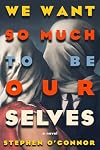
A few years ago I tried to read the first volume of Victor Klemperer's I WILL BEAR WITNESS, a journal of how the author's life as a university professor of French literature in Germany changed drastically for the worse as Hitler rose to power and began clamping down on free speech and scholarship, as well as rounding up and criminalizing Jews, other minorities and anyone who failed to pledge loyalty. The journal was so dense with the mundane details of the professor's life that I lost show more interest and put it down about a hundred pages in. Not so with Stephen O'Connor's new novel, WE WANT SO MUCH TO BE OURSELVES (2026), which deals with the same period of German history and then some.
We meet the central character, A young Dr. Gunter Zeitz, in the 1920s, when he seeks out Sigmund Freud in Vienna and begins to study under him to become a psychoanalyst. He also meets Josine there, who will become his wife. She is Jewish, the daughter of a wealthy shipping magnate. Gunter, the son of a country doctor, is a lapsed Catholic and agnostic. She becomes pregnant and they marry quickly, before moving to Berlin, where Gunter joins the new Berlin Psychoanalytic Institute. Josine, it turns out, is probably bipolar, and will be a serial adulterer, causing deep personal problems in their marriage, extended separations and custody disputes over the child, Hannah (who later becomes an important character herself in the postwar Germany part of the narrative). In the 1930s we watch the Institute change drastically as Hitler comes to power as Chancellor. Gunter remains privately appalled at these changes, refusing to render the required Heil Hitler salute that becomes standard. He watches as Jewish colleagues leave the country and the Institute's core values change, as well as its name. His wife takes Hannah and disappears, as the war progresses. He meets Elke, a young student in training to be a psychoanalyst, but resists a relationship. People begin "disappearing." He interferes with the abduction of a colleague by the SS and is beaten severely. Postwar, a 19 year-old Hannah reappears, searching for her parents in the rubble of Berlin, finding help from an officer of the U.S. occupation army.
I hesitate to give away any more of this finely crafted and deeply absorbing story, which goes far beyond the war years, extending into the 1980s. This is historical fiction at its finest, blending the public and personal events of the Second World War years and the difficult, turbulent times that followed. It was, for me, a book difficult to put down, and I was sorry to see it end. If you are a war lit buff, this is a must-read. My very highest recommendation.
- Tim Bazzett, author of the Cold War memoir, SOLDIER BOY: AT PLAY IN THE ASA show less
We meet the central character, A young Dr. Gunter Zeitz, in the 1920s, when he seeks out Sigmund Freud in Vienna and begins to study under him to become a psychoanalyst. He also meets Josine there, who will become his wife. She is Jewish, the daughter of a wealthy shipping magnate. Gunter, the son of a country doctor, is a lapsed Catholic and agnostic. She becomes pregnant and they marry quickly, before moving to Berlin, where Gunter joins the new Berlin Psychoanalytic Institute. Josine, it turns out, is probably bipolar, and will be a serial adulterer, causing deep personal problems in their marriage, extended separations and custody disputes over the child, Hannah (who later becomes an important character herself in the postwar Germany part of the narrative). In the 1930s we watch the Institute change drastically as Hitler comes to power as Chancellor. Gunter remains privately appalled at these changes, refusing to render the required Heil Hitler salute that becomes standard. He watches as Jewish colleagues leave the country and the Institute's core values change, as well as its name. His wife takes Hannah and disappears, as the war progresses. He meets Elke, a young student in training to be a psychoanalyst, but resists a relationship. People begin "disappearing." He interferes with the abduction of a colleague by the SS and is beaten severely. Postwar, a 19 year-old Hannah reappears, searching for her parents in the rubble of Berlin, finding help from an officer of the U.S. occupation army.
I hesitate to give away any more of this finely crafted and deeply absorbing story, which goes far beyond the war years, extending into the 1980s. This is historical fiction at its finest, blending the public and personal events of the Second World War years and the difficult, turbulent times that followed. It was, for me, a book difficult to put down, and I was sorry to see it end. If you are a war lit buff, this is a must-read. My very highest recommendation.
- Tim Bazzett, author of the Cold War memoir, SOLDIER BOY: AT PLAY IN THE ASA show less
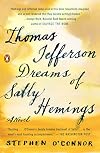
Good artists, whatever their creative medium, are always grappling with the limits of that medium. They are constantly asking themselves: what can this form with which I am working do that no other form can do? What can the peculiarities of this form show us about history, the world, the human condition, etc., that no other form can do? There are, of course, numerous biographies about Jefferson. But it is arguably this work of fiction that comes closes to capturing the full range of show more Jefferson: his brilliance, his managerial ineptitude, his political gamesmanship, his genuine horror at the institution of slavery, his persistent refusal to question his own entitlement and privilege at the apex of that system. Jefferson emerges here as a fully-rounded character: complex, contradictory, plagued by doubt, fortified by arrogance, both admirable and thoroughly reprehensible.
Even more remarkable in many ways is O'Connor's portrayal of Hemmings, a person who--unlike Jefferson--exists only in a few fragments in the documentary record. She is every bit as complex as Jefferson, with her own mix of admirable and questionable characteristics, many of them the result of being immersed in a the complexities of an enslaving system that granted her some privileges (not just because of her connection with Jefferson, but because of her light skin, her position as the child of a house servant, etc). She is by turns self-actualizing and dogged by guilt at having collaborated in her own oppression and the oppression of others.
To pull all this off, O'Connor has to throw out all the rules. He promiscuously mingles genres and styles, layering in several different stories around the central historical novel. There is a Thomas Jefferson who undertakes a physical exploration of the interior of a body that turns out to be Thomas Jefferson. There is a dystopic sci-fi story about a giant industrial machine invented by Sally Hemmings. There is an extended meditation on color--my favorite part in many ways--based on an unfinished project Jefferson apparently had in mind at the time of his death.
There will, therefore, be many people who won't like this book at all. Some will be offended by the central premise, some will be offended by what seems on the surface to be an irreverent treatment of a serious topic, and some will simply be offended by the stylistic bravura. I suspect, however, that what will most offend people about this book is a testament to what O'Connor has achieved: that it offers no easy answers, to black and white view of the world, no comfortable place for anyone to stand. Instead, it shows us the many layers of complexity involved in America's original sin. show less
Even more remarkable in many ways is O'Connor's portrayal of Hemmings, a person who--unlike Jefferson--exists only in a few fragments in the documentary record. She is every bit as complex as Jefferson, with her own mix of admirable and questionable characteristics, many of them the result of being immersed in a the complexities of an enslaving system that granted her some privileges (not just because of her connection with Jefferson, but because of her light skin, her position as the child of a house servant, etc). She is by turns self-actualizing and dogged by guilt at having collaborated in her own oppression and the oppression of others.
To pull all this off, O'Connor has to throw out all the rules. He promiscuously mingles genres and styles, layering in several different stories around the central historical novel. There is a Thomas Jefferson who undertakes a physical exploration of the interior of a body that turns out to be Thomas Jefferson. There is a dystopic sci-fi story about a giant industrial machine invented by Sally Hemmings. There is an extended meditation on color--my favorite part in many ways--based on an unfinished project Jefferson apparently had in mind at the time of his death.
There will, therefore, be many people who won't like this book at all. Some will be offended by the central premise, some will be offended by what seems on the surface to be an irreverent treatment of a serious topic, and some will simply be offended by the stylistic bravura. I suspect, however, that what will most offend people about this book is a testament to what O'Connor has achieved: that it offers no easy answers, to black and white view of the world, no comfortable place for anyone to stand. Instead, it shows us the many layers of complexity involved in America's original sin. show less
This novel was issued roughly contemporaneously with the more acclaimed and popular Lincoln in the Bardo, which it resembles in many respects. It consists of a relatively conventional narrative interspersed with passages of nonfiction, first person narratives which are often achronological, and, especially early in the book, voyages into magic realism: Jefferson is taken to a movie of his life by Jemmy and Dolley Madison, Sally Hemings invites him to travel on her new invention the subway, show more Jefferson and Hemings visit the Museum of Miscegenation, a sadistic guard (possibly Hemings) interrogates a political prisoner (possibly Jefferson). This is a heady brew, and, for me, a winner. It's not often that I take on a 600-page novel without a break to some other reading, but this fascinates. It's not, happily, a BLM style tirade against Jefferson, but neither is he a particularly sympathetic character. The author could have made this more inviting by giving his reader, at least this one, a little less credit; there is plenty of untranslated French, several major characters, notably the Jefferson daughters and Hemings herself. seem to have two names, and he takes his time letting you know that, and the first-person narratives are in italics, which proved difficult for these old eyes to read. And the book is too long--of course it's too long--but it seems churlish to complain, for when one chooses a doorstop like this, there's a sort of compact with it that it's going to take weeks to read. This is a great book and i wish had been better received. show less
This book is a big, shapeless, unwieldy mess.
I think there's something admirable in the attempt to write it, and I think O'Connor has worked hard at getting into Thomas Jefferson's and Sally Hemings's heads, as well as into the eighteenth-century zeitgeist, in an attempt to understand how they understood their -- I don't even know what to call it, since "relationship" seems laughably inadequate to describe whatever this was.
I do think it's fair to O'Connor to point out that he is very clear show more that at the beginning, when Sally Hemings was 14 and Thomas Jefferson 44, Hemings was raped by Jefferson. The Sally Hemings in this book, at least (we really know nothing about the interior life of the real Hemings) actively did not want to have sex with Jefferson and resisted to the point of foolhardiness, given her situation. (And even if that were the case, there would have been no way for a teenaged Hemings to meaningfully consent to sex with her middle-aged master.) O'Connor suggests that Hemings's feelings for Jefferson changed over the course of three decades into something approaching love, although love of a complicated and ambivalent nature.
Is that impossible? I don't think so; people are weird and Stockholm Syndrome is a thing and it's true that Jefferson offered Hemings some valuable currency in that she lived a better, easier life than his other slaves and he agreed to free her children. Could that feel like love to her? It might -- I don't think it's impossible -- but I didn't find the soft-focus scenes of romance in a fanciful hidden-away lodge to be remotely plausible. (The scene in which she insists on calling him "My Tom" -- my eyes practically rolled out of my head.) The main problem with this book -- other than repeated attempts at postmodern nonsense, which added nothing in my opinion -- is that I never for one moment forgot that I was reading a white guy's interpretation of what Sally Hemings felt about Thomas Jefferson. Maybe that's not fair, and O'Connor is unquestionably a well-intentioned white guy, but still -- that's a problem in the writing, because he never made me believe in the Sally Hemings he was trying to conjure. show less
I think there's something admirable in the attempt to write it, and I think O'Connor has worked hard at getting into Thomas Jefferson's and Sally Hemings's heads, as well as into the eighteenth-century zeitgeist, in an attempt to understand how they understood their -- I don't even know what to call it, since "relationship" seems laughably inadequate to describe whatever this was.
I do think it's fair to O'Connor to point out that he is very clear show more that at the beginning, when Sally Hemings was 14 and Thomas Jefferson 44, Hemings was raped by Jefferson. The Sally Hemings in this book, at least (we really know nothing about the interior life of the real Hemings) actively did not want to have sex with Jefferson and resisted to the point of foolhardiness, given her situation. (And even if that were the case, there would have been no way for a teenaged Hemings to meaningfully consent to sex with her middle-aged master.) O'Connor suggests that Hemings's feelings for Jefferson changed over the course of three decades into something approaching love, although love of a complicated and ambivalent nature.
Is that impossible? I don't think so; people are weird and Stockholm Syndrome is a thing and it's true that Jefferson offered Hemings some valuable currency in that she lived a better, easier life than his other slaves and he agreed to free her children. Could that feel like love to her? It might -- I don't think it's impossible -- but I didn't find the soft-focus scenes of romance in a fanciful hidden-away lodge to be remotely plausible. (The scene in which she insists on calling him "My Tom" -- my eyes practically rolled out of my head.) The main problem with this book -- other than repeated attempts at postmodern nonsense, which added nothing in my opinion -- is that I never for one moment forgot that I was reading a white guy's interpretation of what Sally Hemings felt about Thomas Jefferson. Maybe that's not fair, and O'Connor is unquestionably a well-intentioned white guy, but still -- that's a problem in the writing, because he never made me believe in the Sally Hemings he was trying to conjure. show less
Lists
Awards


You May Also Like


Associated Authors
Statistics
- Works
- 6
- Also by
- 2
- Members
- 302
- Popularity
- #77,841
- Rating
- 3.7
- Reviews
- 12
- ISBNs
- 36
