
Extinction Rebellion
Author of This Is Not A Drill: An Extinction Rebellion Handbook
About the Author
Works by Extinction Rebellion
Tagged
Common Knowledge
Members
Reviews
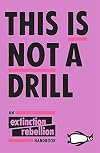
I finished reading the Extinction Rebellion handbook four days ago and had a lot of thoughts about it, yet didn’t feel like writing a review. This is very unusual and reflects the range of emotions the book provoked. Basically, I knew any review would end up being very self-involved. My reaction was largely emotional because, not to put too fine a point on it, the information on climate change was familiar. I already think about it all the time. Just today I was drafting a (very show more unsatisfactory) journal paper on ways to meet the UK’s 2050 Climate Change Act target. Nonetheless, I learned quite a bit about Extinction Rebellion’s ethos and tactics, which I found very interesting. I’d heard of their activists deliberately trying to get arrested and wondered about the rationale. This approach invites comparison with the turn-of-the-millennium globalisation protest tactics discussed by David Graeber in [b:Possibilities: Essays on Hierarchy, Rebellion, and Desire|978934|Possibilities Essays on Hierarchy, Rebellion, and Desire|David Graeber|https://i.gr-assets.com/images/S/compressed.photo.goodreads.com/books/1328694352l/978934._SY75_.jpg|963822]. The handbook makes clear that XR seeks to learn from previous movements across the world. In this case, I wonder if they’re trying to dissolve the threat of arrest by inviting it? I appreciated the acknowledgement that only those with white and other privilege do so. I also noted the focus on capital cities as foci of disruptive protest, as these are where the political and economic power resides. Not a new idea, of course, but the London bridge-blocking was an impressive operationalisation of it. Overall, the short essays that comprise the book provide an engaging and well chosen range of voices and topics. Some are philosophical, others practical. Some offer personal testimony of climate change’s effects, other speculate about the future. I highly recommend them.
Alright, now for the self-involved part. Let’s put the scale of the climate crisis aside for a moment and unpack some emotions. The two main feelings I had upon finishing ‘This Is Not A Drill’ were guilt and hope, both of which were quite painful. Guilt because it reminded me how much better I am at giving things up for the environment than proactively doing them. I stopped flying in 2008, got rid of my car in 2009, and try to buy as few new things as I can. After ten years, it has become normal for me to consider the environmental impact of my individual decisions, and try to gently encourage my loved ones to do the same. While keenly aware of the futility of doing this within a fossil fuel based capitalist system, of course. What I haven’t done is got involved in any environmental organisations. Stupid as it sounds, I’m shy and meeting strangers is scary. I want to support Extinction Rebellion, but have not yet come across an opportunity when I could drag along a more extroverted friend for support. Also I don’t have any practical skills that would be helpful, as I’m very much an indoor creature. Deep down, though, I know these excuses are very weak and am ashamed of them. The planet is dying and I’m anxious about unfamiliar social situations! Ridiculous.
The other feeling, hope, comes with a great deal of ambivalence. This handbook suggests that XR might have greater potential to make progress than any other recent environmental movement I’ve come across. Seeing children on strike for climate change is moving and inspiring on the one hand, but also makes me so sad for them. They shouldn't need to go on strike. When I was their age and for many years after, I genuinely thought the environment could be saved and that the global economic system’s self-destructive tendencies could be reigned in. I’d place the turning point in 2010, when the UK coalition government was elected. In the years prior to that, the financial crisis had apparently shown the irreparable flaws of neoliberal economics and the UK had passed the Climate Change Act. Greece was in crisis, but a sense of positive possibilities still persisted. There was even one glorious afternoon when I thought the UK might one day elect a Green-Lib Dem coalition. (This was before Nick Clegg betrayed us all, OK. Remember the brief burst of Cleggmania?) Then David Cameron became Prime Minister and began systematically defunding, dismantling, and privatising the UK public sector. Environmental protection was dismissed as red tape. Frankly, it’s been all downhill for the UK since then, and to a broad extent the world more generally. During the first year of the coalition, I worked in local government and wrote briefing notes for my colleagues on each fresh horror the government served up. I also ran an angry blog on the same theme, until my entire team was made redundant due to budget cuts.
That process of losing hope since 2010 has been painful. It’s not just about the environment, of course. While sustainability has been greenwashed into meaninglessness, it does at least attempt to capture the interdependence of social, economic, and environmental spheres of life. Neoliberalism destroys all three. Since 2010, wealth inequality has increased, the welfare state has been shredded, and climate change has proceeded inexorably. I think Paul Kingsnorth’s [b:Confessions of a Recovering Environmentalist and Other Essays|31450661|Confessions of a Recovering Environmentalist and Other Essays|Paul Kingsnorth|https://i.gr-assets.com/images/S/compressed.photo.goodreads.com/books/1483077976l/31450661._SX50_.jpg|52153539] comes closest to articulating this loss of hope. Since 2016, of course, it’s got much worse. The vote to leave the EU was bad enough, although my initial reaction to that was largely characterised by bewilderment. Waking up to find Trump had won, though, was a physical blow to the chest. I saw the news and thought, That’s it. All hope of a better world is lost. Humanity will never explore the stars. We’ll die out in the ruins of our own fucking idiocy, taking most of the planet’s biodiversity with us. And that was before I realised how monstrous big tech and surveillance capitalism are. Despite this existential despair, I still try my best not to live wastefully. Probably just in an effort to exert some control over a tiny part of the terrifyingly huge, chaotic, and self-destructive world.
With a cheery outlook like this, is it any wonder I have anxiety? Anyway, ‘This Is Not A Drill’ talks convincingly about effective disruption, the speed at which political change can happen, and how many people can be mobilised. It squarely blames capitalism for climate change and firmly insists that private cars should not be in cities. It includes two inspiring essays from actual UK MPs. Thus, there is an unusual level of conviction about the whole book. I read a lot about climate change, much of it quite theoretical and better at analysis of causes than plausible solutions. The difference here is palpable. Reading the XR handbook, I felt an unfamiliar spark of hope. Yet I’m afraid to feel at all hopeful because there is so much wealth, power, and narcissistic malevolence behind fossil fuels, big tech, and globalised finance. How can we expropriate the billionaires who profit from climate change and fully intend to buy their way out of its effects? (One small crumb of comforting schadenfreude, incidentally, is that even the Koch brothers and others whose impact on the world has been unequivocally evil are mortal. Can’t buy your way out of dying, motherfuckers.)
As you might gather, I am filled with rage about the disastrous state of the world. On the one hand, I want to be hopeful and to feel like the future might not be apocalyptic. On the other, losing hope is so brutally painful that I don’t want to go through it again. I’m suspicious of feeling hopeful, as it could so easily just be a delusion. But is caring intensely while filled with despair really any better? The scale and terror of climate change make it very difficult to think clearly about, especially if you are an anxious person, and the XR handbook navigates this very effectively. I expect other readers will find themselves having a lot of intense feelings about it too.
I’ll end with a quote that hit me particularly hard:
I’ve read history books that try to analyse why it all kicked off in 1848, 1918, 1968, and 1989. Given how difficult it is to understand the reasons for abrupt transformative change with the convenient benefit of hindsight, it’s surely impossible to guess when they are about to occur. The last few years have been disorientating in their sense of perpetual chaotic disaster, but maybe that could change. Surely things can’t keep getting worse. I must still be clinging to some hopeful idealism, otherwise why would I keep searching in books for insights that could make the world better? There are enough such insights here to jolt me out of intellectual analysis and into self-examination. A book about climate change that balances realism and hope so deftly is a rare thing indeed. show less
Alright, now for the self-involved part. Let’s put the scale of the climate crisis aside for a moment and unpack some emotions. The two main feelings I had upon finishing ‘This Is Not A Drill’ were guilt and hope, both of which were quite painful. Guilt because it reminded me how much better I am at giving things up for the environment than proactively doing them. I stopped flying in 2008, got rid of my car in 2009, and try to buy as few new things as I can. After ten years, it has become normal for me to consider the environmental impact of my individual decisions, and try to gently encourage my loved ones to do the same. While keenly aware of the futility of doing this within a fossil fuel based capitalist system, of course. What I haven’t done is got involved in any environmental organisations. Stupid as it sounds, I’m shy and meeting strangers is scary. I want to support Extinction Rebellion, but have not yet come across an opportunity when I could drag along a more extroverted friend for support. Also I don’t have any practical skills that would be helpful, as I’m very much an indoor creature. Deep down, though, I know these excuses are very weak and am ashamed of them. The planet is dying and I’m anxious about unfamiliar social situations! Ridiculous.
The other feeling, hope, comes with a great deal of ambivalence. This handbook suggests that XR might have greater potential to make progress than any other recent environmental movement I’ve come across. Seeing children on strike for climate change is moving and inspiring on the one hand, but also makes me so sad for them. They shouldn't need to go on strike. When I was their age and for many years after, I genuinely thought the environment could be saved and that the global economic system’s self-destructive tendencies could be reigned in. I’d place the turning point in 2010, when the UK coalition government was elected. In the years prior to that, the financial crisis had apparently shown the irreparable flaws of neoliberal economics and the UK had passed the Climate Change Act. Greece was in crisis, but a sense of positive possibilities still persisted. There was even one glorious afternoon when I thought the UK might one day elect a Green-Lib Dem coalition. (This was before Nick Clegg betrayed us all, OK. Remember the brief burst of Cleggmania?) Then David Cameron became Prime Minister and began systematically defunding, dismantling, and privatising the UK public sector. Environmental protection was dismissed as red tape. Frankly, it’s been all downhill for the UK since then, and to a broad extent the world more generally. During the first year of the coalition, I worked in local government and wrote briefing notes for my colleagues on each fresh horror the government served up. I also ran an angry blog on the same theme, until my entire team was made redundant due to budget cuts.
That process of losing hope since 2010 has been painful. It’s not just about the environment, of course. While sustainability has been greenwashed into meaninglessness, it does at least attempt to capture the interdependence of social, economic, and environmental spheres of life. Neoliberalism destroys all three. Since 2010, wealth inequality has increased, the welfare state has been shredded, and climate change has proceeded inexorably. I think Paul Kingsnorth’s [b:Confessions of a Recovering Environmentalist and Other Essays|31450661|Confessions of a Recovering Environmentalist and Other Essays|Paul Kingsnorth|https://i.gr-assets.com/images/S/compressed.photo.goodreads.com/books/1483077976l/31450661._SX50_.jpg|52153539] comes closest to articulating this loss of hope. Since 2016, of course, it’s got much worse. The vote to leave the EU was bad enough, although my initial reaction to that was largely characterised by bewilderment. Waking up to find Trump had won, though, was a physical blow to the chest. I saw the news and thought, That’s it. All hope of a better world is lost. Humanity will never explore the stars. We’ll die out in the ruins of our own fucking idiocy, taking most of the planet’s biodiversity with us. And that was before I realised how monstrous big tech and surveillance capitalism are. Despite this existential despair, I still try my best not to live wastefully. Probably just in an effort to exert some control over a tiny part of the terrifyingly huge, chaotic, and self-destructive world.
With a cheery outlook like this, is it any wonder I have anxiety? Anyway, ‘This Is Not A Drill’ talks convincingly about effective disruption, the speed at which political change can happen, and how many people can be mobilised. It squarely blames capitalism for climate change and firmly insists that private cars should not be in cities. It includes two inspiring essays from actual UK MPs. Thus, there is an unusual level of conviction about the whole book. I read a lot about climate change, much of it quite theoretical and better at analysis of causes than plausible solutions. The difference here is palpable. Reading the XR handbook, I felt an unfamiliar spark of hope. Yet I’m afraid to feel at all hopeful because there is so much wealth, power, and narcissistic malevolence behind fossil fuels, big tech, and globalised finance. How can we expropriate the billionaires who profit from climate change and fully intend to buy their way out of its effects? (One small crumb of comforting schadenfreude, incidentally, is that even the Koch brothers and others whose impact on the world has been unequivocally evil are mortal. Can’t buy your way out of dying, motherfuckers.)
As you might gather, I am filled with rage about the disastrous state of the world. On the one hand, I want to be hopeful and to feel like the future might not be apocalyptic. On the other, losing hope is so brutally painful that I don’t want to go through it again. I’m suspicious of feeling hopeful, as it could so easily just be a delusion. But is caring intensely while filled with despair really any better? The scale and terror of climate change make it very difficult to think clearly about, especially if you are an anxious person, and the XR handbook navigates this very effectively. I expect other readers will find themselves having a lot of intense feelings about it too.
I’ll end with a quote that hit me particularly hard:
Check out the previous global rebellious episodes: 1848, 1918, 1968, 1989, 2012. It starts somewhere, the news spreads, and millions of people come out on to the streets around the world.
The lesson is you don’t wait until everyone is ready, because you’ll be waiting forever. You just need to go and do it.
I’ve read history books that try to analyse why it all kicked off in 1848, 1918, 1968, and 1989. Given how difficult it is to understand the reasons for abrupt transformative change with the convenient benefit of hindsight, it’s surely impossible to guess when they are about to occur. The last few years have been disorientating in their sense of perpetual chaotic disaster, but maybe that could change. Surely things can’t keep getting worse. I must still be clinging to some hopeful idealism, otherwise why would I keep searching in books for insights that could make the world better? There are enough such insights here to jolt me out of intellectual analysis and into self-examination. A book about climate change that balances realism and hope so deftly is a rare thing indeed. show less
Extinction Rebellion’s handbook, This is Not A Drill, details ways that individuals can act to mitigate the forthcoming climate catastrophe. The book – edited by Clare Farrell, Alison Green, Sam Knights, and William Skeaping – is structured into two parts. In the first, “Tell the Truth,” contributors explain in detail the realities of the climate crisis, lack of action, and how capitalism is driving the impending catastrophe. In the second part, “Act Now,” the contributors show more explain how burgeoning and experienced climate activists can take action to make their voices heard and begin to shape policy. The result is a work that functions in parallel with other volumes about the sixth extinction and climate change, including Greta Thunberg’s book as well as Jane Fonda’s What Can I Do?. Though the authors primarily describe a British context, much of what they discuss can apply to any post-industrial nation, particularly in how post-industrial societies shift the brunt of climate change to indigenous peoples and those countries still bearing the brunt of centuries of colonialism. A good introduction for those looking to become more involved in protesting inaction with the climate crisis. show less
Many have noticed the flaws in democracy. These days, you have only to glance at Trump, or watch Britain unravel over Brexit, or notice the hung parliaments and unconvincing votes around the world. Is it time to find a new system?
Climate change has defeated democratic decision making. The main parties are beholden to the big end of town, especially coal and gas, and rather than choosing to oversee a rational transition to renewable sources, politicians have dug their heels in and promoted show more products and practices that add to harmful emissions. The science is indisputable – or should be.
Don’t imagine that politicians are happy with their alliances with coal and banks. Their overreactions to the #Extinction Rebellion sit-ins have revealed how sensitive they are to criticism. To suggest mandatory jail and cutting protestors’ welfare payments is despotic. Messrs Littleproud and Canavan should note: Blocking roads is not new: I can remember sitting on Riverside Drive at peak-hour in 1969 to protest the danger for pedestrians crossing to and from The University of WA.
The argument in This is Not a Drill, a series of opinion pieces by supporters of Extinction Rebellion (Penguin 2019) is that the democratic process has failed us by not taking dramatic action to mitigate climate change. In Australia, emissions are increasing, and sales of coal are growing. Younger people fear for their future: coastal flooding, the melting of polar ice, wildfires year-round and cycles of severe drought should cause fear. The mass extinction of many species, the destruction of much of the world’s coral reefs, including the beautiful Great Barrier Reef, should be cause for alarm and grief.
#Extinction Rebellion aims, in part, to shut down capital cities until governments declare a climate emergency. No one likes the disruption to daily life this causes, but it is far less that the disruption that climate change unchecked will bring.
Writers in This is Not a Drill argue that not only must clean energy be generated and coal and gas phased out, but also the whole economy must be re-made. The ‘free market’ with its dependence on growth and consumer addiction to constant purchasing are the cause of climate change. These writers argue for a more distributive economy, local and equitable. As they say if fewer than 10% control more than 80% of the wealth, the system is loaded for reform.
The #Extinction Rebellion street actions have an element of fun. Some placards are humorous, playful floats function as centrepieces. Food shared generously creates a party atmosphere. Rowan Williams, formerly Archbishop of Canterbury, pleads for a place for delight: this if God’s world we are trying to preserve, and our Scriptures describe the act of creation as a form of divine play. If there is no joy, but only earnest protest, #Extinction Rebellion becomes a negative, maybe destructive force. With the element of delight, however, the movement is showing what a renewed world will be like.
The claims of #Extinction Rebellion disturb me deeply. Has democracy failed? Can a new and loving politics replace it? I fear the answer to both questions is ‘Yes’. We owe it to our children and grandchildren to act to preserve their world. Democracy will evolve – it must – but we must fight for the future. show less
Climate change has defeated democratic decision making. The main parties are beholden to the big end of town, especially coal and gas, and rather than choosing to oversee a rational transition to renewable sources, politicians have dug their heels in and promoted show more products and practices that add to harmful emissions. The science is indisputable – or should be.
Don’t imagine that politicians are happy with their alliances with coal and banks. Their overreactions to the #Extinction Rebellion sit-ins have revealed how sensitive they are to criticism. To suggest mandatory jail and cutting protestors’ welfare payments is despotic. Messrs Littleproud and Canavan should note: Blocking roads is not new: I can remember sitting on Riverside Drive at peak-hour in 1969 to protest the danger for pedestrians crossing to and from The University of WA.
The argument in This is Not a Drill, a series of opinion pieces by supporters of Extinction Rebellion (Penguin 2019) is that the democratic process has failed us by not taking dramatic action to mitigate climate change. In Australia, emissions are increasing, and sales of coal are growing. Younger people fear for their future: coastal flooding, the melting of polar ice, wildfires year-round and cycles of severe drought should cause fear. The mass extinction of many species, the destruction of much of the world’s coral reefs, including the beautiful Great Barrier Reef, should be cause for alarm and grief.
#Extinction Rebellion aims, in part, to shut down capital cities until governments declare a climate emergency. No one likes the disruption to daily life this causes, but it is far less that the disruption that climate change unchecked will bring.
Writers in This is Not a Drill argue that not only must clean energy be generated and coal and gas phased out, but also the whole economy must be re-made. The ‘free market’ with its dependence on growth and consumer addiction to constant purchasing are the cause of climate change. These writers argue for a more distributive economy, local and equitable. As they say if fewer than 10% control more than 80% of the wealth, the system is loaded for reform.
The #Extinction Rebellion street actions have an element of fun. Some placards are humorous, playful floats function as centrepieces. Food shared generously creates a party atmosphere. Rowan Williams, formerly Archbishop of Canterbury, pleads for a place for delight: this if God’s world we are trying to preserve, and our Scriptures describe the act of creation as a form of divine play. If there is no joy, but only earnest protest, #Extinction Rebellion becomes a negative, maybe destructive force. With the element of delight, however, the movement is showing what a renewed world will be like.
The claims of #Extinction Rebellion disturb me deeply. Has democracy failed? Can a new and loving politics replace it? I fear the answer to both questions is ‘Yes’. We owe it to our children and grandchildren to act to preserve their world. Democracy will evolve – it must – but we must fight for the future. show less
I find myself agreeing with so much of this book so, why do I feel uncomfortable with its prescriptive content?
It may be that I am just too cowardly to put myself at risk of arrest and would rather hide behind excuses but, I would (obviously) offer a different reason. I accept that revolutions are better served by a small caucus of leaders. If the take over of the state were to require a poll of thousands of supporters, all checking their i-phones for a convenient date, that day would never show more come. The downside of revolution is that, having attained power, that tight leadership group is never keen to release power to the proletariat, who might not follow the prescribed path.
This is a real dilemma because, I begin to think that only some form of overthrow of the current system can save human kind. show less
It may be that I am just too cowardly to put myself at risk of arrest and would rather hide behind excuses but, I would (obviously) offer a different reason. I accept that revolutions are better served by a small caucus of leaders. If the take over of the state were to require a poll of thousands of supporters, all checking their i-phones for a convenient date, that day would never show more come. The downside of revolution is that, having attained power, that tight leadership group is never keen to release power to the proletariat, who might not follow the prescribed path.
This is a real dilemma because, I begin to think that only some form of overthrow of the current system can save human kind. show less
Lists
Climate Change (1)
You May Also Like


Associated Authors
Statistics
- Works
- 3
- Members
- 211
- Popularity
- #105,255
- Rating
- 3.7
- Reviews
- 10
- ISBNs
- 6
- Languages
- 2