

Edward G. Seidensticker (1921–2007)
Author of Low City, High City: Tokyo from Edo to the Earthquake
About the Author
Seidensticker, noted translator of the Tale of Genji and contemporary Japanese novels. (Bowker Author Biography)
Image credit: Wikipedia
Works by Edward G. Seidensticker
Tokyo from Edo to Showa 1867-1989: The Emergence of the World's Greatest City; Two Volumes in One: LOW CITY, HIGH CITY and TOKYO RISING (Tuttle Classics) (2010) 54 copies, 1 review
Very Few People Come This Way: Lyrical Episodes from the Year of the Rabbit (1994) 5 copies, 1 review
יפאן 1 copy
Japanese and Americans 1 copy
Associated Works
Some Prefer Nettles (1929) — Translator, some editions; Introduction, some editions — 1,179 copies, 25 reviews
House of the Sleeping Beauties and Other Stories (1969) — Translator, some editions — 616 copies, 17 reviews
The Gossamer Years: The Diary of a Noblewoman of Heian Japan (1989) — Translator, some editions — 362 copies, 9 reviews
Modern Japanese Literature: From 1868 to the Present Day (1956) — Translator, some editions — 316 copies, 1 review
Shadows of the Rising Sun: A Critical View of the Japanese Miracle (1983) — Preface, some editions — 38 copies, 1 review
Thermos Bottles — Translator, some editions — 1 copy
Tagged
Common Knowledge
- Legal name
- Seidensticker, Edward George
- Birthdate
- 1921-02-11
- Date of death
- 2007-08-26
- Gender
- male
- Education
- Harvard University
University of Tokyo - Occupations
- translator
- Awards and honors
- Order of the Rising Sun, 3rd class
- Nationality
- USA
- Birthplace
- Castle Rock, Colorado, USA
- Places of residence
- Tokyo, Japan
Honolulu, Hawaii, USA - Associated Place (for map)
- USA
Members
Reviews

This is a diary of Seidensticker's for the time he was working on translating the tale of Genji. Very interesting stuff, and worth reading for translators and Japan people, for the short synopsis.
This book accomplished a fair number of things for me, many of which would require a large change in my life to really accomodate. First and foremost, it kinda made me want to read the Tale of Genji, which I know a lot about but have only read select portions of. He describes it in a way that show more actually makes it seem approachable and readable. Not an easy task, but maybe I should try it; it's probably better than I remember it, and it may be a matter of the translator I have. I have heard the opinion that the Tyler one is bad, and that I should try the Seidensticker one. Fair enough; I was fine with the McCullough I read, and she's my favorite classical translator, so we can try another.
It also made me want to go to Japan again; Seidensticker's observations about the place are wry and evocative, and he pays both attention to the natural stuff, and to the vagaries of Tokyo. There's a lot of comparisons of Tokyo in the early 1970's, when the diary was written, and Tokyo in the early 1950s, when Seidensticker was first there. And I compare all of it to when I was there, and it's fascinating.
Also, it made me want to translate more. He's very good with evoking the problems and the rewards, and the feelings that go along with it, and I empathized greatly.
The man himself must be quite interesting. It'd be cool to meet him; he's snarky, witty, and principled, and somewhat crotchety at times, and it's all fun. I like the way he writes, and the way he aims to provoke reactions sometimes. I really felt it from an episode early in the book where he's in a bad mood at the market, and a war protestor comes up to him offering "Peanuts for Peace," to which he replies, "I am a warmonger." Then Seidensticker says oh, how delightful as the protestor's peace-loving eyes filled up with hatred and a longing to hit Seidensticker, and he concludes with, "So I suppose I had a good time at the market after all." I'd probably love him.
So, yes. Very enjoyable book. show less
This book accomplished a fair number of things for me, many of which would require a large change in my life to really accomodate. First and foremost, it kinda made me want to read the Tale of Genji, which I know a lot about but have only read select portions of. He describes it in a way that show more actually makes it seem approachable and readable. Not an easy task, but maybe I should try it; it's probably better than I remember it, and it may be a matter of the translator I have. I have heard the opinion that the Tyler one is bad, and that I should try the Seidensticker one. Fair enough; I was fine with the McCullough I read, and she's my favorite classical translator, so we can try another.
It also made me want to go to Japan again; Seidensticker's observations about the place are wry and evocative, and he pays both attention to the natural stuff, and to the vagaries of Tokyo. There's a lot of comparisons of Tokyo in the early 1970's, when the diary was written, and Tokyo in the early 1950s, when Seidensticker was first there. And I compare all of it to when I was there, and it's fascinating.
Also, it made me want to translate more. He's very good with evoking the problems and the rewards, and the feelings that go along with it, and I empathized greatly.
The man himself must be quite interesting. It'd be cool to meet him; he's snarky, witty, and principled, and somewhat crotchety at times, and it's all fun. I like the way he writes, and the way he aims to provoke reactions sometimes. I really felt it from an episode early in the book where he's in a bad mood at the market, and a war protestor comes up to him offering "Peanuts for Peace," to which he replies, "I am a warmonger." Then Seidensticker says oh, how delightful as the protestor's peace-loving eyes filled up with hatred and a longing to hit Seidensticker, and he concludes with, "So I suppose I had a good time at the market after all." I'd probably love him.
So, yes. Very enjoyable book. show less

Flâner à Tokyo
Edward Seidensticker's Tokyo Rising, the sequel to the almost equally engaging Low City, High City : Tokyo from Edo to the Earthquake, is a treasure trove of the breathtaking changes that Tokyoites’ public life went through from 1923 until the height of the Japanese bubble. Just like Low City, High City, Tokyo Rising does not contain much political, economic, intellectual or literary history, but seems more like what an intellectual remembered of the time and what he had show more read in the newspaper. Still the author deserves praise for making all these data available, and still managing to turn the book into a coherent story. On the other hand, it is not very clear what someone who does not live in Tokyo or is a regular visitor can learn from this book.
Roughly speaking, the book is about the decline of Tokyo’s Low City in the East and the rise of the High City in the West. The disastrous Kanto earthquake of 1923 speeded up that process. Tokyo was rebuilt with cheaper international devices in lighter colours than before (page 23). After the earthquake retail merchandising, entertainment and culture imitated and emulated what the Japanese had observed in New York and London. Old shop signs, often abstract and symbolic, gave way to signs that announced their business loudly and unequivocally. People stopped changing from street wear into slippers when entering a store, and as shops ceased visiting people at home, matrons had to start mingling with the lesser orders. In 1926, the first vending machines were introduced. Mitsukoshi Department Store included a theatre in its post-earthquake building. All such stores had gardens, terraces, galleries and exhibition halls. Department stores were built at commuter transfer points like Shibuya and Shinjuku. The early era saw the start of suburbanisation with bunka jutaku ("cultural dwellings"): houses with 3-4 rooms, one in Western style, 2 floors, a tiled kitchen and a bath. This lead to the demise of public baths, once an important element of Japanese culture. In the Japanese language, neologisms were mainly foreign imports.
Industrialisation progressed and 1927 saw the introduction of the underground railway. Shinjuku was up and coming and less bourgeois with market stalls and phonographs. It was probably already the most crowded place in the city with flower sellers and fortune-tellers (page 51). The bars in Ginza had French names, and young men no longer came to look at women and listen to their traditional music. The women were becoming more aggressive and less inhibited, and emerged to take charge of conversation. The waitress gave way to the hostess (page 61). Prices came forward and so did the tips. Other changes were the growing popularity of Osaka cooking (Osaka being the challenger/runner-up in many fields), and sumo and kabuki, that started to attract millions of visitors.
1940, the year Japan was 2600 years old, should have brought the Olympics, but Japan returned the franchise. Because of the Sino-Japanese war steel was in short supply. Foreign-named cigarettes were rebranded, but mama and papa could not be extirpated anymore. To support the war effort the nation turned to technology and production, with ersatz to satisfy the populace. Still, the suicide rate went down. And despite the purification of culture, German, Italian, and Russian classical music were still allowed.
The first American air raid hit Tokyo in 1942, but the second one only came in 1944. A total of 4,000 flights occurred over the city. After the war the Americans settled in Marunouchi, and Tokyo was rebuilt on the old street pattern. Japan profited handsomely from the Korean War, which helped rebuild the city. Tokyo needed about a decade to recover from the war. The occupation force mainly censored acts of military virtues like loyalty, but allowed the first kisses on stage and screen. They were soon followed by strip shows. Strippers in Asakusa first wore Japanese dress, while their colleagues in Ginza wore Western dress and Shinjuku was in between. However, soon Ginza was the norm because the clothes went off faster. Another form of amusement of the time was women's swordplays.
The fifties saw the invention of pachinko. Speed and noise increased with these vertical pinball machines:
It does seem to be the case that the Japanese would prefer to be knocked into happy oblivion by sheer noise than by most things.
Car traffic increased to 2.5 million in the mid 1960's, and tramways were done away with before the Olympics. The Tokyo Olympics were the first in Asia, and were supposed to remedy the strong feelings of inferiority and isolation that had persisted. The Olympics led to 20 miles of motorways, the "bullet train" to Osaka, and a monorail to the airport. However t the time only a third of the people outside the centre had access to sewers (page 234). At the Olympics Japan won gold in women's volleyball, but wept for losing the final in open-weight judo.
In these years Harajuku came up as a place for youth culture. Up to the oil crisis of 1973, Japan experienced quickly rising wealth and Tokyo ever more cars. The parking-lot business began. In 1963 it was made illegal to keep the family automobile in the street space in front of the family house. "Key child" was one of the new words of 1964 (it equally existed in Holland in the early 1970's), and in the next year the first newspaper article about fat children appeared. "Tribes" of young people came up, among others in Harajuku:
It is more likely rebellion against the boredom of peace, prosperity, and the life of the office worker and the spouse.
Tokyo got its first high rise buildings of over 200 metres. Golf overtook sumo as a popular diversion for the elite, which the author blames on the demise of the geisha. The golf course became increasingly the place for big deals, despite that it takes dozens of evenings at an expensive geisha restaurant to spend a sum equal to the membership fee in one of the golf clubs.
In the mean time Japan and Tokyo developed what is now known as one of the greatest bubble economies of the 20th century:
One of the most popular little stunts at drinking places has to do with the ten-thousand-yen banknote and the price of land. The note, the largest printed by the Japanese government, is worth about eighty dollars, though the value shifts from day to day. A person is told to fold one of the notes as tightly as possible. Take it down to Ginza and drop it, the instructions continue; it will not buy the bit of land upon which it falls.
This is somewhat overstating it, but a 200 square feet flat in Tokyo costed about 1 million US dollar. Land speculation caused Tokyo house prices to rise at about three times the national rate. Japan’s concentration of money and power (and consequently head offices and artists) was unthinkable in the United States. And as a consequence, Yokohama, Tokyo’s satellite city, was larger than Osaka, the country’s third city.
So Tokyo is and has almost everything, and many a son of the city might say it has lost the most important thing, its identity. (...) The loss of identity is the result of the very Japanese process of homogenisation. Everything is subsumed unto Tokyo and Tokyo is subsumed unto everything; and the nation marches victoriously on, untroubled by the insistence on separateness and difference that troubles so many other nations. show less
Edward Seidensticker's Tokyo Rising, the sequel to the almost equally engaging Low City, High City : Tokyo from Edo to the Earthquake, is a treasure trove of the breathtaking changes that Tokyoites’ public life went through from 1923 until the height of the Japanese bubble. Just like Low City, High City, Tokyo Rising does not contain much political, economic, intellectual or literary history, but seems more like what an intellectual remembered of the time and what he had show more read in the newspaper. Still the author deserves praise for making all these data available, and still managing to turn the book into a coherent story. On the other hand, it is not very clear what someone who does not live in Tokyo or is a regular visitor can learn from this book.
Roughly speaking, the book is about the decline of Tokyo’s Low City in the East and the rise of the High City in the West. The disastrous Kanto earthquake of 1923 speeded up that process. Tokyo was rebuilt with cheaper international devices in lighter colours than before (page 23). After the earthquake retail merchandising, entertainment and culture imitated and emulated what the Japanese had observed in New York and London. Old shop signs, often abstract and symbolic, gave way to signs that announced their business loudly and unequivocally. People stopped changing from street wear into slippers when entering a store, and as shops ceased visiting people at home, matrons had to start mingling with the lesser orders. In 1926, the first vending machines were introduced. Mitsukoshi Department Store included a theatre in its post-earthquake building. All such stores had gardens, terraces, galleries and exhibition halls. Department stores were built at commuter transfer points like Shibuya and Shinjuku. The early era saw the start of suburbanisation with bunka jutaku ("cultural dwellings"): houses with 3-4 rooms, one in Western style, 2 floors, a tiled kitchen and a bath. This lead to the demise of public baths, once an important element of Japanese culture. In the Japanese language, neologisms were mainly foreign imports.
Industrialisation progressed and 1927 saw the introduction of the underground railway. Shinjuku was up and coming and less bourgeois with market stalls and phonographs. It was probably already the most crowded place in the city with flower sellers and fortune-tellers (page 51). The bars in Ginza had French names, and young men no longer came to look at women and listen to their traditional music. The women were becoming more aggressive and less inhibited, and emerged to take charge of conversation. The waitress gave way to the hostess (page 61). Prices came forward and so did the tips. Other changes were the growing popularity of Osaka cooking (Osaka being the challenger/runner-up in many fields), and sumo and kabuki, that started to attract millions of visitors.
1940, the year Japan was 2600 years old, should have brought the Olympics, but Japan returned the franchise. Because of the Sino-Japanese war steel was in short supply. Foreign-named cigarettes were rebranded, but mama and papa could not be extirpated anymore. To support the war effort the nation turned to technology and production, with ersatz to satisfy the populace. Still, the suicide rate went down. And despite the purification of culture, German, Italian, and Russian classical music were still allowed.
The first American air raid hit Tokyo in 1942, but the second one only came in 1944. A total of 4,000 flights occurred over the city. After the war the Americans settled in Marunouchi, and Tokyo was rebuilt on the old street pattern. Japan profited handsomely from the Korean War, which helped rebuild the city. Tokyo needed about a decade to recover from the war. The occupation force mainly censored acts of military virtues like loyalty, but allowed the first kisses on stage and screen. They were soon followed by strip shows. Strippers in Asakusa first wore Japanese dress, while their colleagues in Ginza wore Western dress and Shinjuku was in between. However, soon Ginza was the norm because the clothes went off faster. Another form of amusement of the time was women's swordplays.
The fifties saw the invention of pachinko. Speed and noise increased with these vertical pinball machines:
It does seem to be the case that the Japanese would prefer to be knocked into happy oblivion by sheer noise than by most things.
Car traffic increased to 2.5 million in the mid 1960's, and tramways were done away with before the Olympics. The Tokyo Olympics were the first in Asia, and were supposed to remedy the strong feelings of inferiority and isolation that had persisted. The Olympics led to 20 miles of motorways, the "bullet train" to Osaka, and a monorail to the airport. However t the time only a third of the people outside the centre had access to sewers (page 234). At the Olympics Japan won gold in women's volleyball, but wept for losing the final in open-weight judo.
In these years Harajuku came up as a place for youth culture. Up to the oil crisis of 1973, Japan experienced quickly rising wealth and Tokyo ever more cars. The parking-lot business began. In 1963 it was made illegal to keep the family automobile in the street space in front of the family house. "Key child" was one of the new words of 1964 (it equally existed in Holland in the early 1970's), and in the next year the first newspaper article about fat children appeared. "Tribes" of young people came up, among others in Harajuku:
It is more likely rebellion against the boredom of peace, prosperity, and the life of the office worker and the spouse.
Tokyo got its first high rise buildings of over 200 metres. Golf overtook sumo as a popular diversion for the elite, which the author blames on the demise of the geisha. The golf course became increasingly the place for big deals, despite that it takes dozens of evenings at an expensive geisha restaurant to spend a sum equal to the membership fee in one of the golf clubs.
In the mean time Japan and Tokyo developed what is now known as one of the greatest bubble economies of the 20th century:
One of the most popular little stunts at drinking places has to do with the ten-thousand-yen banknote and the price of land. The note, the largest printed by the Japanese government, is worth about eighty dollars, though the value shifts from day to day. A person is told to fold one of the notes as tightly as possible. Take it down to Ginza and drop it, the instructions continue; it will not buy the bit of land upon which it falls.
This is somewhat overstating it, but a 200 square feet flat in Tokyo costed about 1 million US dollar. Land speculation caused Tokyo house prices to rise at about three times the national rate. Japan’s concentration of money and power (and consequently head offices and artists) was unthinkable in the United States. And as a consequence, Yokohama, Tokyo’s satellite city, was larger than Osaka, the country’s third city.
So Tokyo is and has almost everything, and many a son of the city might say it has lost the most important thing, its identity. (...) The loss of identity is the result of the very Japanese process of homogenisation. Everything is subsumed unto Tokyo and Tokyo is subsumed unto everything; and the nation marches victoriously on, untroubled by the insistence on separateness and difference that troubles so many other nations. show less
Tokyo from Edo to Showa 1867-1989: The Emergence of the World's Greatest City (Tuttle Classics) by Edward G. Seidensticker
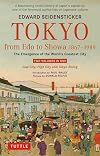
Three stars is MY PERSONAL RATING, based on what I was hoping for. I would give it five stars if I was a total obsessive about Tokyo, was a student of architectural history, was writing a doctoral thesis on the development of Tokyo social class or was the Minister of Tourism for Tokyo. I am none of these. Just a casual observer with a liking for Japanese aesthetics.
Seidensticker is a sociogeo-gnostic. Be prepared for a butt-kicking.
Seidensticker is a sociogeo-gnostic. Be prepared for a butt-kicking.
I read Genji Days a couple of months back and thought so then, but I feel so even more now: Seidensticker and I have a lot in common. His views on the world seem to greatly coincide with mine: about Japan, about Tokyo, about translation, about academia, about so many things. He's got a nice, witty writing style, and he delivers his information in a manner that suggests knowledge of his odd place in society. Translators do have an strange position - sure, you get to know lots of impressive show more people, but it's not like anyone necessarily remembers you were there.
Seidensticker, though, was a diplomat and a writer on Japanese policy on top of being a translator and academic back when he lived there, and he also did the second (and probably still most highly regarded) translation of the Tale of Genji. So he'll probably stick around. Not surprisingly, the most interesting parts of this, his memoir, are the parts where he's in the thick of things and dealing with more well-known folk, like Tanizaki and Kawabata. (Well, well-known for relative values of well-known. Well-known to Japan people? I wonder how many others know about them, and particularly Tanizaki.)
I hope my life is anywhere near as interesting as his, and that if I write a memoir of it, I manage to do it with the poise that he does. I almost want to just read parts of it again now, but I'll save it. I should track down some of his scholarly work, I think. show less
Seidensticker, though, was a diplomat and a writer on Japanese policy on top of being a translator and academic back when he lived there, and he also did the second (and probably still most highly regarded) translation of the Tale of Genji. So he'll probably stick around. Not surprisingly, the most interesting parts of this, his memoir, are the parts where he's in the thick of things and dealing with more well-known folk, like Tanizaki and Kawabata. (Well, well-known for relative values of well-known. Well-known to Japan people? I wonder how many others know about them, and particularly Tanizaki.)
I hope my life is anywhere near as interesting as his, and that if I write a memoir of it, I manage to do it with the poise that he does. I almost want to just read parts of it again now, but I'll save it. I should track down some of his scholarly work, I think. show less
Lists
Awards

You May Also Like


Associated Authors
Statistics
- Works
- 19
- Also by
- 23
- Members
- 696
- Popularity
- #36,356
- Rating
- 3.9
- Reviews
- 13
- ISBNs
- 30
- Languages
- 4
- Favorited
- 1